Deep-fried snacks may feel relishing at first, but they are not something the nutrition experts suggest consuming for everyday meals. As people are becoming more conscious about how much oil they are consuming in day-to-day life, the Indian Council of Medical Research (ICMR) and the National Institute of Nutrition (NIN) have emphasised more beneficial ways to make food in the Dietary Guidelines for Indians 2024.
Their advice is not about giving up on the flavour; it is about selecting the cooking methods that maintain the nutrients, reduce the excessive fat content, and make everyday meals much healthier without giving up on the taste.
Based on the guidelines, frequent deep frying increases the calorie content of foods and can produce harmful compounds, particularly when cooking oil is reheated repeatedly. Rather, ICMR suggests cooking techniques that can use less oil while allowing foods to maintain their natural nutrients, flavour, and texture.
Whether you are making vegetables, pulses, fish, or meat, these techniques fit in easily with everyday Indian cooking. Take a closer look at the cooking methods as suggested by ICMR that you should choose more often and why they deserve a spot in your day-to-day cooking.
Steaming
Steaming cooks the food using the hot water vapour in place of direct contact with water or hot oil. According to ICMR, this is one of the most suitable ways to maintain water-soluble vitamins like vitamin C and B vitamins, as the nutrients are less likely to be filtered out in the cooking water.
Vegetables remain naturally full of colour and remain crisp and flavourful, whereas dishes like idlis, momos, fish, and greens need almost no added fat to be cooked. It is also one of the most temperate cooking methods for those who like to eat light meals and avoid too much oil.
(Image credit: Freepik)
Sautéing
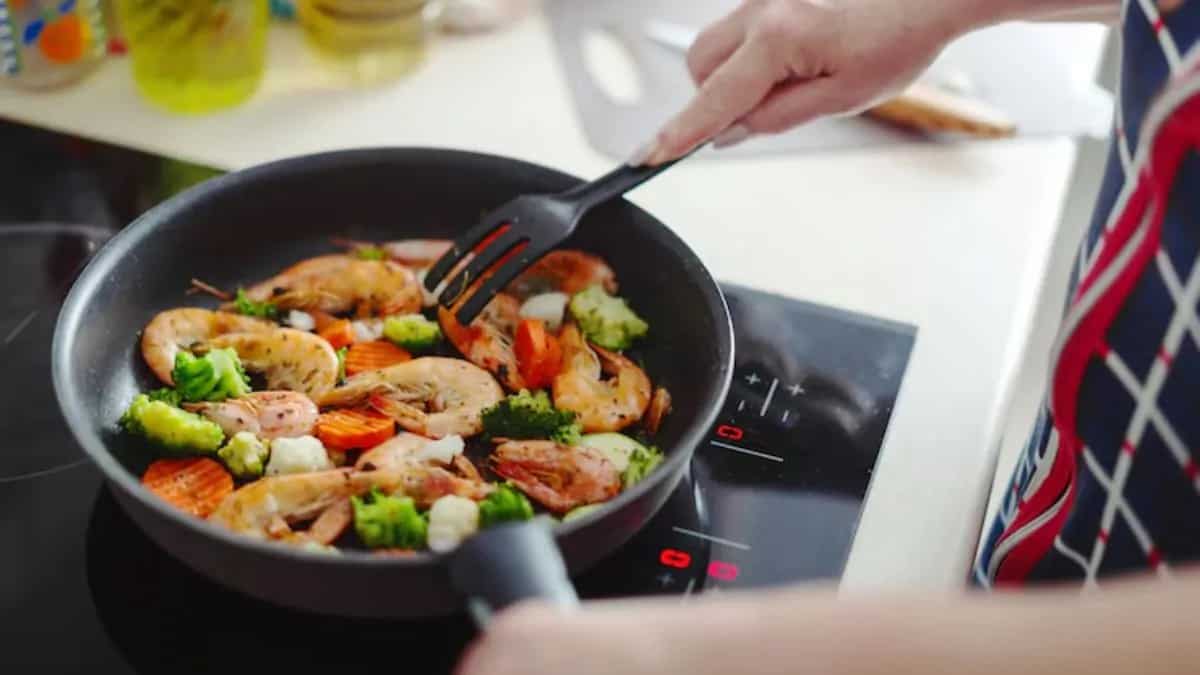
Unlike deep frying, sautéing the vegetables requires only a small amount of oil that can be cooked on medium heat. ICMR suggests that quick cooking allows vegetables to maintain much of their flavour and consistency while limiting excessive fat absorption. The method works extremely well if you are cooking beans, mushrooms, leafy greens, or mixed vegetables.
Choosing oils in moderation and avoiding cooking on high flame are essential, as overheating oil can lower its nutritional value. Proper sautéing makes flavour without making the meals too greasy.
Grilling
Grilling cooks food directly over heat let the excess fat to drip away on its own. This makes it particularly suited for fish, chicken, paneer, and vegetables. ICMR suggests that grilling can lower the overall fat range of meals, but meals should not be too grilled because long exposure to very high heat may form unwanted compounds that may not be healthy.
Cooking over medium heat and turning food from all sides helps in maintaining both taste and nutritional quality.
Boiling
Boiling is one of the most common cooking techniques that is used in Indian households, especially for rice, vegetables, eggs, and some pulses. ICMR suggests that boiling softens food, enhances its digestive qualities, and eradicates multiple harmful microorganisms. However, boiling can also lead to the loss of vitamin C and some B vitamins in the cooking water.
To minimise the loss of nutrients, it is suggested to use only as much water as required or reuse the liquid in soups, gravies, or dals whenever feasible so that the nutritional value is not lost.
Baking
Baking uses dry heat inside an oven and generally needs far less oil than is used in deep frying. ICMR notes that baking is a much healthier choice for vegetables, fish, chicken, breads, and casseroles because it reduces overall fat intake without compromising on the taste or texture.
The guidelines also recommend avoiding setting high temperatures or long baking times, as extreme heat may decrease some heat-sensitive nutrients. When done accurately, baking offers a balanced mix of flavour, crispness, and nutrition.
(Image credit: Freepik)