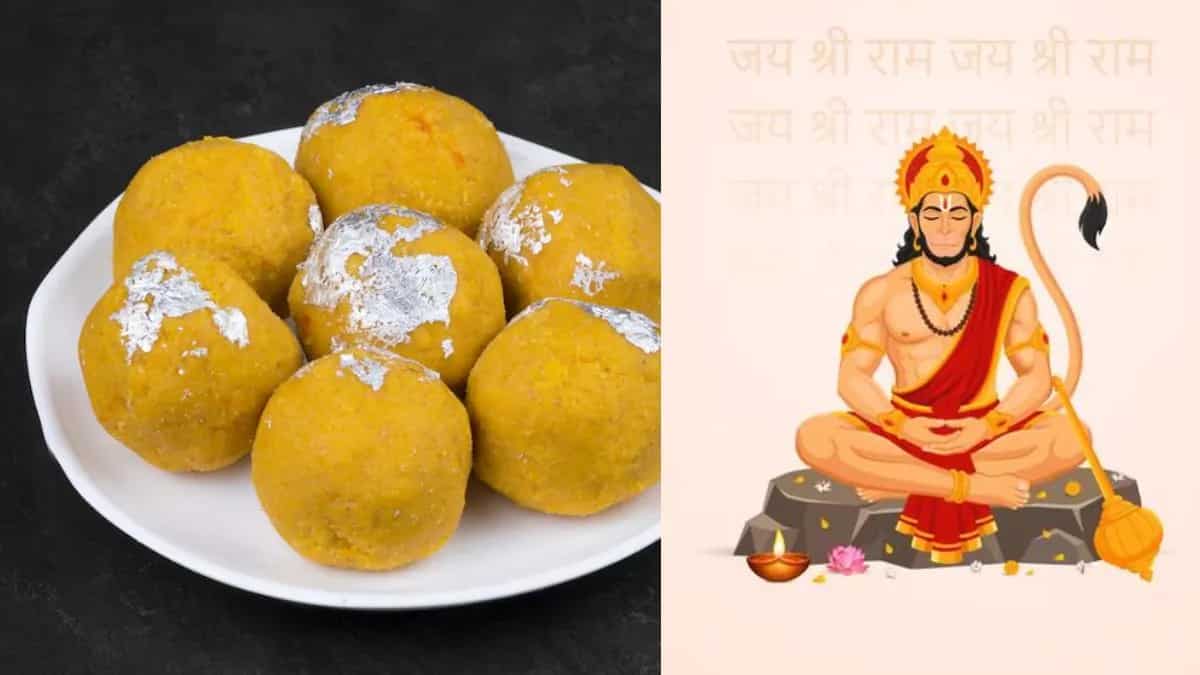
Hanuman Janmotsav celebrates the birth of Lord Hanuman, one of the most revered deities of Hindu tradition. People worship Lord Hanuman for strength, courage, and humility. The day is celebrated on the full moon day or Purnima of the Chaitra month, which mostly falls in March or April. Devotees observe fasts, visit temples, and prepare bhog as a symbol of gratitude and faith.
The bhog offered on the occasion of Hanuman Janmotsav is uncomplicated, satvik in nature, and deeply rooted in tradition. Many of these dishes have ingredients like besan, jaggery or gud, ghee, and wheat, which are known to be Lord Hanuman's favourite. Instead of being overly complicated, these bhog are simple to make. Across homes and regions, the bhog may change, but it always has a sense of devotion, with dishes that feel satisfying, wholesome, and are prepared with full devotion.
Boondi Laddoo
Boondi laddoo is one of the most widely offered bhog to Lord Hanuman, which you will find in temples and households alike. Prepared from tiny fried gram flour or besan boondi, which is soaked in sugar syrup, it has a smooth, slightly grainy texture that melts instantly and easily in the mouth. Also, it has an orange to yellow colour, which is considered to adhere to the day, as mostly bhog of these colours are offered to Lord Hanuman.
To make boondi ladoo at home, make a smooth besan batter and pour it through a ladle with a small pour into hot oil to make boondi. These boondis are soaked in warm sugar syrup flavoured with cardamom. Once they soak up the syrup thoroughly, they can be shaped into small bite-sized laddoos, which are sweet, fragrant, and also deeply comforting once you have them after offering them as a bhog.
(Image credit: Freepik)
Chana And Jaggery
This simple sacred combination of roasted chana and jaggery is one of the most classic offerings associated with Lord Hanuman. It represents strength, energy, and simplicity, the qualities that are often linked to divinity. There is no extensive recipe to make this, as you can get roasted chana from the market and then serve it plain, paired with pieces of jaggery. The taste feels earthy due to roasted chana and has a natural sweetness due to jaggery, making it satisfying without being too heavy. This signifies that the bhog does not have to be extensively complicated for it to feel satisfying and wholesome.
Besan Halwa
Besan halwa is a warm, fragrant dish that is usually prepared during almost every religious event. It has a slightly grainy texture and nutty flavour, making it both comforting and indulgent, and it is everyone's favourite.
It is prepared by slowly roasting the besan in ghee until it turns golden, and you get a rich nutty fragrance out of it. Then, water or milk is added, followed by sugar and a little hint of cardamom, followed by sugar to taste. As it thickens, the halwa gets a smooth, rich consistency. The slow roasting process is what gives it its classic depth and makes it decadent in every bite.
Besan Laddoo
Besan laddoos are another traditional bhog, which is loved for its rich, nutty flavour and soft, melt-in-the-mouth texture. It is simple but deeply satisfying, making it perfect for festive offerings and also as a bhog. Besan ladoos are also considered to be Lord Hanuman's favourite.
To make them, roast the besan in a low flame in ghee until it turns aromatic and gets a slightly dark shade. Add powdered sugar and cardamom, and then mix in once it cools slightly. Shape the mixture into small laddoos while it is still warm. The outcome is ladoos that feel wholesome, having a deep roasted flavour that you will like.
(Image credit: Freepik)
Kesar Bhat
Kesar bhat, or saffron-flavoured sweet rice, has a gentle sweetness and adds variety to the bhog. It has a bright orange colour and soft texture, making it visually and tastefully attractive. It is a popular offering in many regions, loved for its aroma. As complicated as it may sound, making it is equally easy. Cook plain white rice by boiling it, then toss it in some ghee with sugar, aromatised with saffron strands soaked in warm milk, then lightly flavoured with cardamom. Additionally, you can also add some chopped nuts, such as cashews or raisins, for some extra texture. The dish feels mildly sweet, aromatic, and satisfying in every bite, making it a beautiful add-on to the bhog.
Churma
Churma is another lesser-known bhog prepared mostly in parts of Haryana and Rajasthan. It is prepared from coarsely ground wheat, which is often linked with festive and devotional foods. The churma is loved for its crumbly texture and the rich, earthy sweetness that it gets from ghee and jaggery or sugar.
To make churma, shape the whole wheat dough into thick discs and cook until it turns firm, then crush it into a coarse mixture. This mixture is then mixed with some melted ghee and sweetened with jaggery or sugar, and also flavoured with cardamom. The taste feels lightly grainy but deeply satisfying, making it a significant addition to the bhog.