Halloween is celebrated every year on October 31. The festival has its roots in the ancient Celtic festival of Samhain, which celebrated the end of the harvest season and the commencement of winter. It was traditionally considered to be a time when the boundary between the living and the dead became thinner. Over centuries, these traditions blended with Christian compliances and local folk customs, eventually shaping the Halloween celebrations that are recognised today.
Food has always been an integral part of these seasonal gatherings, and apples have a quite fascinating place in the story. Harvested in autumn across parts of Europe and North America, they became associated with games, fortune-telling and festive delights. From trying to grab an apple floating in water to biting into a glossy caramel-coated one, several Halloween customs still carry traces of these age-old traditions.
What Are Halloween's Apple Traditions?
Apples became part of Halloween festivities as they were abundant during the autumn harvest and featured in seasonal feasts as well as games. In Ireland and Britain, they were also used in folk traditions believed to unveil clues about future courtship and marriage. Some games involved catching apples with the teeth, whereas others used apple peels as fortune-telling rules. These customs slowly became part of Halloween parties, especially in Irish and Scottish communities. As the festival spread to North America, new apple-based treats entered the celebrations. The tradition therefore extends from harvest-time games and old-fashioned matchmaking traditions to the sweet, decorated apples associated with modern Halloween festivities.
Apple Traditions Associated With Halloween
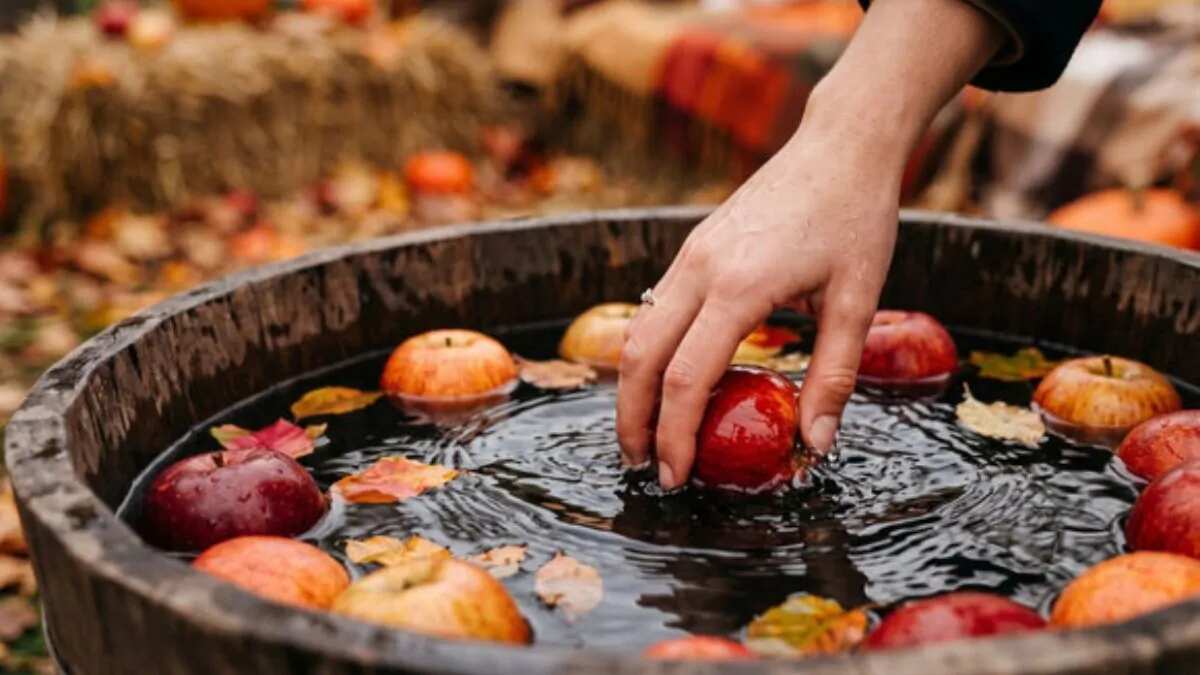
Apple Bobbing
One of the best-known Halloween games, apple bobbing involves filling a big tub with water and letting apples float on its surface. The players have to catch an apple using only their teeth, keeping their hands behind their backs. The game was once associated with romance and fortune-telling: catching an apple was supposed to predict who might get married next. It became a famous activity at Halloween get-togethers in Ireland, Britain and later North America. At present, it is mostly played for fun, although the old matchmaking association remains part of its history.
(Image credit: Freepik)
Snap Apple Night
Before apple bobbing evolved as the familiar party game, another version involved stopping an apple from a string or wooden frame. Participants tried to bite into the swinging fruit without using their hands. This particular game has given October 31 the name Snap Apple Night in parts of Ireland and Britain. Irish artist Daniel Maclise captured the lively tradition in his 1833 painting 'Snap Apple Night', or All-Hallow Eve, based on a Halloween gathering he attended in Blarney, Ireland. The game was also linked with predicting future marriage.
Apple Peel Fortune-Telling
Apples were not just for eating or playing games during Halloween, but they also featured in Halloween fortune-telling practices. One old custom involved peeling an apple in a single, unbroken strip and throwing the peel over the shoulder. The shape it created on the floor was supposed to resemble the first letter of a future beloved name. The ritual was especially associated with young women who were yet to get married. While it was never a trustworthy way to predict the future, it added a fun element of riddle to Halloween parties.
Apple And Mirror Ritual
Another old Halloween rite involved eating an apple in front of a mirror at midnight. Based on the folk custom, a young woman might catch a glimpse of her future husband’s face emerging over her shoulder in the reflection. Some versions included combing one's hair or holding a candle while eating the apple. Like apple-peel fortune-telling, this ritual was linked to the belief that Halloween was a night for finding what the future held, especially matters of love and marriage.
(Image credit: Freepik)
Caramel Apples
Unlike the older apple games, caramel apples are a fairly modern add-on to Halloween food customs. Their popular origin story dates back to the 1950s, when Kraft Foods employee Dan Walker reportedly tested with leftover Halloween caramels and dipped the apples into the melted mixture. The combination of crisp fruit and a chewy, buttery layer soon became a seasonal choice. At present, caramel apples are often adorned with chocolate, crushed nuts, sprinkles and other toppings, turning a simple autumn fruit into an eye-catching Halloween delicacy.