North Bengal, a serene region in the lap of the Eastern Himalayas, is a combination of misty tea gardens, lush forests, and a unique cultural amalgamation. North Bengal's charm has been so prominent in Bengali cinema in Satyajit Ray's masterpiece, Kanchenjungha (1962), a film entirely set in the queen of the hills, Darjeeling. The iconic action-thriller Kahaani 2: Durga Rani Singh (2016), starring Vidya Balan, had significant portions filmed in the beautiful, yet often mysterious, backdrop of the Dooars and Kalimpong.
Image Courtesy: Creative Commons
The Dooars, 'gates' to Bhutan and the Northeast, a region of floodplains and dense forests in the foothills of the Eastern Himalayas, is an immensely famous part of North Bengal. It is known for its biodiversity, wildlife sanctuaries (like Gorumara and Jaldapara), and extensive tea gardens. This rich geography dictates the local cuisine, which heavily features ingredients foraged from the forests and small fish from the streams.
Exploring Rajbanshi Traditional Foods from Shidol to Borolir Jhaal
Image Courtesy: Creative Commons
Shidol
Rajbanshi shidol, a staple ingredient and powerful condiment, is perhaps their most famous and pungent dish. This unique dish is fermented fish, usually small, mixed with mustard oil and spices and sealed to ferment. Mashing fermented fish with taro leaves (Kachu Pata) or other greens, chilli, and mustard oil, then roasting or cooking it into a thick, fiery paste is a traditional preparation. Shidol's strong, umami-rich flavour enhances simple vegetable dishes or rice. It symbolises Rajbanshi cuisine and shows a traditional way to preserve fish without refrigeration.
Aloo Usha
Quite similar to Aloochokha, Aloo Usha is a traditional North Bengal dish that has been favourite among people for ages. On a busy day, when there's no time for preparing a sabji or any other dish to have with steamed rice. Even if you are a non-veg lover, this roasted mashed potato will win over your taste buds for sure. Especially in winter, people in North Bengal prepare this dish with freshly harvested potatoes (locally known as notun aloo), dried red chilli, green chillies, mustard oil, and chopped onions.
Kalai Roti
Just like atta roti in West Bengal, North Bengal chooses Kalai Roti. It is a lentil-based flatbread made from Urad Dal or Black Gramme paste or flour instead of wheat flour. The lentil-based dough makes the roti filling and healthier. Kneading lentil flour, sometimes mixed with rice or wheat flour, into a stiff dough, rolling it out, and cooking it on a tava with ghee make it more delicious. Kalai Roti teams up well with Aloo Ghati, Shidol, or Chayote curry.
Pelka
Pelka is a traditional Rajbanshi recipe that uses fish heads (or sometimes other local ingredients) and greens, following a sustainable, zero-waste approach to cooking. While variations exist, a common preparation involves cooking the fish heads with specific local wild-foraged greens and herbs, often resulting in a stew or curry with a thinner, broth-like consistency. It may also use the special fermented rice-flour-based soda called "Phoktai" in a cooking method known as Chhaka, an alkalising agent.
Chayote Curry
Chayote Squash, commonly found in North Bengal's cuisine, comes with a crispy texture and subtly sweet flavour. Paired with aromatic spices like cumin and turmeric, Chayote squash curry with chopped potatoes in it, has a mild yet distinctive taste. Whether consumed with hot steamed rice or roti, Chayote Curry is an inseparable part of North Bengal's culinary practice.
Nelekata Pitha
This half-moon-shaped, delicious pitha with coconut filling is certainly a crowd-pleaser. The heavenly mixture of sugar, coconut, and cardamom powder stuffed inside a luchi-like coating of flour, rice flour, and semolina. Then fry in oil and serve with jaggery sheera. Mostly, during the prelude of winter, this fried pitha with its melt-in-your-mouth texture feels like a mom's hug.
Borolir Jhaal
Boroli (Barilius barila), also known as Barred Boril, is a small, freshwater fish commonly found in the streams and foothills of North Bengal and Assam. It is highly prized for its tender flesh and a delicate flavour profile—subtly sweet with a hint of earthiness. The fish is identifiable by its small size and glistening skin. The most popular preparation is "Borolir Jhaal," meaning a spicy (jhaal) curry. This fiery preparation typically uses a base of mustard paste, plenty of green chillies, onions, ginger, and garlic, often with added vegetables like potatoes or eggplant. Sometimes, the fish are simply fried until crispy and served as a side.
Rai saag
Steamed rice, ghee, and rai saag - that's all you need for a satisfying lunch in the hills. A trip to North Bengal will always remain incomplete if you haven't tried rai saag. In North Bengal, Sikkim, and other Himalayan regions, these mustard greens are widely available and consumed, especially in winter. The most prevalent and traditional way to prepare Rai Saag is through a rapid, high-temperature stir-fry, typically executed in mustard oil heated until it reaches its smoking point. This pungent oil is immediately infused with bold aromatics, most commonly including finely sliced garlic and whole green or red chillies. To achieve a characteristic nutty fragrance and a pleasant crunch, Jakhiya seeds, a local spice, ar tossed into the hot oil. The mustard greens are often hand-torn rather than neatly chopped. They are introduced to the smoking, flavoured oil mixture towards the end of the preparation. A quick sauté slightly softens the leaves, retaining their natural, characteristic, sharp, peppery bite. Rai Saag is elevated into a rich, full-bodied preparation by being paired with meat, specifically in the famous Rai Saag Pork. This dish is substantial and uses the pungent, slightly bitter flavour of the mustard greens to beautifully contrast and cut through the richness of the pork fat. The preparation involves slow-cooking generous chunks of pork (often using fatty cuts like belly or shoulder) with the Rai Saag.
Aloo Ghati
This vegetarian comfort food distinguishes itself from typical Bengali potato curries by its thick, creamy consistency. The name 'Ghati' refers to this dense gravy. It is prepared by boiling and mashing potatoes, which are then slowly cooked with a strong aromatic base. Key flavour components include a generous amount of mustard paste and a tempering of fenugreek seeds (methi). Unlike many other curries, it often avoids heavy spices, relying instead on the pungency of the mustard and the slight bitterness of the fenugreek for its signature taste.
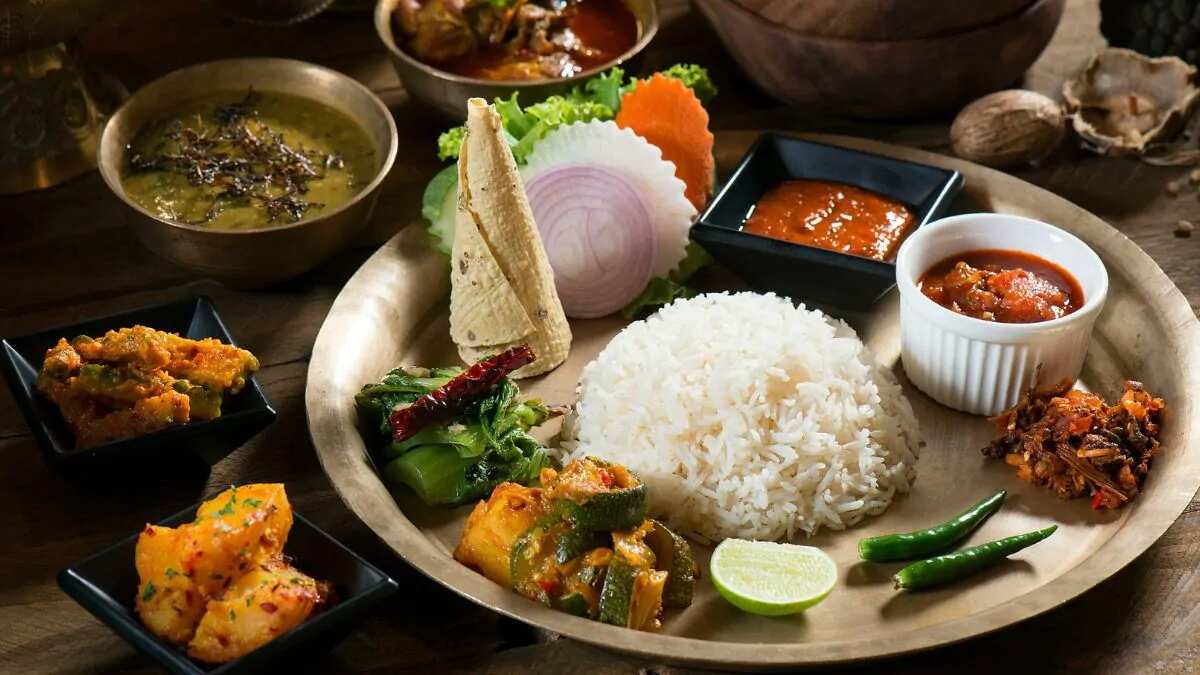
The food in North Bengal is a blend of flavours from the Rajbanshi community, as well as influences from neighbouring Nepal, Bhutan, and various tribal groups. The Rajbanshi, a community with a believed mixed Mongoloid-Dravidian origin, has a unique culinary heritage that uses numerous wild plants and endemic recipes.