Across countries, communities that follow Islam spend hours and days in preparation for a feast that is rich in taste and suits the palates right before Eid al-Adah 2026 falls. In Singapore's Muslim households, the feast on Eid al-Adha stretches across three to four days, and the food reflects the remarkable layering of cultures that makes this community's culinary identity so distinctive. Mughlai tradition sits comfortably alongside Southeast Asian influence, the two neither competing nor compromising but finding, over generations, a harmony that is entirely Singaporean. Whether you are recreating the spirit of Hari Raya Haji at your own table or simply looking to cook something that carries genuine weight and flavour, this Eid al-Adha 2026, dig into recipes that have stories of magical cooking hands that have made it before and will make it again and again.
Image Credit: Wikimedia Commons
Nasi Ambeng
According to the Michelin Guide, 'nasi ambeng', also known as 'nasi ambang', is a traditional Javanese sharing plate in the manner of 'nasi campur', which consists of steamed rice and side dishes. Traditionally served during festivities and festivals, the meal consists of a centre pile of steamed rice on a circular platter coated with banana leaves, surrounded by a variety of meat and vegetable side dishes. These often include meat rendang, ayam lemak sambal goreng and urap. This cuisine, which originated in Java, Indonesia, has gained popularity across political and cultural divides in Malaysia, Singapore, and Brunei. Singapore's cosmopolitan influences have given nasi ambeng a contemporary touch, with fried chicken, sambal goreng, and even otak-otak which is a grilled fish paste.
Ayam Masak Merah
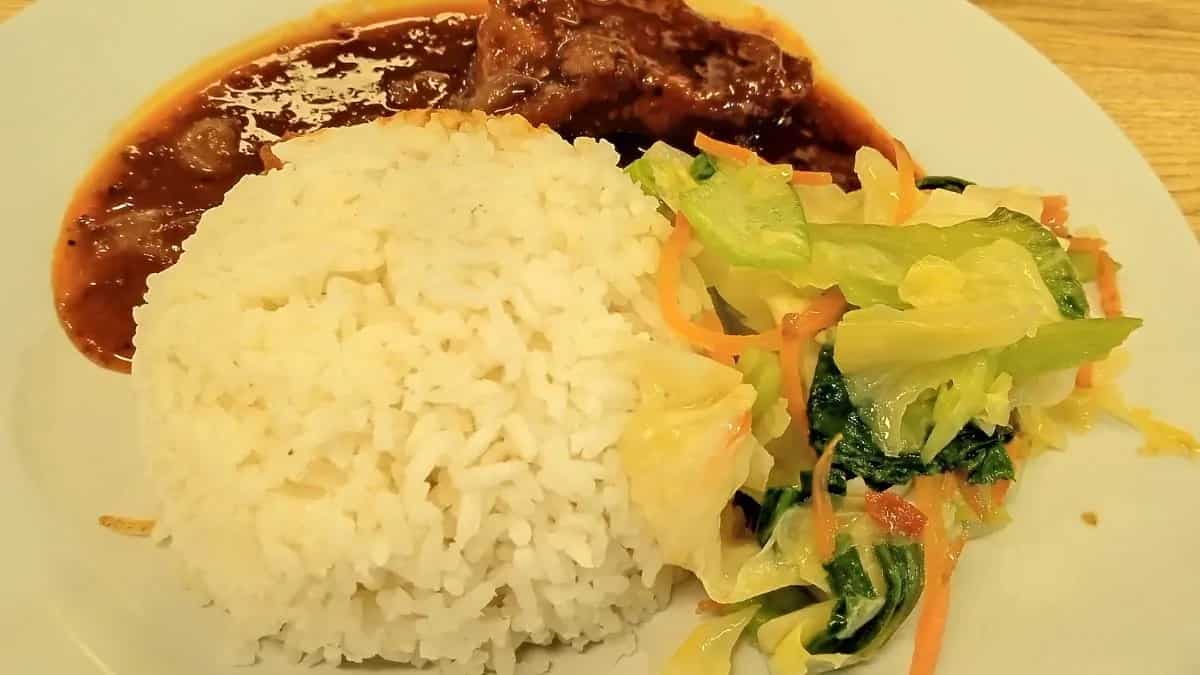
Consider chicken in a rich, creamy, spicy tomato sauce with the perfect balance of heat from the chillies, sweetness from the tomatoes, and creaminess from the coconut milk. The community enjoys serving it with nasi minyak, ghee rice or steaming rice. The chicken is deep-fried first, which gives it a crunchy texture and seals in all of the flavours before simmering in the sauce. It contains similar spices such as cinnamon, cloves, star anise, and chillies, but it stands out for its distinct, memorable texture and preparation.
Image Credit: Flickr
Paal Mee Siam
Paal mee siam is a semi-wet rice vermicelli dish cooked by Tamil-Singaporean Muslims in the country during Eid al-Adha. It is made with coconut milk and red meat broth, served with tofu, chye sim, bean sprouts, and delicate mutton chunks. It is often cooked for large family gatherings, prayer sessions, iftar meals, or dinners attended by more than five individuals. The 'paal' in the name alludes to the coconut milk used to boil the noodles with veggies; it is an abbreviation for thenga paal, which is the Tamil term for coconut milk. The sweetness of freshly squeezed coconut milk ties the noodles to the veggies and makes the heat of the sambal, with which the noodles are served, palatable. The meal itself is straightforward, but the foundations demand attention and effort. Before assembling the noodles, the mutton must be cooked and the sambal prepared.
Sup Tulang
Soup or sup tulang, also known as bone soup, is a cuisine that consists of sheep or beef bones simmered in a sweet and spicy red broth made with mutton stock, tomatoes, ginger, chillies, and spices. The dish is appreciated for the marrow found in the bones. Despite being linked with the Indian Muslim community, the dish is considered a local creation and has travelled across borders, especially with those who made a home in Singapore. The meal is served hot, with sliced bread on the side. It is typically eaten using your hands rather than silverware to get to the flesh on the bones more readily. The marrow is sucked directly from the bone using a straw or is carefully knocked out. The bread is usually used to mop up the soup at the end.
Kiuh Miuh
It's a simple phrase that makes your mouth swim since it evokes nostalgia and distinct local flavours. They may be found anywhere, from street markets to upscale restaurants. Kuih come in a range of flavours, including kuih cara berlauk (minced red meat coated in pancake batter) and cucur badak (sweet potato dumpling with dried shrimp). No Eid table in Singapore's Muslim households closes without something sweet, and the dessert spread is as telling as everything that came before it. Kuih lapis, with its painstaking layers of colour built one at a time over hours, ondeh ondeh, pandan-green and filled with palm sugar that bursts warm and sweet at the first bite and kuih seri muka, a two-layered steamed cake of glutinous rice beneath a set pandan custard so smooth it barely holds its shape.