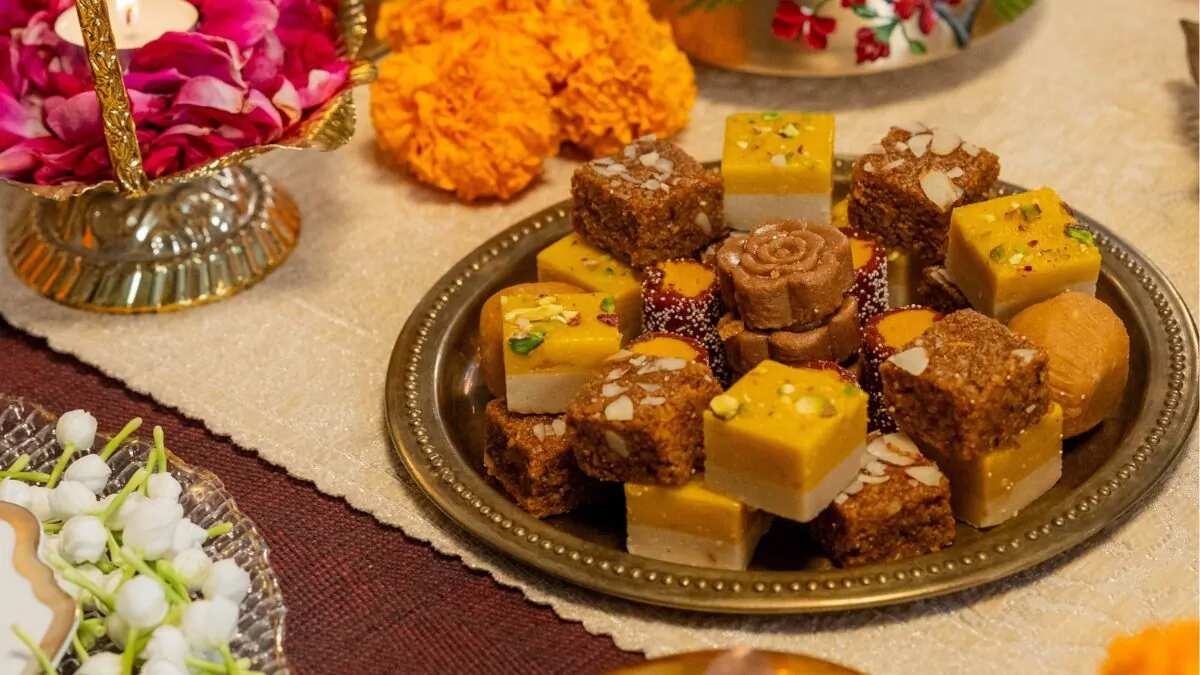
The soft glow of diyas, the sparkle of rangoli, and the irresistible aroma of freshly made mithai, these are the sensory markers of Diwali that have remained constant across generations. Yet, whilst the festival's spiritual essence endures, the sweets that grace our tables during this celebration of light have undergone a remarkable transformation. From the traditional sweet shops of old India to contemporary patisseries reimagining age-old recipes, Diwali mithai has taken an journey that mirrors India's own evolution.
The Traditional Foundation
For centuries, Diwali sweets were crafted using time-honoured recipes passed down through generations of halwais. These traditional confections, from the melt-in-your-mouth texture of kaju katli to the dense richness of Mathura peda, were made with simple, wholesome ingredients: milk, sugar, ghee, and nuts. Each region developed its own specialities, creating a diverse tapestry of festive treats. The preparation of these sweets was often a family affair, with grandmothers presiding over bubbling kadais, stirring endless batches of barfi whilst sharing stories and wisdom with younger family members.
These sweets weren't merely confections; they were vessels of memory and tradition. The act of making mithai was as important as consuming it, serving as a way to connect with one's heritage and pass cultural knowledge to the next generation. Every sweet carried significance, laddoos symbolised good fortune, barfi represented prosperity, and the very act of sharing these treats strengthened community bonds.
The Winds Of Change
As India globalised and urban lifestyles accelerated, the landscape of Diwali celebrations began to shift. Nuclear families replaced joint households, and time-intensive traditions gave way to convenience. Simultaneously, exposure to international cuisines and ingredients sparked curiosity about new flavour possibilities. This confluence of factors set the stage for a revolution in how Indians approached their festive sweets.
Girish Nayak, Chief Mithaiwala at Bombay Sweet Shop, observes this evolution firsthand. "Guests are definitely looking for that mix, something familiar but with a little twist," he explains. "The beauty of traditional mithai is that it brings back memories of home, of festive celebrations with family. But there's also a growing curiosity around contemporary reinterpretations. People want to experience mithai that feels fresh and exciting, something they might not have tasted before, but still carries that comforting, nostalgic essence."
This desire for innovation whilst honouring tradition has become the defining characteristic of modern Diwali sweets. Today's mithai makers walk a delicate tightrope, introducing novel elements without alienating those who seek the familiar comfort of traditional flavours.
The Art Of Reinvention
Reimagining classic recipes requires both reverence and audacity. It's not simply about adding trendy ingredients to traditional bases; successful innovation demands a deep understanding of what makes a particular sweet beloved in the first place. Nayak's approach to this challenge is instructive. "When we are reimagining a classic, we start by thinking about what made that sweet special in the first place, the texture, the flavour profile, the memories it evokes” he explains, “Then we ask ourselves: How can we enhance that experience?"
This philosophy has led to creative reinterpretations that have captured the imagination of contemporary consumers. Consider the Biscoff Mathura Peda, which takes the rich, fudgy texture of the traditional peda and introduces Biscoff spread to create a caramelised, slightly biscuity flavour profile. "What resonates with our customers is that they can relate to the nostalgic feeling of the peda, but the Biscoff adds a playful element that feels fresh and indulgent," Nayak notes. "The combination of traditional comfort with a modern surprise makes it irresistible!"
Similarly, innovations like the Indie Katli Bites, which pair the beloved kaju katli with dark chocolate ganache and a dusting of cocoa powder, demonstrate how global ingredients can complement rather than overwhelm traditional Indian flavours. These creations succeed because they enhance rather than mask the original essence of the sweet.
The Health-Conscious Turn
Perhaps no trend has influenced Diwali sweets more significantly than the rise of health-conscious eating. As awareness about nutrition and wellness has grown, even festive indulgences have come under scrutiny. This shift initially posed a challenge to mithai makers, whose recipes traditionally relied on generous amounts of sugar and ghee. However, it has also spurred innovation in ingredient selection and portion sizing.
"There's definitely been a shift in the way we look at Diwali sweets," acknowledges Nayak. "People are far more mindful about what they eat, even when it comes to festive indulgences." Rather than viewing this as a constraint, progressive sweet makers have embraced it as an opportunity to refine their craft. Natural sweeteners like jaggery and coconut sugar have found their way into modern recipes, offering alternatives to refined sugar whilst adding complexity to flavour profiles.
Importantly, the approach isn't about creating "guilt-free" versions that compromise on taste. "For us, it's never about making things 'healthy,' but about using better ingredients that elevate the flavour while keeping that rich, satisfying sweetness intact," Nayak emphasises. The focus has shifted to quality over quantity, with smaller, more intense portions replacing the oversized servings of yesteryear. The Indie Katli Bites exemplify this philosophy, "tiny, bite-sized pieces of dark chocolate meets mithai indulgence. Just one or two pieces can satisfy your craving without overdoing it."
Presentation And The Gift-Giving Experience
The evolution of Diwali sweets extends beyond flavour into the realm of presentation and packaging. Traditional mithai was typically presented in simple boxes or even brass thaals, with little attention paid to visual aesthetics beyond the sweets themselves. Contemporary consumers, however, value the complete sensory experience, from the moment they receive a gift to the final bite.
Modern mithai makers have responded with sophisticated packaging designs that reflect the premium nature of their products. Clean lines, elegant colour palettes, and thoughtful presentation have transformed sweet boxes into coveted gifts. "Modern design, clean lines, and fun packaging can make a huge difference in how a traditional sweet is perceived today," Nayak observes.
This attention to presentation has elevated mithai from a festive necessity to a luxury gifting option. People increasingly seek "gifting options that feel personal, thoughtful, and memorable, something that creates a lasting impression rather than just another sweet box." The packaging itself becomes part of the celebration, an expression of care and consideration for the recipient.
Global Influences And Fusion Flavours
As Indian diaspora communities have grown worldwide and international travel has become commonplace, the cross-pollination of culinary traditions has accelerated. Ingredients once considered exotic in India, from matcha to salted caramel, now inspire innovative mithai creations. The addition of orange zest to dodha barfi or the incorporation of floral infusions into traditional recipes exemplify how global flavours are being woven into the Indian sweet-making tradition.
Looking ahead, Nayak predicts this trend will only intensify: "I think we are going to see even more fusion between global and Indian flavours: more creativity, more innovation, and a lot more playfulness. Ingredients like matcha, salted caramel, and floral infusions are going to continue finding their way into mithai, adding new dimensions to familiar favourites."
This fusion approach reflects a broader shift in how Indians, particularly younger generations, view their cultural identity, not as static and bound to the past, but as dynamic and capable of incorporating diverse influences whilst maintaining its essential character.
Striking The Balance
The central challenge in the evolution of Diwali sweets remains finding the equilibrium between honouring tradition and embracing innovation. Success lies not in choosing one over the other, but in creating what Nayak describes as "the perfect crossroads of tradition and innovation." It's about ensuring that "every bite feel[s] both like a trip down memory lane and an exciting new adventure."
This balance manifests differently for each sweet maker and each consumer. Some prefer minimal tweaks to traditional recipes, perhaps using better quality ingredients or refining production techniques. Others embrace bolder experimentation, creating entirely new categories of sweets that draw inspiration from traditional mithai whilst charting new territory. The market has proven capacious enough to accommodate both approaches, suggesting that there's no single "correct" path forward.
The Future Of Festive Sweets
As we look to the future, the evolution of Diwali sweets shows no signs of slowing. The principles guiding this transformation, respect for tradition, openness to innovation, attention to health and quality, and commitment to creating memorable experiences, will likely continue to shape how mithai makers approach their craft.
What remains constant, however, is the central role these sweets play in Diwali celebrations. Whether traditional or contemporary, simple or elaborate, Diwali mithai continues to serve its essential function: bringing people together, creating joy, and marking this special time of year with sweetness. As Nayak notes, "The key is to keep innovating while celebrating the traditional art of mithai-making, so that every creation still feels like part of your festive traditions, no matter how much it evolves."
In this sweet revolution, perhaps the most important achievement has been maintaining the emotional resonance of Diwali mithai whilst allowing it to evolve with changing times. The sweets on our Diwali tables may look and taste different from those our grandparents enjoyed, but they fulfil the same timeless purpose, spreading light, love, and the incomparable sweetness of celebration.