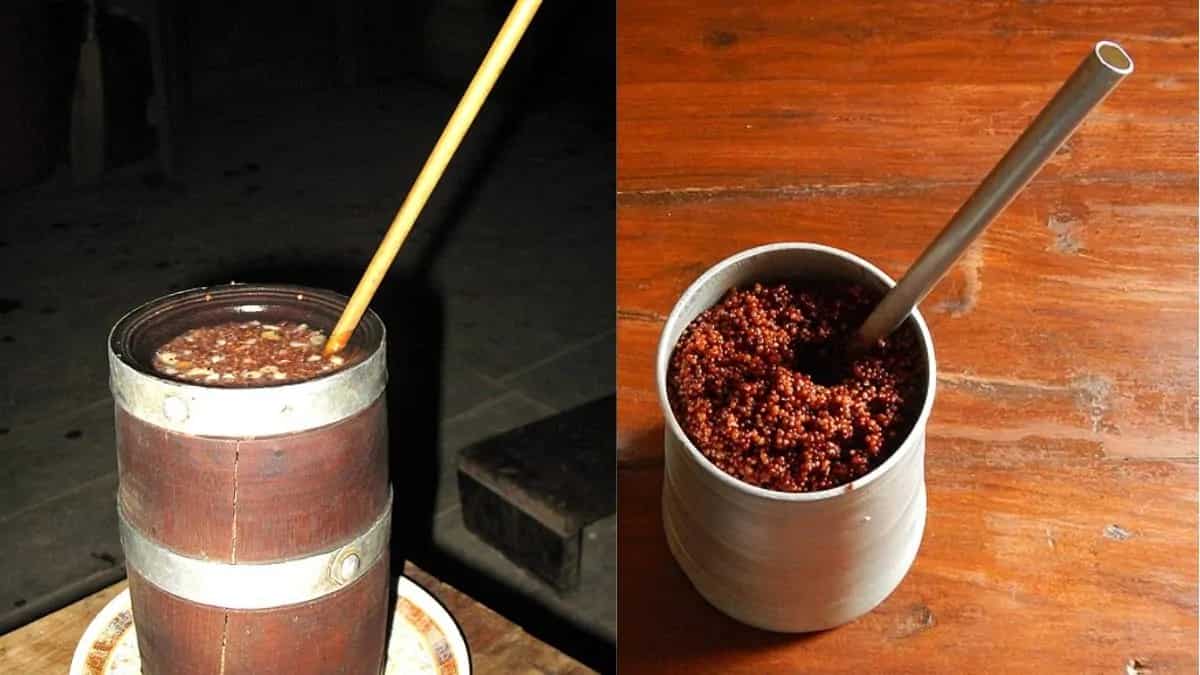
Nepal's varied landscapes, communities, and enduring customs have all contributed to the country's distinctive culinary culture. Tongba, an East Nepalese beverage of the Limbu people that is sometimes referred to as a hot Tibetan beer, is at its core and reflects the warmth and deeply ingrained culture of the region. It’s often mixed up with Chaang, but Chaang can be made from many grains and is served very differently. To be honest, most people simply refer to the whole experience as ‘Tongba,’ but some claim that the wooden jar is the true Tongba and the drink inside is termed as ‘Jaand.’ Here are a few important and interesting things to know about this drink:
What Is Tongba?
Tongba is unique in the most beautiful ways; it seems like the perfect beverage for chilly winters when the mountains are shrouded in mist and the evenings are long and still. Tongba preparation is revered; the yeast used for fermentation is frequently passed down through families like an heirloom, and it is closely guarded because it contains each household's distinct flavour.
The Limbu, Rai, Sherpa, and other Kirati people of eastern Nepal and parts of northeastern India, particularly Sikkim and Darjeeling, have strong ties to Tongba. It is traditionally used as a sign of warmth, welcome, and community rather than just for drunkenness. Refusing a tongba at a party is like turning down a buddy. Steaming tongbas are served to guests during festivals, weddings, and even after a long day of hill farming.
Image Credit: Wikimedia Commons
It is a Tibetan beer that simultaneously warms the hands, throat, and soul. The drink has become a favourite companion for people during these cold months. As the night grows darker, you'll see people gathered around fires, chatting idly, and passing tall wooden cups filled with steaming Tongba, allowing its gentle heat to pulse through them.
The fact that Tongba differs from the majority of alcohols that people are familiar with is what makes it so intriguing. It is not distilled like alcohol or made like beer. Rather, it starts with modest millet grains, which are tiny, earthy, and ideal for the Himalayan temperature. After being boiled until they are soft, these grains are chilled and combined with murcha, a unique starter that is full of microorganisms and natural yeasts. Fermentation is triggered by this mixture, although not in the typical liquid-filled barrels or jars. Tongba ferments more like bread dough than wine because the grains stay moist but not wet, which lets the yeast operate slowly and change the millet over a few weeks.
The fermented millet is extremely portable and nearly dry because no water is supplied during this stage. For mountain cultures, particularly the Limbu people who invented this beverage, its portability was crucial. During travel, festivals, or winter get-togethers, they could effortlessly transport these fermented grains.
How To Drink Tongba
Only when hot water is poured over the fermented millet in a long wooden container does Tongba's magic actually start. You sip through a bamboo or metal straw with tiny holes to keep the grains out as the warmth awakens the grains and releases a mild, fragrant brew. It has a subtle, earthy, and cosy flavour that is never overpowering but always welcoming. With each refill, the drink gradually becomes softer as you keep adding hot water to it.
Image Credit: Wikimedia Commons
Although Tongba is merely the wooden vessel and Jaand is the spirit of the drink, the terms have become synonymous in common speech over time. Most people simply dismiss the technicalities and call the entire soothing, winter-warming experience Tongba. With Tongba, you don't actually become intoxicated in the conventional sense, but you do feel very calm and relaxed. You may feel as though you are floating on a flowing river or lying on a puffy white cloud after a while. It feels somewhat psychedelic, although it's not quite that way. The translation of the word to ‘emptiness’ seems oddly appropriate here.