From opening Bungalow in New York City to earning a Michelin star and being named in the TIME100 Most Influential People of 2026, chef Vikas Khanna has been one of the most recognised voices who represent Indian cuisine globally. In a recent podcast show, Limitless With Ishan, the chef pointed out a region whose cuisine deserved more recognition: Odisha.
When the interviewer, Ishan Sharma, asked which place in India has the most underrated food scene, Khanna immediately had Odisha’s name on his lips. He called it a state with an “explosive food scene” and spoke about the state’s unique frying and fermentation techniques, especially mentioning pakhala, the fermented rice dish associated with Odia summers. He also recalled visiting Jagannath Temple, saying the experience felt like “a masterclass of how food should taste.”
Cuisines from Punjab, Bengal, or Hyderabad have long found visibility, but Odia cuisine has quietly remained in the background despite having one of the country’s oldest and most nuanced culinary traditions. This cuisine is rooted in temple cooking, seasonal eating, subtle spices, and minimal intervention.
Hallmarks Of Odia Cuisine
One of the defining aspects of Odia cooking is its use of Pancha Phutana, which is a five-spice tempering made using mustard seeds, cumin, fennel, fenugreek, and nigella seeds. Unlike heavier masala pastes, which are used in many Indian gravies, this tempering adds a gentle earthiness and aroma rather than intense heat. Odia food is often cooked in mustard oil or ghee, and it creates flavour without overpowering the ingredients.
Another important aspect of the cuisine is restraint. Odia food avoids excessive oil, cream, or layered gravies. The vegetables are often lightly sauteed, roasted over fire, or steamed to preserve their natural taste and texture. Traditional methods like poda, where ingredients are wrapped in leaves and charred, add smokiness without the need for heavy sauces. This minimalism is what gives many Odia dishes their unique identity.
The cuisine also stands out for its use of fermentation and mustard-based flavours. Preparations using besara, which is a pungent paste made from mustard and garlic, add sharpness and depth to the curries, particularly seafood dishes. Fermented foods, meanwhile, have long been a part of Odia households, much before they became part of modern wellness trends.
5 Must-Try Dishes From Odia Cuisine
(Image Credit: Wikimedia Commons)
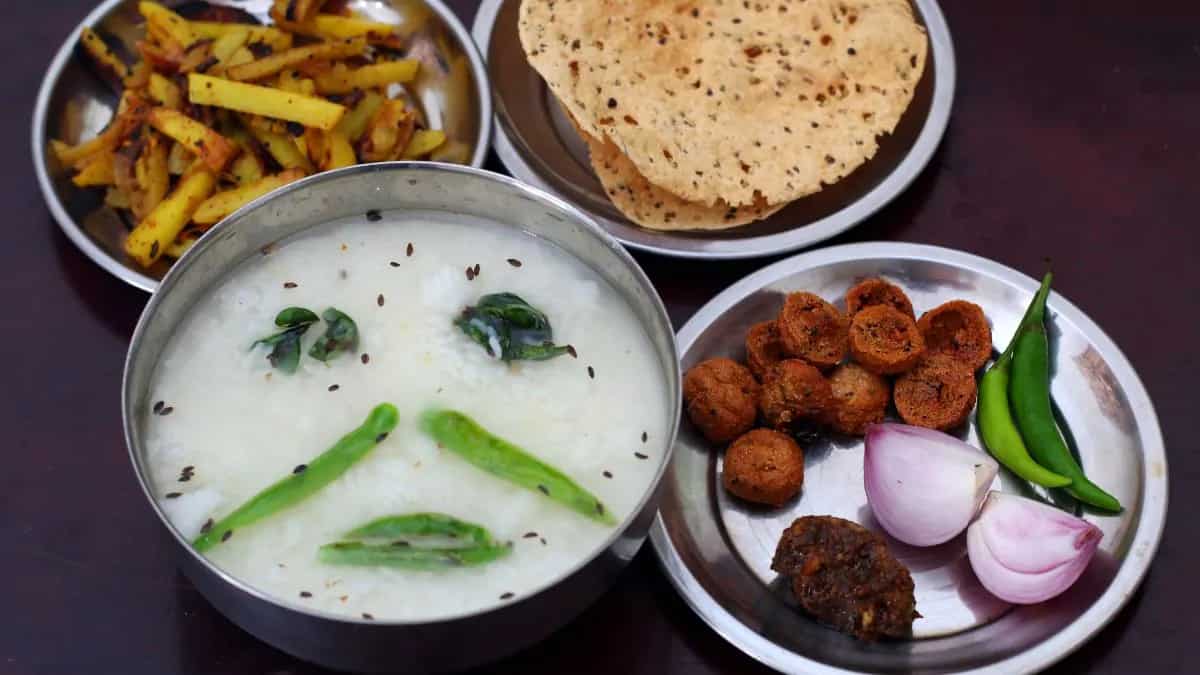
Pakhala
Pakhala is one of Odisha’s most iconic dishes, and is prepared by soaking cooked rice in water and allowing it to ferment slightly. It is usually eaten during summers, as it is cooling, slightly tangy, and comforting. The dish is often paired with fried vegetables, mashed potatoes, or fish fry, making it a complete meal that reflects the cuisine’s reliance on fermentation and climate-friendly eating habits.
Also Read: Odisha Special Aloo Chop For Breakfast
Dalma
Dalma is a simple and flavourful preparation made with lentils and seasonal vegetables, similar to dal. Unlike heavily spiced dals from other regions, Dalma uses mild tempering and relies more on the natural sweetness of vegetables. This dish is also closely associated with temple food traditions and showcases how Odia cuisine builds depth through balance rather than excessive masalas or rich gravies.
(Image Credit: Wikimedia Commons)
Chhena poda
Often described as Odisha’s answer to cheesecake, chhena poda is made using chhena, sugar, and semolina. It is slow-baked until it is caramelised around the edges. The dessert has a smoky sweetness and soft texture that sets it apart from syrup-heavy Indian sweets. The flavour of chenna poda depends more on controlled baking and caramelisation than richness alone.
Machha Besara
A staple in coastal Odisha, Machha Besara is a fish cooked in a sharp mustard-based gravy. The use of besara, which is a paste made with mustard seeds and garlic, gives the dish its pungent and earthy flavour profile. Unlike creamy fish curries, this machha besara is lighter and bolder, highlighting Odisha’s love for mustard-forward cooking.
(Image Credit: Santula)
Santula
Santula is a lightly sauteed vegetable dish that reflects the minimalist nature of Odia cuisine. It is prepared with seasonal vegetables and mild spices, and avoids heavy frying or rich gravies. The dish focuses on freshness, texture, and clean flavours, making it one of the best examples of Odisha’s restrained yet comforting style of cooking.
Odisha’s culinary heritage extends beyond these individual dishes. The state currently has GI tags for several products, including Odisha Rasagola, Kendrapada Rasabali, Dhenkanal Magji, and Similipal Kai Chutney, which highlights the diversity and specificity of its food traditions. Temple food culture, local ingredients, and regional techniques are important pillars of the culinary tradition in Odisha and continue to shape everyday eating.