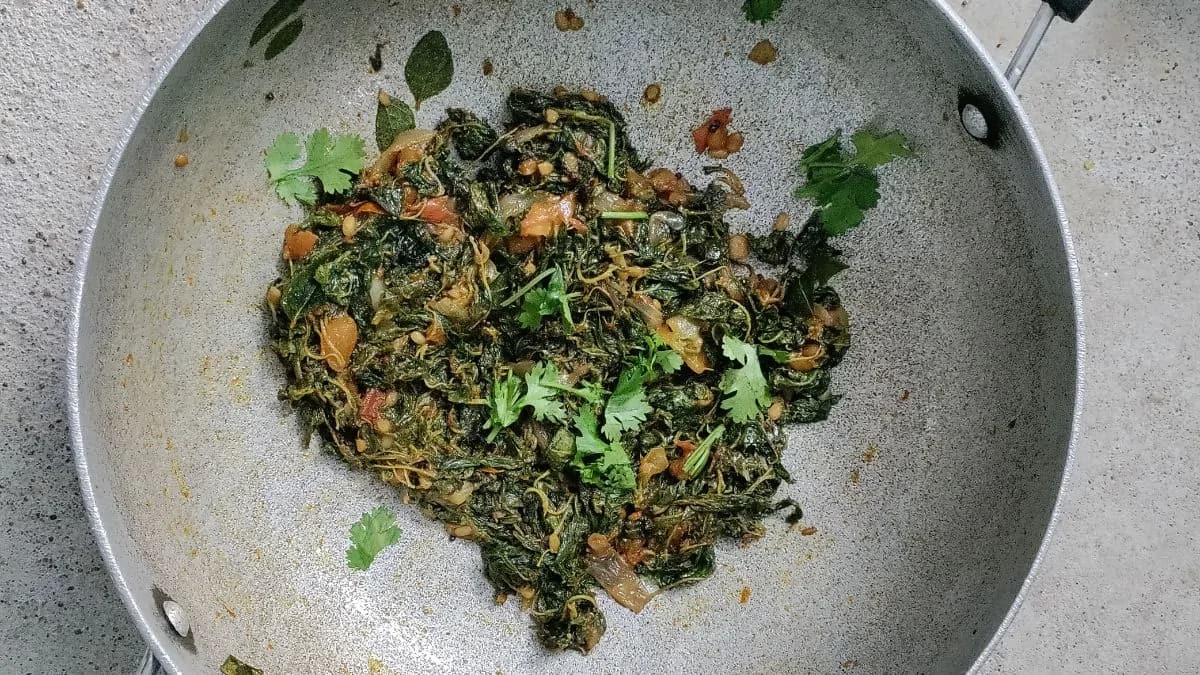
In Punjab, winter means a big pot of sarson ka saag cooking slowly on the stove, with a stack of makki di roti and a generous dollop of white butter on the side. Mustard greens are so closely tied to this dish that it's easy to forget they grow and get eaten in many other parts of the world. From the American South to the hills of Nepal and the kitchens of China, Japan and Korea, cooks have found very different ways to handle this peppery, slightly bitter leaf. Some cook it down slowly, some ferment it for months, and some just toss it in a hot wok for a minute.
Punjab: Slow-Cooked And Hand-Churned
Before looking elsewhere, it helps to remember what makes the Punjabi version special. Sarson leaves are cooked with spinach and bathua (or other greens) to soften the sharpness, then mashed with a wooden ghotna until coarse and creamy. A little makki ka atta thickens it, and a tadka of ginger, garlic, green chillies and onions in ghee or butter finishes it off. The saag often tastes even better the next day, which is why many families make a large batch and reheat it through the week.
Assam: Lai Xaak With Pork
Mustard greens show up in Assamese cooking too, and in a very different way. Here the broad-leaf variety, called lai xaak, grows through the winter months and goes into everyday meals. The best-loved dish is lai xaak aru gahori, where pork and mustard greens cook together, often without any added oil, since the pork releases enough fat to cook the greens. The slight bitterness of the leaves balances the richness of the meat, and the dish is eaten with plain steamed rice. On lighter days, lai xaak is simply stir-fried in mustard oil with garlic and green chillies as a bhaji, cooked with dal, or paired with fish, always letting the fresh, peppery taste of the greens come through.
Southern United States: Greens With Pot Likker
Source: Pexels
In the American South, mustard greens are often cooked the same way as collard and turnip greens. They're simmered for a long time with smoked ham hock, bacon or smoked turkey, along with onions, a splash of vinegar and some chilli flakes. The flavourful broth left in the pot is called "pot likker," and people mop it up with cornbread. A plate of greens is also a New Year's Day tradition in many Southern homes, eaten with black-eyed peas in the hope of a prosperous year.
China: Pickled, Preserved And Paired With Pork
Chinese cooking uses mustard greens both fresh and preserved. In Sichuan, pickled mustard greens, called suan cai, give their sour, tangy flavour to suan cai yu, a popular dish of fish simmered in a hot and sour broth. Hakka cooks salt and sun-dry mustard greens to make mei cai, which is then steamed with thick slices of pork belly in a dish called mei cai kou rou. Fresh mustard greens are also stir-fried with garlic or added to soups, where their bitterness softens as they cook.
Japan: Takana In The South
In Kyushu, in southern Japan, mustard greens are pickled to make takana-zuke. The pickles are chopped and used in fried rice and rice balls. They're also a familiar topping on Hakata-style tonkotsu ramen, where diners spoon spicy takana into the rich pork broth to cut through its heaviness.
Korea: Gat Kimchi
Source: Pexels
Korea turns mustard greens into gat kimchi. The leaves are salted and then mixed with chilli flakes, garlic, ginger, fish sauce and spring onions before being left to ferment. The town of Yeosu, on the southern coast, is especially known for its gat kimchi, which has a sharp, slightly nose-tingling kick that stands out from the usual cabbage kimchi.
Nepal And The Himalayas: Gundruk
In Nepal and parts of Sikkim and Darjeeling, mustard leaves are one of the main greens used to make gundruk. The leaves are wilted, packed tightly into jars to ferment, and then sun-dried so they last through the long winter. Gundruk is cooked into a sour soup called gundruk ko jhol, or tossed with onions, tomatoes and chillies into a tangy side dish. It's a smart way of saving the harvest, and the sour flavour goes very well with plain rice.
Southeast Asia: Sour Pickles And Light Soups
In Vietnam, mustard greens are fermented into dưa cải chua, a sour pickle often eaten with braised pork or fish. Fresh leaves also go into canh cải, a light, clear soup sometimes cooked with minced pork or shrimp. In Thailand, pickled mustard greens are served alongside khao soi in the north and with slow-braised pork leg in khao kha moo, adding a sour crunch to rich dishes.
Ethiopia: Gomen
Ethiopian gomen is a simple dish of leafy greens cooked with onions, garlic, ginger and niter kibbeh, the country's spiced clarified butter. It's traditionally made with Ethiopian mustard or collard greens and served with injera as part of a shared platter. The idea of greens cooked in spiced butter will feel familiar to anyone who loves a ghee-topped bowl of saag.
Conclusion
Sarson ka saag may be the most famous mustard greens dish in India, but it's just one of many ways people around the world cook this hardy winter leaf. Some cuisines simmer it slowly with smoked meat, while others pickle or ferment it into something tangy that lasts for months. However it's cooked, the leaf brings the same peppery warmth to the table, and it fits right in with the cold months it grows in.