


 Share
Share

Every year, as you enter August, many restaurants across the country come up with an Independence Day-themed menu. With a familiar phrase, “dishes from the Undivided Punjab,” it arrives like sepia photography, a line about Amritsar and Lahore being “once one” and a menu that nine out of ten times still serves you butter chicken, dal makhani, and the same-old naan.
While the words promise a lost geography, you hardly get a plate that lives up to the hype. So, this Independence Day, Slurrp interviewed chefs, food experts and historians to dive deeper and separate the culinary heritage from the marketing gimmick. Read on to learn more about forgotten dishes and how you can be more accountable in preserving recipes from the pre-partition era.
1947 Partition And Punjabi Cuisine Without Borders
The instinct to treat "undivided Punjab" as shorthand for "before the 1947 border" is itself a simplification, argues Chef Amninder Sandhu. Her own pind is Granthgarh in Gurdaspur, a district whose fate was so uncertain at Partition that, for a few days in August 1947, the Pakistani flag flew over it before the Radcliffe Award placed most of it in India. But when she thinks about Punjab's food history, she doesn't start at the 1947 line at all. She starts with Maharaja Ranjit Singh's Sikh Empire, which connected Lahore, Multan, Peshawar and Kashmir through trade, armies and migration long before any border existed. "Cooks travelled, ingredients travelled, and techniques travelled," she says. "So when I think about my food heritage, I don't start with the India-Pakistan border. I start with that larger Punjab."
Image Credit: Magnific
With roots from the undivided Punjab, Aarti Singh, a food historian, notes, “My father’s roots are deeply anchored in the majestic, historic soul of Lahore, where every stone tells a story of culture, art, and grand culinary legacies. Meanwhile, my mother’s lineage draws its strength from the fertile, emerald expanses of Doaba.” Talking about the partition, she adds, “Both my maternal and paternal grandparents found themselves within the stark, uncertain boundaries of refugee camps. In those crucible days, food ceased to be mere sustenance; it became a sacred mercy. Having witnessed the edge of scarcity, they passed down a profound reverence for the plate that not a single morsel of food should ever be wasted. My Nani managed to preserve some of her heavy brass kadhais, deghs - vessels that once anchored her kitchen in Doaba and travelled with her through the fracture of history. Today, I still hold and cherish a beautiful collection of her old utensils.”
Image Credit: Magnific
Born and brought up in Nabha, a town in Punjab, Manjot Singh, Consultant Chef for Rani Bagh, Chandigarh, has a similar story. With his grandparents having migrated from the undivided Punjab, now Pakistan, he grew up listening to stories from the kitchens where regional Punjabi cuisine was prepared. Making the most of his grandmother's recipes and his travels to Amritsar and Jalandhar, he says, “When you come to Rani Bagh, the flavours that you try here are absolutely not artificial. From preparing all the masalas in-house to sourcing some of our ingredients from Amritsar, I’ve designed the menu to let the GenZ and netizens get familiarised with the cuisine, who might’ve limited themselves to butter chicken and dal makhani.”
What Sets Lahori, Multani, Peshawari, And Amritsari Cooking Apart?
Ask all chefs to distinguish Lahori, Multani, Peshawari and Amritsari cooking, and their answers converge with a consistency that's rare across independent interviews; you know it’s a good sign that this is genuine culinary knowledge rather than reheated menu copy.
Peshawari cooking, they broadly agree, is the most restrained of the four and is built on good meat, fat, salt, smoke and charcoal, without a heavy masala doing the work. “Multani cuisine often has richer ghee-based preparations with distinctive sour notes from ingredients such as tamarind and pomegranate. Lahori cooking has similarities with the tandoor traditions that later became popular in Delhi, but also has its own approach to garlic and breads,” Chef Ravi Kant, Cluster Corporate Chef North, The LaliT Suri Hospitality Group, puts it plainly. “Amritsari cuisine is perhaps the most familiar, with its kulchas, fish preparations, generous use of desi ghee and hing.”
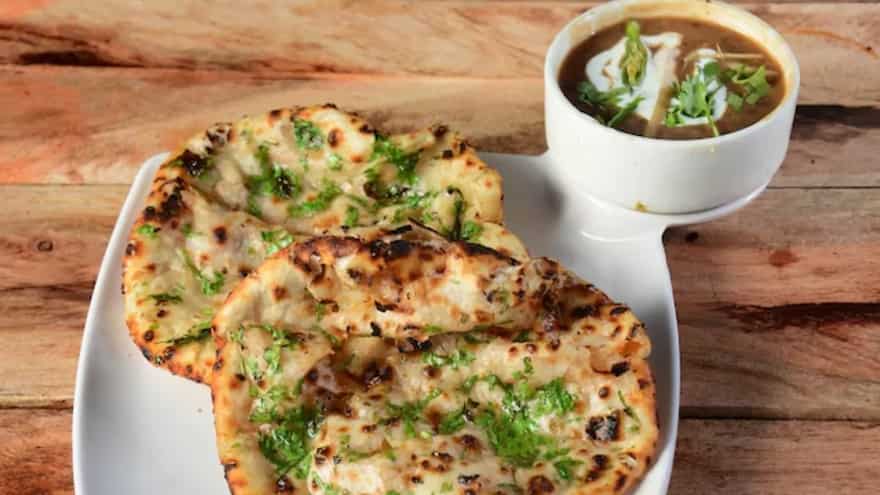
Image Credit: Adobe Stock
Executive Chef Palvinder Singh of Ran Baas, The Palace adds, “Many of the dishes we now identify as Punjabi have existed for generations across different parts of Undivided Punjab. Nihari, paya, haleem, saag, makki di roti, kali dal, kadhi, kebabs, stuffed parathas and slow-cooked meat curries are examples. The name, seasoning or preparation may change slightly depending on where you are, but the basic philosophy of cooking remains remarkably similar.”
The takeaway for anyone auditing a menu: if a restaurant can't tell you which of these four traditions a specific dish belongs to, and why grain, fat, cooking vessel, technique, the "undivided Punjab" label is decorative, not descriptive.
The Uncomfortable Truth About Butter Chicken
Here's where the story earns its edge. Another common theme across all the Slurrp interviews was the answer to the origin of butter chicken, a dish often associated with Punjabi cuisine. Amninder Sandhu calls butter chicken "a much more modern dish than people imagine," tying it directly to "the Punjabi refugee restaurant culture that developed in Delhi after Partition, particularly the Moti Mahal tradition."
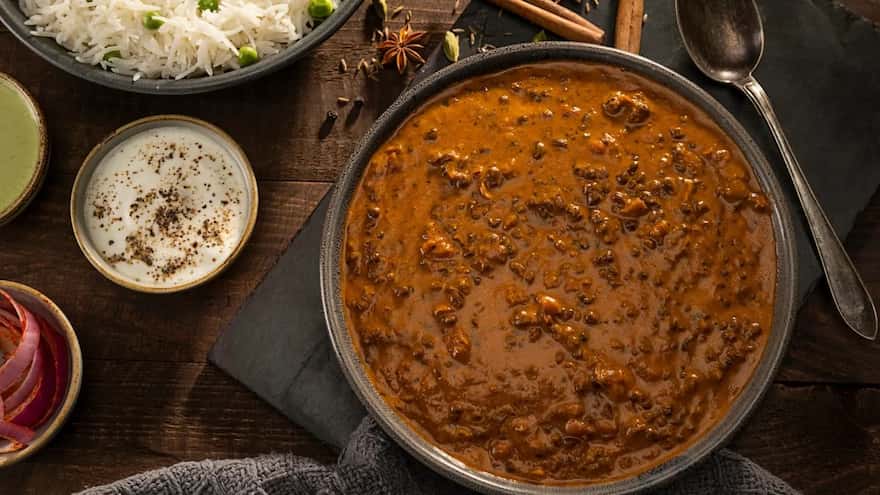
Chef Rohit Sharma, Chef de Partie, The Westin Goa, calls the exact origin of butter chicken "often debated," but it is clear that the dish's real home is "the food culture that developed in Delhi after Partition." He also focuses on using less cream, less tomato purée, and more patience. And, surprisingly, all the experts had the same complaint about what the restaurant industry has done to its own signature dish: using overpowering spices so that you can hardly taste the dal or chicken.
Forgotten Punjabi Dishes For The 80th Independence Day
Perhaps the strongest consensus among the chefs concerns the commercialisation of the term Undivided Punjab. However, touching base with the long-lost recipes, enthusiasts can preserve the pre-partition food cultures in a real sense.
Amninder Sandhu's list reads like the real undivided Punjab, still uncaptured by any restaurant: chuara doodh cooked slow over the hara, chibbar chutney ground by hand on a kunda-danda, nalli kachori, tawa kaleji, magaz, bhaneya aloo tikki with moth dal, and dal cooked simply enough that "you cannot get by rushing it."
Manjot Singh also adds to the list with dishes like Jalandhari Aloo Chhale, which he calls a lost recipe, Satpura, Chitta Kukad, Katlama, Bheega Kulcha, Gud Vale Chawal, Shahi Mutton, and more. While you can find some of these exact dishes at his recent project, Rani Bhagh, you can also try some of the unique takes like churi with kunafa and besan cheela with keema, and more.
Preservation And The Modern Punjabi Cuisine
If there’s one thing that is clear, it is that heritage is not nostalgia. Not a marketing word. It is memory, technique and context and then the courage to take it forward.
“Preservation doesn’t mean refusing to evolve. We can modernise presentation, improve consistency and adapt dishes for today’s guests while keeping the soul of the food intact,” Sumit Kumar, Executive Chef, voco Amritsar, comments. “My family has been connected with food through catering for almost 50 years, and my own career has taken that learning into professional kitchens. I see my responsibility as taking what the previous generation taught us, respecting its roots, and giving the next generation something authentic to learn from.”




