


 Share
Share

As India approaches Independence Day in 2026, the air is understandably thick with celebrations of political freedom. We rightfully honour the martyrs who shed their blood to free the subcontinent from British rule. The unfurling of the tricolour prompts a national reflection on the sacrifices made by countless young men and women. Yet true independence was never just about replacing foreign rulers with indigenous ones. For revolutionary thinkers like Bhagat Singh, freedom meant a complete structural overhaul of society. One of the most profound and deeply moving examples of his egalitarian vision occurred in the days leading up to his execution on 23 March 1931 in Lahore Central Jail. It was there that he made an extraordinary final request. He asked for his last meal, a simple offering of home-cooked food, to be prepared and served by a Dalit sweeper named Bogha. Sharing food has always been a powerful symbol of unity, and for this revolutionary, it became the ultimate tool for social protest.
The Harsh Realities Of Kitchens And The Caste System
To understand the magnitude of this request, one must look closely at the deeply entrenched caste system of the 1930s. The social hierarchy of the era was rigidly policed by orthodox norms and draconian rules of purity, especially concerning food. Who could cook, who could serve, and who could eat together were heavily restricted. The communities relegated to the very bottom of this hierarchy were forced into menial labour, primarily scavenging and cleaning human waste. Bogha was a sanitation worker in the prison, tasked with cleaning the cells and toilets of the inmates. Under the oppressive social codes of the time, his very touch was considered polluting by upper caste society, making his entry into a kitchen absolutely unthinkable. Bhagat Singh, born into a Jat Sikh family, was acutely aware of these brutal culinary and social divisions. By deliberately asking Bogha to bring him food cooked in his own home, the young revolutionary was launching an unspoken but incredibly powerful strike against the deeply rooted prejudices of Indian society.
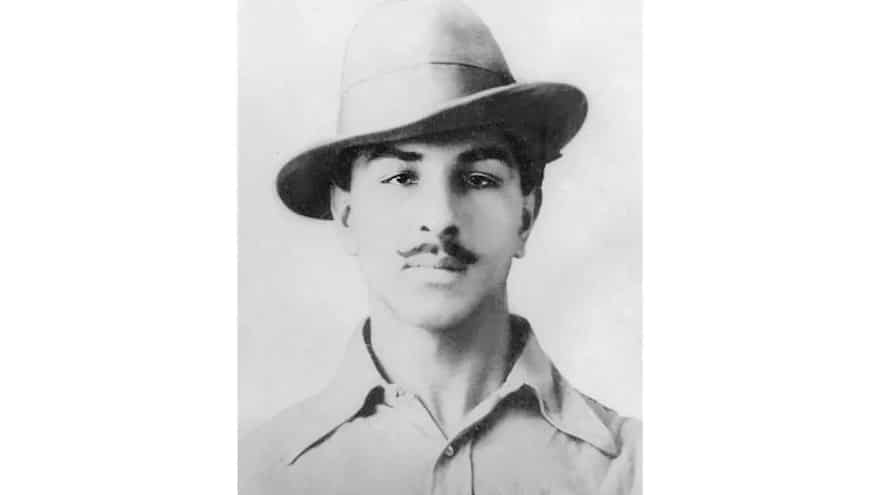
Image credit: Wikimedia Commons
The Ideology Of Equality And Shared Nourishment
The Hindustan Socialist Republican Association, which Bhagat Singh helped lead, was built on the firm foundations of scientific socialism. The members of this organisation envisioned a republic where the exploitation of man by man was completely abolished. This core ideology naturally placed them in direct opposition to the caste system and all forms of inherited privilege regarding food and resources. While many mainstream nationalist leaders believed that social reform could wait until after the British were expelled, Bhagat Singh and his comrades saw social oppression as an immediate and intolerable evil that had to be confronted simultaneously. They understood that political power in the hands of a few privileged elites would merely replicate the very tyranny they were trying to overthrow, keeping the metaphorical and literal dining tables of the nation segregated.
A Radical Culinary Request Behind Bars
When Bhagat Singh made his dietary request, Bogha was completely taken aback. The sanitation worker hesitated immediately, expressing his deep fear of the consequences. He reminded the young revolutionary that society deemed him impure and that accepting a meal of roti from his hands would be a grave violation of strict religious and social codes. Bogha was terrified of the backlash. He feared retribution not just from the strict prison authorities but from a society that enforced caste segregation with violent rigour. In an environment where prisoners maintained strict boundaries based on religion and caste, particularly concerning their rations and cooking fires, the request from a high profile political prisoner to eat food prepared by a sweeper was nothing short of scandalous.
Redefining Dignity And The Nourishment Of Motherhood
Bhagat Singh responded to this hesitation with a perspective that shattered the cruel logic of the caste system entirely. He addressed Bogha affectionately as Bebe, a traditional Punjabi term for mother. When the astonished worker questioned this title, the revolutionary explained his reasoning with striking simplicity and profound empathy. He noted that when a child is an infant, it is the mother who cleans up after them, removing their waste, ensuring their hygiene, and ultimately feeding them. Society reveres the mother for this selfless act of care and nourishment. Bhagat Singh argued that since Bogha performed the exact same necessary task for the prisoners, keeping their living conditions sanitary and bearing the burden of their physical waste, he deserved the exact same status and respect as a mother providing sustenance. By elevating a marginalised sweeper to the revered position of a parent who feeds her children, Bhagat Singh dismantled the notion of ritual pollution and replaced it with a framework of immense respect for manual labour.
The Written Crusade Against Segregated Dining
This incident involving his final meal was not an isolated emotional outburst but the culmination of his deeply studied political ideology. In 1928, Bhagat Singh penned a powerful essay titled The Untouchable Problem, which was published in the Punjabi journal Kirti. In this essay, he lambasted the hypocrisy of Indian political leaders who demanded freedom from the British while simultaneously subjecting millions of their own people to unspeakable degradation. He urged the marginalised communities to organise themselves, stand up for their inherent rights, and refuse to accept the humiliating status quo, which heavily featured the rigid rules of inter-dining. He firmly believed that political liberation was utterly meaningless if it was not accompanied by total social and economic equality, where all citizens could sit and break bread together.

Image credit: Adobe Stock
An Unfulfilled Meal But An Enduring Legacy
Tragically, the exact meal never came to pass in the way Bhagat Singh had hoped. Fearing massive public unrest across the nation, the British colonial authorities abruptly advanced the execution time by twelve hours. Bhagat Singh, Sukhdev, and Rajguru were hanged in the early evening of 23 March rather than the following morning. The suddenness of the execution meant that Bogha could not bring the requested rotis from his home in time. The final plate of food remained unserved. However, the intent behind the request remains a towering testament to an uncompromising commitment to human dignity. The young man facing the gallows was not merely thinking about ending British colonisation; he was actively dismantling the internal colonisation of the caste system until his very last breath.
Relevance For Independence Day 2026
As we celebrate Independence Day in 2026, this poignant historical episode demands our undivided attention. The flags, anthems, and parades are essential markers of our sovereignty, but they must be accompanied by rigorous national introspection. The structural inequalities that Bhagat Singh fought against have evolved over the decades, but they have not entirely disappeared from our modern social fabric, especially in how we treat those who grow, cook, and clean up after our food. Caste discrimination continues to manifest in various subtle and overt forms, constantly challenging the egalitarian promises laid out in the Indian Constitution. Remembering Bogha and the revolutionary who called him mother forces us to measure our progress not just by economic growth or geopolitical influence, but by the dignity afforded to the most marginalised citizens among us.
Bhagat Singh understood that the true measure of a civilisation is how it treats its most vulnerable people. His final request was a masterclass in lived philosophy. He did not just write about equality in political pamphlets; he embodied it in the grim shadow of death. By choosing a Dalit prisoner to prepare his final meal, he left behind a culinary and social legacy that challenges every successive generation of Indians to confront their inherited prejudices. This Independence Day, the most fitting tribute to his supreme sacrifice is to carry forward his unfulfilled dream of a society where no individual is deemed unequal by birth, and where the simple act of sharing food is universally recognised as a fundamental human right.




