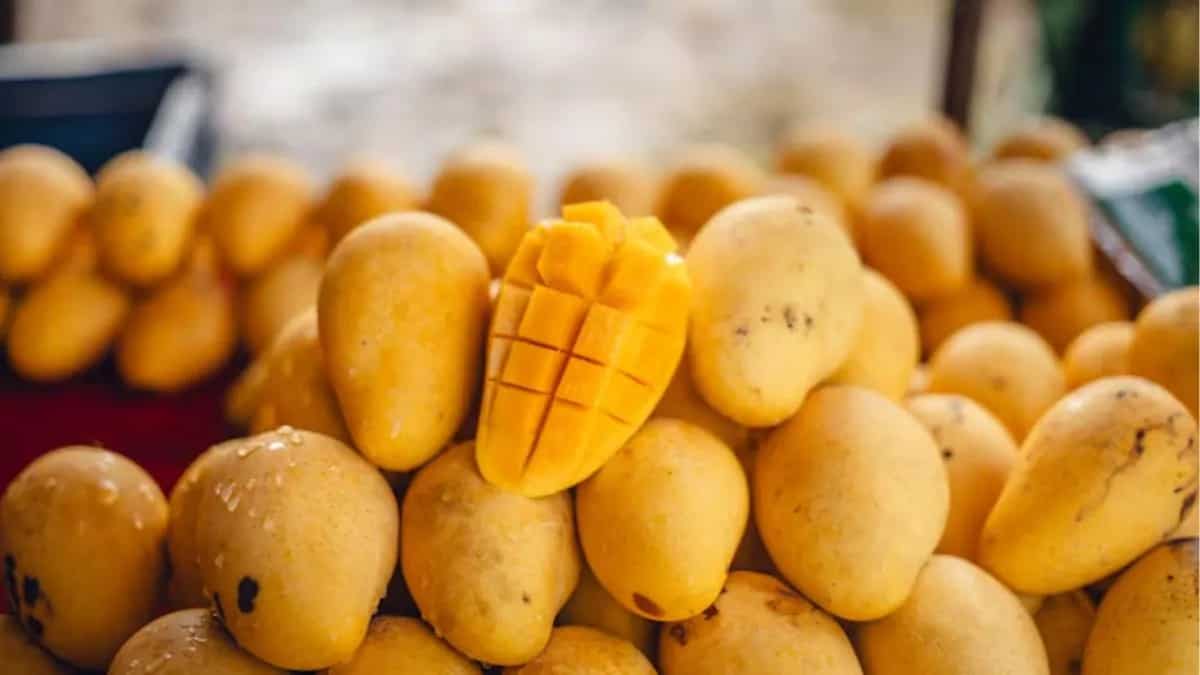
Whenever there is a conversation about mangoes in India, the discussion almost always circles back to only the name- "Alphonso". It’s renowned, widely available, and often regarded as the premium standard in the variety of mangoes. But what many people do not acknowledge is that India is home to around 1,000 varieties of mangoes, each shaped by the soil it is grown in, the climate, and also the local tastes.
Some are sweet, some tangy, while some are so delicate that they can seldom travel beyond their own area. These lesser-known mangoes are not just about options to try, but they carry stories of local farming, seasonal rhythms, and flavours that feel more personal than just the commercial ones. From the rose-like fragrance of eastern varieties to the rich, almost buttery southern ones, these mangoes offer a totally different experience.
These mangoes may not always make it to polished fruit boxes or the export markets, but they have something that is more useful, i.e. regional identity and diversity in flavour. Once you explore them, Alphonso may not feel like the only benchmark.
Imam Pasand, South India
Imam Pasand is grown across the region of Andhra Pradesh, Telangana, and Tamil Nadu and is often referred to as the royal mango, and for all the good reasons. It was once preferred by nobility and is still regarded as one of the finest-tasting mango varieties. The fruit is large, with thin skin and almost no fibre, making it extremely smooth to eat. This flavour of Imam Pasand is rich but not overpowering, having a gentle sweetness and a hint of citrus as an aftertaste. What makes it unique is its texture; it almost melts in the mouth. Because it bruises easily, it’s not exported very widely, which is why it is still a hidden gem.
(Image credit: Wikimedia Commons)
Gulab Khaas, Bihar And Jharkhand
Gulab Khaas is one of those mango varieties that feels more like a fragrance, more than a fruit. Grown mostly in parts of Bihar and Jharkhand, it is loved for its subtle rose-like scent and a bit of pinkish skin. The size is smaller than that of the other commercial mangoes, but the flavour is light and delicate. It’s not too sweet, which really makes it refreshing to have in the intense summer heat. Gulab Khaas taste best when eaten fresh, without slicing, just peeled and enjoyed slowly as is.
Lakshmanbhog, West Bengal
Lakshmanbhog hails from the Malda region of West Bengal, an area known for delivering some of the finest mango varieties. This type has a bright golden skin and a balanced taste, not too sweet, or too tangy. The flesh is smooth, having a little fibre, making it easy to eat. What makes it apart is its clean flavour, which does not feel heavy at all. It was once even thought of for international export as well because of its quality. Unlike Alphonso, which is rich and has an intense taste, Lakshmanbhog feels much lighter, making it ideal to have for long summer afternoons.
Malgova, Tamil Nadu & Karnataka
Malgova is a large, round mango that is oversized when compared to others. Grown mainly in Tamil Nadu and parts of Karnataka, it has thick pulp and is extremely sweet. The texture feels a bit firm, making it pleasing to slice rather than just scoop. It also has a bit of tang that perfectly balances the sweetness. Because of its size and shelf life, it is often grown in conventional orchards. Malgova does not have the intense aroma of Alphonso, but its richness grows with you in every bite.
Totapuri, South India
Totapuri stands out because of its shape, as it has a pointed tip, almost like a parrot’s beak, hence the name totapuri. Grown widely in Karnataka, Andhra Pradesh, and Tamil Nadu, this mango is different from the dessert varieties. It is less sweet and a bit tangy, which makes it perfect to use for pickles, juices, and salads. The flesh is firm and holds its shape nicely when sliced. If you like mangoes that are not too sweet, Totapuri is a refreshing change. It’s also typically used in processed products because of its strong structure and flavour.
(Image credit: Wikimedia Commons)
Langra, Uttar Pradesh
Langra, hailing from Varanasi, is a famous variety in North India but still does not get the same spotlight as the Alphonso. Its skin remains green even when ripe, which usually confuses first-time buyers. Inside, the flesh is soft, fibreless, and full of juicy. The taste is sweet, with a slight tang that makes it addictive. It’s not too rich, meaning you can eat more without feeling too heavy. Langra is one of those mangoes that locals wait for the whole season, often picking it over more expensive varieties.