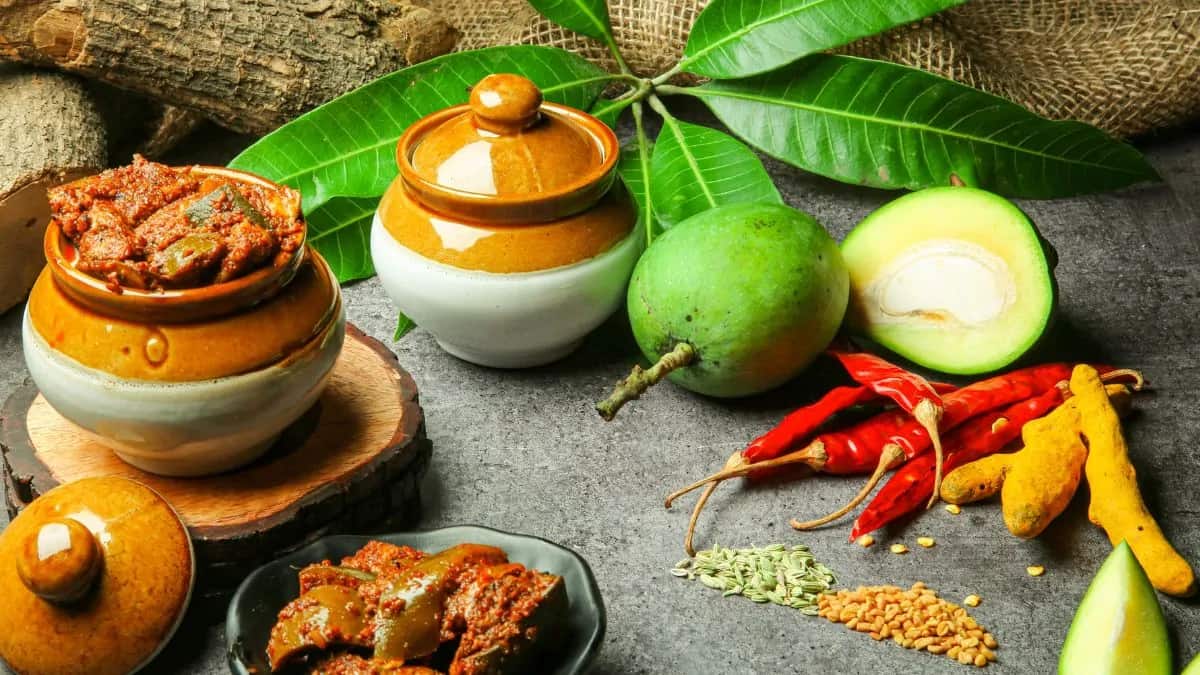
Summer in India is ruled by the king of fruits, the mango. Mangoes are not only savoured via different recipes, but they are also stored for the entire year in different forms. Pickle or achaar is one of the most beloved preservation techniques of mango. Across terraces, balconies, and kitchens, jars filled with cut raw mangoes, spices, oil, and salt are left out in the sun to mature slowly over days and weeks. Although mango achaar is familiar across the country, no two regions prepare it the same way.
In some states, the acchaar is fiery and oil-heavy, while in others, it is sweet, tangy or lightly spiced. The type of mustard used, the oil for preservation, and even the size in which mangoes are cut differ depending on local traditions. In several homes, recipes are passed down through generations and are closely associated with seasonal rituals. Read on to know how mango pickle changes its form across different states of India.
Andhra Pradesh
In Andhra Pradesh, the mango pickle is known as avakkai, which is India’s boldest and spiciest mango pickle. The pickle is usually made using large pieces of raw mango with the seed intact. This keeps the mango retain its crunch while absorbing spices slowly. Avakkai stands out because of the generous use of mustard powder, red chilli powder, salt, and sesame oil. The spice levels of avakkai are significantly higher compared to other regional pickles, which gives the achaar its intense flavour and deep red colour. Sesame oil also plays an important role because it acts as a preservative and also adds richness. Avakkai is commonly eaten with hot rice and ghee, curd rice, or even simple dal meals. In many Telugu households, preparing mango pickle during summer is considered an annual ritual, with large batches stored for months.
(Image Credit: Wikimedia Commons)
Gujarat
Unlike Andhra Pradesh’s fiery avakkai, Gujarat’s chhundo takes a sweeter route. Chhundo is made using grated raw mangoes, and they are mixed with sugar, salt, and mild spices. Instead of relying heavily on chilli and oil, the pickle develops a jam-like consistency as the sugar slowly melts and preserves the mango. Many traditional recipes leave the mixture in sunlight for several days so the sugar dissolves naturally. Some versions also include roasted cumin, saffron, or chilli powder for balance. This method reflects Gujarat’s wider food culture, where sweet, salty, and tangy flavours often appear together. Chhundo is commonly eaten with thepla, parathas, and snacks, and is especially popular among children because of its sweet taste.
(Image Credit: Wikimedia Commons)
Kerala
Kerala’s mango pickles have coconut oil, curry leaves, and strong spice tempering. Kadumanga, a popular Kerala-style pickle, is made using small tender mangoes that are pickled without any cuts. The pickle has mustard seeds, red chilli powder, fenugreek, curry leaves, vinegar, and gingelly or coconut oil, depending on the household. Compared to some North Indian pickles, Kerala-style mango pickles have a sharper sourness, and the presence of tempering is more in the flavour. Kadumanga is frequently served during sadya meals and is also paired with kanji, curd rice, and everyday meals. In many Syrian Christian households, mango pickles are made alongside fish and meat pickles during summer.
Punjab
Punjabi mango pickle is known for its prominent usage of spice blends and generous use of mustard oil. The pickle is made using chunky pieces of raw mango mixed with fennel seeds, nigella seeds, mustard seeds, turmeric, chilli powder, and asafoetida. Mustard oil gives the pickle its sharp aroma and acts as a natural preservative. Compared to smoother or sweeter regional pickles, Punjabi mango pickle often has a coarser spice texture and a punchier flavour. The achaar is eaten with stuffed parathas, dal-rice, and everyday Punjabi meals. Many households also prepare mixed vegetable pickles during the summer using the same spice base.
(Image Credit: Pexels)
Maharashtra
Maharashtra has several mango pickle variations, ranging from spicy oil-based achaars to sweeter preparations like methamba. Methamba is a mixture of cubed raw mangoes with jaggery, mustard seeds, fenugreek, and chilli, creating a balance of sweet, spicy, and tangy flavours. Apart from long-lasting pickles, Maharashtrian households also prepare quick instant mango pickles known as kairiche lonche. These are often made in smaller quantities and consumed fresh over a shorter period. Groundnut oil is commonly used in many Maharashtrian pickle recipes, and spice levels are balanced rather than overwhelmingly hot. Mango pickles are eaten with bhakri, varan bhaat, or simple everyday meals.