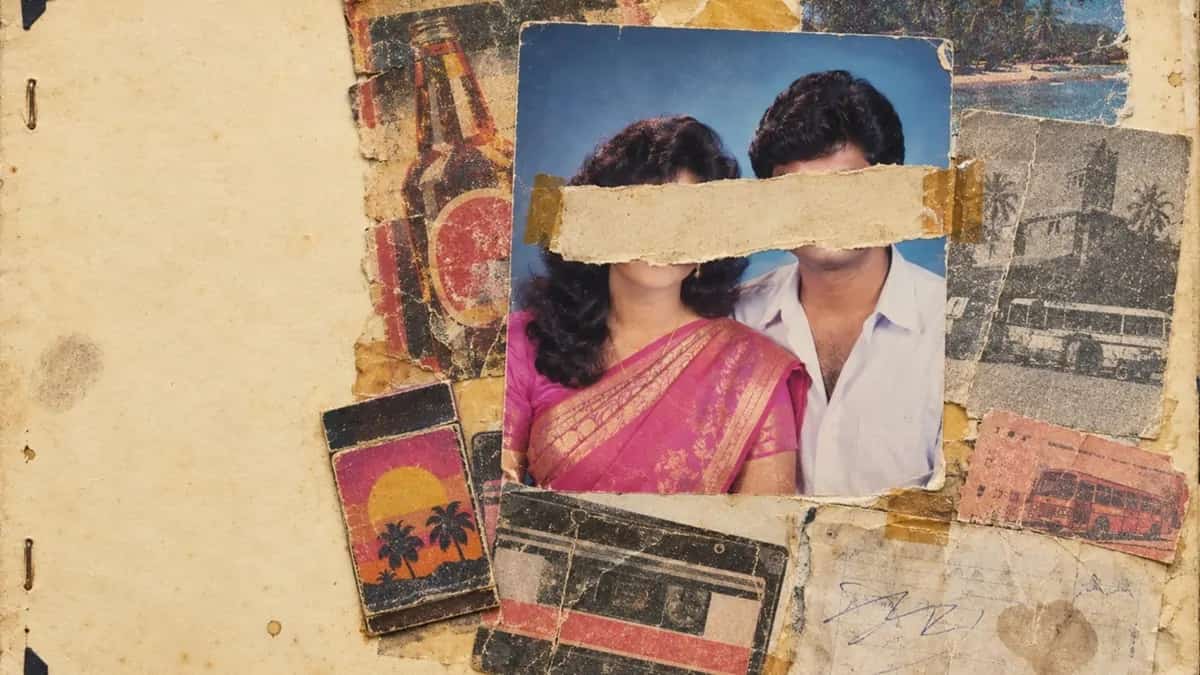
FOR THE PAST WEEK — the wave is dated by multiple outlets to the first days of September 2026 — Instagram and Facebook in India have filled with AI-generated portraits built from a single prompt: upload a current photo, keep the face, and ask ChatGPT to rebuild everything around it in the visual grammar of the 1980s. Voluminous retro hair, vintage Indian fashion, statement jewellery, warm studio lighting, saturated colour, film grain. No smartphones, no contemporary clothes, no modern cars anywhere in frame. The format travels on Instagram's "Add Yours" sticker, which is precisely why it has spread so fast: one post invites the next. Kerala's politicians joined early and in numbers, Ramesh Chennithala, V. Sivankutty and O.J. Janeesh among a considerably longer roster.
It is the latest in a run of AI-photo waves arriving every few months since early 2025: the Studio Ghibli-style portraits of March that year, the miniature action-figure craze that followed in April, and last September's "Hug My Younger Self" trend, built on Google Gemini's Nano Banana model, which pulled in figures including Shashi Tharoor. The 1980s is simply the current costume.
Nobody has been able to credibly identify a single origin point, and this piece won't manufacture one. It appears to have emerged more or less simultaneously across meme accounts, individual users and, within days, political social-media teams, in the way genuinely viral prompts usually do — no clear patient zero, just a template good enough to be worth copying. What is clear is why the decade. 1985 is close enough that most urban Indian families have an actual photo album to compare against, and far enough that the clothes, the hair and the furniture read as costume rather than memory. Nostalgia with just enough distance to be fun rather than raw.
What the AI is reliably good at is the surface: hair, wardrobe, film grain, a beige Ambassador idling somewhere behind you. What it has no way of reconstructing is what that Saturday night actually consisted of — where two people went, what they drank, what was playing, and what it cost them. That is a research question, not a prompt, and it is the one this piece spent its time on instead.
A note on money before we start. The five reconstructions below all work from the same figure — ₹150 for two people on a Saturday in 1986 — and none of them is a receipt. No verified price list survives for any venue here. What follows is what the money would plausibly have bought given each room's documented positioning, and it should be read that way throughout.
WHAT "CONTINENTAL" ACTUALLY MEANT
"Continental" on an Indian menu circa 1985 was never a claim to European authenticity. It was a genre marker, signalling a kitchen that would attempt cutlery-and-crockery Western food rather than a thali or a tandoor. The dishes that recur across the restaurants' own histories and long-serving menus are the steak (Bangalore's The Only Place, Pune's Touche the Sizzler), the sizzler (arriving at Calcutta's Peter Cat specifically in the late 1980s, by the restaurant's own account), chicken à la Kiev (a signature at both Gaylord Bombay and Gaylord Delhi), roast chicken and mixed grill (Koshy's, Bangalore), fish and chips, club sandwiches, and caramel custard, the last so ubiquitous that Trincas in Calcutta still serves it.
Whether any of it was authentically Continental in a European sense is close to beside the point. Nobody sitting down to a chicken à la Kiev in Churchgate in 1985 was making a claim about Kyiv. They were making a claim about themselves — that they belonged to a kind of evening the rest of the country, for reasons of money, geography and licensing, mostly couldn't have.
WHAT WE WERE DRINKING
This is the thinnest-documented corner of the research, and it is worth saying so rather than papering over it. What can be established with confidence: beer was overwhelmingly the default order, served in large bottles rather than the pint-glass draught culture that came later; whisky-soda and rum-and-Coke were the standard spirit orders, with a proper cocktail menu confined almost entirely to hotel bars like the Connemara's; and the whole culture operated inside a patchwork of state excise laws and FERA-era import controls that made hotel bars disproportionately important, simply because they were licensed and consistently stocked when standalone bars often weren't.
What could not be independently verified: a reliable period figure for the price of a beer, a minimum drinking age enforced in practice city by city, or hard data on how commonly women drank in these rooms as opposed to being present in them. All five cities' restaurant histories describe couples and mixed groups as normal clientele, which establishes presence. Nothing quantifies it further.
BANGALORE: CANTONMENT CITY, BEFORE THE PUBS TOOK OVER
Pecos deserves its rabbit hole, and the documented version is narrower than the myth. It was founded in 1989 by Collin Timms as, by its own house history, a struggling small enterprise where the founder played rock, blues and country records from home simply to keep morale up during slow nights. Regulars began donating rare cassettes and posters, and only over years did it accumulate the reputation — and the audience of admen, musicians and, later, software engineers — that people now project backward onto the whole decade. Pecos is real, but it belongs to the very last months of the 1980s, not the decade's defining years.
What actually defined mid-decade Bangalore, and is far less mythologised, were two Church Street pubs that opened within months of each other. Ramada, run by Hari Khoday of the Khoday brewing family, served draught beer with masala peanuts and South Indian vadas to a mix of fresh graduates and older regulars, until repeated fighting closed what several accounts call the city's first proper pub. Sources disagree on whether it opened in 1984 or 1986, and on which of the two brought cheap draught to the middle class. The Pub, opened in September 1986 by Ashok Sadhwani, was at that point an old-fashioned English pub; the space-capsule interior, porthole door and astronaut-costumed staff that gave it its NASA reputation came only with a 1993 refit, and the crowds it reportedly drew from as far as Chennai and Mysore belong to that later era.
Older than either was Dewar's, founded in 1933 by Kanniah Naidu on Cockburn Road near the Cantonment station — an Indian-owned bar that served British soldiers rather than a British establishment, known for its loyal regulars and mutton chops until it closed around 2011 after roughly 78 years. Outside the pub category, Koshy's (a bakery from 1940, a full restaurant on St Mark's Road from 1952) and The Only Place (founded in the 1960s by Haroon Sait and his American wife Alice, steaks and apple pie) supplied the sit-down, date-appropriate version of the same evening.
***
***
BOMBAY: THE CITY THAT NEVER TREATED ITSELF AS PROVINCIAL
Studio 29 deserves more space than a footnote, and a more careful claim than it usually gets. It opened as Bombay's first nightclub — members-only, roughly 700 paying members at its peak, a guest list Homegrown's own history describes as "a who's who of Bollywood royalty" — at a moment when the only other late-night venues in the city sat inside five-star hotels. It was not India's first: Calcutta's Mocambo, opened in 1956, holds that claim, though both are the kind of "first" that is asserted more often than it is documented. Labour disputes and declining numbers closed Studio 29 by 1985, so its real cultural life belongs to the start of the decade, not its middle or end. The disco culture most people associate with 1980s Bombay more accurately continued afterward at places like the discotheque Sabira Merchant built inside the Bombay International hotel — today's Marine Plaza — on Marine Drive, a distinctly later and more mainstream chapter of the same story.
The Continental-and-beer circuit proper ran through Colaba and Fort. Leopold Café on Colaba Causeway, an Irani establishment since 1871. Café Mondegar, a few hundred metres away since 1932, with one of the city's first jukeboxes and, later, Mario Miranda's murals on every wall. Gaylord at Churchgate, open since 1956, chicken à la Kiev and Waldorf salad under live piano. Khyber, in Kala Ghoda since 1958, sat slightly apart — North-West Frontier cuisine rather than Continental, and shut for three years after a 1985 fire before its celebrated 1988 relaunch with work by M.F. Husain and Anjolie Ela Menon on the walls — but belongs in the same aspirational category of restaurant-as-destination.
Running alongside all of it, not as a restaurant but as connective tissue, was Rhythm House on Kala Ghoda, founded in 1948 by Suleman Nensey and already a cultural landmark in South Bombay by the early 1980s. It was where an evening often started, browsing vinyl and then cassettes before the same group walked on to Leopold's, Mondegar's or the cinema next door.
***
***
CALCUTTA: PARK STREET AS ECOSYSTEM, NOT ADDRESS
Park Street's reputation rests heaviest on the 1950s to 70s: a nightclub culture built around Trincas (a 1927 tea room, converted to a restaurant with live floor shows after Om Prakash Puri and Ellis Joshua took it over in 1959), Mocambo (opened 1956 by Shivji Kothari) and Blue Fox, with cabaret at the Grand and Firpo's a short walk away. That cabaret culture was, by the sources' own account, already declining through the 1980s.
What defines the decade more accurately is the live-band supper-club format. Trincas ran continuous live music, Hindi bands early evening, English bands later, unbroken since the 1960s by its own account; Usha Uthup began performing there after arriving in Kolkata in 1969 and became one of India's most recognisable voices from that stage. The Louis Banks Brotherhood, formed in 1971, belonged to the same circuit a little later. Next door, Peter Cat — opened in 1975 by Nitin Kothari, who also ran Mocambo — built its identity on the Chelo Kebab and added sizzlers specifically in the late 1980s: dim lighting, red lampshades, white-gloved waiters, a room barely changed since.
"Ecosystem" is the right word and not just marketing language. Within a few hundred metres of each other, a group could move from a jazz set at Mocambo to a Chelo Kebab and an English band at Peter Cat to a nightcap at Trincas without recrossing the same doorway twice — a density of live music, alcohol and Continental food that none of the other four cities in this piece could match on a single street.
***
***
DELHI: CONNAUGHT PLACE, ALREADY A LITTLE PAST ITS OWN PEAK
Delhi's version concentrated almost entirely in Connaught Place, and much of what we know about its evenings comes from the people who were young there at the time — including an oral history collected by Mayank Austen Soofi from three elderly regulars, which is the single source for most of what follows and should be read as memory rather than record. "Along with restaurants like Volga, United Coffee House and the Standard, Gaylord was an exotic place in my eyes in my college days in the late 1980s," one of them says, describing a CP that was, even then, "the centre of westernized Delhi life."
In their telling, Gaylord meant a dance band, its own bakery and a huge dining hall, with a semi-formal, married-couples reputation in explicit contrast to Volga a few doors down, where the Hecke Kingdom Quartet had reigned as the city's most popular jazz band for a younger, single crowd. At the Standard, in the Regal Building and open since 1957, the trumpeter Frank Dubier — later far better known as the "Jazz Man of Madras" — was said to play like Miles Davis.
That jazz-and-dance-band CP more properly belongs to the 1950s and 60s, but the restaurants themselves, and CP's basic identity as where a Delhi college student or young executive took a date, persisted through the 1980s essentially intact. The closures came much later and not all at once: Gaylord went around 2007 after a ceiling collapse, Volga about 2010, its premises now a clothing showroom. Kwality and United Coffee House survive, both since renovated — though in both cases the work was closer to period restoration than modernisation, Kwality's 2018 Sabyasachi-designed reopening explicitly so.
***
***
MADRAS: THE VEGETARIAN CITY THAT ALSO DRANK
Madras never produced a Park Street or a Connaught Place. What it produced instead is stranger and more specific. Its elite social-and-drinking life ran, first, through membership. The Madras Club (founded 1832, merged with the Adyar Club in 1963, some thirteen riverside acres, and closed to Indians until the late 1950s or early 60s depending on which account you follow), the Madras Gymkhana Club (1884) and the Madras Boat Club (1867) all ran versions of the same thing — golf, cricket, rowing, dinner and a bar, gated by proposer-and-seconder membership rather than a door anyone could walk through. Madras's advertising executives, film people, senior civil servants and old-money families did their drinking inside institutions that required someone to already know you.
Outside the clubs, the more interesting and more distinctively Madras answer is the vegetarian hotel with a bar attached — a combination that looks like a contradiction until you understand Tamil Nadu's on-again-off-again prohibition history. Hotel Maris in Gopalapuram, inaugurated on 15 January 1975 by the Pillai family, whose money was originally made in Ceylon tea estates, served vegetarian food on banana leaves at its Anandam Restaurant — and, in the same building, ran a bar the family named, with deliberate irony, The Permit Room, after the state's prohibition-era system under which drinkers needed a government permit to legally buy liquor. Contemporary guest accounts describe exactly the ritual you would expect from that pairing: a banana-leaf vegetarian lunch downstairs, then upstairs to the first-floor air-conditioned bar for a beer, teetotal members of the same lunch party settling for lemon water at the same table.
Hotel Savera in Mylapore ran the same model at greater scale. Trading from 1965 as a twenty-room hotel and incorporated in 1969, fully operational at 125 rooms by 1972 with a swimming pool unusual for the city at the time, it ran a bar called the Bamboo Bar — explicitly a permit room in the hotel's own recorded history — from the basement for its first years, before renovating and moving it up to the ground floor in 1985.
The term itself travelled south rather than originating there: "permit room" is documented as a Bombay coinage, from the permits required under the Bombay Prohibition Act of 1949, and it means simply the section of a restaurant licensed to serve alcohol. But it landed in Tamil Nadu with unusual force, because the state spent half the century legally undecided about whether such a room should exist at all — prohibition imposed in 1937, suspended in 1971, reinstated in 1974, lifted by MGR in 1981, arrack and toddy banned again from January 1987. Tamil Nadu's bar licences have long been attached to hotels rather than standalone bars, requiring a minimum room count, a separate dining room and restaurant, and cuisine "both Indian and Continental" before a licence would even be considered.
That structure is why Madras's version looks different from Bangalore's pubs or Calcutta's supper clubs. The drinking never got its own room in the city's imagination the way Pecos or Trincas did; it got bolted onto a vegetarian, family-oriented hotel restaurant. The result was a real and specific Madras evening: dinner on a banana leaf with your family or colleagues, then, if you were so inclined, a beer next door in a room that existed for exactly that purpose and no other. For a more self-consciously cosmopolitan slice of the city — without a club membership and not looking for a banana leaf — the Connemara's Cocktail Bar, Taj-run since 1974 and billed in the hotel's own vintage advertising as Madras's first licensed public bar, remained the aspirational alternative.
A Personal Memory, Offered As Memory, Not As Record:
Here the paper trail runs out and something more useful takes over. Madras, 1985. Two men walk into the Bamboo Bar at the Savera — down in the basement, before the 1985 move upstairs — and order a beer each. What arrives alongside it is not sausages, not fish fingers, not a bowl of salted peanuts standing in for a Western bar snack, but a plate of masala vada, hot off the pan, the same thing either of them might have eaten at breakfast or with evening coffee on a normal Tuesday. Nobody at the table thought of it as an unusual pairing. That was rather the point of it.
No menu, advertisement or photograph turned up in this research to confirm masala vada was ever printed on a Bamboo Bar bill. That detail rests on memory, not an archive, and is offered as exactly that. But it fits what the documented record does support. The plate of vada beside the cold bottle is what you would expect Madras to have improvised in the gap — not a steak, not a cocktail, not a jukebox, but the city's own breakfast food, repurposed without fuss into the only bar snack the room had ever really needed.
***
***
THE SOUNDTRACK
Two different soundtracks ran through this decade, doing two different jobs. In the older supper-club rooms — Trincas and Peter Cat, Volga's Hecke Kingdom Quartet, the Standard's Frank Dubier, Mocambo's original six-piece with a teenage Pam Crain — the music was live, played by working musicians, rooted in jazz standards and Hindi film songs rearranged for a dance floor: a 1950s and 60s inheritance these rooms simply kept running through the 1980s because nothing had yet replaced it. Bombay's Studio 29 and its disco successors added a third strand entirely, imported disco records for a members-only dance floor, the closest India got to a Western nightclub format inside the decade proper.
In the newer rooms — Ramada and The Pub in Bangalore, and by the decade's very end, Pecos — the soundtrack changed to recorded Western rock on cassette. Dire Straits, Pink Floyd, the Eagles, Deep Purple, Led Zeppelin, imported records treated as precious enough that regulars donated their own collections to build up a pub's library, exactly as Pecos's house history describes happening in its earliest years. This was the actual 80s-bangers layer of the decade, and it belonged to a younger, more Anglophone, college crowd than the live-band supper-club audience across town. Two soundtracks, two audiences, sometimes within walking distance of each other and rarely at the same table.
THEN VS NOW
An AI model can give you the hair, the saree or the shirt, the film grain and the Ambassador in soft focus, in about eleven seconds. What it has no training data for, because nobody photographed it, is the actual texture of the evening the photograph interrupted. Waiting for someone outside Rhythm House with no way to text them if you were late. Finding a restaurant by word of mouth and a rough sense of the street rather than a map. Choosing somewhere because a friend had been, not because of a rating. Calling ahead from a landline, if you called ahead at all. Four people pooling coins for one more round. Listening to a whole side of a cassette because skipping meant getting up and touching the deck. The waiter at Koshy's who already knew your order. Sitting at the same table at Trincas every Saturday until it was, unofficially, yours. Smoking at the table because nobody had yet suggested you shouldn't. Striking up a conversation with the next table because there was no phone screen between you and them. And three unphotographed hours over one sizzler, split, because that was the whole point of the evening rather than documentation to prove the evening had happened.
None of that is nostalgia for its own sake. It is a structural observation. Scarcity, not virtue, built it: when there were only two or three rooms in a city where this kind of evening was even possible, those rooms ended up holding an entire generation's first dates, office send-offs and reunions inside a handful of tables, for years. Today's abundance doesn't need to build anything that durable, because there is always another room, another reel, another recommendation. AI can manufacture the look of scarcity's aesthetic. It cannot manufacture the thing scarcity actually produced, which was depth.
WHAT DISAPPEARED, AND WHAT'S ONLY THE NAME
The survival record is mixed and follows no single pattern. Koshy's, The Only Place, Leopold, Mondegar, Gaylord Bombay, Khyber, Trincas, Mocambo, Peter Cat, Kwality, Hotel Maris and Hotel Savera are all still trading in 2026 — a genuinely high rate, though several have moved premises or been renovated close to unrecognisable. Others didn't make it. Studio 29 closed by 1985, its own decade barely survived. Rhythm House shut in February 2016, Café Samovar in March 2015. Ramada closed after repeated violence; Dewar's around 2011 after some 78 years; in Delhi, Gaylord, Volga and the Standard are all gone, the Standard's own building shutting as a cinema in 2017.
The sharper question is which survivors are still the place, and which are only the name. By that test, Koshy's, The Only Place, Leopold, Mondegar, Trincas, Peter Cat and Hotel Maris plausibly still are the place — continuous family ownership, a core menu and, in Maris's case, the same banana-leaf-and-Permit-Room pairing it opened with in 1975. Gaylord Bombay, Khyber, Savera's Bamboo Bar and Kwality Delhi sit in a greyer zone, each extensively reworked to re-manufacture a nostalgia the room no longer organically carries on its own — which is, in its own way, exactly what an AI-generated 1980s portrait also does.
WHERE THIS LEAVES THE TREND
India in 2026 has more restaurants, bars and choice in a single neighbourhood than these five cities had between them in 1985, and an AI model that can put you back into that decade's clothes in under a minute. What it can't do is put you back into a room that held the same fifty regulars every Saturday for a decade — most of those rooms are gone, and the ones that survive no longer have a monopoly on the evening. The trend is, in the end, a perfectly honest artefact of the world this piece has been describing the loss of: it recreates everything about the decade that was visible, and nothing about what made a Saturday night at Koshy's, Trincas, the Connemara bar, or a banana leaf and a beer at Hotel Maris feel, at the time, like the whole point of being alive in a city. That part was never going to fit in a prompt.
The illustrations accompanying this piece were generated using AI image tools.