


 Share
Share

FIFTEEN YEARS AGO, Indian chocolate was a familiar constant—sweet, nostalgic, and largely indistinguishable. Today, that is beginning to change, driven as much by shifting consumer tastes as by the makers themselves.
Today, across premium retail shelves, café menus and even gifting catalogues, a new layer has emerged: bean-to-bar chocolate that foregrounds origin, process and price in ways that would have been difficult to imagine even a decade ago. What was once a nostalgia-led purchase is now showing early signs of something more durable—repeat consumption, premium acceptance, and increasing shelf relevance.
The shift is being driven by a cohort of Indian makers, each leading a distinctive charge—from early players like Mason & Co and Paul & Mike to newer names such as Naviluna, Bon Fiction and All Things Chocolate, alongside Manam Chocolate, which operates across the value chain, from sourcing to production. These are movers who are not just introducing consumers to craft chocolate, but collectively building the conditions for it to function as a category. The distinction matters.
India’s broader chocolate market, currently valued at roughly $3.05 billion (2025) and projected to grow steadily over the next decade, has historically been dominated by mass milk chocolate. But within that, a smaller, faster-growing segment is emerging: artisanal chocolate, expected to grow at over 11% annually—significantly outpacing the overall market.
The question is no longer whether craft chocolate exists in India. It is whether it has crossed the threshold into something more structurally meaningful.
From Novelty to Repeat Demand
The earliest phase of India’s craft chocolate movement was driven by curiosity. Consumers bought into the idea—bean-to-bar, single-origin cacao, small-batch production—there was an increasing sense of awareness and a certain attachment to the regional showcase of it on labels generating much intrigue, but ask about the product and its craft, there was very less interest.
Today, a growing share of consumption is repeat-driven, all directed through familiarity with cacao percentages, flavour profiles and origin-specific characteristics. In effect, the category is beginning to behave more like specialty coffee did a decade ago—that is the beauty of discernment.
“The shift became visible when consumers stopped buying craft chocolate just to ‘try it once’ and started coming back for something specific they remembered… That is when you know they are beginning to build a relationship with the category,” says Chaitanya Muppala, Founder, Manam Chocolate.

At Manam Chocolate, that transition is already visible in early data. Nearly 40% of online customers are repeat buyers, with a noticeable move away from gifting-led purchases towards self-consumption. Just as importantly, repeat buyers are not staying within safe choices. Movement towards higher cacao percentages and more expressive flavour profiles (and incorporating regional, familiar and nostalgic flavours too) suggests that familiarity is translating into confidence—an essential marker of category maturity.
This evolution has been accelerated by format. Unlike traditional retail, experiential spaces—factories, tasting rooms, cafés—are compressing the education curve, allowing consumers to understand process, origin and flavour in a single interaction. What might have taken years of passive exposure is now happening in a single visit.
Gifting, Retail and the Economics of Premiumisation
Retail signals scale, that is a given. India’s gifting economy has long been dominated by mithai and dry fruit hampers, incredibly important formats which are embedded in markets due to the ritualistic and cultural motives attached to it. Craft chocolate is not replacing that system outright, but it is establishing a parallel premium category within it.
At Manam Chocolate, chocolate and gifting now account for nearly 70% of total revenue across channels; this happened far earlier than anticipated. The implication is structural: craft chocolate is no longer an accessory within a hamper; it is increasingly capable of anchoring the gift itself.
Retail is not far behind. Alongside Manam’s expansive, design-led spaces—beginning with its Karkhana in Hyderabad and extending to high-end locations from Delhi’s Eldeco Centre to its recent presence at Mumbai’s Galeries Lafayette—other brands have also found growing traction within this segment.
For Paul & Mike, modern trade has emerged as the strongest demand driver, accounting for over 50% of business, with all channels growing at more than 20% annually. Founder Vikas Temani points to a broader shift in consumer behaviour: “Premiumisation is clearly visible across categories—snacks, coffee, beauty—and chocolate is no exception.”
That visibility matters. Shelf space in modern retail is performance-driven. Products that do not move are quickly replaced. Sustained growth within that environment suggests that craft chocolate is no longer dependent on one-time discovery.
The split between new and returning consumers reinforces that trajectory. At Paul & Mike, roughly 40% of sales now come from repeat buyers, indicating that a meaningful portion of consumers are moving beyond trial into habitual consumption.
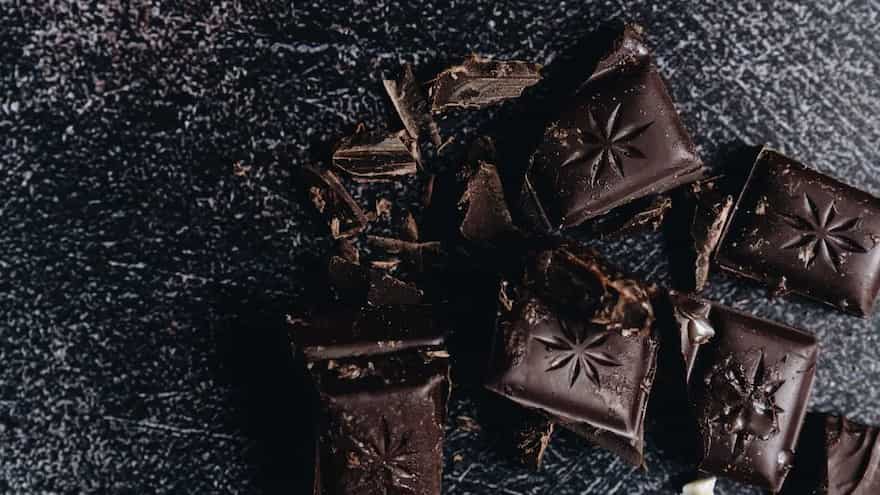
Price, too, is becoming less of a barrier. As disposable incomes rise and consumption patterns shift, Indian consumers are showing increasing willingness to engage with premium formats—whether in coffee, packaged foods or beauty. Chocolate is following that curve.
The success of high-priced, novelty-driven formats—from imported bars to viral products like kunafa chocolate—may signal experimentation at the top end. But the more important shift is that premium chocolate is no longer being justified; it is being normalised.
The Indianisation of Craft—and What Comes Next
For all its global references, the Indian craft chocolate story is becoming distinctly local. Bean-to-bar, as a model, is built on control, and it begins right at the source, then fermentation, roasting and eventually processing. In India, that control is being applied not just to match international standards, but to reinterpret them.
Brands across the spectrum—from Mason & Co’s minimalist, single-origin bars to Paul & Mike’s flavour-forward formats—are increasingly working with indigenous ingredients and flavour references. Filter coffee, jaggery, regional fruits and spices are not peripheral innovations; they are becoming part of how the category communicates itself to a domestic audience.
India currently produces roughly 27,000–30,000 metric tonnes of cocoa annually, accounting for less than 1% of global output. This small base is precisely what makes the category interesting. Production has been steadily rising—up nearly 25% over the past five years—alongside a parallel expansion in cultivation, with over 110,000 hectares now under cocoa farming.
The geography of that growth is concentrated but significant. Andhra Pradesh and Kerala together account for the majority of India’s cocoa output, supported by cultivation models that integrate cacao as an intercrop within coconut and arecanut plantations.

This localisation comes with its own set of challenges. There are variabilities in fermentation (cited at our climatic conditions), higher acidity and inconsistent post-harvest practices. Solving for those constraints has pushed Indian makers towards a more process-led, technically precise approach—one that heavily relies on science.
At the same time, the ecosystem itself is expanding. Cocoa has been identified as a high-value crop within government-led agricultural initiatives, while exports of cocoa products crossed 45,000 metric tonnes in the last financial year—early signals of a supply chain that is gradually scaling alongside domestic demand, with estimates suggesting the number could increase dramatically over the next few years.
For F&B businesses, this shift has clear implications. For retailers, it presents a category that is still small but growing faster than the broader market—and one that carries higher margins and stronger differentiation potential. For cafés and restaurants, it offers a way to integrate desserts, beverages and retail into a more cohesive, premium experience and for brands, it opens up a positioning opportunity that sits at the intersection of provenance, process and modern Indian identity.
The inflection point, then, is not defined by size alone. It is defined by alignment—between consumer behaviour, production capability and market opportunity. And in India, that alignment is beginning to take shape.
Nikhil Merchant is a Mumbai-based F&B consultant, lifestyle and luxury writer, and goes by Nonchalant Gourmand, where he fuses culinary storytelling with cocktail craft. His work spans national and international publications, and he also consults on restaurant menus, beverage programs, and concept design at his company Elevenses Hospitality. He can be found on Instagram @nonchalantgourmand.




