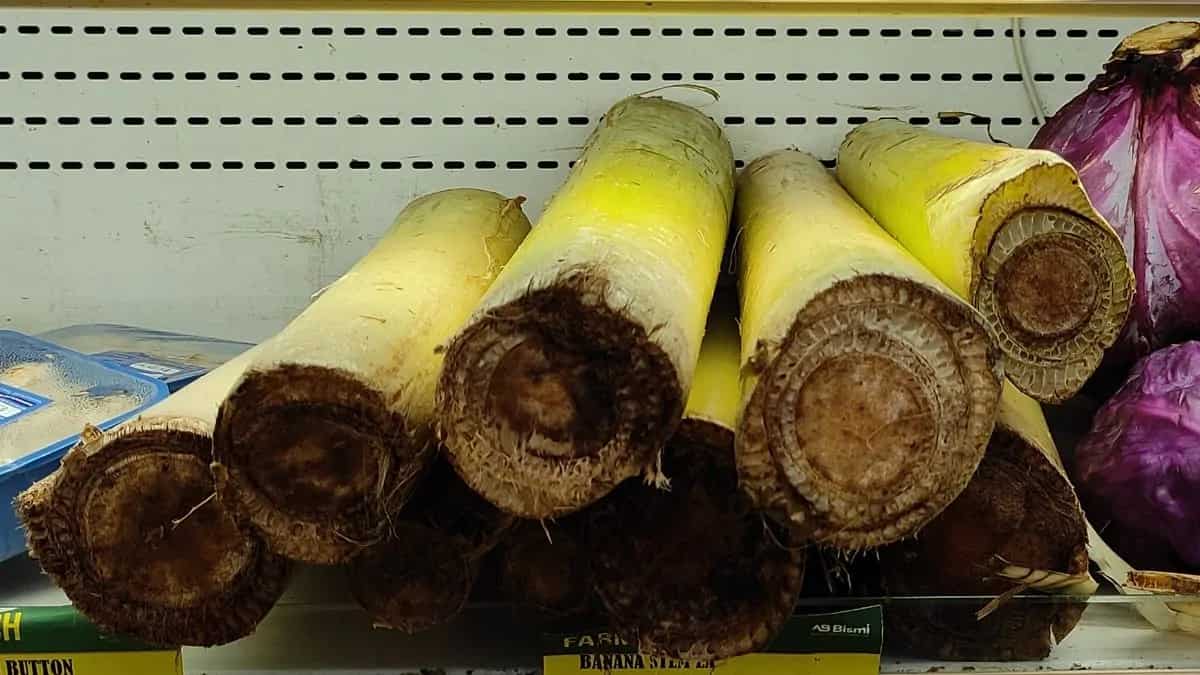
When the weekend arrives, one wants to prepare a few creative dishes tastes a little different but pack a punch. When you have no idea what to cook, or you don’t feel inspired enough to whip up something out of this world, adding banana stems can be a fun way to make your daily cooking less mundane. The banana stem, also known as thor in Bengali, kele ka tana in Hindi, vazhapindi in Malayali and more, is a tasty and nutritious part of the banana plant. Unlike typical plant stems, the banana stem is made of rolled-up leaves, giving it a unique crunchy texture.
Image Credit: Wikimedia Commons
Widely used in many Indian households across the country, banana stems are packed with vitamins that keep you strong and healthy. With its mild sweetness, banana stems can be enjoyed raw in salads or cooked into delicious dishes, proving once again that Indian culinary techniques promote a zero-waste kitchen wherever and however possible.
Vazhapindi Thoran
Vazhapindi thoran, created from soft banana stems, is a popular and nutritious Kerala-style stir-fry that is commonly served as a side dish with rice. The core of the banana stems used in this recipe is the inner core of the banana plant when it’s young while the outer core of the same banana plant stem becomes crunchy as it matures. Then this crunchy part of the banana stem is used in salads, chutneys and more across other regional cuisines. This dish is popular in Keralite homes because of its mild flavour, high fibre content, and ease of digestion. Though simple, it demonstrates the intentional approach of traditional cooking techniques that transform ordinary ingredients into delicious and nutritious preparations.
Thor Ghonto
Cutting and removing the fibrous tissues of the banana stems can be a lot of work, yet the result is just as rewarding. The inclusion of grated coconuts adds more to the tropical aspect of the delicacy, and the warm wheat flour and milk mixture makes it slightly sticky. Throwing some light on the name of the dish, thor ghonto, ‘thor’ in Bengali means banana stem, while ‘ghonto’ means a mixture of many things.
Thur Chaat
Banana stem or thur chaat, is a healthy alternative to the typical streetside chaat offerings. This variation of chaat is the fusion of the health benefits of banana stem with the familiar flavours of chaat masala, fresh herbs and lemon juice. The process of making banana stem chaat requires finely chopped banana stems, which are mixed with vegetables like onions, green chillies, tomatoes, and coriander leaves. You can’t resist the crunchy texture and tangy and spicy taste of banana stem for your perfect evening snack options.
Kol Posola
This dish, known as degkh or kol posola, has a particular place in the hearts of many Assamese people because the recipe is typically passed down through generations to convey the comfortable spirit of home. This dish, a staple of Assam's Barak Valley region, expertly combines the soft texture of banana stem with the earthy richness of masoor dal and the luscious flavour of prawns. Preparing it always ties you to Assam's unique culinary legacy, combining nourishment, memories, and tradition.
Image Credit: Wikimedia Commons
Banana Stem Kootu
Kootu is another essential dish mostly consumed in South India, which is rich in fibre and protein. Banana stem kootu is made by combining the richness of banana stem with lentils, especially moong dal, which are well-cooked together with different spices like black pepper, coconut paste, and cumin. It can be a satisfying meal for monsoons when served with rice and a dollop of ghee. Also known as kootukari, it is a versatile stew commonly made with yams, lentils, and a few vegetables. The dish is popular for its nutty and complex flavours and distinct textures.
Gabbya Upkarri
Upkarri is a type of stir fry that is typically lacking in onion and garlic. Gabbya upkarri is a Konkani-style stir fry made using banana stem and is usually served with steamed rice and a local dish like steamed rice and dalitoy, ambat or saung Konkani cuisine is known for utilising an abundance of ingredients such as rice, coconut, banana and jackfruit, as well as a variety of dishes made with vegetable peels. Banana stem upkarri is a classic stir fry that varies from household to household, each with its own distinct flavour; needless to say, coconut oil tempering is a highlight in all upkarri recipes.
Image Credit: Wikimedia Commons
Laphu Eromba
Manipuri cuisine has a few interesting dishes and delicacies that needs more of your attention and one such dish is eromba/iromba (pronounced ee-rom-ba) which is an important dish of the Meitei ethnic group, usually made with dried and fermented fish and locally available vegetables. The majority of Manipuri cuisine is organic and healthy and banana stem is a fibre-rich food that Manipuris use widely in chutney, salads, and curries. A chutney called laphu eromba is served as a side dish using the inner core of the banana stem which is mashed and cooked with a good amount of red and green chillies. The recipe uses little to no oil, making it a healthy, easy, yet flavourful meal complement, although you can use a small amount if you want.