


 Share
Share

Every year, Hindu devotees bring Bappa to their home, and he becomes the heart of the house; meals are planned for him, streets are decorated, and people visit their friends and loved ones. The 10-day festival is not merely about pandal hopping but also about devotion, believing that Lord Ganesha will bless you with strength to fight obstacles and show you the way to achieve your goals.
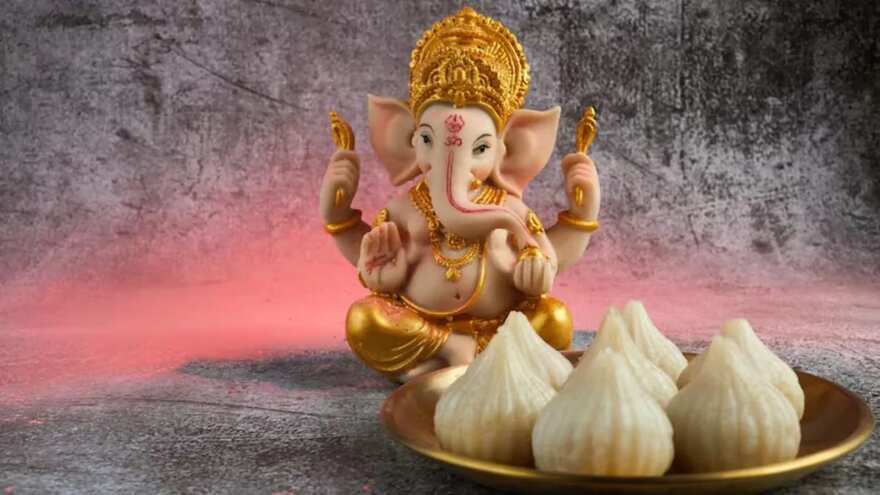
While the festival is celebrated across India, the vibe in Maharashtra is different. For these 10 days, people forget everything, take time off from their offices, and spend time performing rituals, participating in modak-making sessions, and feasting. The last day, also called Anant Chaturdashi, is when devotees bid farewell to Bappa with great pomp and show. Though people can perform Visarjan a day after installing Lord Ganpati’s idol at home, the 10th day is marked by pomp and show when larger-than-life idols installed in temples and pandals are taken to the banks of rivers and shores of the sea for the final farewell.
The electric energy and positive vibe of Maharashtra are unmatchable. But farewell to Bappa is not with the last feast. Devotees prepare a spread with all their favourites, much like how one would do for their favourite guest or best friend. From ukadiche modak to katachi amti and puran poli, the last meal is just extra special. It is offered to Bappa with lots of love in the heart, a bit of sadness that he would be leaving, and a hopeful request for him to visit the next year. Slurrp brings you a glimpse of Visarjan thalis offered to Bappa in Maharashtra.
Meena Burghate
Meena Burghate, a school teacher from Amravati, Maharashtra, has been preparing a traditional feast for decades; however, busy schedules and changing times have surely modified the spread. She says, “One thing that never changes is the count of 21 items, which we strictly maintain. If time doesn’t permit, a few dishes may be left out, but the spirit of the tradition is always kept alive.”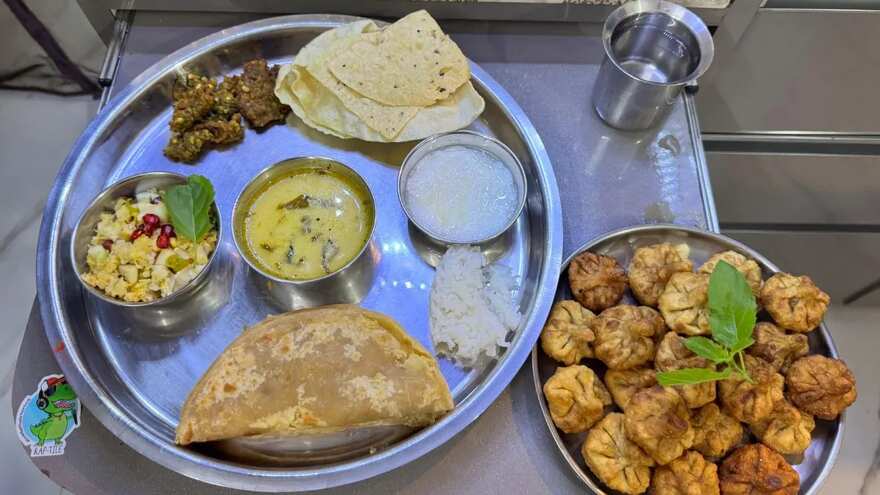 Image Credit: Dnyaneshwari Burghate
Her Visarjan thali includes puran poli modak, puran poli, kaala, jowar ambil (a preparation made with jowar flour mixed in curd and water, to which ghee, sugar, milk, and jaggery are added). “Along with the thali, we also light 21 diyas,” she says, adding, “This Visarjan thali is quite different from the regular prasad offered on other days, which generally consists of fried modak, pedha modak, grated coconut with sugar, and dry fruits."
For her family, this feast is more about tradition and shared values. “A memory that makes it special is what we were told as children, that when Ganpati departs, he carries a shidori (a food bundle) with him,” she says while reminiscing about her childhood.
Gautami Deshpande
“For me, the Visarjan Thali has never been just about food — it has always been about the emotions and stories that come with it,” says Gautami Deshpande, a singer and an emcee. The last meal that she offers to Bappa includes his pancha pakwan — with pancha khadya, pancha amrut, some seasonal fruits, sweets like barfi or the much-loved modak, and at times even a simple dal.
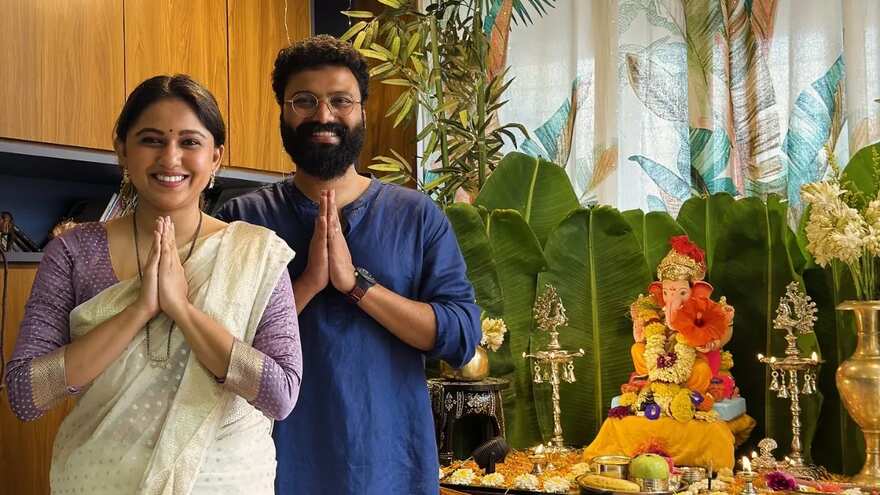
Image Credit: Gautami Deshpande/ Instagram
With love and a hint of pride, she adds, “What makes it even more meaningful is the way the entire family and community come together for it. Everyone adds something of their own — someone makes sweets, someone brings fruits, someone prepares the simpler dishes — and when it all comes together on one thali, it feels like a true celebration of togetherness.” Over the years, she has witnessed the feast evolving as every generation adds a twist. What connects people is the rituals that their ancestors followed, and the new generation tries to keep up with them. She concludes, “The Visarjan Thali will always remain a symbol of family, culture, and devotion — something that ties the past, the present, and the future together in the most beautiful way.”
Priya Chavan
Priya Chavan, Founder of Priya’s Kitchen, and her family have a tradition of making 11 or 21 ukadiche modak along with leafy greens, sprouted usal, varan bhat, and chapati on the first day of Ganesh Chaturthi. But on the last day, Vasarjan thali includes some previous dishes and a few more, like katachi amti (a thin, spicy & tangy chana dal-based curry made from the strained stock of dal used in puran poli), shidori( a small potli bag of cloth, that includes a sweet jaggery item kept with bappa while visarjan with a belief that it will be his food till the time next year when he comes), poha with jaggery and coconut, and puran poli. Apart from the traditional times, it also has modern sweets, including dry fruit or chocolate modaks.

Reminiscing the good old days, she shares, “I still carry the memory of holding the thali my aaji (grandmother) prepared, complete with shidori, modaks, katachi amti surrounded by neighbours and cousins. After the Visarjan ritual, we shared prasad standing by the pond, together our voices mingled in aarti and laughter. That sense of shared devotion and community is what makes the Visarjan thali truly unforgettable."
Pooja Tayde
Pooja Tayde, a homemaker from Pune, says that the Visarjan thali is a mix of traditional and modern treats. She adds, “I find a balance, keeping core rituals intact while allowing one or two modern treats to delight kids.” The feast at her house includes poha, kaala, etc. Comparing it with the meals offered to Bappa on other days, she adds, “Compared to prasad in the initial days of Ganesh Chaturthi, which might focus more on fresh modaks, milk-based sweets, and simple offerings, the Visarjan thali is often slightly more elaborate, as it marks the farewell to Ganpati Bappa.” It evokes nostalgia, prayers, and a sense of spiritual closure. She shares that during Visarjan, families gather, and thalis may be shared among neighbours, creating a sense of belonging.
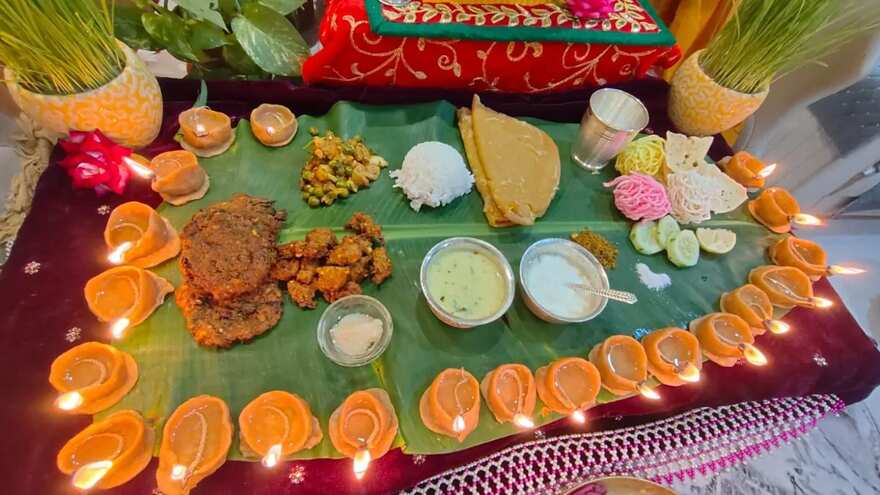
Image Credit: Pooja Tayde
Sakshi Kuperkar
At Sakshi Kuperkar’s house, the Visarjan thali is an elaborate affair that comprises puran poli or shrikhand, 2–3 vegetable dishes, fryums, and siders like aloowadi or aloo fry. “A whole coconut is broken and placed with jaggery as a symbolic offering—believed to be taken along by Bappa on his journey back. The last naivedya is made with extra care, filled with his favourite dishes, almost like a loving farewell,” she adds. Throughout the 10-day celebration of Ganesh Chaturthi, sattvik, vegetarian, and nutritious meals are prepared with love.
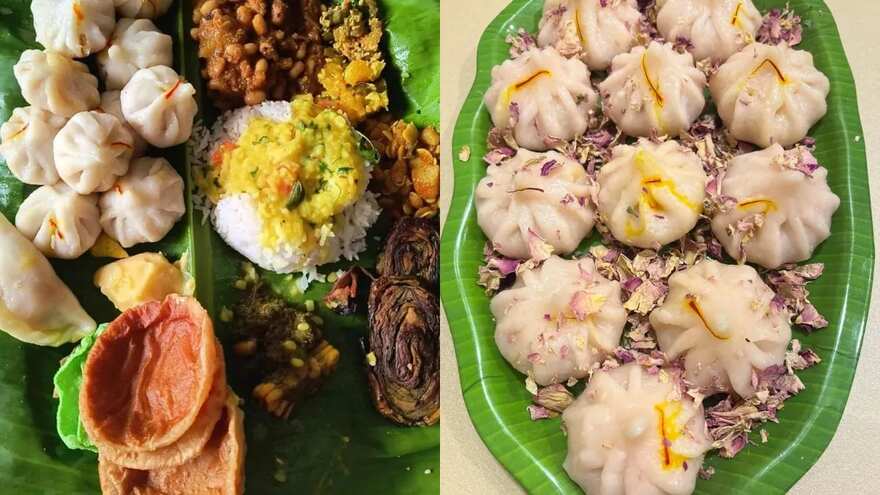
Image Credit: Sakshi Kuperkar
Speaking about the feast, she says, “The Visarjan thali is very emotional for us—it’s the last meal we offer Bappa, and we try to include all his favourite dishes. While modaks are usually offered at the beginning, we sometimes prepare them again on the last day out of love. When Bappa leaves, there's a noticeable emptiness, so we do our best to make his last meal memorable. It’s a moment of heartfelt farewell.”
Bijal Shah
Bijar Shah is a home chef in Mumbai whose Visarjan thali consists of modak, puri, aloo bhaji, kheer, ladoo, and fruits. It is like a grand send-off meal. “It’s not just about food—it’s about saying goodbye with love and gratitude. There’s a lot of togetherness, as neighbours and relatives also join in sharing the meal. One memory I cherish is when all of us cousins would gather around the thali, waiting for the aarti to finish so we could grab our favourite sweet. That joy and laughter made the farewell less heavy,” she shares while remembering the past.
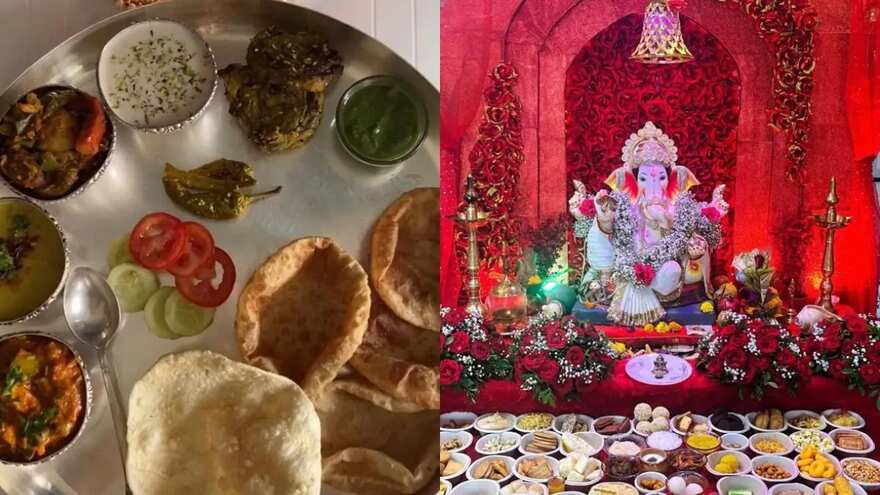
Image Credit: Siddesh Mokashi/ Instagram
But the Visarjan thali that she prepares today is slightly different from the one her grandmother makes. She still remembers vividly the classic dishes that were a part of this last meal for Bappa. Today, the spread includes a few modern touches, like sugar-free modaks, new sweets, and baked items. “But the essence remains the same: honouring Ganpati Bappa with sincerity. Even if recipes evolve, the spirit of devotion and family bonding hasn’t changed,” she adds.




