


 Share
Share

Meat eaters love their prosciutto, pancetta and salami, but how and when these were developed is a mystery. Since meat is a breeding ground for bacteria, your ancestors used salt to keep meat from spoiling, as salt absorbs moisture, which actually takes away the ideal conditions for bacteria to thrive. Besides salting, cold smoking is also used to preserve meat. This process doesn’t use heat at all. If you’ve wondered what curing meat is, let’s take a look at the history first.
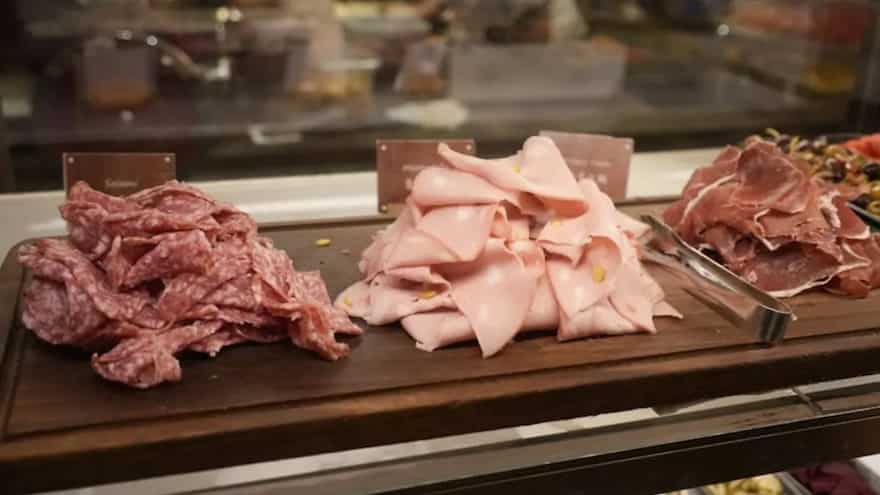
Image Credit: Pexels
A Brief Origin Of The Cured Meat Process
The first record of cured meat can be traced back to Mesopotamia around 3000 BC. It has been mentioned that sesame oil was used to preserve meat and fish, which were also dried and salted to give them a longer shelf life. These were stored especially for when food was scarce. Salt curing became popular in Greece and the Roman Empire by 200 BC. By the 19th century, methods used to preserve meat were further refined. The meat is usually cured before being smoked. This adds an interesting flavour and also prevents the growth of bacteria and fungus.
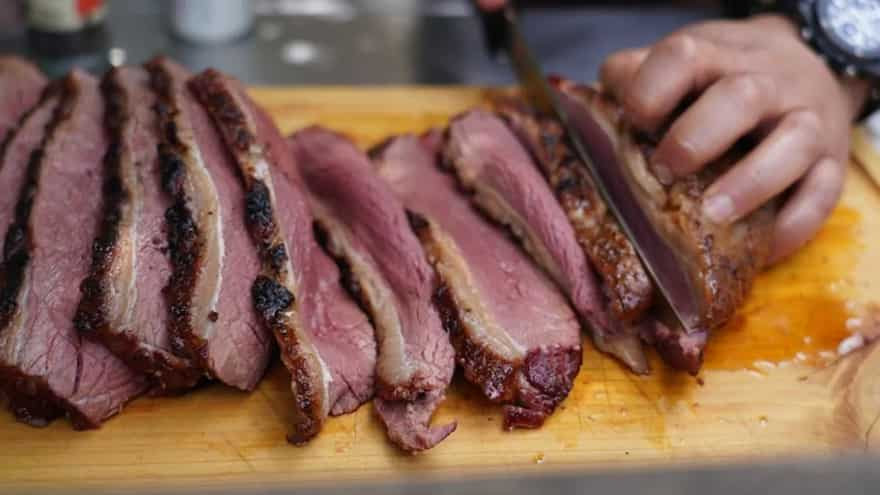
Image Credit: Pexels
When cold-smoking meat, the temperature must be maintained below 30°C. Fish begins to cook around this temperature. If too hot, the meat will be cooked instead of being preserved. The process of curing meat was perfected during the era of Homer, the Greek author and poet, in 850 BC. It was the first time that people used nitrates for curing. The importance of nitrates was clearly established in the 20th century. Nitrates help in preserving the meat’s colour and flavour, and also keep unwanted bacteria at bay.
The fact that nitrates keep meat red for a longer time was first observed by the Romans. The Greeks taught the Romans salt curing. The nitrate used during salt curing, saltpetre, preserved the pink colour of the meat while it was being cured.
The butchers of the Roman Empire preserved their meat by sprinkling it with salt and then leaving it to dry. All the moisture was absorbed by the salt, drying the meat. More salt was sprinkled once this was done. Then, the meat pieces were put into containers without touching each other. These containers had originally been used to store oil and vinegar. After placing the meat in the containers, it was covered with sweet wine and straw. Finally, the containers were stored in a cool place.
Image Credit: Pexels
When the meat was to be eaten, it was first boiled in milk and then water. This helped get rid of all the salt. Another method used for preserving meat didn’t require salt. The meat was soaked in honey, put into an air-tight container, and stored in a cool place to be eaten during the winter.
Cured Meat Techniques Reach India
Early societies developed a meat preservation technique that was appropriate for India's harsh climate, despite their incomplete understanding of the science underlying salt and nitrates. Cured meats were subtly included in daily celebrations and nutrition throughout many locations. This was heavily influenced by the early British colonial regime during the 1800s, with pork preparations considered to be celebratory in Goa, a part of regional cuisine in Nagaland and Arunachal Pradesh, and seasonal eating patterns even in high-altitude Ladakh.

Image Credit: Pexels
While France is known for its charcuterie and Italy for its prosciutto and pancetta, India's customs surrounding cured meat originated out of necessity and blossomed into a rich cultural legacy. Indian households have already embraced preservation as a practical and artistic practice even before cheese boards and deli counters became metropolitan fads. Here are a few interesting cured meat techniques for the Indian kitchens you should know about.
Traditional Indian Meat Preservation Techniques
Sun Drying
In Rajasthan, Tamil Nadu and Gujarat, meat is liberally salted, sometimes with turmeric or chilli, and left out in the sun for a few days in this age-old method of preservation. The high heat of the sun speeds up drying while the salt extracts moisture. The environment becomes unsuitable for bacterial growth when the water content decreases. Strong sunlight and low humidity effectively produce a natural dehydration chamber, enabling the meat to cure properly while gaining concentrated flavour and a longer shelf life.
Hearth Smoking
Lightly salted beef, pig, or mithun is customarily hung above the kitchen hearth in Manipur, Meghalaya, Arunachal Pradesh, and Nagaland. For days or even weeks, the meat is suspended over a slow wood fire, slowly drying and absorbing smoke. It is deeply flavoured and dehydrated by this continuous contact. Consider the fireplace to be a patient protector. Rich in natural antibacterial properties that help prevent spoiling, the rising curls of wood smoke envelop the meat in a protective shroud. Simultaneously, the soft, lingering warmth gradually extracts moisture, which is necessary in the humid air of the area, turning fresh slices into smoky, well-preserved treats.
Fermentation Pairing
Fermentation is a way of life in Nagaland and Manipur, not just a side note. Northeastern cuisine is characterised by its strong, multilayered tastes, which are produced by cooking or storing smoked meats with fermented bamboo shoots, axone (fermented soybean), or ngari (fermented fish). Here, fermentation and smoke combine to create depth and subtly increase shelf life. The fermentation naturally lowers pH, making the environment too acidic to support the growth of dangerous germs. The helpful, active bacteria take care of the rest, protecting, enhancing, and preserving taste in a single, exquisitely traditional process.
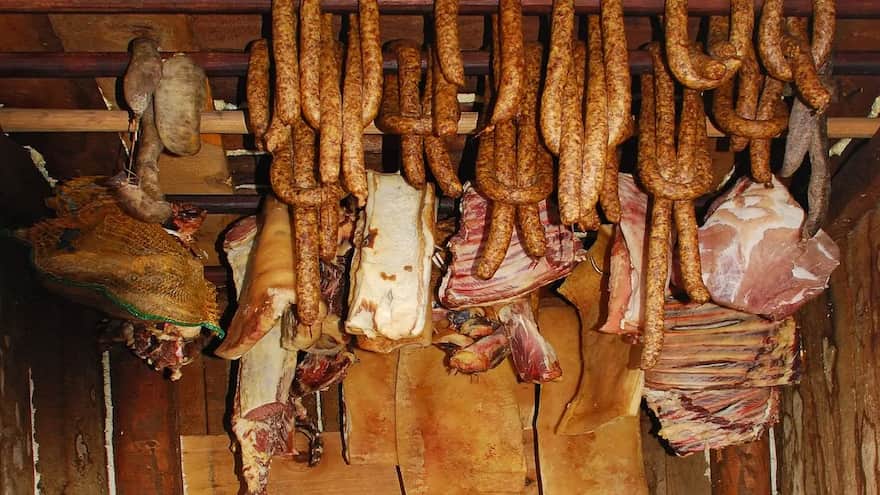
Image Credit: Wikimedia Commons
Vinegar & Acid Curing
Goa's Indo-Portuguese heritage is clearly marked by its preservation techniques. Before being packed into organic casings and allowed to dry in the sun, pork is heavily marinated in a potent blend of spices, crushed garlic, and bitter palm vinegar. The constant heat and sea breeze solidify the meat over several days, focusing its flavour and texture. The science is straightforward but powerful. Dehydration eliminates the moisture bacteria require to flourish, while the acidity of palm vinegar limits microbial growth. This harmony of sun and tang guarantees a longer shelf life and a thoroughly seasoned outcome in Goa's humid coastal climate.
Fat Preservation
By creating a barrier that keeps out air, the solidified fat inhibits oxidation and slows the growth of microorganisms. In addition, the mountains' inherently low temperatures function as a built-in refrigerator. Winter itself becomes a part of the preservation process in these high-altitude areas. Meat is slow-cooked till tender and then kept buried in its own rendered fat before the deep cold sets in. When fresh supplies become low, they can be reheated after resting in durable containers during the winter months.




