


 Share
Share

Whenever Maharashtrian food is discussed, the first names that appear on everyone’s lips are Vada Pav and Misal Pav. But the Vidarbha region of Maharashtra, lying in the eastern part of the state and at the centre of the country, comprising the Nagpur and Amravati divisions, has multiple food options that bring a far bolder taste to your palate. Once you get used to this flavour profile, it becomes difficult to adjust to milder dishes.
Amravati itself is a city layered with mythology and history. Krishna is believed to have eloped with Rukmini here, and during the freedom movement, leaders like Mahatma Gandhi, Bal Gangadhar Tilak and Subhas Chandra Bose visited the region. Like its past, the culinary landscape of the city is also old and deeply rooted. Many of its dishes date back to the pre-Independence era, especially in the lanes inside the famous Jawahar Gate and the bustling Sarafa Market.
The old city still carries this heritage forward every single day, with customers ensuring their mornings and evenings begin and end at these eateries. And because the region experiences extreme heat, often touching 45 degrees in summer, people naturally are tolerant of spicy food, as the sweat induced by eating it is believed to cool the body. Here is a look at some of the famous eateries of the city that are keeping the food culture of the city alive!
(Image Credit: Author)
Aloo Bonda Rassa, Bappu Cha Aloo Bonda
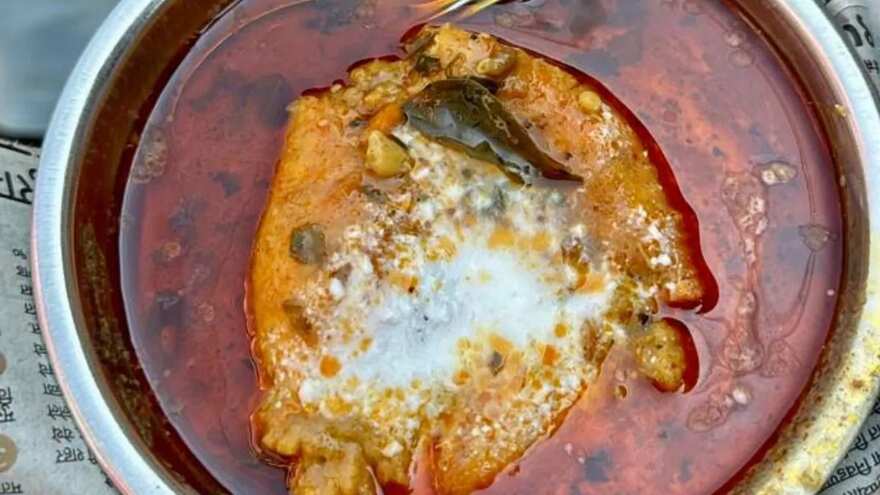
Aloo Bonda Rassa is probably the most go-to breakfast option for natives of Amravati, who want to start their day on a zanzanit note! Aloo Bonda, which is called Batata Wada in many parts of the country, is slightly crushed and topped with rassa made from masala and boiled chana, with a floating oil tarri, a spoonful of curd, and fried mirchi. It makes you sweat from the tip of your head with the first bite. While the preparation is not extremely spicy, the hot rassa and the aloo stuffing inside make you take each bite with caution. Customers line up outside the shop for hours, which, without any name or signage, can easily go unnoticed if you are new to the city. Started in 1972 by his father, Sanjay Kolhe now runs the shop, and he is fondly called Bappu, after his father. He claims that the shop feeds around 20,000 customers daily, starting from 7 in the morning to 5 in the evening. If you want to taste the truest flavour of Vidarbha, Bappu Cha Aloo Bonda is the perfect place for that.
Address: Namuna Galli No. 5, Near Rajkamal Chowk
Timings: 8.30 AM - 5.30 PM
Cost for two: ₹70
(Image Credit: Author)
Gilawada, Vishnu Dahi Wada House
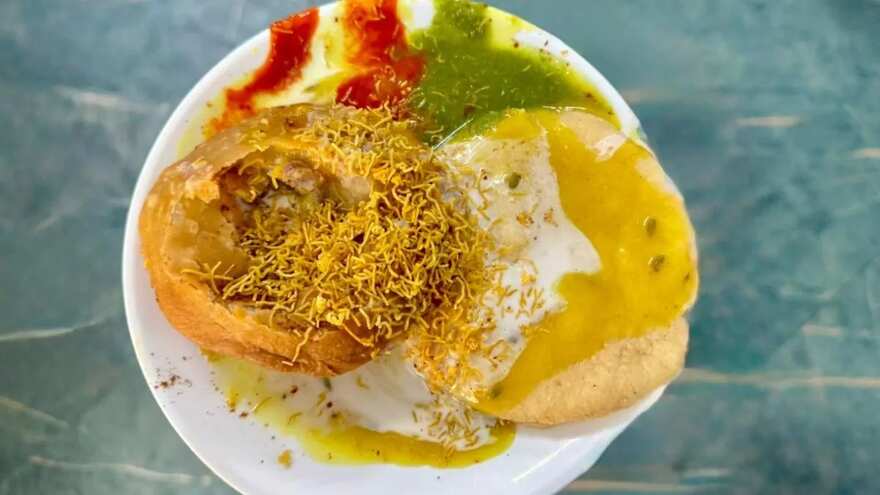
This breakfast spot in Amravati, situated inside the 19th-century Jawahar Gate, is Vishnu Dahi Wada House. It was started as a cart in 1996 and later turned into a shop by its second-generation owner, Manish Upadhyay, famous for its Gilawada, Kachori and Mangora combo. Gilawada is found specifically in Amravati, and even beyond 10 kilometres, you will not get this authentic dish, which was started by the Baniya community of Amravati. Gilawada is made with urad dal, while mangora is made with moong dal, and both are soaked in water before serving with imli, curd, red chutney and green chutney, which add flavour to the otherwise bland wadas. The chutneys are the real game changers here. These wadas are not spicy or bold, and act as an antidote to the spicy palates of Vidarbhians, making them a perfect breakfast option. The owner still runs a cart before opening the shop at 10 am to give customers the old vibe of the area and the dish.
Address: Inside Jawahar Gate
Timings: 7.30 AM - 1.30 PM
Cost for two: ₹70
(Image Credit: Author)
Kanji Wada, Nanak Ramji Dahibade Wale
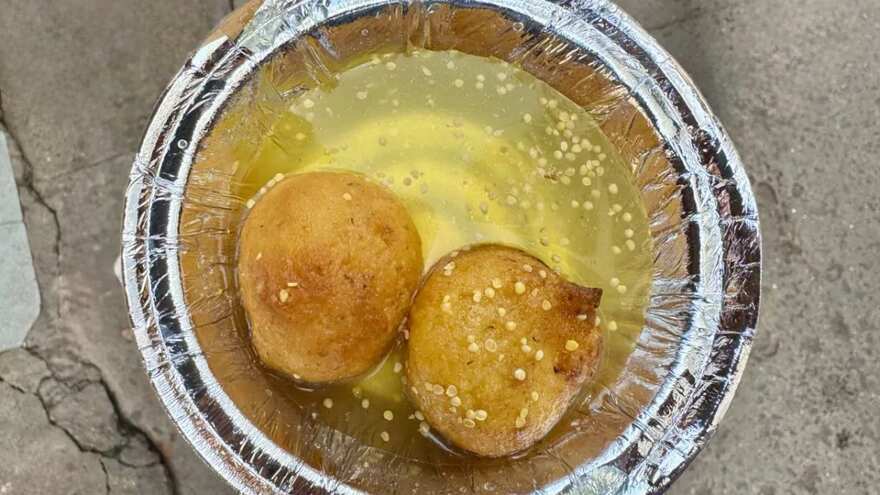
Another eatery, which is situated inside Jawahar Gate, was started even before 1947 by the Sharma family of Rajasthan, who had migrated to Amravati. This shop is famous for Kanji Wada, which is specifically eaten for breakfast and made from moong dal, while the water, made with rai, hing and namak, is fermented for 3–4 days in advance. The wadas are made fresh. Kanji Wada is famous for its digestion benefits, and many customers drink two katoris of just the water, said Mohit (Vicky) Sharma, who is the third generation of the family running this business.
Sharma also said that there are around 100 customers who come here daily, with weekends seeing even more. Virendra Mutha, who has been staying in Yavatmal, an adjacent district to Amravati, for the last 20 years, says he never misses eating a plate of Kanji Wada when he is in Amravati.
Address: Inside Jawahar Gate
Timings: 7.30 AM - 1 PM
Cost for two: ₹70
(Image Credit: Yash Kulkarni)
Sambharwadi, Hotel Roshni
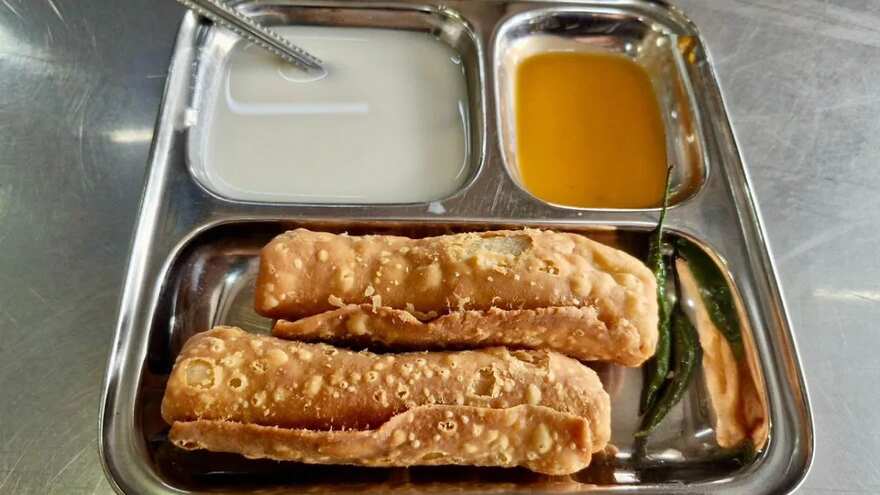
Amravati has given birth to dishes that are found only in Amravati, and one of them is Sambharwadi. While many might think of sambar as the one that goes with idli, Sambhar for Vidarbhians means kothimbir, dhaniya or coriander. This food item can be eaten for breakfast as well as an evening snack. Sambharwadi is made from dry peanut chutney mixed with sambhar (coriander), filled with maida and rolled into a roll before frying. Roshni Hotel, the go-to place for Sambharwadi, has been serving this dish since 1992. What makes Roshni’s Sambharwadi special is the mattha (buttermilk) served cold and unlimited, made from fresh milk, salt, sugar and jeera masala. Arwind Thakare, the first-generation owner of this shop, says mattha is beneficial for digestion and helps balance the fried Sambharwadi.
Address: Panchavati Square
Timings: 7.30 AM - 10 PM
Cost for two: ₹70
(Image Credit: Author)
Garam Meetha Doodh, Poonamchand Halwai
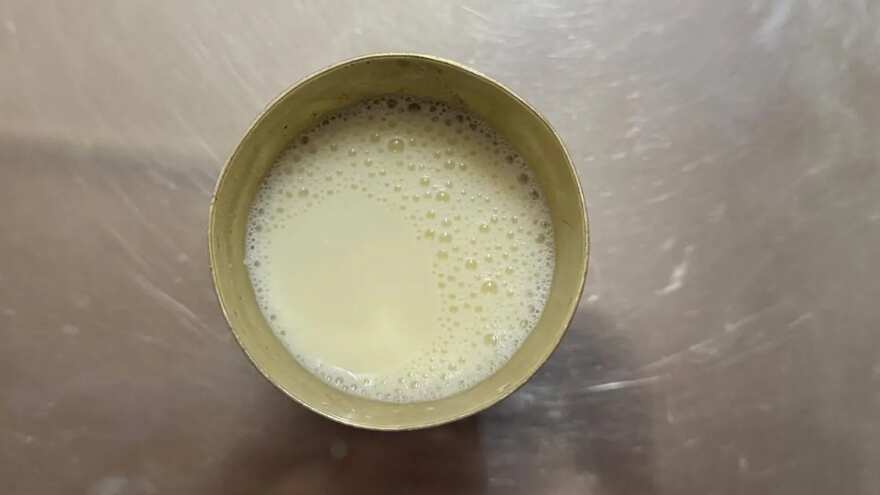
While Amravati’s breakfast dishes give your palate a delicious start to the day, the city also has post-dinner traditions that help you wind down. Poonamchand Halwai, established in 1958, is one of the most iconic stops for this nightly ritual. The shop is famous for its milk sweets and garam doodh, which is boiled for over two hours on a natural bhatti and flavoured with cardamom, nutmeg and saffron before serving. Although the halwais make mithai throughout the day, the real buzz begins after 6 PM. Tucked inside Jawahar Gate, along a narrow lane leading towards Sarafa Bazaar and surrounded by decades-old shops, the establishment is now run by the fourth generation, Abhishek Prajapati, whose family has always worked with milk and dairy products. By 9 PM, customers begin lining up after dinner for a warm glass of milk, believed to aid digestion and help with good sleep. The shop goes through roughly 100–150 litres of milk every day, serving nearly 1,000 customers nightly. This tradition is proof that Vidarbha’s cuisine isn’t only spicy and bold, but it also has its soothing, comforting side, ensuring your stomach gets a balance of every flavour.
Address: Inside Jawahar Gate
Timings: 6 PM - 11.30 PM
Cost for two: ₹70
All of the dishes above have followed the same recipes for decades, with the only change being an increase in quantity to meet growing demand. Priced at no more than ₹40 for one, they are built on trust, community, and the belief that food is meant to be served, not exploited for profit. These dishes have shaped the flavours of Amravati, and they continue to hold their ground just as they always have with honest, unaltered and deeply rooted in the city’s identity. From locals to tourists to political leaders, these flavours remain the true taste of Vidarbha, carrying forward a culinary heritage that refuses to fade.




