


 Share
Share

It began with momos, aloo-dum, and chai. A simple lunch, really. Yet on that cool afternoon in Queens, as Zohran Kwame Mamdani—New York’s newly minted mayor-elect—sat across from Congresswoman Alexandria Ocasio-Cortez in a modest South Asian eatery, something more profound unfolded. This wasn’t just a meal. It was a manifesto written in spice and steam.
Mamdani’s first public act as mayor-elect wasn’t a press conference or ribbon-cutting—it was a meal rooted in the soil of the subcontinent and served in the heart of immigrant New York. A symbolic act, yes, but also a deeply personal one: a man tracing the arc of his own heritage—from Bombay to Kampala to Jackson Heights—with the flick of a spoon in a bowl of steaming aloo-dum.

The Plate As Biography
To understand the resonance of that lunch, one must understand Zohran Kwame Mamdani himself—a man born of multiple worlds. His father, the acclaimed Ugandan-Indian scholar Mahmood Mamdani, fled the brutal expulsion of Asians from Uganda under Idi Amin. His mother, filmmaker Mira Nair, chronicled stories of diaspora, longing and resilience through her lens. Their son was raised amidst both protest and poetry—where kitchen conversations held the same gravity as political ones.
Food in such a household was never mere sustenance; it was identity; a vessel for remembering. Each meal was an act of reconstruction—of Uganda’s warmth, India’s flavour, and New York’s freedom. So when the mayor-elect ordered momos, chai and aloo-dum, it wasn’t random indulgence, it was autobiography. He was feeding the ghosts of his ancestry, honouring the millions who left home and built new ones across continents, and signalling to every New Yorker who’s ever missed the smell of home: I see you, I am you.
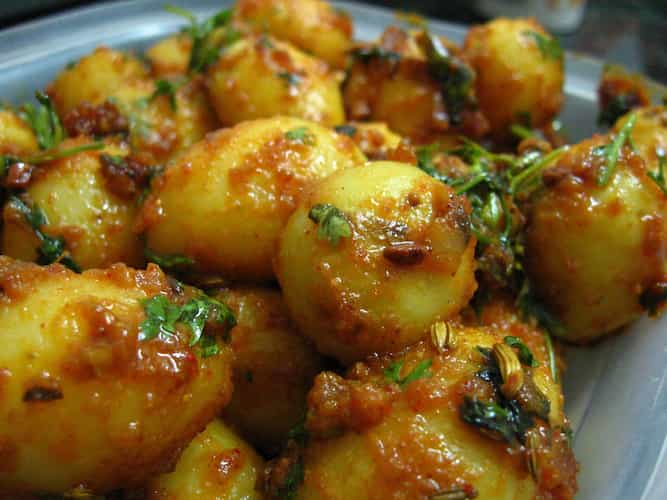
Image Credits: Wikimedia Commons
Aloo-Dum: The Humble King
Among the dishes on his table, aloo-dum stood tallest—not in stature, but in spirit. The potato arrived in India in the 17th century, carried by Portuguese traders from the Andes. At first alien, it quickly rooted itself into the Indian culinary imagination. By the time the Mughal kitchens learned to dum—to slow-cook sealed pots until the spices married in aromatic surrender—the potato had found its purpose.
In Kashmir, the dish became ceremonial—dum aloo bathed in curd and saffron. In Bengal, it turned earthy and red, cooked in mustard oil and chili. In the plains, it was street food, soul food, festival food all at once.
For a boy of Indian-Ugandan heritage, aloo-dum holds multitudes. It is the immigrant’s dish—portable, inexpensive, forgiving. It can travel across oceans and still taste like home. That’s why the sight of Mamdani dipping bread into its crimson gravy meant more than comfort, it meant continuity. In that moment, he embodied an entire civilisation’s genius for adaptation—the same instinct that once carried Indians to East Africa, and now carries their descendants into the corridors of New York power. Aloo-dum is not aristocratic, it is the people’s dish; and that’s precisely why it matters.
Momos: The New Silk Road
Then there were the momos—those delicate dumplings folded like tiny prayers. Born in Tibet, carried across Nepal and Bhutan, momos crossed into India along with monks and migrants. By the time they reached Delhi and Kolkata, they had absorbed new identities—stuffed with paneer, spiced with garam masala, dunked in tomato-chili chutneys. In New York, momos became the unofficial currency of Queens—a food that speaks 10 languages at once.
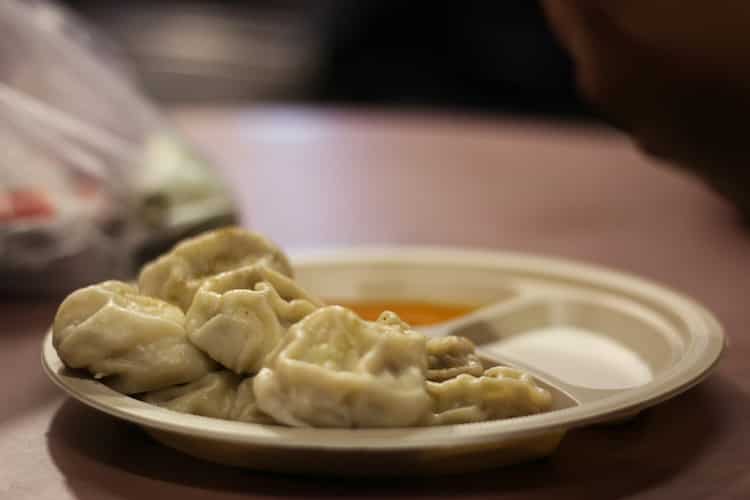
Image Credits: Unsplash
You find them at Nepali carts beside Ecuadorian arepas, under Bangladeshi neon signs next to Mexican taquerias. By choosing momos for his first meal, Mamdani wasn’t just celebrating South Asia—he was invoking the entire immigrant experiment—the messy, miraculous coexistence that makes New York pulse. The momo is democracy on a plate—handmade, inexpensive, shared by all; that’s how Mamdani sees his city—a place where difference is the main ingredient, and solidarity is the spice that binds.
Also Read:
Chai: The Pause That Anchors
Then there was chai—not the perfunctory ‘tea’ of boardrooms, but the kind brewed with patience—milk scalding, leaves unfurling, sugar caramelising into memory. In the South Asian imagination, chai is more than beverage—it is social glue. It’s the pause before work, the excuse for conversation, the handshake of hospitality.
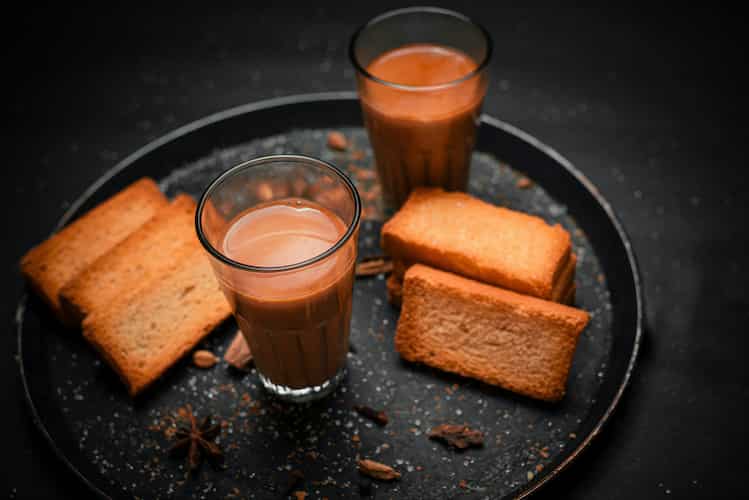
Image Credits: Unsplash
Mamdani once said in an interview that his morning ritual with his parents begins with chai. It is, he explained, the moment that “makes the world slow down and make sense again.” That ritual followed him across oceans. So, as photographers captured him sipping chai beside AOC, it was as if the entire diaspora exhaled, because to drink chai in a foreign land is to declare: I am not foreign here anymore.
A Political Meal
Every politician understands optics. But only a few understand how to make symbolism sing. For Mamdani, this wasn’t a photo-op. It was a sermon in civility. By eating at a small South Asian café in Queens instead of an elite Manhattan restaurant, he chose accessibility over artifice.
He placed himself among the people who make New York function—the cooks, drivers, shopkeepers, cleaners—those whose food cultures built the boroughs but rarely make headlines. His lunch said, without speechwriters: power tastes better when shared. His companion, Alexandria Ocasio-Cortez, amplified that symbolism. Two progressives of colour, born of immigrant struggle, sitting together over chai—this was New York’s future in a single frame. Not a melting pot, but a mosaic.
---
The Geography of Appetite
What one eats reveals how one imagines the world. For Mamdani, food is geography: every dish maps a chapter of his lineage.
1. The Ugandan-Indian Table
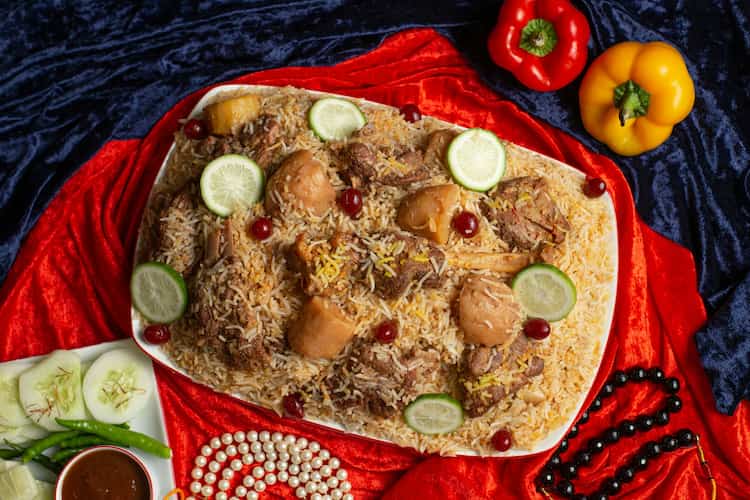
Image Credits: Unsplash
The Indian diaspora in Uganda and Kenya built hybrid cuisines—biryani with potatoes, chapati with beans, masala tea with African tea leaves. In Kampala, Indian traders made chapati a staple of the working class; it later evolved into Uganda’s famous ‘rolex’—an egg-chapati roll eaten by everyone from taxi drivers to students.
Mamdani’s childhood table, as he’s said, was covered in these transcontinental fusions. He recalls biryani where cardamom met cassava, and curries tempered with coconut milk instead of cream. It was food that had travelled—like his people, adapting, surviving, thriving.
2. The Indian-New York Kitchen
Now living in Queens, he speaks fondly of cooking with his wife—salmon glazed with Indian spices, pasta infused with cumin and coriander. That’s not dilution—it’s evolution. The way a culture breathes in the new and exhales something authentic. To the immigrant, fusion is not fashion—it’s necessity. Every spice jar becomes an act of translation.
Food As Memory, Memory As Compass
In politics, memory can be weaponised or sanctified. Mamdani chooses the latter. His memory doesn’t serve to divide, but to anchor. That first meal in office reminds him—and us—that identity is not linear; it spirals. Each dish on that table connected him to a grander story: of displacement, resilience and reclamation.
His father once wrote that ‘colonialism reshaped our hunger—made us crave both belonging and freedom.’ That sentence now echoes in the son’s gestures. Eating aloo-dum in Queens isn’t nostalgia—it’s decolonisation by palate. In a city that often asks immigrants to assimilate by forgetting, Mamdani insists on remembering through taste.
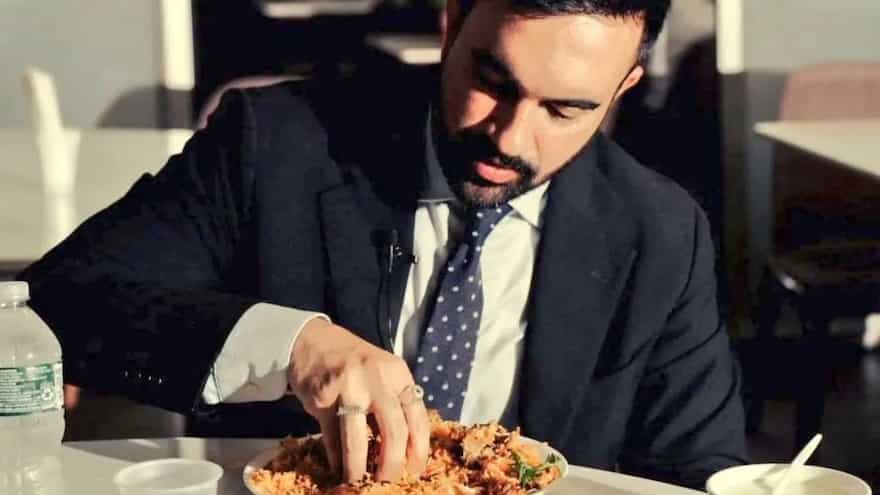
Image Credits: @Izengabe_/X
The Soft Power Of The Kitchen
If there’s anything politics has forgotten, it is tenderness; the kitchen restores it. The act of feeding and being fed humbles even the powerful. It makes you listen. That’s why the imagery of Mamdani and AOC sharing momos matters—it humanises leadership. In an age where populism often masquerades as empathy, here was an actual moment of communion.
The immigrant kitchen is the original site of democracy. No hierarchy survives where hands knead the same dough. And perhaps, in some way, that’s what Mamdani wants to bring to City Hall—the humility of the cook, not the hauteur of the king.
---
The Roots And The Reach
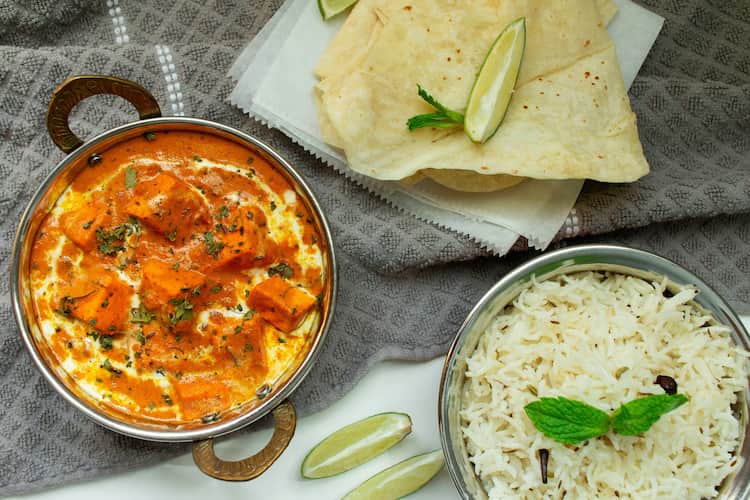
Image Credits: Unsplash
What distinguishes Mamdani from the archetypal American politician is that he does not hide his hyphenated self, he celebrates it. He does not flatten his Indian-African-American identity into palatable simplicity; he layers it like a biryani—each bite revealing a new note.
His food preferences reveal a temperament: patient, inclusive, curious. The kind that listens before acting, that allows flavours to develop, that values slow-cooked change over microwave revolutions. That is the lesson here. Leadership, like good curry, needs time to simmer.
---
A City Built On Spice
New York, like the dishes on Mamdani’s plate, is the child of trade winds and migration routes. Its boroughs hum with global aromas: Dominican sofrito, West African jollof, Bangladeshi biryani, Jewish bagels, Chinese dumplings.
By choosing to begin his mayoralty in Queens—New York’s most diverse borough—Mamdani essentially said: The city’s centre is not Manhattan, it’s everywhere people cook with memory. That reorientation is profound. It shifts power from skyline to street corner. From corporate to communal. From elite palates to public plates. It’s not just food politics; it’s politics made edible.
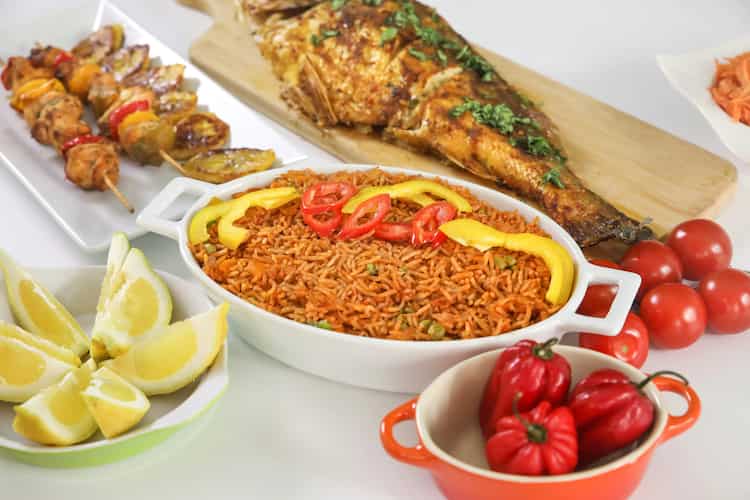
Image Credits: Unsplash
---
The Emotional Undertow
Let’s step away from analysis for a moment and feel what this really means. Picture him that afternoon: a young mayor-elect, born of exiles, now in the world’s loudest city, lifting a spoon to his lips and tasting something that his grandmother might have cooked, that his mother might have filmed, that his father might have remembered while writing about identity.
In that single act, continents collapsed. Kampala met Kolkata. New York met Nairobi. Memory met destiny. Maybe he smiled—not just because the food was good, but because it confirmed that belonging can be rebuilt, bite by bite.
---
The Hope Of The Table
Every civilisation measures its humanity by how it eats. The table, when done right, is both parliament and prayer mat. That’s why this first meal matters—not for its novelty, but for its symbolism of hope. The son of refugees sharing food with the daughter of Puerto Rican migrants in the borough that birthed both of their political dreams—that is the future of democracy.
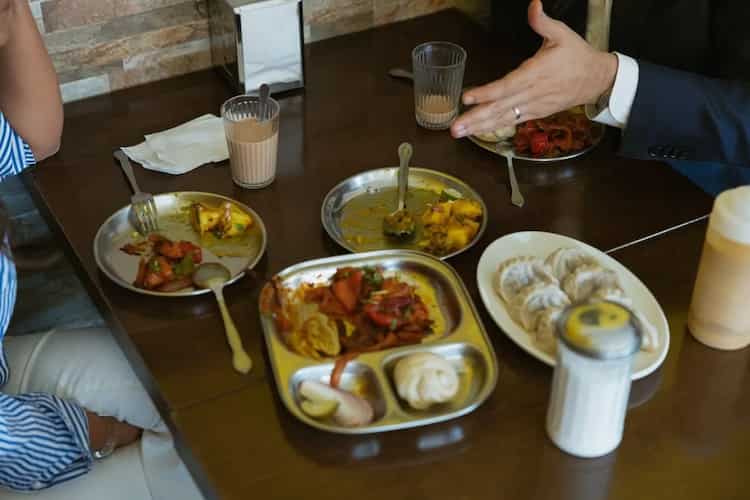
Image Credits: WION/Facebook
The flavours of that lunch spoke of cooperation, coexistence, compassion—all the ingredients missing from modern politics. It tells us that maybe, in the age of cynicism, politics can still be tender. That empathy can still taste like aloo-dum and chai.
---
The Lessons In Leadership
Let’s translate this warmth into insight:
- Symbolism becomes strength when it’s lived, not staged. Mamdani’s challenge now is to ensure that the inclusivity of that lunch becomes the inclusivity of policy—housing, healthcare, wages, transit.
- Identity must serve purpose, not posture. His heritage is a foundation, not a shield. He must use it to understand communities, not to be defined by them.
- Ritual sustains resilience. The chai at dawn, the shared meal at dusk—these rituals keep a leader human in a system designed to strip humanity.
- Cultural confidence is contagious. By proudly eating what his ancestors ate, Mamdani gives permission to others to do the same—to exist fully, without apology.
---
The Continuum Of Belonging
In truth, every migrant’s child carries two hungers: one for opportunity, and one for remembrance. Mamdani’s first meal satisfied both. It fed his ambition and his ancestry. It grounded the boy who once ate chapati on Kampala’s streets in the man now shaping New York’s skyline.
His table that day was the world in miniature: immigrant, egalitarian, exuberant. It whispered that we can be modern without being rootless, global without being placeless. Maybe that’s the real promise of his leadership—that progress need not erase memory, that the future can taste like home.
---
The Coda: A City That Eats Together
As the lunch plates cleared and the cameras packed up, the meaning lingered—like spice on the tongue. Outside, Queens pulsed with a thousand aromas: halal smoke, jerk chicken, dumpling steam, coffee, incense. Inside that restaurant, a new mayor had made his first promise—not in words, but in the language of food: that New York’s strength is not its wealth or its skyline, but its shared hunger for connection.
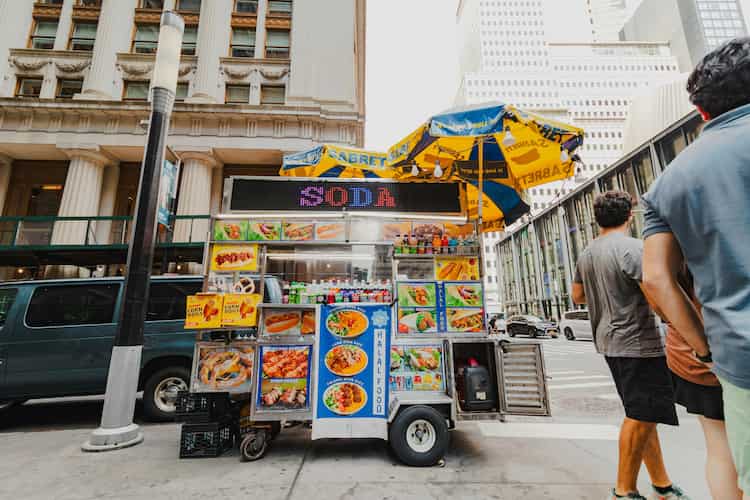
Image Credits: Unsplash
If he governs as he eats—curious, compassionate, communal—then perhaps this city of ceaseless appetite will finally find its balance. Because in the end, the truest leaders, like the finest cooks, understand one timeless truth: You cannot nourish a city unless you remember what hunger feels like.
---
In that first meal, Zohran Mamdani remembered, and in doing so, he reminded us all—belonging, like food, is best when shared.




