


 Share
Share

Shravan is one of the most sacred months in the Hindu calendar. It usually falls during July and August. In many parts of India, people fast or eat simple sattvic meals during this time. This includes avoiding onion, garlic, heavy spices, and rich ingredients. Some also avoid regular grains like wheat and rice. Instead, they rely on millets, fruits, root vegetables, and alternative flours like rajgira and singhada.
But fasting does not have to mean eating less or feeling weak. A well-planned Shravan thali can still be light, easy to digest, and filling. It can also include familiar tastes from home, textures that satisfy, and dishes that bring comfort during spiritual discipline.
The meals shared below are not complicated. They follow basic Shravan guidelines but give enough energy for the day. Each thali is built with common ingredients like potatoes, peanuts, sabudana, and curd. There is also space for variety, because eating the same thing every day during Shravan can get repetitive. These thalis can be eaten during upvas days or even on regular days if you’re keeping a sattvic diet.
Let’s look at five complete thali ideas that are nourishing and full of flavour, without breaking the spirit of Shravan fasting.
1. The Classic Sabudana Thali
This is perhaps the most familiar Shravan combination in many Indian homes. Sabudana is easy on the stomach and gives slow energy. It can be used in different ways across the plate to avoid monotony.
- Sabudana Khichdi: Made with soaked sabudana, boiled potatoes, crushed peanuts, cumin, and ghee.
- Farali Batata Vada: Shallow-fried mashed potato balls rolled in rajgira flour and crisped.
- Plain Dahi (Curd): Cooling and aids digestion. Avoid sugar or salt if keeping strict fast.
- Banana or Seasonal Fruit: Sliced banana or papaya on the side adds a fresh touch.
- Roasted Peanut Chutney: A dry chutney made from ground roasted peanuts, jeera, and rock salt.
This thali is filling but not heavy. The peanut-based dishes offer protein and good fat. The sabudana gives energy without spiking sugar levels. The banana or fruit gives a bit of sweetness without any need for dessert.
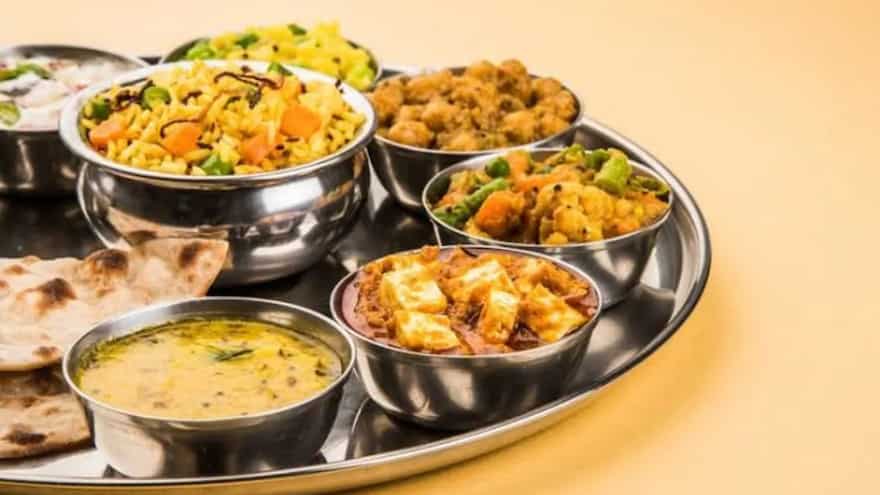
2. Moraiyo & Potato Thali
Moraiyo, also known as sama or bhagar, is often used in place of rice during Shravan. It is a millet that cooks quickly and feels light in the body. It works well as a base for a rice-style meal.
- Moraiyo Khichdi: Lightly seasoned with cumin, boiled potato cubes, and ghee.
- Shinghada Puri: Deep or shallow-fried puris made from water chestnut flour, served warm.
- Boiled Sweet Potato Chaat: Diced and tossed with lemon juice, black pepper, and sendha namak.
- Cucumber Raita: Grated cucumber with whisked curd and rock salt.
- Lemon Pickle (No Garlic): A tangy and mildly spicy touch using sugar-cured lemon pickle.
This thali feels similar to a homely rice plate. The millet gives the same satisfaction as rice but without heaviness. The sweet potato brings natural sweetness, while the cucumber keeps the body cool.
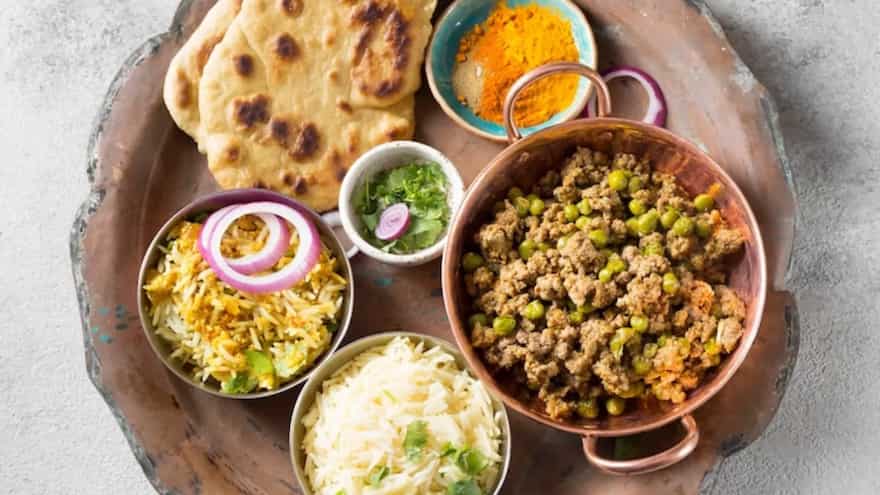
3. Farali Thepla Thali
This is a dry thali, ideal for travel or lunch at work. Thepla is made with rajgira flour, mashed potato, and curd. It’s a Gujarati favourite during Shravan and holds well even without reheating.
- Farali Thepla: Soft flatbreads made with rajgira flour, mashed potato, cumin, and curd.
- Coconut Chutney: Fresh coconut blended with roasted peanuts, green chilli, and curd.
- Fruit Chaat: A mix of apple, pomegranate, papaya, and banana sprinkled with black salt.
- Plain Boiled Potato: Tossed in ghee, cumin, and rock salt. It is simple and hearty.
- Homemade Lassi or Chaas: Slightly sweetened or plain spiced buttermilk to sip on the side.
This thali is dry but nourishing. Thepla gives fibre and carbs. The fruit chaat adds vitamins. The chutney and chaas complete the meal without weighing it down.
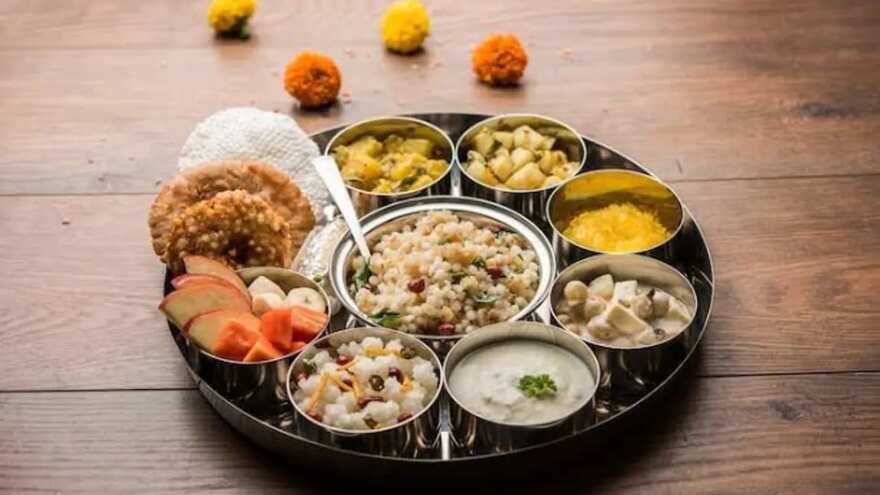
4. Sweet-Savoury Shravan Thali
This thali balances both sweet and savoury dishes, all within fasting guidelines. It is meant for days when one meal is taken during upvas, and the idea is to feel truly full but not heavy.
- Rajgira Sheera: A warm porridge-like sweet dish made with rajgira flour, ghee, jaggery, and dry fruits.
- Farali Pattice: Mashed potato balls filled with coconut, raisins, and peanuts, shallow-fried in ghee.
- Minty Cucumber Salad: Fresh cucumber slices with crushed mint, lemon, and rock salt.
- Sabudana Vada: Fried sabudana and peanut patties, crisp outside, soft inside.
- Plain Curd or Rose Flavoured Lassi: To cool down and balance the heat from fried food.
The sheera provides warmth and sweetness. The pattice and vadas are rich but traditional. The cucumber and curd bring balance and lightness.
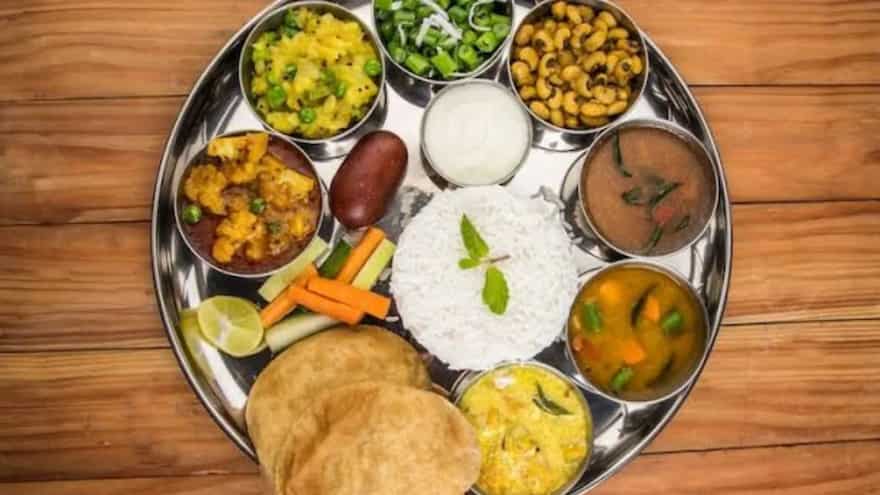
5. No-Fry Sattvic Thali
Some prefer to avoid all deep-fried foods during Shravan. This thali is built for such days. It is clean, nourishing, and easy to prepare. Yet it feels complete and calming.
- Steamed Doodhi Muthia: Grated bottle gourd mixed with rajgira flour and steamed till soft.
- Sweet Potato Curry (No Onion/Garlic): Cooked with sendha namak, jeera, and fresh coriander.
- Plain Sama Rice (Moraiyo): Steamed millet to go with the curry.
- Mint-Coriander Chutney: Fresh chutney made with lemon juice and roasted peanuts.
- Amla-Infused Buttermilk: Whisked chaas with grated amla and black salt for digestion.
This thali works well when the body needs a break. There is no frying, no heavy spices, and no dairy overload. It keeps energy steady and digestion light.




