


 Share
Share

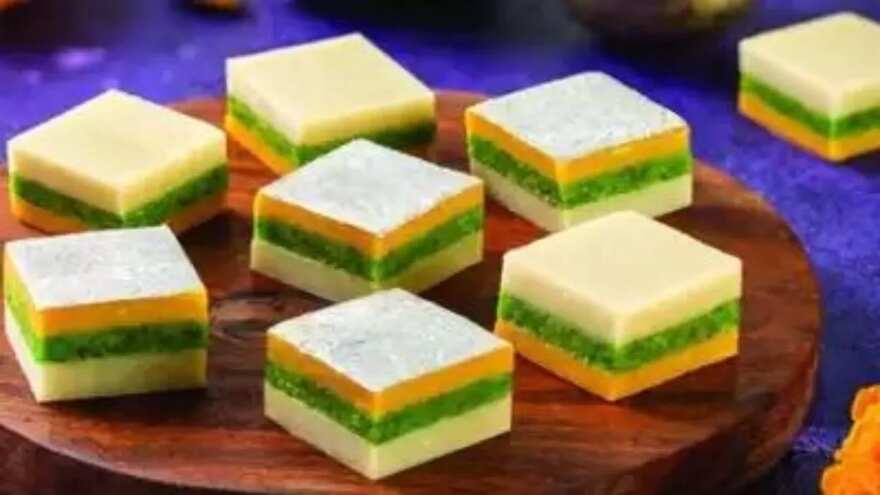
In a country where emotion is represented through food, Tiranga Barfi stands as one of the most noteworthy creations of Varanasi. This tri-coloured sweet was not designed just like that, but to communicate patriotism, born from a time when local halwais wanted to celebrate the nation in the language they knew best. Created by combining saffron, white, and green colours in layers, the barfi represents the Indian flag, turning a simple khoya, sugar, milk and nuts into an edible sign of pride.
In the city of Varanasi, where sweets are never just sweets, Tiranga Barfi was more about a patriotic offering than a dessert. Its origin is deeply rooted in intention: to celebrate independence, individuality, and to plant the thought of patriotism in people when the British ruled the country. As you read further, this article will take you through how this dessert came into existence, why it continues to carry emotional value, how it earned a GI tag beyond local lanes, and why it remains one of Varanasi’s most iconic creations, even today.
History: A Sweet Born From Celebration
The city of Varanasi has always honoured its history through food, and Tiranga Barfi is one such sweet that carries a patriotic feeling. Going deep into history, Tiranga Barfi was first created in the year 1940 by Madan Gopal Gupta at Ram Bhandar sweet shop in Varanasi. When India was still governed by the British, there was a prohibition on the usage of the Indian national flag, and thus, to communicate the feeling of patriotism, Tiranga Barfi was prepared, imitating the national flag, i.e.Tiranga. This barfi was also distributed for free to people to instil patriotism in them and to fight against the British.
(Image credit: Instagram)
Rooted In Varanasi’s Mithai Culture
The origins of Tiranga Barfi are closely linked to Varanasi’s love for making a variety of sweets that are seldom found anywhere else apart from the city. Known for its precision-based mithais, such as khoya sweets, peda, and barfi, the halwais in the city used their expertise to test visually without compromising on taste. Tiranga Barfi is a sweet that has three flavours, layers and colours, all created using natural ingredients. Over time, many old sweet shops near the Godowlia and Chowk area became well-known for creating this barfi during national events. You can now also find the Tiranga barfi all year round.
Why The Name ‘Tiranga’
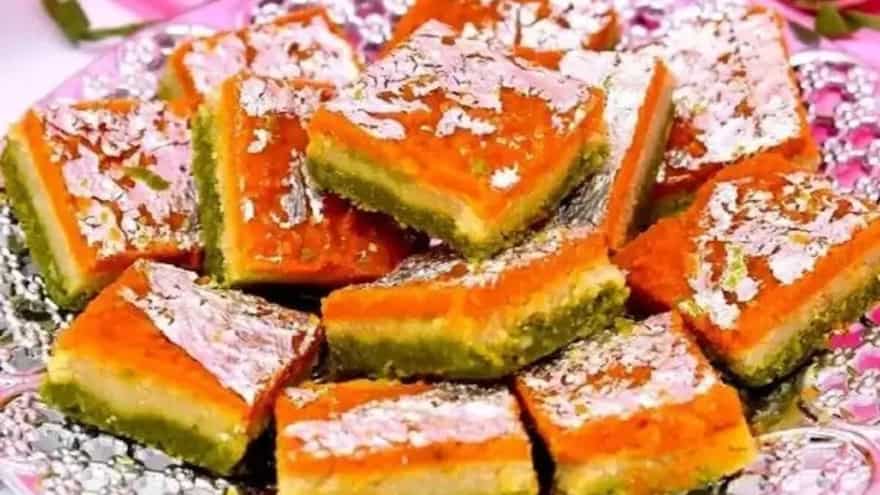
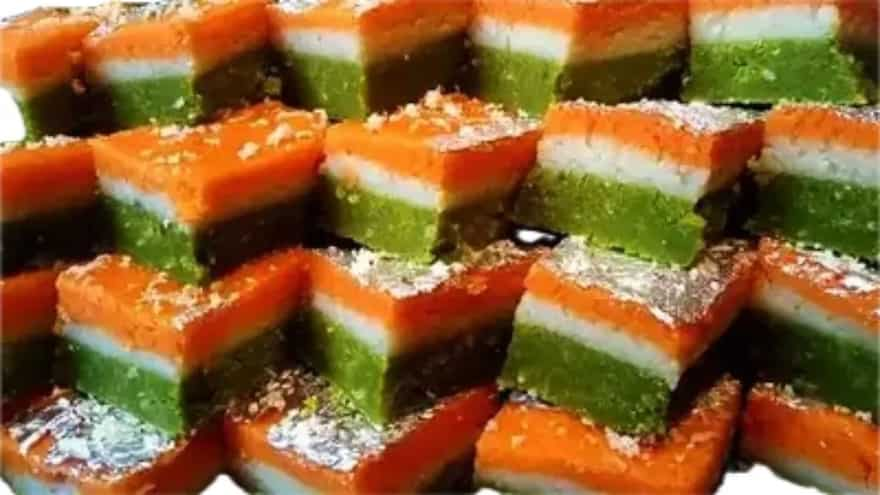
The name Tiranga is derived directly from the Indian National Flag, which features saffron, white, and green colours. Each layer symbolises the colour of the flag and holds a symbolic meaning. The colour saffron represents courage and sacrifice, white symbolises peace and righteousness, whereas green denotes growth and prosperity. Traditionally, saffron flavour or kesar is used to make the orange layer, plain white milk khoya makes the centre layer, and pistachio or cardamom-flavoured khoya makes the green layer. The layers of barfi are carefully assembled so that they remain separate, maintaining their own flavour, yet sticking to each other.
GI Tag: Protecting Cultural Sweet
Tiranga Barfi has acquired a Geographical Indication (GI) tag, identifying its distinctive identity related to Varanasi. This has helped in protecting the sweet from duplication, and there is also the guarantee that its preparation methods are conserved. The GI tag also highlights the role of local halwais whose skills have been passed down through generations, those who are involved in making this iconic barfi. For Varanasi, this honour is not just about ownership, but it is about protecting the cultural food heritage and providing national visibility to a sweet that represents both skill and patriotism.
(Image credit: Instagram)
How To Make Tiranga Barfi At Home
Ingredients
500 g khoya (mawa), grated
1 cup (200 g) sugar
¼ tsp cardamom powder
15–20 saffron strands, soaked in 2 tbsp warm milk
2 tbsp pistachio paste (or ¼ tsp green food colour)
1 tbsp chopped pistachios (optional, for garnish)
Steps:
1. In a pan, heat khoya and add sugar and cardamom to it. Cook until it thickens.
2. Divide this mixture into three equal portions.
3. To one portion, add saffron; keep one portion plain, and mix the pistachio and cardamom paste to the third.
4. Take a greased tray and add layers of the mixture to it- green at the bottom, white in the middle and saffron on top. Be careful while assembling the layers so that they do not overlap each other.
5. Let it sit for an hour or two, then cut into neat square shapes and serve.
(Image credit: Instagram)




