Share
Share

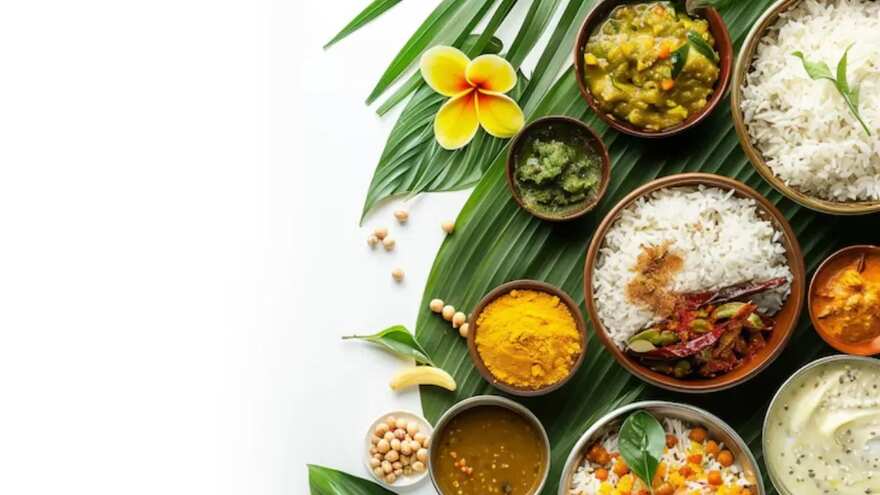
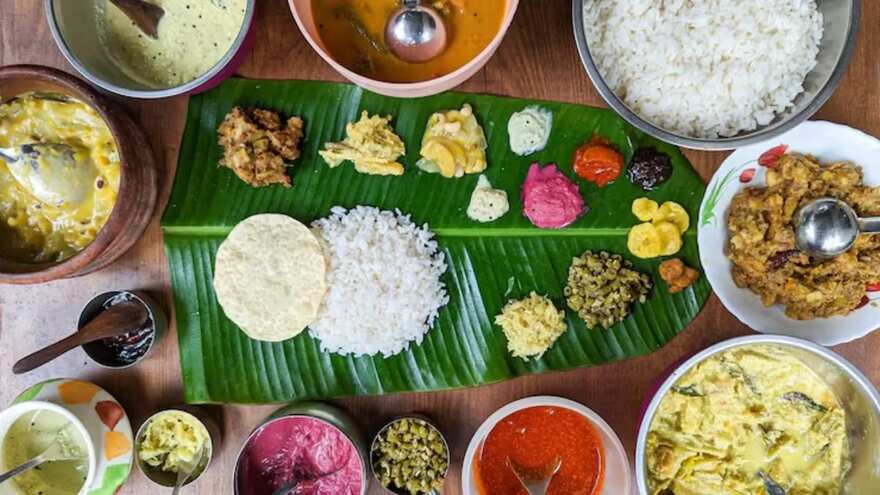
With Onam celebrations in full swing, you can observe households in Kerala hosting a Sadhya feast for friends and relatives, and even restaurants are coming up with a day or more event where they are calling foodies to indulge in this cultural banquet featuring 64 delicacies (at least 12 if not more). From curd-based light dishes to pachadis and sweets, there is a balance of flavours on the banana leaf. Even if you are not an expert on food, you can witness this well-rounded meal coming together without weighing you down. Imagine savouring more than 50 dishes yet not feeling sleepy or full till your throat. That’s the beauty of Onasadhya, which features dishes made with seasonal ingredients.

Why Is Sadhya A Balance Of Sweet, Sour, Bitter, and Spicy?
If you are looking for answers to this question, you might have to dig a little deeper. The secret lies in the Ayurvedic Wisdom found in the ancient Indian scriptures. While knowledge is being commercialised and sold after being packaged in multiple layers of ‘organic’ and ‘clean’ labels, it is more than that. If you ask experts, you will understand the science behind it and how it aims to correct primary doshas - Vata (dry, light, and cold), Pitta (hot, sharp, and intense), and Kapha (heavy, cold, and slow).
Vata is associated with ether and air, Kapha refers to water and earth, and Pitta stands for fire and water. Sadhya has dishes associated with each of these elements, so the feast does not weigh more on one side. Emerging from these six elements are six tastes - sweet, sour, bitter, spicy, salty, and astringent. When you take a bite comprising all these notes, your buds enjoy a symphony that can’t be put into words but experienced while eating. Not to mention that this banquet balances doshas. While a single meal cannot improve your overall well-being, at its core, it stands for nourishing both mind and body.
When you see a Sadhya arranged in front of you, taste bitterness from kootu curry, sweetness from payasam, saltiness from pickles and salt, tanginess from curd-based curries, spiciness from certain sambar and inji puli, and astringent taste from thamboolam (areca nut and betel leaf combo making an excellent mouth freshener)
Significance Of Each Note
Sourness is known to awaken your appetite; hence, such elements are often added to the first half of the banana leaf. Sweetness is the celebration of harvest. “Kuch meetha ho jae,” is not only a tagline of a popular chocolate brand, but it is a common phrase used in Indian households after completing the meal or celebrating a joyous occasion.
While no one likes the bitter taste, it acts as a palate cleanser. Since Sadhya has several elements, your buds are bound to get confused after every 3-4 bites. No matter what you eat, everything will taste the same. Hence, bitterness in pavakka (bitter gourd) thoran or uluva curry (fenugreek curry) helps you clear the palate so that you can relish other flavours. It also detoxifies the body and balances the sweet notes in the meal.
Spiciness in Sadhya stands for warmth, and it comes from red chillies, pepper, and green chillies. Sambar, rasam, and avial are spicy, tangy, and sour. They create a lively contrast with sweet and bitter notes. The meal comprises hot elements as well as cooling ingredients to prevent your digestive system from being overwhelmed. They complement each other, making it easy on the stomach to break down the food and extract nourishment. Sadhya or thalis across India are not just meals; they stand for gratitude, balance, celebration, nourishment, and togetherness. Have you made plans to enjoy Onasadhya this year?