


 Share
Share

Sabudana, known globally as tapioca pearls, is not native to the Indian subcontinent. It is derived from the starch extracted from mouth-watering cassava roots (Manihot esculenta), a crop indigenous to South America. Brought to Asia by Portuguese traders and later commercialised during periods of food scarcity, cassava quickly adapted to tropical climates. Its transformation into uniform, pearl-like spheres made it a versatile, shelf-stable kitchen ingredient.
The association between sabudana and vrat (ritual fasting) stems primarily from cultural adaptability and logistical convenience rather than any sacred or unique nutritional profile. During Navratri and other Hindu fasting periods, strict dietary rules prohibit the consumption of true cereal grains (ann) such as wheat and rice. Botanical tubers, non-cereal starches, fruits, dairy, and nuts remain permissible. Because sabudana is derived entirely from a tuber root rather than a cereal grass, it naturally fit the religious criteria for non-grain foods while providing an immediate source of calories to sustain devotees through long hours of prayer and ritual activities.
Dr Rohini Patil, author, nutritionist, and founder of Nutracy Lifestyle, explains the cultural transition clearly: "Sabudana, also called tapioca pearls, comes from the starch taken from the starch taken from the cassava or tapioca root. Cassava originally grew in South America. It was then brought to different parts of Asia, like India. Over time, tapioca became very popular in cooking. The link between sabudana and vrat is mostly because of culture and convenience, not because sabudana is special in nutrients. When people fast, they often avoid grains and cereals, but foods like tubers, some fruits, dairy, nuts, and tapioca are usually allowed based on the type of fasting."
Eshanka Wahi, Dubai and Delhi-based culinary nutrition and holistic wellness coach and founder of Eat Clean With Eshanka, echoes this practical perspective: "Sabudana is made from tapioca starch which has cassava. It became common in vrat food because it could be eaten when regular grains were avoided. There are different fasting traditions across India, so I wouldn’t say there is one particular story behind it. It has simply become a familiar part of fasting food over the years."
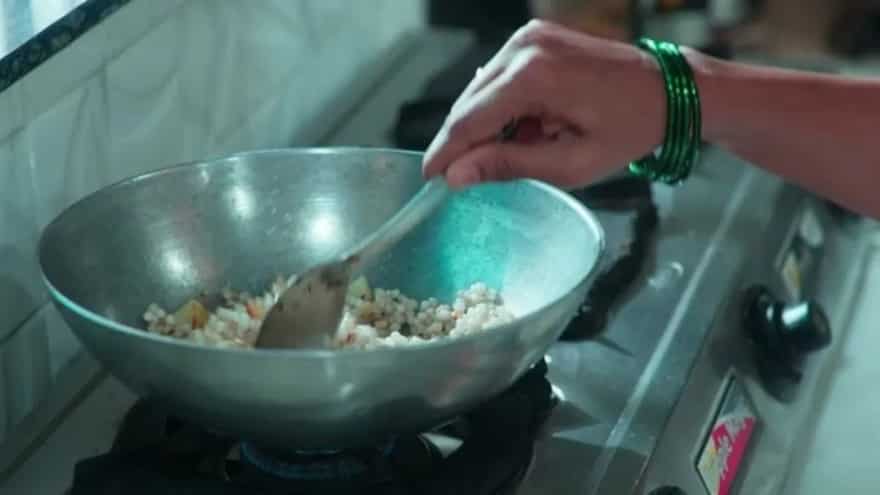
Image credit: Adobe Stock
Deconstructing The Macros: Is Sabudana Truly Healthy?
To evaluate whether sabudana deserves its stellar reputation as a health food, one must examine its raw nutritional breakdown. Pure tapioca starch consists almost entirely of complex and simple carbohydrates, containing minimal trace amounts of dietary fibre, protein, vitamins, or essential minerals. A standard 100-gram serving of dry sabudana provides roughly 350 to 360 calories, dominated by nearly 88 grams of carbohydrates, less than 0.2 grams of protein, and less than 1 gram of fibre.
When evaluated solely on micro- and macronutrient density, calling sabudana a comprehensive wellness food is a significant misnomer. While it is naturally gluten-free and gentle on the gastrointestinal tract, its primary function in human physiology is rapid calorie delivery.
Eshanka Wahi notes: "I think we sometimes call something healthy just because we eat it during vrat. Sabudana isn’t bad for you. It gives you carbohydrates and energy, but it is low in protein and fibre. So I wouldn’t look at sabudana by itself as a complete meal. It mainly gives you carbohydrates which give you energy. Which is useful during fasting, especially when your usual meals have changed. But I wouldn’t depend on sabudana for protein or fibre."
Dr Rohini Patil highlights this distinction: "From a nutritional point of view, sabudana is mainly starch. Gives very little protein, fiber, vitamins, and minerals when compared with whole foods such as vegetables, fruits, legumes, or nuts. Sabudana’s main benefit during vrat is that sabudana supplies carbohydrates and therefore energy, especially when normal cereal meals are not allowed. So Sabudana itself is not unhealthy. Sabudana’s nutrition depends a lot on how much Sabudana you eat, how Sabudana is cooked, and what Sabudana is served with."
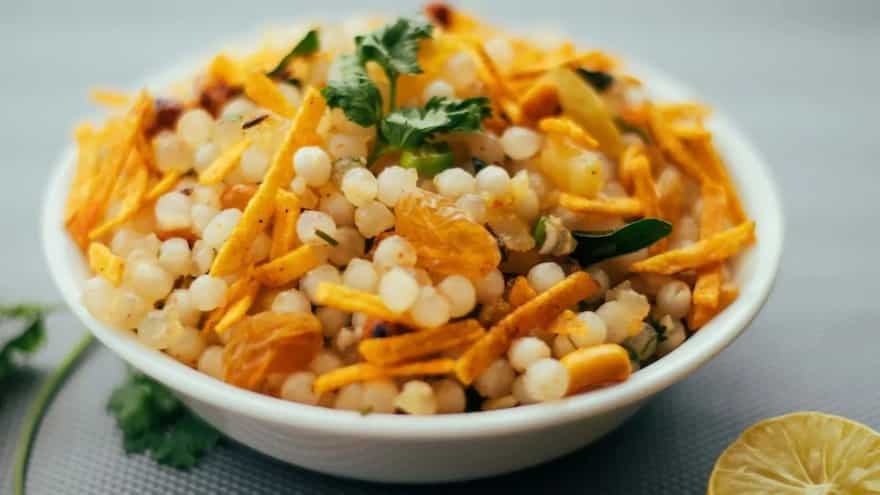
Image credit: Unsplash
Glycaemic Impact, Satiety, And The Physiology Of Fasting
Because sabudana is essentially refined plant starch devoid of structural fibre or protein matrices, it possesses a high glycaemic index (GI). When consumed alone or in starchy preparations, the digestive enzymes rapidly break down the tapioca pearls into simple glucose molecules. This leads to a quick spike in blood glucose levels, followed by a corresponding surge in insulin secretion.
While a rapid rise in blood sugar provides immediate energy, it lacks sustained satiety. Protein and fibre are the primary dietary components responsible for triggering fullness hormones (such as peptide YY and GLP-1) and slowing gastric emptying. Without them, a high-carbohydrate meal can lead to sudden blood sugar crashes, leaving a fasting individual feeling fatigued and hungry shortly after eating.
Eshanka Wahi agrees on the limitations of plain starch: "Sabudana mainly gives you carbohydrates. The problem is that there isn’t much protein or fibre coming along with it. So you may get energy from it, but it may not keep you full for very long. That’s why I prefer having sabudana with peanuts, curd or paneer rather than sabudana as the whole meal. It can give you energy, yes. But plain sabudana may not keep you full for very long."
Dr Rohini Patil breaks down the physiological impact: "Sabudana is mostly starch, so it gives you carbohydrates and calories but little protein and fiber. Protein helps maintain muscle, supports recovery, and keeps you feeling full. Fiber is important for digestion, helps control blood sugar, and adds to the feeling of being satisfied. Because sabudana lacks protein and fiber, a meal made mostly of it may not keep you full for long. Especially if you don't add foods that bring in protein or fiber, you might feel hungry again soon after eating."
Addressing energy vs. long-term satiety, Dr Patil adds: "Sabudana can provide energy during fasting because it contains carbohydrates. That is useful when someone is not eating grains and needs a source of carbohydrates. I want to separate the idea of giving energy from the idea of staying full for a time. Sabudana is low in protein and fiber, which usually help you feel full. Because of that, plain Sabudana might not keep everyone full for long."

Image credit: Adobe Stock
The Industrial Reality: Understanding The Processed Nature Of Sabudana
It is a common misconception that sabudana is a minimally processed agricultural whole food like unpolished rice or whole grains. In reality, commercial sabudana manufacturing is a heavily intensive industrial process. The starchy roots of the cassava plant are harvested, washed, peeled, and crushed into a thick pulp or mash. This mash is washed repeatedly with water to extract the pure milky starch liquid, which is then filtered and allowed to settle into a dense starch cake.
To transform this fine starch powder into the iconic uniform pearls found in markets, the wet starch undergoes a specialised thermal and mechanical process known as gelatinisation. The starch is partially cooked over heat, forced through metallic sieves or granulation machines to form small spheres, and then polished, sun-dried, or oven-dried to achieve a shelf-stable moisture content. Because of this extensive processing and refinement, sabudana is stripped of any native vitamins, minerals, and dietary fibres that might have been present in the raw cassava root, leaving behind a pure, highly concentrated carbohydrate isolate.
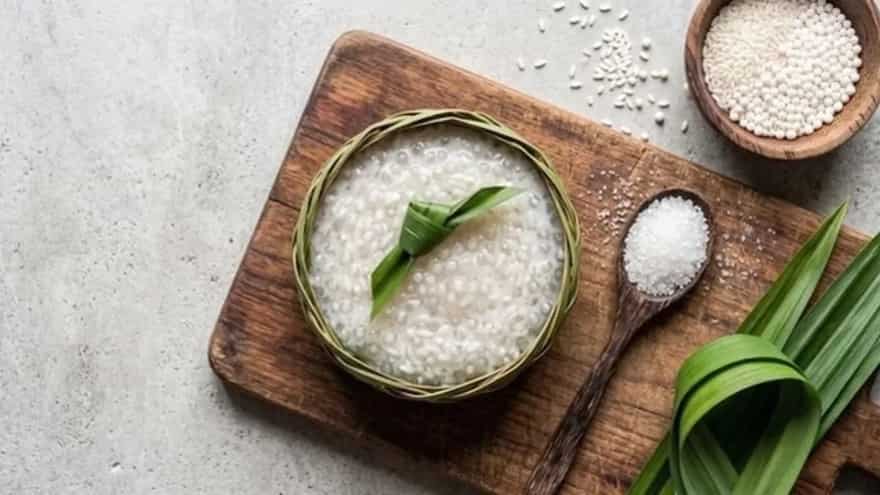
Image credit: Adobe Stock
Culinary Preparation: How Cooking Methods Alter Health Outcomes
The overall health impact of sabudana changes dramatically based on how it is prepared in the kitchen. The raw starch acts as an absorbent canvas, soaking up whatever liquids, fats, and sugars it is cooked with.
A traditional Sabudana Khichdi, prepared with a moderate quantity of ghee or peanut oil, roasted groundnuts, curry leaves, and allowed vegetables, balances the high carbohydrate load with healthy monounsaturated fats and plant protein. Conversely, items like Sabudana Vada are submerged in boiling oil; the starch absorbs large amounts of dietary fat, significantly increasing the caloric density of the dish. Similarly, Sabudana Kheer often introduces high quantities of refined sugar and full-fat dairy, transforming a modest carbohydrate source into a dense dessert.
Dr Rohini Patil explains the nutritional variance: "The basic carbohydrate content of sabudana stays the same. How it is prepared can greatly change the calories, fat, sugar, and overall nutritional value of the meal. Sabudana khichdi can be a balanced choice when made with limited oil, peanuts, and allowed vegetables. Sabudana vada is usually higher in calories because the mixture is deep-fried, which raises the fat and energy content. Sabudana kheer can also be much higher in calories. This depends on how much sugar, milk, and other items are used. During Navratri, it is better to go with steamed, sautéed, or lightly cooked versions rather than deep-fried ones."
Eshanka Wahi contrasts these popular dishes as well: "Sabudana khichdi with peanuts is one thing. Sabudana vada is deep fried. Kheer has milk and sugar. So even though they all have sabudana, they aren’t the same food in nutrition."
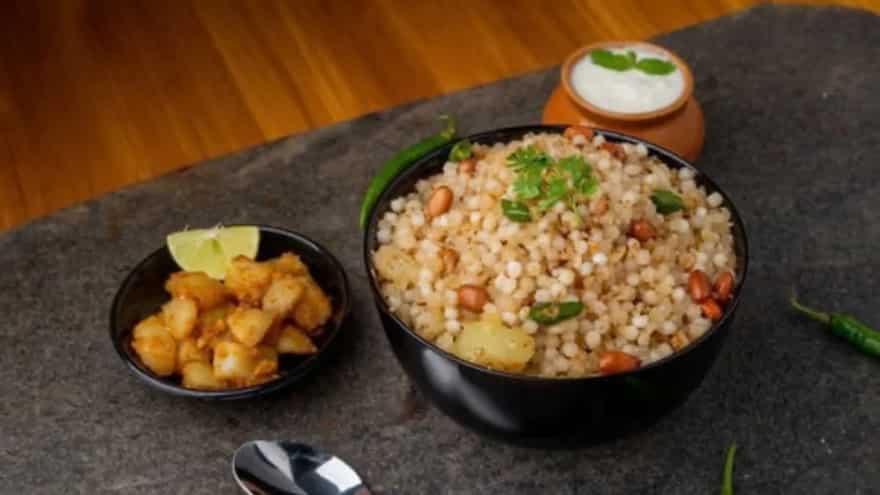
Image credit: Adobe Stock
Smart Pairing Strategies For A Nutritionally Balanced Vrat Plate
To prevent blood sugar spikes and avoid muscle breakdown during Navratri fasting, sabudana should never be consumed as an isolated starch. Combining it with protein-rich foods, healthy fats, and high-fibre vegetables creates a complete, balanced meal that slows digestion and keeps energy levels steady.
During Navratri, acceptable fasting ingredients offer several options for nutrient pairing:
- Protein additions: Fresh paneer, full-fat or low-fat curd (yogurt), Greek yogurt, or buttermilk (chaas).
- Healthy fats and micro-nutrients: Roasted peanuts, almonds, walnuts, pumpkin seeds, and sunflower seeds.
- Fibre additions: Allowed fasting vegetables such as bottle gourd (lauki), pumpkin, potato in strict moderation, cucumber, spinach, and fresh fruits like apples or pomegranates.
Dr Rohini Patil offers practical pairing guidance: "The easiest rule is to combine a source with protein, healthy fats, and fiber-rich foods that are allowed. Protein keeps you satisfied, while carbohydrates provide energy. Healthy fats add flavor and satiety, and fiber-rich foods support digestion. For instance, you can make sabudana khichdi with peanuts. Serve it with curd. If you follow a fasting style, paneer, milk, or other allowed dairy foods also add protein. Vegetables that are allowed during vrat add bulk, micronutrients, and fiber. Nuts and seeds give you fats and a bit of protein."
Eshanka Wahi emphasises keeping the plate varied: "Peanuts are a good option, especially with sabudana khichdi. Curd or paneer can also be added if they are part of your vrat. Fruit, suitable vegetables, nuts and seeds can come in during the rest of the day. Potatoes are fine too. I just don’t want the plate to only have sabudana, potatoes and fried snacks."
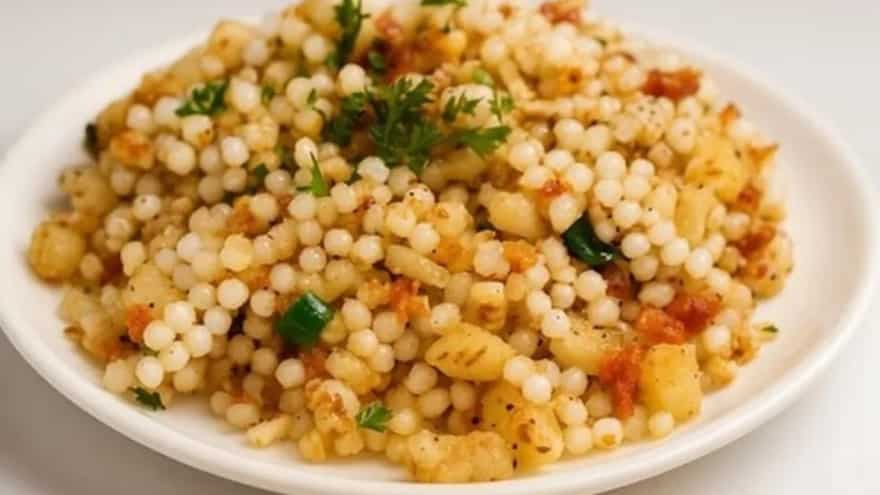
Image credit: Adobe Stock
Portions, Frequency, And Avoiding Fasting-Induced Gaps
Because fasting routines reduce the variety of daily food groups, relying predominantly on starchy tubers like potatoes and sabudana can lead to subtle micronutrient deficiencies, sluggish digestion, and overeating later in the evening. Moderation in portion sizing and meal timing is essential.
For healthy, moderately active adults, a portion size of approximately half a cup to one cup of cooked sabudana per meal is generally sufficient, provided it is accompanied by appropriate proteins and fats. Individuals engaging in intense physical activity, such as energetic Garba or Dandiya dancing, may require slightly higher carbohydrate allowances to replenish glycogen stores. Conversely, individuals managing diabetes, insulin resistance, or weight goals should keep portions modest and space their consumption thoughtfully.
Dr Rohini Patil addresses portion control and daily frequency: "As a guide, about half a cup to one cup of cooked sabudana in a meal can work for many healthy adults, especially when it is mixed with protein and vegetables or other good foods that have nutrients. People who are very active might need more while those who are trying to lose weight or keep blood sugar levels under control might need less. I would also suggest not using sabudana as the source of carbohydrates at every meal during Navratri. Switch it with other allowed foods, like vegetables, fruits, dairy, nuts, seeds, and good protein options."
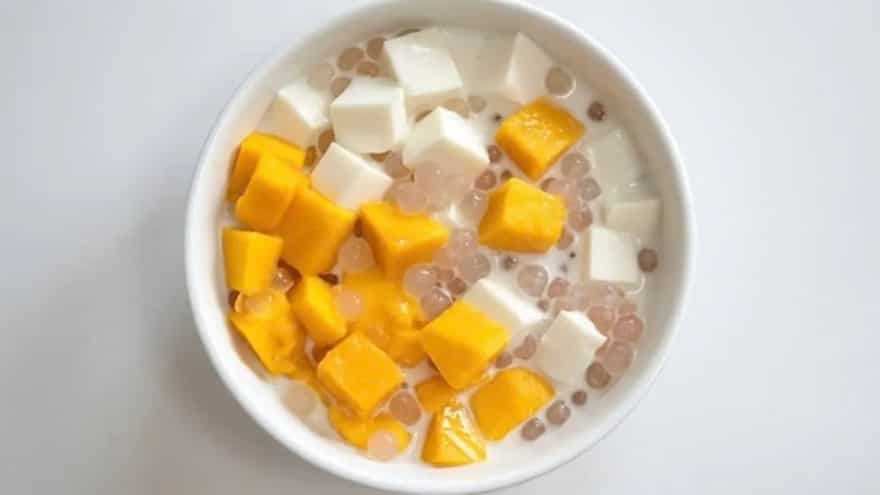
Image credit: Adobe Stock
Dr Patil also warns against standard nutritional gaps: "When most meals are made up of potatoes, sabudana, and other high-starch foods, you may notice that the diet becomes low in protein and fiber. Depending on food choices... you might eat vegetables and therefore receive fewer vitamins, minerals, and phytonutrients. Excessive reliance on fried vrat foods can raise calorie and fat intake more. Another concern is that you sometimes compensate for fasting by eating portions, frequent snacks, sweets, or sugar-sweetened drinks."
Eshanka Wahi highlights how improper day-time nutrition drives evening overeating: "There isn’t one number that I would give to everyone. Someone who is dancing for hours during Navratri will have different needs from someone spending the day at home. I just wouldn’t make sabudana the food for every meal. Have it once and bring different foods for the rest of the day. If someone is eating potatoes, sabudana and fried snacks for most of their meals, there isn’t much variety left. They can also end up getting fewer different vitamins and minerals. And then there is the hunger. If you barely eat all day, by night you’re obviously going to want something more filling. That’s when fried vrat food can easily become the main meal."
For a structured approach to fasting, Eshanka Wahi shares a blueprint for a balanced Navratri routine: "You can have fruit, curd and some nuts in the morning. For lunch you can have Kuttu or rajgira roti with paneer, curd and suitable vegetables. If you feel hungry later then you can have makhana or fruit. Sabudana khichdi with some peanuts and curd can work for dinner. Sabudana doesn’t need to disappear from your Navratri diet. Just don’t have only this. The main idea is to eat properly during the fast. Even in fasting your body needs nutrition."
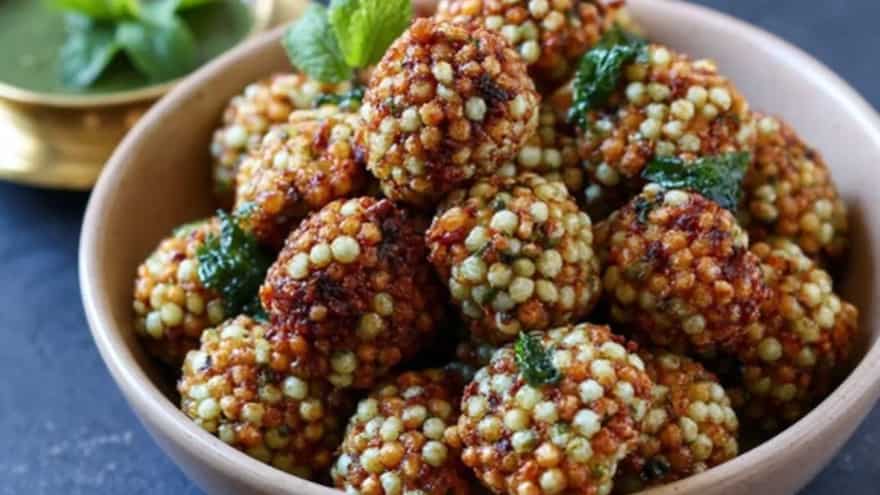
Image credit: Adobe Stock
By understanding sabudana as an energetic base rather than a complete meal in itself, you can enjoy traditional fasting foods while keeping your energy steady, your digestion healthy, and your body well-nourished throughout Navratri 2026.




