


 Share
Share

Navratri is a festival that carries deep spiritual significance in Indian households. Each of its nine days is associated with a form of the Goddess and a colour that represents her qualities. The sixth day is dedicated to Goddess Katyayini, revered as a powerful and courageous manifestation of Durga. She is believed to destroy negative forces and bless her devotees with strength, prosperity, and fulfilment. Grey, the chosen colour for this day, is linked with balance and calm energy. When preparing bhog for Goddess Skandamata, devotees select dishes that are satvik, made without onion or garlic, and often connected to fasting traditions. These offerings are not only a mark of devotion but also a way to bring families together in prayer and celebration.
Preparing food in shades linked with the day’s colour theme has become an important part of Navratri. Grey-themed bhog can be created through the use of wholesome ingredients such as sesame seeds, poppy seeds, kuttu flour, sabudana, and various nuts. These dishes may not always appear entirely grey but carry undertones or elements that connect symbolically to the day. Each preparation is meant to be simple, nourishing, and suitable for fasting, while also being a heartfelt offering to the Goddess.
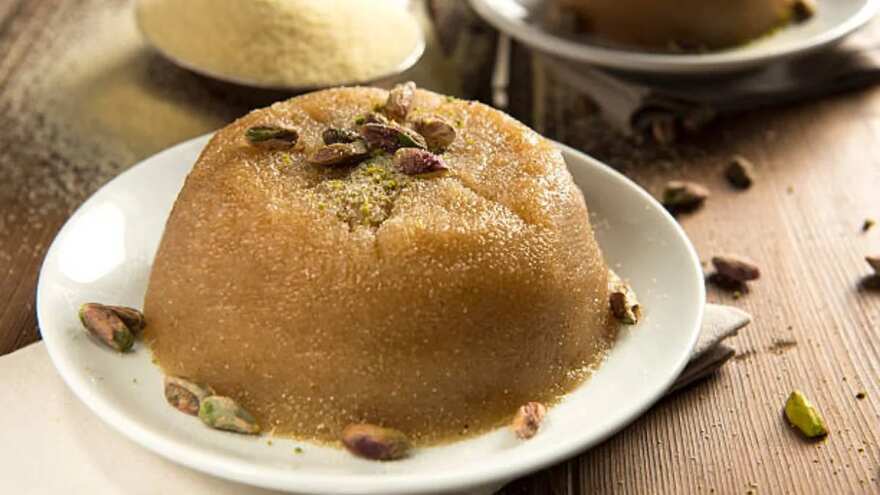
1. Kuttu Atta Halwa
Kuttu flour, also called buckwheat flour, is an ingredient that becomes central during Navratri fasting. Its naturally earthy tone makes it an apt choice for offerings connected with the colour grey. To prepare the halwa, roasted kuttu flour is slowly cooked with ghee and sweetened with jaggery or sugar. Cashew nuts and almonds may be added to enrich the dish, while cardamom lends aroma. This halwa is both filling and considered auspicious for the day. As a bhog, it reflects devotion and sustains energy during fasting.
2. Sabudana Khichdi With Peanuts
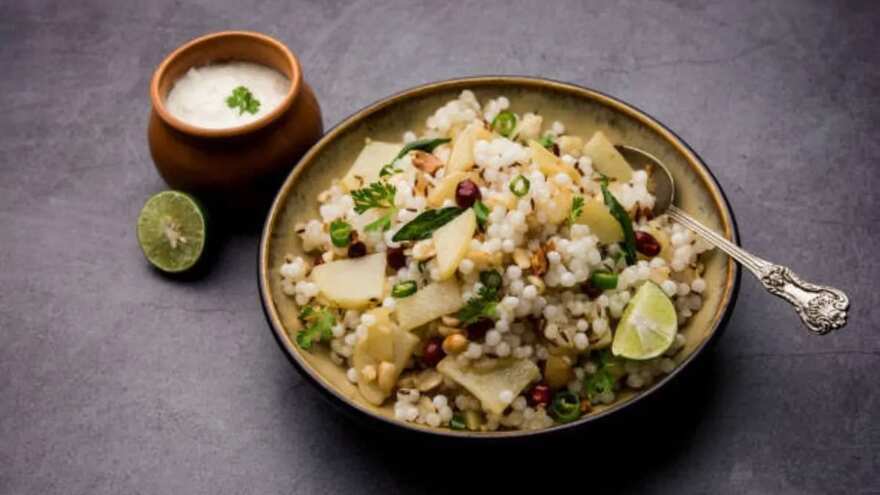
Sabudana, or sago pearls, is another essential ingredient during Navratri. While it appears white when cooked, the addition of roasted peanuts brings in the grey undertone that links the dish to the day’s theme. Sabudana khichdi is prepared by soaking the pearls, then cooking them with peanuts, green chillies, and a light seasoning of rock salt. The texture is soft yet satisfying, making it ideal as a bhog item. When offered to Goddess Katyayini, this dish represents purity and balance, while also being wholesome for the family after prayers.
3. Makhana Kheer With Poppy Seeds
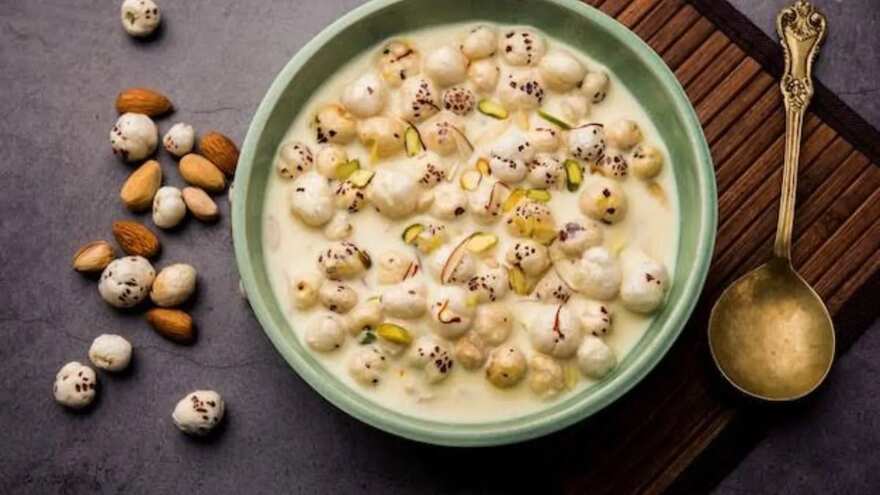
Makhana, or foxnuts, are widely used in fasting dishes, and when combined with poppy seeds they gain a greyish hue that is symbolic for this day’s bhog. The kheer is made by roasting makhana in ghee and simmering them in milk until they become tender. Ground poppy seeds are added to enrich the flavour and bring the dish closer to the grey colour. Sweetened with sugar or jaggery and garnished with almonds, this kheer is a divine offering and a traditional way to seek blessings from the Goddess.
4. Til Ladoo
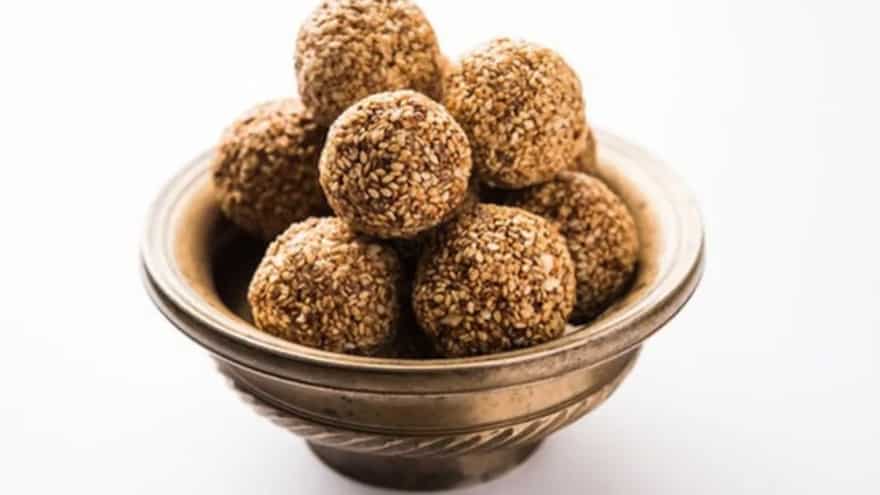
Sesame seeds hold strong significance in Indian rituals and are especially apt for this day because of their grey appearance. Til ladoos can be prepared with roasted sesame seeds bound together with jaggery. The process is simple yet meaningful, as sesame is regarded as a symbol of protection and good fortune. Offering til ladoos to Goddess Katyayini is believed to remove obstacles and bring blessings for health and prosperity. This sweet is also enjoyed by families after the rituals, serving both as prasad and as a nourishing festive treat.
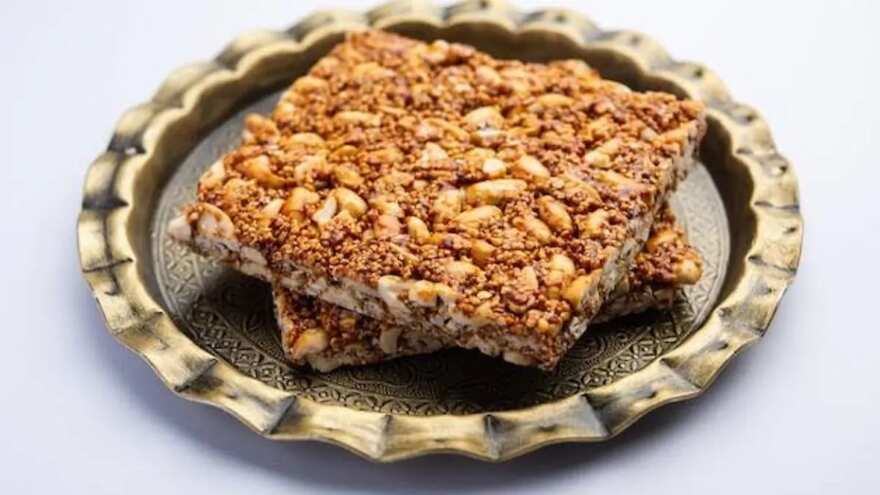
5. Rajgira Chikki With Nuts
Rajgira, or amaranth, is another grain associated with fasting that can be transformed into a delightful chikki. By blending roasted rajgira with sesame seeds, almonds, or cashews, and binding them with jaggery, one creates a preparation that carries nutty flavours and symbolic colours. The combination of sesame and nuts introduces natural grey tones, making it suitable as a bhog for the sixth day. This dish is easy to prepare, stores well, and is cherished by both children and elders during the celebrations.
6. Kaju Katli
Kaju katli is one of the most cherished sweets in Indian households during festivals. Its pale, silvery shade aligns with the symbolic colour of the day, making it an elegant choice for bhog. The sweet is prepared using ground cashew nuts blended with sugar syrup until the mixture sets into smooth slices. A thin layer of edible silver leaf is often placed on top, which further enhances its connection with the colour grey. Kaju katli holds significance as a festive mithai that combines refinement and devotion, and it is considered especially auspicious when offered to the Goddess. Families also share this sweet as prasad, which adds to the sense of celebration and togetherness.




