


 Share
Share

Navratri is one of the most widely observed festivals across India, marked by nine days of devotion, fasting, and prayer. Each day is dedicated to a distinct form of Goddess Durga, with food and rituals chosen to reflect her qualities. On the fourth day, devotees honour Maa Kushmanda, the goddess associated with creation, vitality, and cosmic energy. She is often described as radiating light like the sun, bringing life and balance to the universe. The rituals of Day 4 carry deep significance, with yellow recognised as the colour of the day. This shade is linked with growth, healing energy, and knowledge. Orange is also included in many offerings, as it symbolises warmth, light, and transformation. Devotees prepare bhog in these shades to celebrate the radiant power of Maa Kushmanda.
The bhog is always satvik, free from onion, garlic, and overly heavy spices. The intention is to prepare dishes that are pure, nourishing, and simple enough to reflect devotion. Every household adds its own variations, but the essence remains the same: preparing food with sincerity and then offering it to the goddess before sharing it as prasad with family and guests. The focus is on purity of heart and symbolic representation through colour and ingredients such as saffron, turmeric, gram flour, milk, fruits, and nuts.

1. Mango Shrikhand
Mango shrikhand is a creamy preparation made with hung curd and ripe mango pulp, flavoured with saffron and cardamom. The dish takes on a bright golden-yellow shade, making it ideal for Day 4 bhog. Devotees prepare shrikhand by straining fresh curd overnight, ensuring the texture is thick and smooth. The pulp of ripe mango is then mixed with sugar and saffron, before blending with the curd. Garnished with slivers of almond and pistachio, mango shrikhand is both refreshing and festive. Its satvik nature and association with fruit-based offerings make it a perfect addition to the bhog thali for Maa Kushmanda.
2. Kesar Malpua
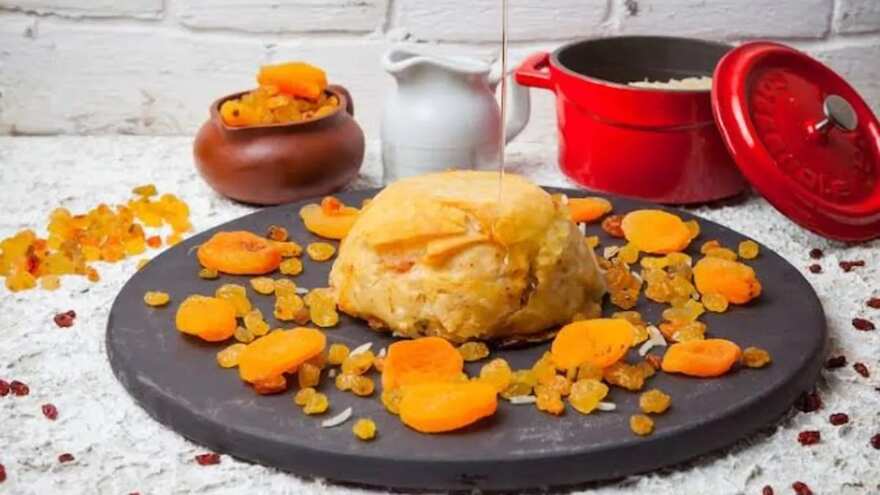
Malpua is a traditional sweet prepared during festivals, and when flavoured with saffron, it turns into a golden delicacy well suited for Navratri offerings. The batter is prepared with wheat flour, milk, and cardamom, then fried in ghee until golden. The malpuas are soaked in a saffron-infused sugar syrup, which lends them their distinctive colour and fragrance. When arranged in the bhog thali, the golden discs of malpua reflect light and festivity. Prepared in small batches, these are offered with devotion before being shared as prasad. Their richness, combined with the symbolic shade of saffron, makes them highly significant for worship of Maa Kushmanda.
3. Pineapple Halwa
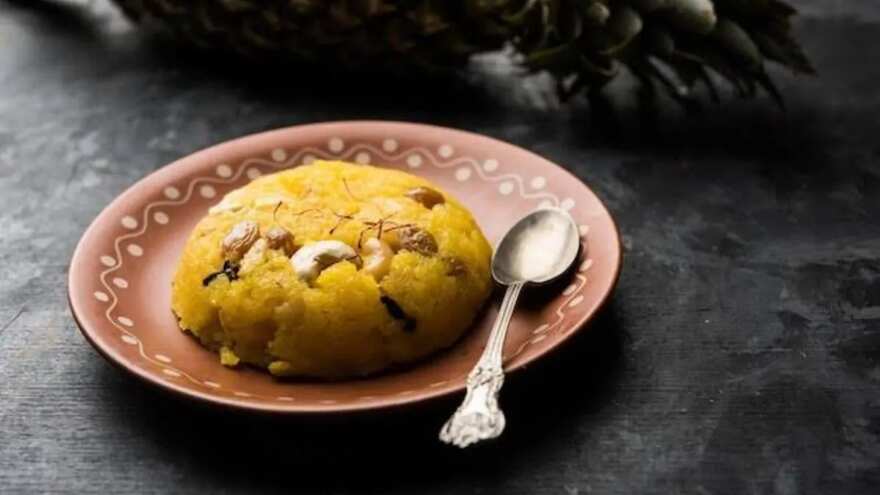
Pineapple halwa adds a fruit-based twist to the traditional halwa often made during Navratri. The bright yellow fruit is cooked in ghee along with semolina, sugar, and milk, resulting in a halwa that is both fragrant and vibrant in colour. The pineapple brings freshness, balancing the richness of ghee and semolina. A few strands of saffron and cardamom powder complete the preparation, giving it depth and aroma. This halwa is distinct from the usual sweets, offering a light yet festive choice for bhog. Its bright yellow hue fits perfectly with the symbolism of Day 4, making it a memorable addition to the offerings.
4. Orange Barfi
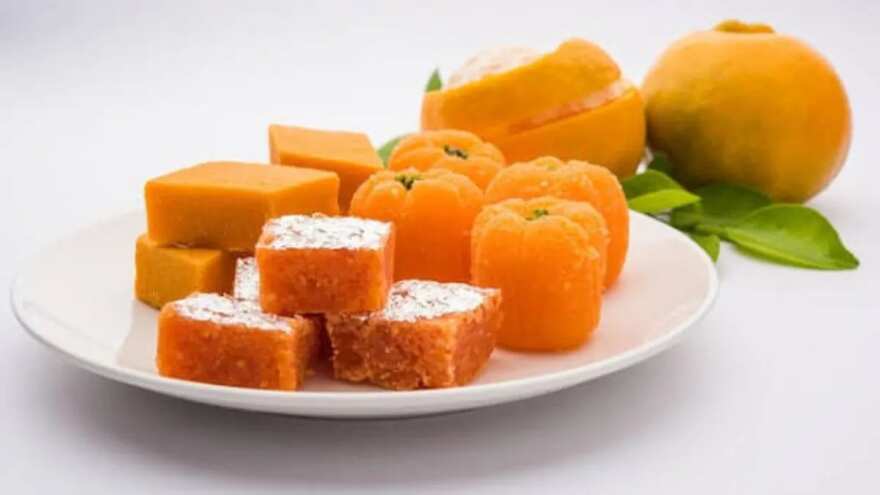
Orange barfi is a unique sweet that uses fresh orange juice or pulp blended into a base of milk solids. The mixture is slow-cooked until it thickens, then set and cut into squares. The natural orange tone gives it an appealing festive appearance, while the subtle citrus flavour sets it apart from traditional barfis. Garnishing with pistachios or almonds adds a celebratory touch. The presence of fresh fruit in the preparation reflects purity and devotion, and the orange shade connects directly with the radiance of Maa Kushmanda. Offering orange barfi during the puja adds variety and richness to the bhog thali.
5. Chana Dal Halwa
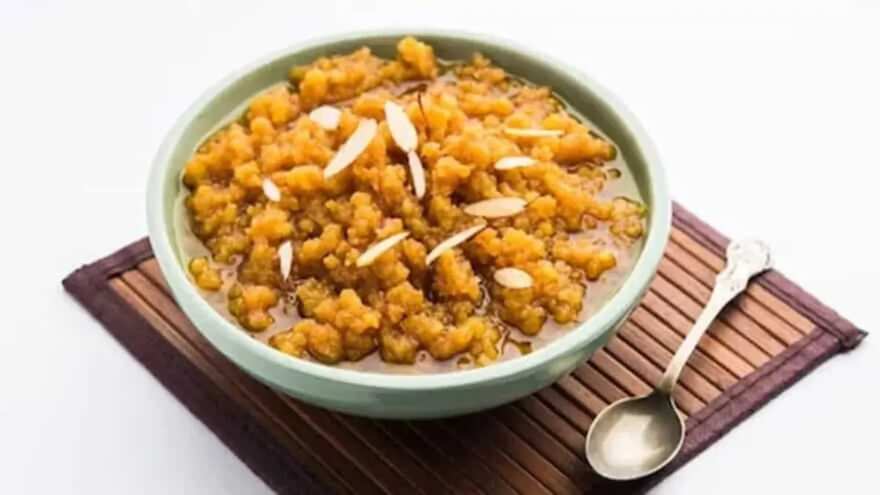
Chana dal halwa is an auspicious choice for bhog, known for its nourishing quality and vibrant golden colour. The dal is soaked, ground, and then cooked slowly in ghee until fragrant. Milk and sugar are added gradually, followed by saffron and cardamom for flavour. This halwa requires patience, but its festive richness makes it especially fitting for offerings during Navratri. Garnished with cashews and almonds, it completes the bhog thali with a balance of texture and taste.




