


 Share
Share

At a glance, momo and dimsum may appear like cousins- both are little covers of dough wrapped around flavourful fillings and served warm inside bamboo baskets. But that visual resemblance often leads to confusion, with many assuming both to be just the same. While both of them have a dumpling-like appearance, it is less known that the two belong to entirely different food cultures, which are shaped by geography, tradition, and the way they are meant to be eaten.
What Are Momos?
Momos hail from the Himalayan belt, Tibet, Nepal, and parts of Northeast India—where food is designed to be filling, warming, and practical for colder climates. These dumplings are stuffed with chopped vegetables or meat, flavoured simply with ginger, garlic, onion, and basic spices to let the ingredients shine. They are folded by hand, steamed, and paired with a fiery red chilli chutney. Momos are less about variety and grace, and more about convenience and satisfying flavours.
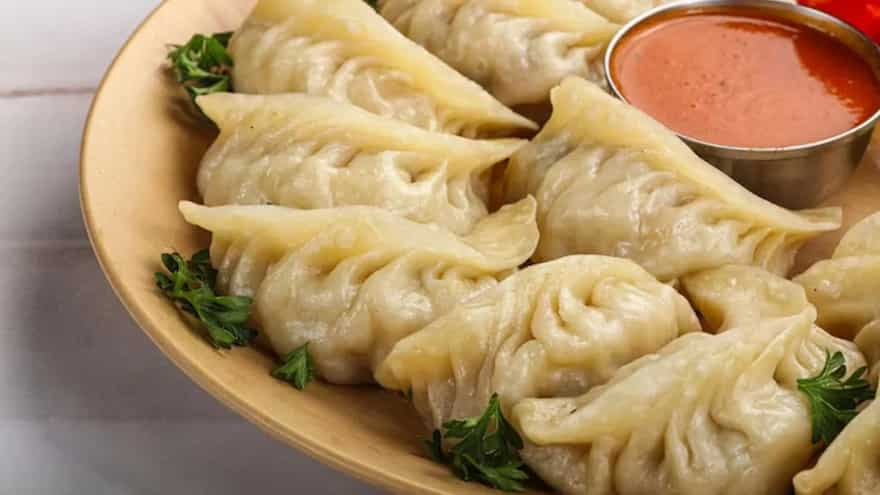
(Image credit: Freepik)
What Is Dimsum?
Dimsum belongs to the Cantonese culinary tradition of yum cha, which means tea-time snacking, where small, light portions are enjoyed alongside a cup of tea. Rather than one typical dish, dim sum is an entire variety of dumplings, buns, rolls, and pastries prepared with a particular technique and creative presentation. Its fillings can vary from vegetables and tofu to seafood, often lightly seasoned to emphasise freshness and texture.
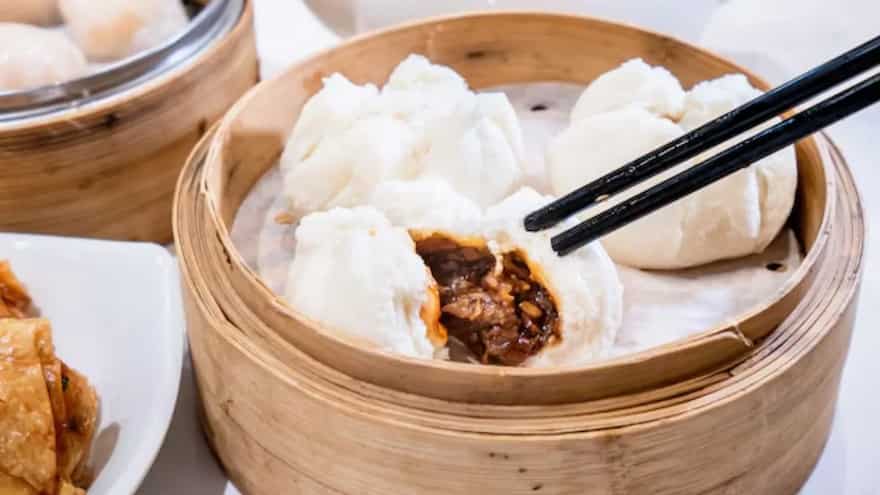
(Image credit: Freepik)
One is a quick, enjoyable bite often enjoyed as a street-style snack; the other is part of a more unhurried, shared meal experience. Understanding the key similarities and differences is not only about knowing the ingredients, but it’s about appreciating the stories, tips, and practices behind these treasured dishes.
What's In A Name?
For both momo and dim sum, they often get an extra ‘s’ tacked on to the end by well-meaning English speakers. But the reality is quite different. When you say "momo", you're already talking about the dumplings (plural!), and "dim sum" already covers all those little dishes on the table. So while the two have different origins and the additional ‘s’ feels natural in English, in the native places, Tibetan and Nepali for momo, Cantonese for dim sum, no such modification exists.
Origin Tells A Story
Momos arrive from the Himalayan belt, i.e. Tibet, Nepal, and Northeast India, where food had to be filling, warm, and useful to adhere to cold climates. Dimsums, on the other hand, belong to the Cantonese tradition of China, particularly as per the culture of yum cha, meaning tea-time dining. While momos grew as a hearty street and home food, dimsums were created for small, elegant bites that were served along with tea. One is about comfort and care, whereas others are about variety as well as refinement.
Process From Dough To Steamer
At first glimpse, both appear to be covered in the same white dough, but the texture shows the difference. Momos usually have a thick cover to hold juicy fillings and survive the steaming in piled pans or street-side cookers. Dimsum skin, on the other hand,d is often thin, more delicate, sometimes even sheer. Momos feel satisfying to take a bite into, whereas dimsums are created for a softer, more delicate mouthfeel that perfectly complements the tea-time snacking.
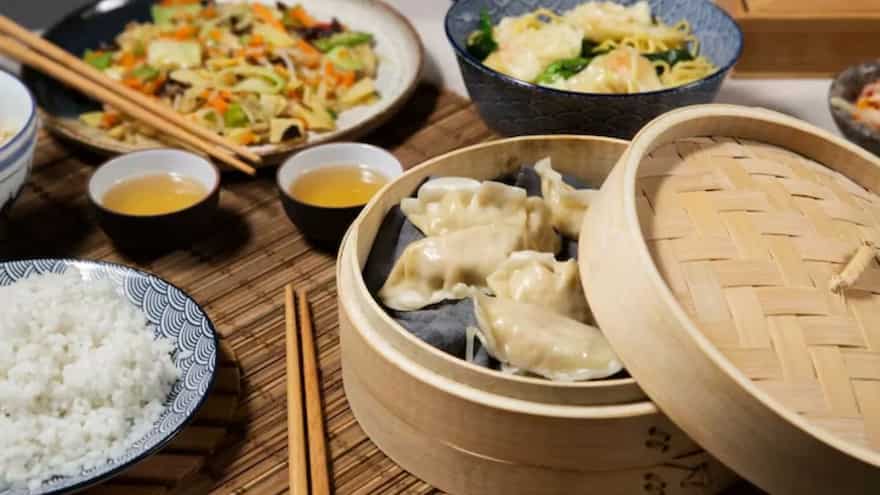
(Image Credit: Freepik)
Fillings Reflect Local Taste Preferences
The filling of momo is specific and bold, such as minced meat, cabbage, onion, garlic, ginger, and simple basic seasoning. It is prepared to be juicy and satisfying without having too many added flavours to it. Dimsums, on the other hand, can be far more detailed. In this filling, you will find prawns, bamboo shoots, water chestnuts, mushrooms, and even finely balanced sauces within it. The Cantonese approach treasures texture, the combinations and light seasoning. Momos feel like having a complete meal inside a cover, whereas dimsums are about distinction, contrast, and tasting various ingredients in small portions.
Cooking Styles
Most people link both of these with steaming, but momos mostly stick to that one method, sometimes and sometimes fried or pan-seared in street-style variety. Dimsum, however, is a whole universe of techniques—steamed, pan-fried, baked, or even deep-fried. Dimsum is not just one dish, but it is an entire type. Momos are a particular comfort food, whereas dimsums are part of a wider culinary ritual showing multiple textures on one table.
How To Eat Them
Momos are often enjoyed as a snack or even as a simple, quick meal, served with spicy red chutney. Dimsums, on the other hand, are seldom eaten alone, often enjoyed with tea and conversation. Instead of one plate per person, dimsum is about tasting many baskets together. Momos are simple and filling; dimsums are social, turning eating into an experience rather than just fulfilling hunger.




