


 Share
Share

The internet has a host of hacks, shortcuts and easy recipes to land the perfect poached egg. There’s something about cooking an egg to the perfect consistency that has internet chefs absolutely obsessed! Over the last few months, several chefs and content creators on social media have shared their hacks for achieving flawless, soft and delicate poached eggs. In fact, several times, these tips and tricks have leaned towards a microwave method to make good poached eggs. However, most functional recipes for a poached egg need minimal equipment and just a few minutes of prep. Is it even possible to make a perfect poached egg if you’re not a pro? Turns out, there are easy ways to make the egg hold its shape, and it works almost every time. Here are some of the best methods for making perfect poached eggs at home like a pro:
The Whirlpool Method
A method preferred by both chefs and newbie cooks, it can help you achieve consistent eggs. Creating a whirlpool in the poaching water is a classic technique that helps wrap the egg whites around the yolk, resulting in a more uniform shape. To do this, use a spoon or spatula to stir the simmering water in a circular motion, creating a vortex in the centre of the pot. Once the water is swirling gently, carefully slide the cracked egg into the centre of the whirlpool. The centrifugal force will help the egg whites wrap around the yolk, yielding a beautifully shaped poached egg.
Cover The Eggs For Even Cooking
Covering the poaching pot with a lid helps trap steam and heat, ensuring that the egg cooks evenly from top to bottom. After gently lowering the cracked egg into the swirling water, cover the pot with a lid and let the egg poach undisturbed for about 3-4 minutes for a soft yolk or longer for a firmer yolk. Avoid lifting the lid during the cooking process, as this can cause fluctuations in temperature and disrupt the poaching process. It is essential to keep a check on the cooking time of the poached eggs. When overcooked, the poached eggs will have firm yolks with rubbery whites, whereas an ideal poached egg should have a gooey-but-runny yolk with firm white.
Use Fresh Eggs
The foremost rule to make perfectly poached eggs is to use fresh eggs. When the eggs age, they become more fluid and lead to ghost-like whiskies in the water. It is advisable to go for fresh eggs for better results. Those who love poached eggs know that making them to perfection is no less than an art. It could be a little tricky and fussy to make, but the results are surely amazing. With a few tips and tricks, you can actually ace the art of making perfectly poached eggs every single time.
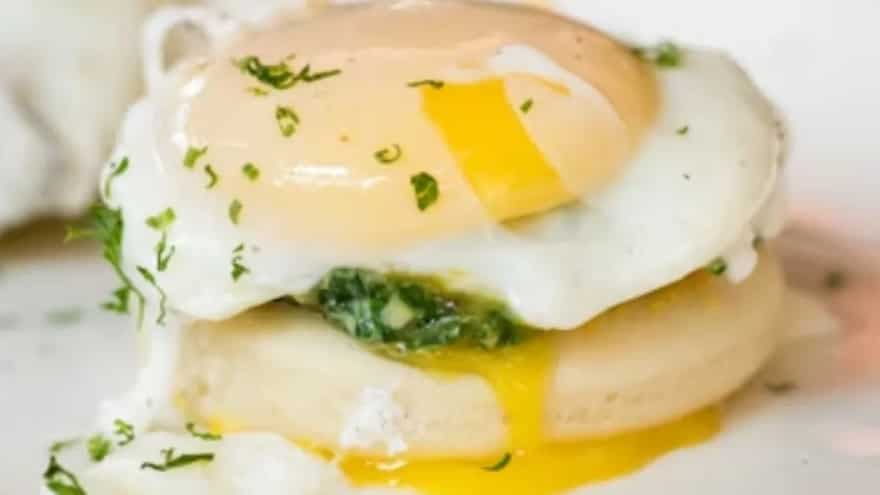
Image Credit: Unsplash
The Ice Bath Method
To stop the cooking process and prevent overcooking, transfer the poached egg to an ice bath immediately after removing it from the poaching water. Simply fill a bowl with ice water and use a slotted spoon to transfer the cooked egg from the pot to the ice bath. The cold water will shock the egg, halting the cooking process and preserving the desired texture of the yolk. After a brief soak in the ice bath (about 30 seconds), carefully remove the poached egg and blot it dry with a clean kitchen towel before serving. And using a pot which is too tiny will also not help, as it would not provide enough space for the eggs to get cooked. It is advisable to go for a straight-sided skillet with not more than 4 inches of water.
Adding Vinegar While Cooking
Adding vinegar to the poaching water helps coagulate the egg whites faster, resulting in a neater, more compact poached egg. White vinegar or apple cider vinegar works well for this purpose. Simply fill a large saucepan with water, add a splash of vinegar (about a tablespoon per quart of water), and bring it to a gentle simmer. Vinegar is an inherently acidic material, so if you add a few drops of vinegar into the boiling water that is going to increase the rate of denaturing (the process of protein molecules unravelling from their naturally coiled state. With eggs, this happens most frequently when they're heated or beaten) and it’s going to make that happen faster and help the poached egg hold its shape better. Your best bet is using malt vinegar, which is a by-product of ale that is fermented past its drinkable stage.




