


 Share
Share

With October 2nd fast approaching, India will once again mark the birth anniversary of Mohandas Karamchand Gandhi. Born in Porbandar in 1869, Gandhi became one of the principal figures of India's freedom movement. His choice of weapons? Satyagraha, non-violent civil disobedience, and mass mobilisation against British rule, while campaigning on questions of social reform, village industries, sanitation, and untouchability. His political legacy is immense, and sometimes controversial, but the man’s influence cannot be confined to politics alone.
If you have read his writings, then you may have an idea already. He wrote rigorously about how people should live their lives, what they should eat, when they should fast, and how food could become part of their moral compass and self-discipline. And then there was milk. Few foods occupied such a prominent place in Gandhi's thinking. He would describe milk as unnecessary, ethically troubling, and a temptation to be resisted, yet later was forced to acknowledge that it had helped restore his own failing health.
As a result, his stance was neither just a straightforward rejection of milk nor an endorsement of it. It was an evolving argument that was tested repeatedly on his own body, and finally confirmed by it as well.
Gandhi's Vegetarianism Was About More Than Food
Gandhi's vegetarianism was rooted partly in his upbringing in Gujarat, but eventually became a conscious ethical choice. His reading of Henry Salt's A Plea for Vegetarianism during his early years in London helped turn his inherited culinary practice into deliberate conviction. In later writings, he even argued that humans were not naturally carnivorous and that a vegetarian diet could provide adequate nourishment.
But Gandhi's food experiments went considerably further as time went by. He experimented with strict fruit diets, raw vegetables, fasting, restricted meals, as well as the elimination of particular foods. For him, food was tied to self-restraint and brahmacharya, instead of modern calorie consciousness and epicurean satisfaction. And milk became especially complicated because of his concern about animal welfare. The Gandhi Heritage Portal records that in 1910, while Gandhi was at Tolstoy Farm in South Africa, he vowed to give up milk and began experimenting with a fruitarian diet.
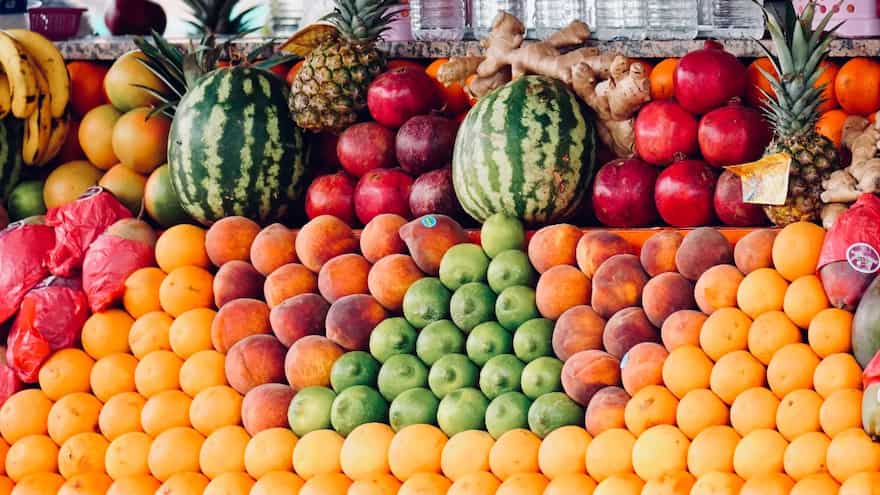
Image credit: Pexels
The ethical objection was not abstract, for Gandhi had become disturbed by accounts of cruelty towards cows and buffaloes in milk production, including the practice he referred to as “phooka” or cow blowing. As a result, he regarded milk as something humans had no inherent right to consume beyond mother's milk during infancy. In his Autobiography, Gandhi was remarkably candid about this conviction. He wrote that he had long believed milk was not the natural diet of humans and had personally abandoned it altogether.
When The Experiment Met A Sick Body
The problem with Gandhi's theory was eventually answered by his own body. During a serious bout of dysentery in India, he became severely weak. Initially, he vehemently resisted milk despite medical advice and searched for alternatives, including mung water, almond milk, and other preparations. None restored his strength sufficiently. Eventually, following the advice of his doctors and wife, Kasturba Gandhi, he agreed to drink goat's milk. But the episode troubled him enormously because he understood that his original vow had logically included goat's milk as well.
In his own account, he admitted that he had preserved the “letter” of his vow while breaking its spirit. Yet the physical result was difficult to argue with. Gandhi himself wrote that goat's milk seemed to bring him "new life" and that he recovered rapidly enough to leave his sickbed shortly. After several similar experiences, he was forced to concede that even a strict vegetarian diet needed milk, under certain circumstances.
That admission is crucial because it complicates the popular versions and stories of Gandhi being someone who simply and two-dimensionally believed that all Indians should stop drinking milk. He did not hold that position consistently throughout his life.
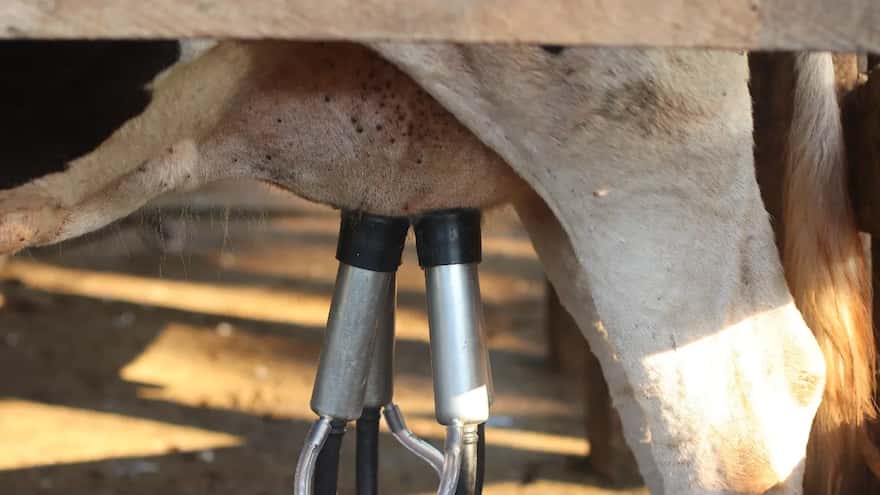
Image credit: Pexels
Did Gandhi Really Consider Milk A Habitual Weakness?
At several points, yes, but the phrase needs a lot more context. In his writings on diet and brahmacharya, Gandhi repeatedly connected milk with sensual appetite and self-control. In a 1927 discussion published in Young India, he wrote that milk made his observance of brahmacharya more difficult and described it as a partial stimulant. But at the same time, he explicitly stopped short of advising everyone to abandon it, by acknowledging that he had not found a fruit or vegan substitute that was equally effective as a muscle-builder while being so easily digestible.
Elsewhere, Gandhi was even more categorical. He wrote that humans did not need milk beyond infancy and imagined an ideal diet based on fruits and nuts. But here is an important distinction to be kept in mind. This was part of his continuing search for an ethical and nutritionally adequate alternative to milk, not any established or proven scientific fact by him. You can call Gandhi an early vegan for historical convenience, but it is somewhat misleading.
Image credit: Pexels
For though the modern term ‘vegan’ and the movement associated with it existed in the 20th century, Gandhi’s own dietary philosophy was not consistent. It was changing constantly and adapting itself according to his exploring beliefs and health restrictions. And most importantly, after his bout of illness and recovery, Gandhi was not able to give up milk. A scholarly review of his dietary experiments also records his repeated attempts to live without milk as well as his eventual return to goat's milk after serious illness.
Also read: Cow Milk Vs. Goat Milk: Which One Is Better?
The Hunger Question Makes His Argument More Complicated
There is an uncomfortable layer to Gandhi's thinking about food. The fact that India, in which he conducted these experiments, was an extraordinarily food-insecure society, compared to today. Famines had repeatedly devastated the subcontinent under colonial rule. While the Bengal famine of 1943, which occurred towards the end of Gandhi's life, caused enormous mortality. India's 1951 Census review estimated approximately 1.5 million deaths in Bengal from the famine as well as the epidemic that followed.
But it would be historically inaccurate to suggest that Gandhi's anti-milk arguments were a response to these famine deaths or that he proposed vegetarianism as a straightforward solution to India's hunger crisis. His milk arguments emerged principally from his own ethics, animal welfare, self-restraint, and his personal experiments with diet. However, there is an intriguing point here. Gandhi's idealised dietary experiments were undertaken by a man whose political work was mainly focused on India’s impoverished masses. And sometimes, his writings recognised this tension.
For instance, in his 1942 discussion of a "minimum diet", he considered how the more privileged might alter their consumption according to his guidelines, so that scarce foods could be made more available to poorer people to satisfy their hunger. And Gandhi's own later writings became much more pragmatic about milk. In The Moral Basis of Vegetarianism, he plainly stated that experience had taught him that a vegetarian diet needed milk and milk products "to be perfectly fit".




