Share


Ladakh’s high-altitude geography shows many challenges for agriculture, from the limited rainfall that it receives and harsh winters to a short growing season. Yet, farming remains closely tied to the region’s food culture and local economy. On October 25, 2026, Lieutenant Governor Vinai Kumar Saxena declared Ladakh India’s first 100% organic Union Territory, marking an essential step in its agricultural journey. The change follows a phased effort to bring villages under organic certification and limit the dependence on synthetic fertilisers.
It also puts the spotlight on regional produce like apricots, sea buckthorn, barley and buckwheat, which could find broader markets through better processing as well as branding. However, the achievement goes beyond a change in just the farming practices. Supporting organic standards, helping farmers and building dedicated supply chains will be essential in the years lying ahead. Here is a closer look at how Ladakh achieved this milestone and what it could mean for its agricultural future lying ahead.
How Did Ladakh Become A 100% Organic Union Territory?
The transition picked up pace in 2026. In March, the Kargil administration began broadcasting 270 quintals of organic fertiliser to Chanigund and Karkitchu villages under its Cultivating Prosperity initiative for the 2026–27 crop season. The aim was to help farmers slowly move away from chemical fertilisers.
In July, Lieutenant Governor Vinai Kumar Saxena ordered a total prohibition on the procurement, allocation, sale, marketing, as well as use of chemical and synthetic fertilisers for agricultural practices across Ladakh. The Agriculture Department was made the nodal agency for this implementation, with other departments asked to help with farmer training and awareness programmes.
By July, 207 revenue villages have been brought under organic certification. The October 25 announcement formally identified the region's improvement.
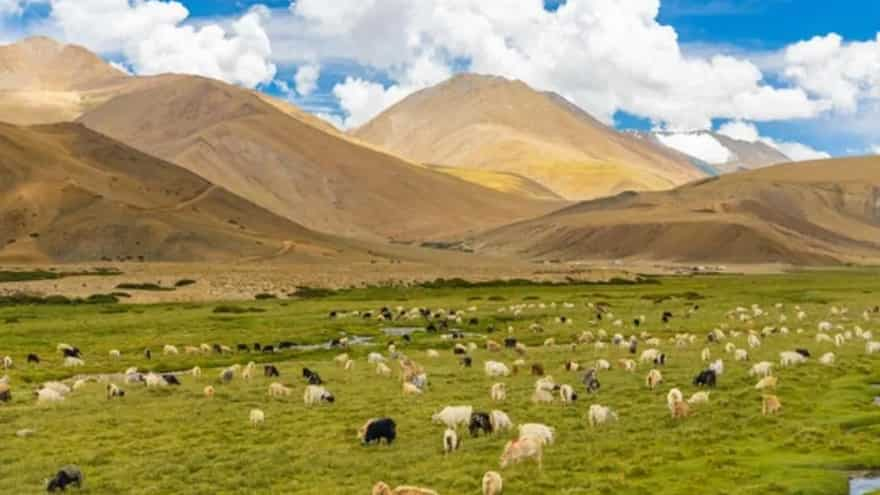 (Image credit: Wikkimedia commons)
Which Local Crops Could Benefit From Organic Farming?
Ladakh's agricultural identity is closely related to crops suited to its environment. The local crops that could benefit from organic farming are:
Apricots: One of the region's best-known fruits, apricots are eaten fresh, dried and are also preserved. Better processing and packaging can help local growers reach more markets and get more expansion.
Sea buckthorn: These orange berries are used in making juices, concentrates and other processed foods. Leh has also been recognised as a sea buckthorn production cluster by the Ministry of Food Processing Industries.
Barley: Barley is a classic staple in Ladakhi households and is used to make tsampa, which is a roasted barley flour. It is generally mixed with butter tea or water to make a simple, filling meal that is loved by locals. The grain is well-suited to the region's short growing season and also the cold weather.
Buckwheat: Buckwheat, or kuttu ka aata, is another traditional crop grown in Ladakh and is loved for its flour, which is used to make local breads, pancakes and porridge. Its distinct, earthy taste makes it appropriate for both traditional dishes and for newer products such as packaged flour and also grain mixes. Buckwheat flour is widely used during vrat to make fasting dishes.
What Does Organic Certification Mean?
Organic farming is more than just avoiding synthetic fertilisers. It follows criteria for cultivation, certified inputs, soil management, storage, processing and also labelling.
India identifies two major certification systems: the National Programme for Organic Production (NPOP), assisted by APEDA, and the Participatory Guarantee System (PGS-India), enforced by the Ministry of Agriculture and Farmers Welfare. Both have specified standards and verification processes.
For consumers, packaged organic food should have the relevant certification information. The Jaivik Bharat logo, along with the FSSAI logo and licence number, can help buyers determine regulated organic products.
Can Organic Farming Improve Farmers' Incomes?
Organic certification could help Ladakhi produce stand out in markets where buyers look for confirmed sourcing. However, better earnings will rely on more than just the certification. Farmers also need facilities to dry and process the fruit, store the produce properly, package it and transport it safely to the market.
Apricots can be sold as dried fruit and also preserves, whereas sea buckthorn can be processed to make juices as well as concentrates. Barley and buckwheat also offer possibilities for packaged regional food products. These forms of value addition can help lower post-harvest losses and create more possibilities to earn from local crops.
 (Image credit: Freepik)
What Challenges Lie Ahead?
Maintaining organic status across Ladakh will need regular monitoring, farmer training and access to authorised agricultural inputs. Farmers must also be supported with useful ways to manage soil fertility and crop pests without prohibited synthetic products.
Equally important is maintaining traceability after harvesting, so certified produce remains distinct from non-certified goods during storage and processing. Better market links will also be necessary to confirm that the effort involved in organic cultivation translates into reliable returns.
Ladakh's declaration puts its standard crops and farming practices in the limelight. Its long-term success will rely on whether this milestone can save the region's agricultural landscape while making stronger opportunities for local farmers.