


 Share
Share

There is a particular sound that old South Bangalore makes in the early morning that I don't think I could explain to someone who hasn't lived inside it. Before the sound is a smell or a taste, it is, for me, a piece of music — one line of it, specifically, that has been looping in my head since I was a child and shows no sign of stopping.
A short walk from my house in Jayanagar 4th T Block is a modest neighbourhood temple, Sri Valli Devasena Sametha Sri Subramanya Swamy — dedicated to Subramanya, the form of Karthikeya or Murugan that South India knows best, Shiva's warrior son, spear in hand, peacock underfoot. Every morning, before the day has properly assembled itself, a loudspeaker somewhere near that temple begins its rotation of devotional music, and one particular line drifts down the street with a regularity I could set a watch to: "Yedhelu Manjunatha, yedhelu belagaayithu…" — roughly, "Wake up, Manjunatha; get up, morning has broken." I should be honest about what I actually know here, rather than what I've simply always assumed. This is, as best I can trace it, my own remembered, slightly worn-down version of a well-known Kannada devotional song properly titled "Eddelu Manjunatha, Yelu Belagaayithu," sung by the veteran playback singer P. B. Sreenivas with music by M. Ranga Rao — a song addressed not to Subramanya at all, but to Manjunatha, one of Shiva's most widely worshipped South Indian forms, most famously enshrined at the Dharmasthala temple further down the Karnataka coast. That mismatch doesn't bother me, and it shouldn't bother anyone who has actually lived near an Indian temple loudspeaker: the devotional playlists that drift over these neighbourhoods every morning are rarely curated for theological precision. A Subramanya temple plays Manjunatha bhajans, a Ganesha temple plays Venkateshwara suprabhatams, and nobody in the street below is checking the lyrics against the deity in the sanctum. What I'm certain of is only this — the line as I remember it, the rough shape of its meaning, and the fact that it has been arriving through my window at roughly the same hour for most of my life. Everything more precise than that belongs to musicologists, not to memory.

Image Credit: Magnific
Before the traffic begins, before delivery motorcycles and school buses take over the roads, there is another Jayanagar entirely, and it is built almost as much out of sound and smell as it is out of streets. Temple bells somewhere getting their morning ring in. That looping suprabhatam carrying through the gulmohar and rain trees that line most of Jayanagar's older roads. Someone, a few houses down, crouched at the gate drawing a rangoli in white stone-powder before the day's dust and footsteps ruin it. The particular smell of filter coffee decoction starting up in a dozen kitchens at once — not yet poured, just beginning its slow, bitter climb through the house. Milk packets being pulled off the gate hooks. The newspaper landing with its familiar thin slap on the doorstep. The city's morning walkers, already two or three rounds into the park, moving at the specific unhurried pace of people who have nowhere urgent to be for another hour. And somewhere close by — because in Jayanagar there is always somewhere close by — the first idlis are already steaming and a dosa tawa is being wiped down with its onion-and-oil rag, ready for the day's first batch. None of this is particularly remarkable on its own; it's just Tuesday. But taken together, sound folding into smell folding into the first hunger of the day, it forms something that doesn't quite have an English word — the specific sensory grammar of a South Indian morning, one that anyone who grew up inside it would recognise instantly and find almost impossible to describe to someone who didn't. For me, that grammar is inseparable from where I live: the bells and the bhajan line and the coffee smell aren't background noise to the neighbourhood. They are the neighbourhood, at least for the hour or two before Jayanagar turns into traffic.
Also Read: In Defence Of Saoji Cuisine
I need to be precise here, because Bangalore has a habit of collapsing distinctions that matter enormously to the people who live inside them. I do not live in Jayanagar 4th Block — the commercial one, with its shopping complex and its market and its through-traffic. I live in 4th T Block, the quieter residential pocket, tucked in a slightly different geometry of the neighbourhood's original 1948 layout. To an outsider this sounds like pedantry. To anyone who has actually lived here, it is the difference between two entirely different rhythms of life occupying the same postal code. Even the BBMP's own records are careful to write it out formally — "4th 'T' Block, Jayanagar" — as though the municipality itself understood that the T was not decorative.
Bangalore, in the abstract, is home. But South Bangalore — Jayanagar specifically — is the Bangalore that still feels like it belongs to me rather than to the eleven million people currently trying to merge onto the Outer Ring Road. There is a reason for this, and it isn't nostalgia, or not only nostalgia. Jayanagar was laid out in 1948, a year after independence, as one of the first planned residential extensions in the city — arguably the largest planned layout in Asia at the time. It was built with wide, treelined avenues, art deco bungalows, public parks, and a neighbourhood commercial complex, the sort of civic ambition that assumed people would grow old inside a single neighbourhood rather than churn through it every eighteen months chasing a shorter commute. Somebody, in 1948, decided this city deserved trees. That decision is still paying interest, eighty years later, every time I walk under one of them on the way to buy vegetables.
The name itself carries a small piece of the city's political transition tucked inside it. Before it became Jayanagar, this stretch of land south of the old city was simply referred to, in planning documents, as the Kankanpalya extension — a working name, functional and forgettable, drawn from one of the villages the layout absorbed. It was renamed Jayanagar in honour of Jayachamarajendra Wadiyar, the twenty-fifth and last ruling Maharaja of Mysore, who had ascended the throne in 1940 and would go on, after signing the Instrument of Accession to the Indian Union in 1947, to serve as Rajpramukh and later Governor of the reorganised Mysore state. The renaming was not incidental. Bangalore was in the middle of its own quiet transition in 1948 — a princely state becoming part of a new republic, its old aristocratic patronage giving way, layout by layout, to a modern municipal one — and naming this brand-new southern extension after the reigning Maharaja was as much a gesture of continuity as it was a tribute. "Jayanagar" translates loosely to "victory city" or "the city of Jaya," and the ceremony marking its foundation, on the 20th of August 1948, was presided over by none other than C. Rajagopalachari, who only weeks earlier had become independent India's first Governor-General. It is a strange, layered little fact to sit with: a neighbourhood inaugurated by the last Governor-General of British India's successor arrangement, named after the last Maharaja of Mysore, built in the first flush of a republic that no longer had much use for either title. Old Bangalore rarely announces its history loudly. It just keeps living inside it.
And then there is the T — the detail that trips up almost everyone who doesn't live here, myself very much included until I finally went looking for the answer. Jayanagar's original plan divided the extension into a clean sequence of numbered blocks, laid out to house roughly six thousand residential sites across land that had, until then, belonged to a scatter of small villages on the city's southern edge. Two of those villages — Thayappanahalli and Tilaknagar — sat awkwardly between what had already been marked out as the 4th and 5th Blocks of the new layout, too small and too oddly shaped to cleanly fold into either numbered block, yet too settled and too populated to simply erase from the map. Rather than force them into an existing block or invent an entirely new numeral, the planners gave this absorbed, in-between pocket its own designation: Jayanagar 4th "T" Block — the T standing, quite literally, for Thayappanahalli, the older and larger of the two villages it swallowed. It is, in other words, not a typo, not a directional marker, and not (as I once genuinely believed as a child) short for "Temple." It is a fossil, a small administrative scar left behind by the layout's expansion, marking the exact spot where a village's name got folded into a numbered grid and never quite let go. I live inside that fossil. It is, I'll admit, a strange thing to feel proprietary about — a leftover letter from a village most of Bangalore has never heard of — but I do.
And because Jayanagar was built for people to actually live in, it was inevitably built for people to actually eat in. That is the thing about old, settled, tree-heavy neighbourhoods in South India: they don't produce restaurants so much as they produce institutions, and the two are not the same. A restaurant serves you food. An institution has been serving the same food, in largely the same way, to at least three generations of the same families, long enough that the act of eating there becomes a form of civic memory.
To understand why South Bangalore eats the way it does, you have to go back fifty years before Jayanagar existed at all, to a public health disaster. In 1898, a bubonic plague epidemic tore through the old, densely packed Pete area of the city — the original walled settlement around what is now Chickpet and KR Market — killing roughly a tenth of Bangalore's population. The Dewan of Mysore at the time, K. Seshadri Iyer, responded by doing something that would come to define the entire southern half of the city for the next century: he demolished large sections of the overcrowded old town and marked out two brand-new, deliberately spacious "extensions" on its outskirts — Basavanagudi to the south and Malleswaram to the north — to decongest the population and, not incidentally, to house it along the social and caste lines that Mysore's administration considered orderly. Basavanagudi in particular became, from its earliest years, a Brahmin-heavy extension, planned around its temples and colleges, and it was this demographic inheritance — vegetarian, education-obsessed, ritually particular about food — that gave South Bangalore its entire culinary personality decades before Jayanagar's own founders broke ground in 1948. By the time Jayanagar arrived, it wasn't inventing a food culture from scratch; it was extending one that Basavanagudi and Malleswaram had already spent half a century perfecting.
Consider the darshini — a word that doesn't quite translate, though "standing breakfast counter" gets you partway there. You walk in, you're handed a chit or you pay at a counter, you find a spot at a steel-topped table designed explicitly to discourage lingering, and you eat off a steel plate that has been in service since before you were born. There is no ceremony to it, and that absence of ceremony is the entire point. The darshini is Bangalore's most honest social leveller — the retired schoolteacher, the software engineer running late, the auto driver on his break, and the elderly walker fresh off his morning round of Jayanagar's parks all stand at the same counter, eating the same idli, paying more or less the same amount. Conversations happen in rapid, clipped Kannada around you, not performed for anyone, simply the ambient hum of a neighbourhood talking to itself.
Vidyarthi Bhavan, a few kilometres away in Gandhi Bazaar, Basavanagudi, is the most famous of these — founded in 1943 by Venketarama Ural specifically to feed students at the nearby colleges, and eight decades later still serving a benne dosa that has become something close to a civic monument, its walls lined with photographs of the poets, actors, and thinkers who have eaten there over the generations. A short walk away, Brahmin's Coffee Bar in Shankarapuram has been doing much the same thing on a smaller, more devout scale since the mid-1960s: soft idlis, crisp vadas, and a filter coffee strong enough to argue with, served standing up to a queue that never seems to fully dissolve, only rotate. Malleswaram, the older of Seshadri Iyer's two plague extensions, has its own equivalent in CTR — Central Tiffin Room — whose benne masala dosa, soaked in butter until it turns almost translucent at the edges, has been drawing loyalists since the late 1920s; and in Veena Stores on Margosa Road, a shop that began life as a condiments store and slowly, almost accidentally, turned into one of the city's most beloved noseating breakfast counters. Further out, MTR — Mavalli Tiffin Room — carries its own small culinary footnote in Bangalore's history: during the grain rationing of the Second World War, when rice became scarce and idli batter along with it, MTR's founders are credited with inventing the rava idli, made from semolina instead of rice, as a workaround that ended up outliving the shortage that produced it. And for the city's non-vegetarians, Shivaji Military Hotel, tucked into the older militarycantonment side of Bangalore's food map, has spent decades serving the donne biryani and mutton curry that the Udupi-style darshinis, by their own vegetarian convention, never would. Old Bangalore's culinary map is basically a triangle drawn between institutions like these, each fiercely defended by its own neighbourhood's loyalists, each one a small monument to the plagueera decision that scattered them across the city's southern half in the first place.
What these places reveal, if you sit with them long enough, is that food in old South Bangalore was never meant to be an event. It was meant to be a rhythm — the same coffee, the same crowd, the same 7 a.m. clatter, repeated until it became indistinguishable from the neighbourhood's own pulse. Newer café culture has arrived alongside all this in the last decade — the specialty coffee counters, the all-day breakfast places with exposed filament bulbs — and I don't resent them, exactly. But they operate on a different logic entirely: they want you to stay, to photograph your food, to treat the meal as content. The darshini wants you gone in eleven minutes, fed, and quietly grateful. Jayanagar, at this point in its life, holds both economies simultaneously, and that tension — between food as ritual and food as rhythm — is, I'd argue, the most honest thing you can say about what this neighbourhood is currently negotiating: what Bangalore used to be, sitting at the same table as what Bangalore is becoming.
(I should note, for the sake of full disclosure and at the risk of starting a small war: I am not going to discuss JP Nagar's food scene in this essay. This is deliberate. Any true Jayanagarite will understand exactly why, and I will simply leave it there.)

Image Credit: Magnific
It was against this backdrop — my own particular corner of it, 4th T Block, scrolling Zomato from my couch on some unremarkable evening about a year and a half ago — that I saw a name I did not expect to see: Shetty Lunch Home.
My first reaction was not hunger. It was disbelief, and a very specific kind of disbelief — the sort reserved for encountering a childhood memory in a context where it has no business being. Hang on, I remember thinking. Is this actually the same Shetty Lunch Home from Kundapur?
I want to be honest about how I answered that question, because the honest answer is: not immediately, and not simply. The name "Shetty Lunch Home" turns out to be less a single brand than a small constellation of restaurants across coastal Karnataka and its diaspora cities, several of them entirely unrelated to each other, sharing a surname that is itself one of the most common among the Bunt community of the coast. There is a Shetty Lunch Home in Udupi. There is one in Manipal. There is, confusingly, more than one under this name even within Mangaluru. So the instinct to assume lineage purely from a signboard is exactly the instinct worth resisting.
What I can establish with reasonable confidence, cross-referencing restaurant records, GST filings, and independent reviews rather than relying on the restaurant's own marketing copy, is this: the Bangalore branches of Shetty Lunch Home — including the one in Jayanagar 5th Block, a short drive from my house in 4th T Block, along with sister outlets in Koramangala and Malleswaram — operate as a registered partnership, formed in 2019, headquartered at the Jayanagar address. The partners named on record are not the same individuals who appear in the documented history of the original Kundapur family business — no Tejappa, no Mohandas, no Ravindranath, no Uma or Harish. This doesn't necessarily mean fraud or unrelated appropriation; regional Indian food chains frequently expand through licensing arrangements, extended family branches, or former employees carrying a trusted name into a new city, and at least one customer review of the original Kundapur restaurant — admittedly an informal, unverified source, but a directionally useful one — describes it as "the original branch... which has subsequently opened 4 branches in Bangalore." The Jayanagar outlet's own menu copy leans into this continuity too, describing its ghee roast as carrying "a recipe spanning 67 years" — arithmetic that lands you almost exactly back at 1957, the year the dish is most commonly said to have been invented. What I cannot do, in good conscience, is hand you a tidy, fully verified corporate lineage connecting the Jayanagar restaurant's kitchen, ingredient-for-ingredient, to Prabhavathi Shetty's original stove. What I can tell you is that the claim is plausible, consistent with how such expansions typically happen on this coast, and not obviously false. That is a more honest answer than the confident one, and I'd rather give you that.
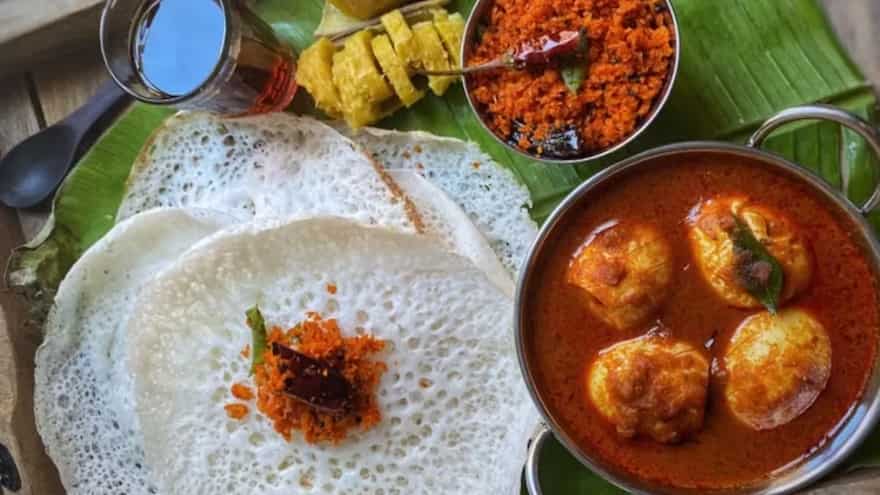
Image Credit: Pexels
Either way, the discovery did what any good piece of culinary reporting from your own dinner table should do: it sent me backward, out of Jayanagar entirely, four hundred and fifty kilometres west and several decades into the past, to a small port town on the Arabian Sea called Kundapur.
Kundapur is old in the way that Indian coastal towns tend to be old — not preserved-in-amber old, but old the way a river is old, having simply kept flowing through whichever empire happened to be standing on its banks. It takes its name from the Kundeshwara Temple, built near the Panchagangavalli river by a tenth- or eleventh-century Alupa dynasty ruler named Kundavarma. During the medieval period it functioned as a genuine trading port with connections stretching into the Middle East; the Portuguese arrived and fortified it in the sixteenth century; centuries later it fell briefly under Tipu Sultan's control before settling into the long administrative arc of British Madras Presidency rule as "Coondapoor." Today it's a modest municipality of roughly thirty thousand people, part of Udupi district, sitting at the cultural crossroads of Tulu, Konkani, Kannada, and Malayalam. It is not, on the face of it, the kind of town that invents a dish that ends up on menus from Mumbai to the Gulf. And yet.
The documented history of Shetty Lunch Home itself is layered, and — as with most family food businesses of this vintage — the layers don't always align perfectly. According to family accounts collected by food writers, the business's roots trace back to around 1920–21, when a man named (in various renderings) Kadri Subbayya Shetty or Subbaiyya Shetty ran a modest eating house in Kundapur known in Tulu/Kannada as Buntara Matthu Naadavara Ootada Mane — roughly, "the eating house of the Bunt and Naadava communities." This was, by every account, an unpretentious operation: simple meals, for simple prices, for a farming and trading community that needed to eat between errands.
It was his son, Tejappa Shetty, along with his wife Prabhavathi (also rendered Padmavathi in some sources), who formally established the restaurant under the name Shetty Lunch Home — most sources place this between 1956 and 1958, with 1957 the figure that recurs most consistently across independent food-history write-ups. This is worth flagging honestly: the exact year moves by a season or two depending on which family member or which article you trust, which is entirely typical of oral business histories in small-town India, where formal registration often lagged years behind the informal reality of a kitchen already in daily operation.
What is not seriously disputed, across every source I could find, is the invention story's protagonist: Prabhavathi Shetty. The dish now known globally as Chicken Ghee Roast is, by the most credible accounts — including that of Kudpi Rajnikanth Shenoy, a food writer and family associate whose account is cited across several tribute pieces on the family — the result of her experimenting on an existing chicken sukka recipe already served at the restaurant. She increased the ghee, dramatically; she leaned on Byadgi chillies for their particular alchemy of colour and restraint; and she pushed the dish toward something slowcooked and clinging rather than merely stir-fried and dry. It caught on immediately with the restaurant's regulars, and within a few years had become the dish the restaurant was known for — not merely a menu item but a reason to make the trip to Kundapur at all.
The dish then followed the family's own expansion outward, in the well-worn pattern of coastal Karnataka's food diaspora: to Anupama Restaurant in Mangalore's Balmatta area, opened by the family in the early 1970s and run for years by Tejappa and Prabhavathi's sons, Mohandas ("Kane Mohan," for his devotion to the local ladyfish) and Ravindranath ("Kane Ravi"); and from there, decades later, into Bangalore itself, first through Ravindranath's own venture, Coast to Coast, founded after his return from a stint running a shipping business in the Middle East, and eventually through the broader wave of Mangalorean and Kundapuri restaurants — Shetty Lunch Home's Bangalore branches among them — that have made coastal Karnataka food a fixture of this city's eating life.

Image Credit: Magnific
Understanding why the dish works requires understanding its central, deceptively simple engineering. The Byadgi chilli — grown in the Haveri district, several hundred kilometres inland from Kundapur, and awarded a Geographical Indication tag in 2011 — is prized specifically because it inverts the usual chilli logic: it delivers enormous, saturated red colour and a round, almost sweet, smoky depth, while contributing comparatively little actual heat, typically in the 5,000 to 15,000 Scoville range, well below chillies used purely for pungency. This matters enormously for ghee roast, because the dish is not meant to punish you with spice; it's meant to coat you in flavour. Fenugreek, tamarind or a touch of jaggery for a rounding sourness, garlic, and a generous, unapologetic quantity of ghee complete the base. And the ghee is not there for richness alone — it is the medium through which the Byadgi's colour blooms, the fat that carries the roasted spice aroma into every fibre of the meat, and, critically, the thing that lets the masala cling to the chicken rather than pool around it the way a wetter curry would. Slow, patient heat does the rest: the chicken cooks directly in the masala rather than being finished separately and combined at the end, so that by the time it reaches the table, meat and spice have become genuinely inseparable.
The recipe itself, at its bones, is almost stubbornly simple — which is precisely what makes it so easy to get wrong. Dried Byadgi chillies are soaked in warm water until they soften and yield, then ground to a fine paste along with garlic, a modest handful of coriander seeds, a few fenugreek seeds (no more than a pinch — too many and the masala turns bitter rather than rounded), and a spoon o tamarind pulp or a small piece of jaggery to give the whole thing a tangy, faintly sweet undertow beneath the heat. The chicken, cut into fairly large pieces so it can withstand a long cook without drying out, is typically given a brief, light marination — turmeric, salt, sometimes a whisper of pepper — more as preparation than as a separate flavouring step, since the real seasoning is about to arrive in the pan. And then comes the part that separates a genuine ghee roast from the many imitations that crowd restaurant menus: the chicken goes into the pan together with the ground masala and a generous, almost extravagant quantity of ghee, and the whole thing is cooked low and slow, uncovered, stirred patiently, until the raw edge of the spices burns off, the ghee separates and pools faintly at the surface, and the sauce reduces down from a loose paste into something thick, dark red, and glossy enough to cling to a fingertip. There is no onion, no tomato, none of the aromatics that anchor most Indian gravies — the dish is deliberately spare, so that chilli, ghee, and the meat's own juices are left to do all the work unaided. Done properly, the finished masala should be dry enough to eat with your hands, wet enough to want rice or a neer dosa alongside it, and carrying a heat that builds slowly across a few bites rather than announcing itself all at once — the Byadgi's particular gift, giving you colour and drama on the plate while keeping the actual burn courteous. It's a dish that rewards restraint everywhere except in the ghee, and punishes it everywhere else — too much liquid and it becomes a curry; too little patience and the spices taste raw instead of roasted; too much chilli of the wrong variety and you lose the colour without gaining anything except unwanted heat.
Coastal Karnataka's food is routinely flattened, in the popular imagination, into a single category called "Mangalorean cuisine." This is a bit like calling all of North Indian food "Punjabi" — not wrong exactly, but a real loss of resolution. The coastal belt from the Kerala border to the edge of Goa is home to a genuine plurality of culinary traditions, shaped as much by community and religion as by geography. Kundapuri cooking, of the sort Shetty Lunch Home represents, sits within the broader TuluvaBunt culinary world, but carries its own inflections — a particular fondness for coconut milk in curries like Kundapura Koli Saaru, a slightly different chilli-and-spice calculus than you'll find thirty-six kilometres south in Udupi. Udupi cuisine itself, strictly speaking, refers to the strictly vegetarian Brahminical tradition associated with the Krishna Matha and its ashta mathas — the food of temple kitchens, not fish markets, and the actual origin of the "Udupi restaurant" template now found from Chennai to Chicago. The Bunt community's cooking, by contrast, is frequently non-vegetarian and seafood-forward, built around the coast's daily catch. Layered alongside these are the Goud Saraswat Brahmin and Konkani-speaking traditions, largely vegetarian, with their own distinct pantry of dishes; the Mangalorean Catholic tradition, which folds in Portuguese-era influences and a comfort with pork; and the Beary community, whose Malabar-inflected Muslim cuisine draws on centuries of Arab trade contact along this coast. What ties them together loosely is geography and a shared pantry — coconut, rice, curry leaves, chilli, the sea — not a single unified "Mangalorean" identity. Ghee roast itself is properly a Bunt-Kundapuri invention that has since been absorbed, gratefully, into the wider coastal repertoire and beyond it into the popular idea of Mangalorean food generally.
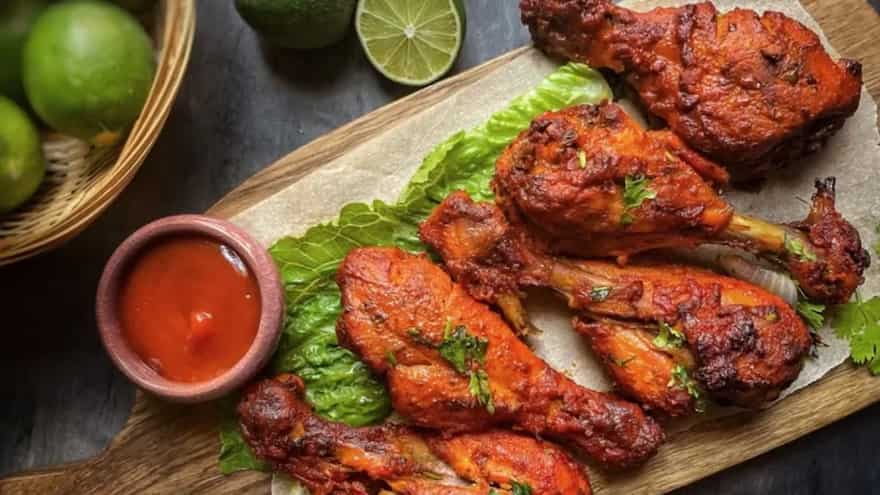
Image Credit: Pexels
I have now eaten this dish at both ends of its own migration — once, years ago, on a trip through Kundapur itself, at a restaurant humming with the unbothered confidence of a place that knows exactly what it is; and repeatedly, more recently, a fifteen-minute drive from my own front door in 4th T Block. The comparison is, inevitably, personal opinion rather than verifiable fact, and I'd ask you to treat it as exactly that. The coastal original, eating in the actual salt air with the actual fishing boats visible from the window, has a rawness and a slightly rougher-hewn character to its masala that I suspect owes something to freshly ground spice and freshly caught seafood arriving that same morning. The Jayanagar version is, unsurprisingly, a more polished, more "restaurant" experience — air-conditioned, a proper bar, a menu padded out with Chinese and North Indian dishes to satisfy a metropolitan crowd that doesn't want to commit entirely to one cuisine on a Tuesday night. But the ghee roast itself, when it arrives, is recognisably the same animal: the same fiery, faintly smoky red, the same clinging, ghee-slicked masala, the same underlying sweetness fighting a very controlled, very Byadgi-shaped battle against heat. Beyond the ghee roast — offered here in chicken, prawn, and crab versions, alongside neer dosa, kane rava fry, and a handful of other coastal standards — the Bangalore menu has plainly been widened for a metropolitan audience, and I don't hold that against it. A restaurant that wants to survive in Jayanagar in 2026 cannot run on Kundapuri fish alone; it also has to sell chilli chicken to a table of college students who came for the ambience and the bar.
The more interesting question, to me, isn't really about menu fidelity. It's about why a dish invented in a fifteen-seat coastal hut in 1957 feels so entirely unremarkable, so completely absorbed, appearing on a delivery app in a Bangalore residential neighbourhood built the decade before that dish existed. Part of the answer is migration, plain and simple: coastal Karnataka has been sending its sons and daughters to Bangalore for education and work for generations, and food memory travels in the same suitcase as everything else. Part of it is the peculiar economics of a food-delivery era, where a cuisine that once required an actual train journey to Mangalore now requires only a working thumb. And part of it, I think, is that Bangalore's own culinary identity was never really about defending a single regional cuisine in the way, say, a city with a more singular food culture might. This city has always been a layering of migrations — Tamil, Telugu, Kannadiga, coastal, North Indian, and now increasingly everyone else — and its old neighbourhoods, Jayanagar very much included, have simply gotten very good at absorbing new arrivals without losing their own underlying rhythm. A Kundapuri dish landing in a Jayanagar restaurant isn't really an anomaly. It's the neighbourhood working exactly as designed.
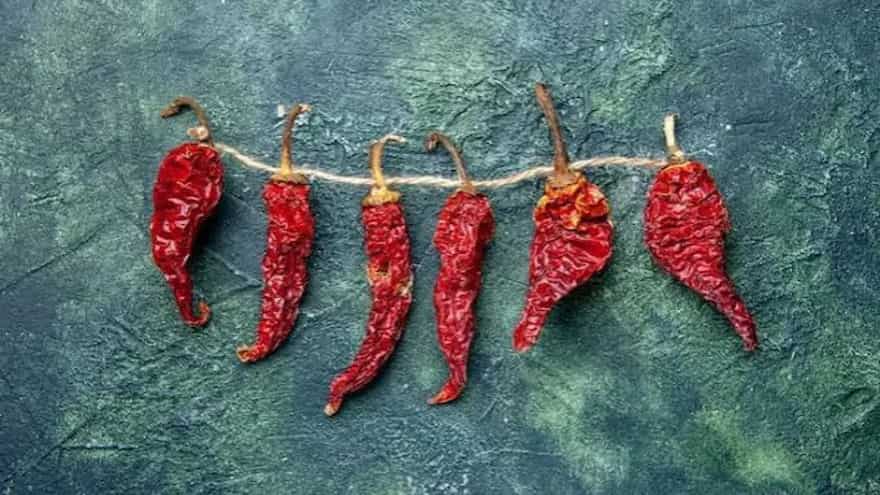
Image Credit: Magnific
I still make ghee roast at home, more often than is probably reasonable for a dish this rich, using a version of the masala I've cobbled together over some years of trial and error — never, I should say, the actual Shetty family recipe, which by every account remains a closely guarded secret held by only two or three women across four generations. Mine is a home cook's approximation, not an heirloom. But there's something in the process — soaking the Byadgi, watching the oil separate a deep, improbable red at the edge of the pan, the smell of ghee just starting to catch — that feels less like cooking and more like a small, private act of historical reconstruction.
That, in the end, is what I keep coming back to. Some histories survive in monuments, in plaques, in the sort of official record that BBMP is careful to spell correctly — 4th 'T' Block, not to be confused with the block next door. But other histories survive in a far more fragile, far more human way: because somebody, somewhere, decided the dish was worth making one more time. Prabhavathi Shetty's chicken sukka experiment in a fifteen-seat hut on the Karnataka coast in 1957 had no reason to still exist in 2026, and every reason to have quietly disappeared along with a hundred other kitchen improvisations from small-town India that nobody bothered to write down. Instead, it travelled — inland, then metropolitan, then digital — until it arrived, almost absurdly, at a phone screen in a house in Jayanagar 4th T Block, ordered on a Tuesday night by someone who still, sixty-nine years later, cannot quite believe his luck.
The story, for me, still begins the same way it always has — not with the dish, but with the sound that arrives before it. Yedhelu Manjunatha, yedhelu belagaayithu. Wake up, morning has broken. It's the neighbourhood telling itself, every single day, that it's still here — the same loudspeaker, the same looping bhajan, the same rangoli drying on the same stretch of pavement, the same coffee climbing through the same kitchens, decades before any of us had heard of Kundapur or knew what a Byadgi chilli was. Food, music, and ritual aren't separate strands of what Jayanagar is; they're the same inconspicuous mechanism, running quietly underneath the traffic and the delivery apps, through which a city keeps remembering itself. Somewhere near my house, a temple is still waking up Manjunatha. And somewhere not far from that same temple, a pan of ghee is still turning a deep, improbable red, sixty-nine years and four hundred and fifty kilometres from where someone first thought to make it that way.
Here's the thing nobody tells you about food history: it isn't really about the food. It never was. It's about the woman who threw more ghee into a pan of chicken sukka one afternoon in a hut on the coast because she was stubborn, or bored, or brilliant, or all three, and had no earthly idea she was about to give sixty-nine years' worth of strangers something to fight about on the internet. It's about a village called Thayappanahalli that got swallowed by a city and lived on anyway, as a single letter on a signboard nobody questions. It's about a temple loudspeaker that doesn't care whether the god in the song matches the god in the sanctum, because the point was never theological accuracy — the point was to get the street moving. Food doesn't survive because it's important. It survives because somebody, somewhere, refuses to let it die — makes it again, sells it again, orders it again on a Tuesday night out of nothing more than stubbornness dressed up as nostalgia. That's it. That's the whole secret. Kundapur didn't set out to feed the nation; it just refused to stop making one very good chicken dish. Jayanagar didn't set out to become a shrine to old Bangalore; it just kept its darshinis open and its coffee strong long enough for the rest of the city to notice. Nothing here was inevitable. Somebody had to keep showing up — at the stove, at the temple, at the counter — for long enough that the rest of us could mistake it for permanence. Eat the ghee roast. Drink the coffee too strong and too sweet. Listen to the bell you don't understand. That's not sentiment. That's just paying attention to what's actually in front of you — which, if I've learned anything writing this, is the only kind of history that ever really counts.




