


 Share
Share

Temple food in India is usually cooked for a reason. It is prepared according to a set of rules derived from rituals and beliefs. Many of these foods are cooked without garlic, onion, or strong masalas. They are made with simple ingredients like rice, dal, jaggery, and seasonal vegetables.
Some people think these dishes are only made inside temple kitchens or during festivals, but many of them are easy to make at home as well. They do not take too many ingredients. Most of them can be cooked with what you already have in your kitchen. There is no need for any fancy equipment. You just need to follow the basic method and keep the flavours clean.
Here are five temple-based dishes from different Indian states that you can try in your own kitchen. They are not copied exactly from the original version, but they stay close to the taste and the method.
1. Kada Prasad, Punjab (Gurudwara Langar)
This is a kind of halwa made with wheat flour, ghee, sugar, and water. It is served in every Gurudwara across India. It is usually given after prayer, and it is cooked fresh every day in large amounts.
To make it at home, take some ghee in a heavy pan and heat it on a low flame. Add an equal quantity of wheat flour and keep stirring. The flour will change colour and smell nutty after ten to twelve minutes. In another pan, mix sugar and water and bring it to a boil. Once the sugar melts, add it slowly to the roasted flour. Stir well so that lumps do not form. Cook it until it thickens and the ghee starts to separate. It tastes best when eaten warm.
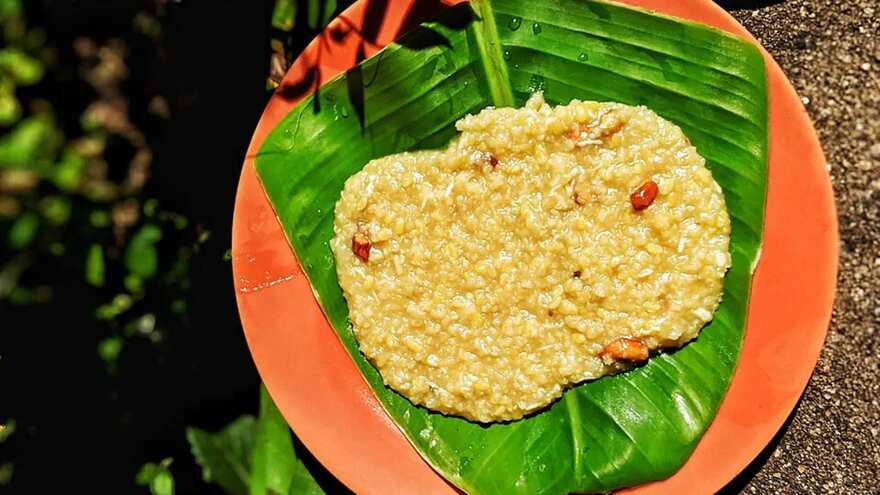
2. Sakkarai Pongal, Tamil Nadu (Festival Offering)
Sakkarai Pongal is made during the Pongal festival in many homes and temples in Tamil Nadu. It is also served as prasad in South Indian temples during special occasions. It is a sweet dish made from raw rice, jaggery, ghee, and moong dal.
First, roast moong dal in a dry pan for a few minutes until the colour changes slightly. Wash and cook the rice and dal together until they turn soft. Melt jaggery in a little water and strain it to remove any dirt. Add this jaggery syrup to the cooked rice and dal and stir gently. Let it cook for a few more minutes. Add ghee slowly and mix it in. You can also fry a few cashews and raisins in ghee and add them on top.
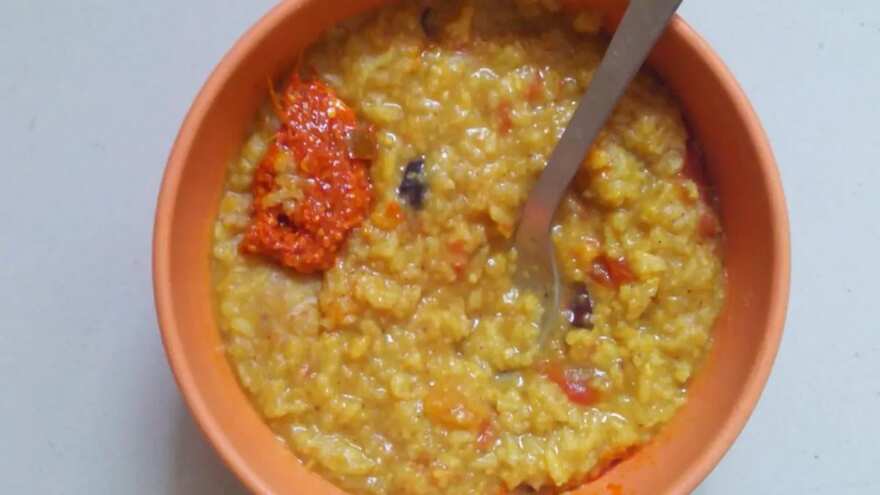
3. Bhuni Khichdi, Gujarat (Temple Thaal)
In Gujarat, many temples offer a simple khichdi as part of the thaal. It is light and cooked with only two or three ingredients. It is usually made with moong dal and rice and is served with kadhi, curd, or a small spoonful of ghee on top.
Wash equal parts of yellow moong dal and rice. Roast the dal for a few minutes until it smells cooked. Combine with rice and cook in plenty of water with a little salt and a pinch of turmeric. Keep the flame low so it does not stick to the bottom. Once everything is soft, you can stir in some ghee and eat it hot. It is not spicy. It does not have onion or garlic. It is meant to be very light and easy to digest.
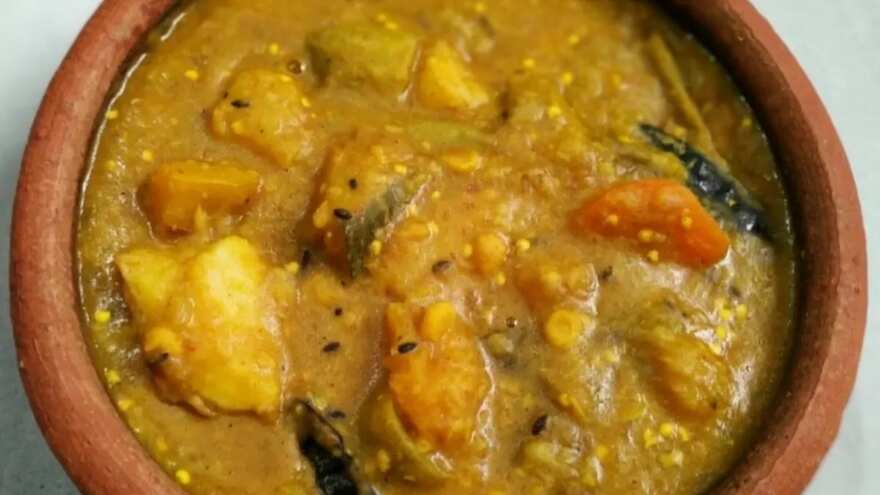
4. Abhada Dalma, Odisha (Jagannath Temple)
Dalma is a common part of the meal served at the Jagannath Temple in Puri. It is a mix of dal and vegetables, cooked with very mild seasoning and without any onion or garlic. The taste is clean and slightly sweet, depending on the vegetables used.
Use arhar dal or moong dal and cook it until it is soft. Add vegetables like raw banana, pumpkin, and arbi. Cut them into medium pieces so they do not become mushy. Add turmeric and salt, and cook everything together. For the tempering, heat ghee in a small pan and add cumin seeds, grated ginger, and a dry red chilli. Pour this into the dal and vegetable mixture and stir gently. Some people also sprinkle a mix of roasted cumin powder and pepper powder just before serving.
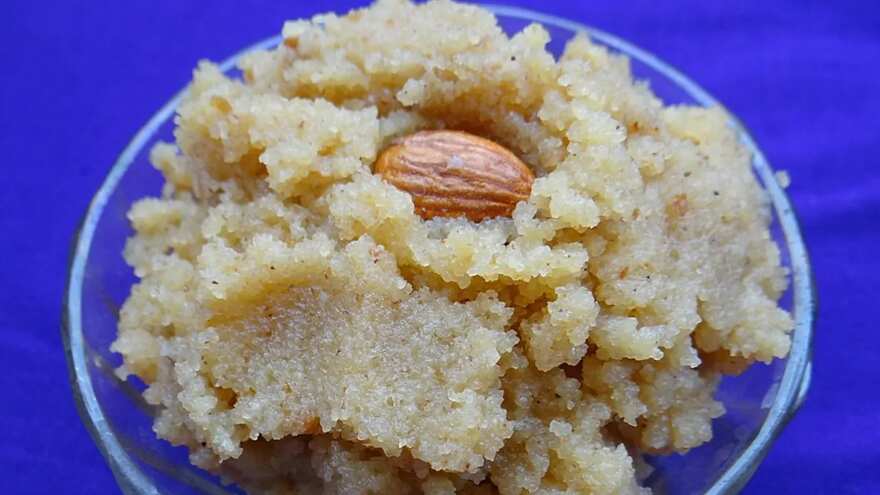
5. Chana-Suji Halwa, Madhya Pradesh (Ujjain Prasad)
In Ujjain’s Mahakaleshwar temple, a halwa is sometimes offered during rituals. It is not like the regular suji halwa. It is made with chana dal and suji, and it takes more time to cook. It is heavier and more filling.
Soak some chana dal for three to four hours. Grind it into a coarse paste. Heat ghee in a pan and roast this paste slowly until the raw smell disappears and it becomes light brown. Roast the suji separately until it turns golden. Now mix both and add hot water slowly. Stir it well and then add jaggery. Let the mixture cook until it becomes thick. You can add a few cashews if you want, but the original version is very plain and does not use cardamom or saffron.
All these recipes are based on foods served in temples or as part of religious offerings. They follow a simple way of cooking. Most of them avoid onions, garlic, and too many spices. The recipes are not made to impress, instead, they’re made to nourish and to offer.
You can make them in your kitchen with ingredients you already have. They do not take too long and do not need any special skill. Once you try them, you might find yourself going back to them again, not just because they are part of tradition, but because they are easy to make and satisfying to eat.




