


 Share
Share

The festival of Janmashtami celebrates the birth of Lord Krishna and is marked by fasting, prayers and preparing special bhog to offer. In 2026, Janmashtami will fall on September 4. Homes and temples make a variety of offerings for the day, with many of them drawing inspiration from foods that are traditionally associated with Krishna and his childhood.
Among all the bhog preparations for Janmashtami 2026, makhan mishri is one of the simplest and is considered to be the favourite food item of Lord Krishna. Its preparation simply involves soft white butter and some mishri, making it a quite easy bhog that can be prepared at home.
But its simplicity does not mean there are no techniques to make it properly. The quality of the butter, the amount of mishri and also the temperature at which it is served can all impact the final consistency.
Why Is Makhan Mishri Central To Janmashtami?
Before proceeding to learn how to make makhan at home for Janmashtami 2026, it is essential to know why it is central to the festival. Makhan mishri's importance comes from Braj tradition, where freshly churned butter, curd and other dairy foods are closely knitted into tales of Krishna's childhood. The famous Makhan Chor tales depict how Krishna and his friends sought out pots of freshly prepared butter in Gokul, which is why makhan evolved into one of the foods traditionally linked with offering to Bal Gopal, deemed to be his favourite.
Mishri is paired with makhan to add some sweetness without cooking the butter, keeping the offering simple and close to its dairy-based origins. During Janmashtami, devotees prepare fresh churned makhan along with mishri as bhog and then distribute it as prasad. If you are making makhan for Janmashtami bhog 2026, these tips can help you keep it close to the traditional preparation.
Start With Fresh, Unsalted Butter
The butter is the main part of makhan mishri, so avoid too much salted or flavoured butter. Traditionally, makhan is made by churning cream or curd until the butter splits from the buttermilk. If you are making the makhan at home, use fresh malai or full-fat cream and churn until soft butter begins to gather. Wash the butter gently with some cold water so that any remaining buttermilk is removed, then drain it well. This gives the makhan a clean and fresher taste.
Keep The Makhan Soft, Not Melted
Temperature can make a huge difference to the consistency. Makhan mishri tastes best when the butter feels soft and creamy instead of being too runny or greasy. Once made, keep the makhan chilled and take it out soon before you are going to offer it as bhog. If you have churned it by yourself, gently press or knead the butter so that any excess moisture is removed before serving. Avoid keeping the makhan near the stove or in direct heat, especially during warm and humid September weather. The butter should hold its shape in the bowl but should also be soft enough to be scooped easily.
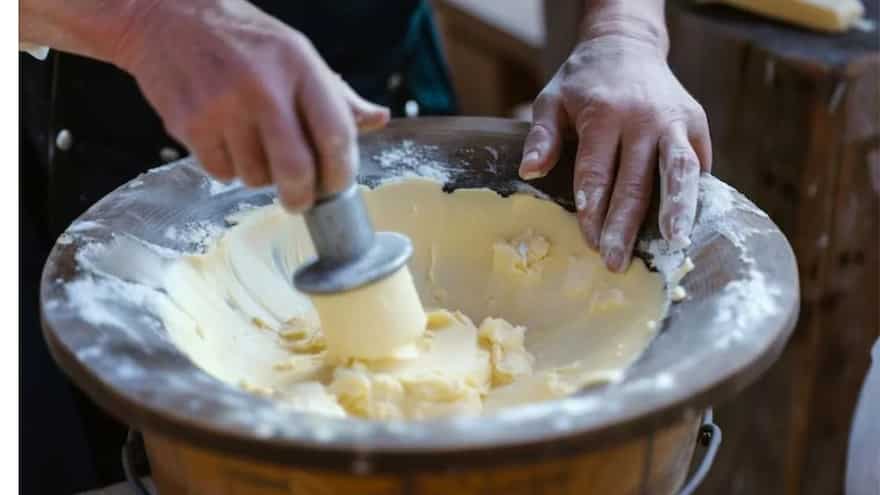
(Credit: Freepik)
Choose Mishri For The Crunch
Mishri gives the makhan its distinctive sweetness and little pop of crunch in every bite. Use plain mishri crystals or small pieces, not powdered sugar, as it will dissolve into the butter. In case the mishri pieces are large, lightly crush to small ones. Also, do not add too much, as the sweetness should feel balanced with the mild, milky taste of the makhan rather than the sugary taste dominating it. Smaller crystals are especially convenient when the makhan mishri is also to be given to children as prasad.
Keep Extra Flavourings Minimal
Traditional makhan mishri is simple and uncomplicated, so you do not need to turn it into an extravagant flavoured dessert. However, some home preparations also add a little cardamom, saffron or chopped nuts. If you choose to add them, use them sparingly. A small hint of cardamom can add aroma without hiding the real taste of butter, whereas a few saffron strands can also give the bhog a festive appearance. Chopped pistachios or almonds can also be used to garnish.
Prepare It Close To Offering Time
Makhan mishri does not need to be made hours in advance. In fact, making it nearer to the puja time helps maintain the fresh taste and soft consistency of the butter. Mix the makhan and mishri gently rather than vigorously beating them together. The mishri crystals should remain unbroken rather than melt into the butter. Transfer the mixture to a clean bowl or a small matki-style serving pot and then garnish if preferred. Keep it refrigerated until it is time for the bhog and avoid leaving homemade butter at room temperature for a very long period.
How To Make Makhan At Home For Janmashtami 2026?
Ingredients
- 4 cups full-fat milk cream/malai
- ½ cup cold water
- 1–2 cups chilled water, for washing the butter
- 1 pinch of salt, optional
Method
- Collect malai from full-fat milk for 3 to 4 days until you have about 4 cups. You can also use fresh cream instead. Let it soften a bit before churning.
- Transfer the malai or cream to a deep bowl. Add ½ cup cold water and whisk vigorously with a hand whisk or a churner for about 10 to 15 minutes.
- Keep churning until you see small yellow-white lumps of butter begin to come together and get separated from the thin buttermilk.
- Now, again add a little chilled water to the bowl and gently collect all the butter lumps together with your hands or a spoon and take them out.
- Put the collected makhan in a bowl of fresh chilled water and gently knead it. Change the water about 2 to 3 times until the water begins to appear mostly clear. This means all the leftover buttermilk has been removed.
- Squeeze out excess water and gently shape the makhan into a small ball; add a few crystals of mishri and offer it as bhog.




