


 Share
Share

In 2026, Shwetambar Jains observe Paryushan Parva for eight days, from Tuesday, 8 September to Tuesday, 15 September, with Samvatsari falling on 15 September. On the other hand, the Digambar tradition observes Das Lakshana Parva for ten days, from Wednesday, 16 September to Friday, 25 September 2026, with each day devoted to one of the ten supreme virtues. The ten-day spiritual observance is followed by Kshamavani, the Digambar day of forgiveness. The exact ritual timings are governed by local tithi rather than a single nationwide clock time. So, those planning a fast or formal rituals should follow their local derasar, temple, or sangh calendar for precise details.
During Jain Paryushan, even a simple meal can come with a long list of considerations and restrictions. For devotees observing vrat-friendly diets rather than a complete fast, the focus is often on simple, sattvic preparations made without root vegetables and root-derived spices, such as potatoes, onions, turmeric, and garlic, while certain communities also avoid green vegetables, fermented foods, and richer ingredients.
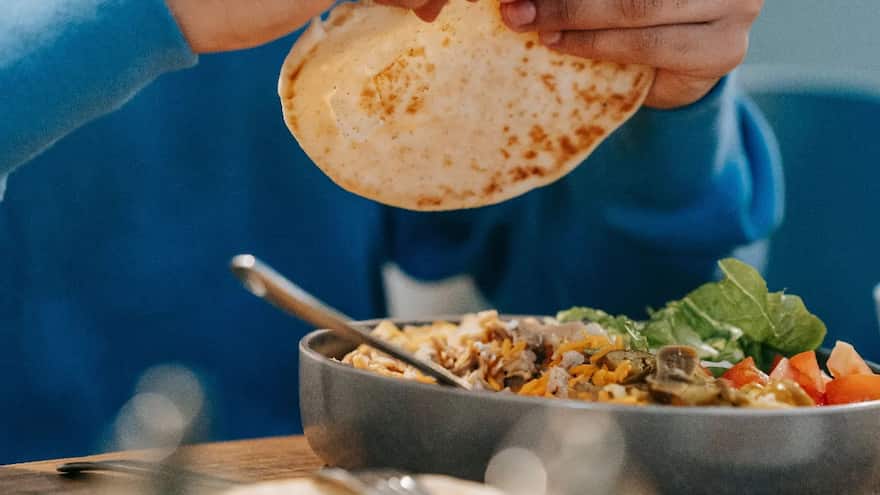
Image credit: Pexels
Practices such as Ayambil take this restraint a step further, with one plain meal a day and restrictions on comforting ingredients such as milk, curd, ghee, oil, and strong flavours. For those undertaking stricter vrats, even these foods are set aside altogether. But the finer details depend on which Jain tradition you follow.
Why Fasting Matters During Paryushan
Food takes on a very different meaning during Paryushan. It is not viewed through any epicurean lens. Instead, it is considered fuel for spiritual tapa or austerity, while existing as part of society. Fasting is not simply about going hungry for religious merit or brownie points; it is understood as one of the forms of tapa, intended to encourage self-discipline and turn attention away from physical desires towards the soul. Jain teachings also place enormous emphasis on avoiding any harm to living beings, making food choices part of the larger ethic of ahimsa.
However, there is no single Paryushan diet followed identically by every Jain. The extent of fasting depends on individual vows, health, age, capacity, and guidance from religious teachers or family elders. Some undertake a single-day fast, others observe longer periods, while particularly rigorous practitioners may fast throughout the entire eight or ten days. Consumption of boiled water during daylight hours can be permitted under certain fasting vows, while stricter forms involve complete abstinence from food and water.
How Do Shwetambar Fasting Traditions Differ?
For Shwetambar Jains, their eight-day Paryushan is closely associated with Pratikraman, scriptural study as well as the reading of the Kalpa Sutra. The final day, Samvatsari, is very important. For devotees reflect on their actions, repent for harm caused knowingly or unknowingly by them, and seek forgiveness from all living beings through the practice of Kshamapana, expressed through the eternal words “Micchami Dukkadam”.
However, even among Shwetambar Jains, practices can be remarkably varied. One well-known austerity is Atthai, an eight-day fast. Some may undertake Attham, a three-day fast, or choose a single-day upvas. There is also Ayambil, in which a person eats once a day and keeps the meal deliberately plain, without any rich ingredients or strong flavours. Traditional descriptions of Ayambil exclude items such as milk, curd, ghee, oil, and green or raw vegetables.
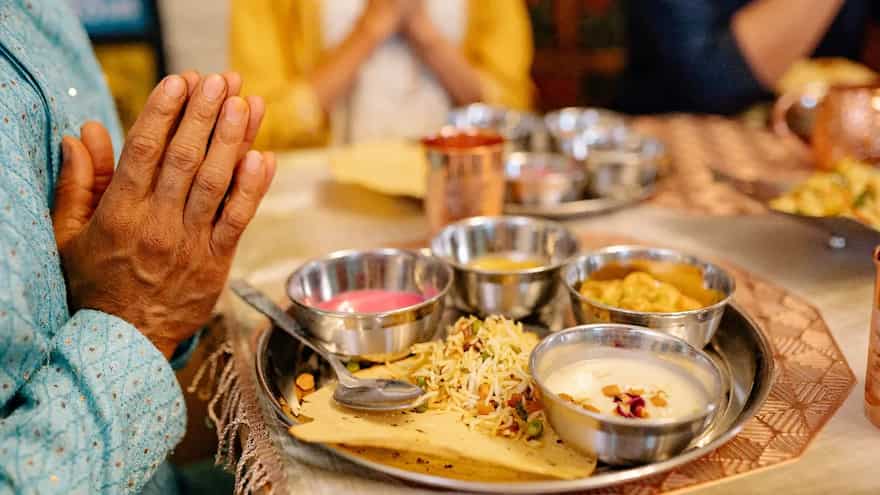
Image credit: Pexels
For everyday Paryushan meals, many Shwetambar households also avoid foods associated with causing significant harm to any living organisms, particularly root vegetables such as potatoes and onions, along with garlic. In many communities, even green, leafy vegetables and fermented foods fall into the same category. However, household and sectarian practices do differ, so these should not be treated as a universal menu followed by every Shwetambar Jain.
What Changes In The Digambar Tradition?
The Digambar observance is formally known as Das Lakshana Parva, rather than simply being a ten-day version of the Shwetambar Paryushan tradition. Its structure revolves around the ten supreme virtues: forgiveness, humility, straightforwardness, purity/contentment, truth, self-restraint, austerity, renunciation, non-attachment, and celibacy. Every virtue receives particular attention each day.
Food is important, but the emphasis remains firmly on austerity rather than on creating a standard festive menu. Digambar teachings describe several forms of external penance, including complete fasting, eating less than one's appetite, restricting what foods may be accepted, and giving up particular pleasurable foods. For example, rasa-parityaga involves renouncing one or more of the six tastes or delicacies traditionally identified as ghee, milk, curd, sugar, salt, and oil.
This observance also places considerable importance on restraint, meditation, scriptural study, and detachment. Thus, eating less is only one part of the exercise. It is important to remember that external austerity has meaning only when it supports internal transformation instead of becoming an achievement in itself.
Two Traditions, One Underlying Idea
The easiest way to understand the difference is not to ask which community fasts more strictly. The traditions organise and approach the same spiritual exercise differently. While Shwetambar Paryushan places particular emphasis on the Kalpa Sutra, Pratikraman, the eight days and their culmination in Samvatsari and universal forgiveness. Digambar Das Lakshana uses ten days to contemplate ten supreme virtues, with austerity, self-restraint and spiritual study interwoven throughout the observance.

Image credit: Pexels
But do keep in mind that both arrive at the same profound idea: that restraint is meant to create space for reflection. During Paryushan, what is left off the plate is only part of the story. The greater discipline is to put aside anger, attachment, excess desires, and carelessness. And focus on making forgiveness as important as fasting.




