


 Share
Share

Coffee used to occupy predictable slots in our daily schedule. It was the hot morning ritual in a traditional home, the mug kept on a workplace desk, or a casual beverage at a local café. Today, the global coffee landscape, and India’s maturing coffee ecosystem in particular, looks entirely different. The beverage now acts as a creative canvas. It bridges the gap between morning routines and late-night social scenes, transitioning from a simple drink into a culinary ingredient, a mixology component, a technical hobby, and a foundation for sober nightlife. Consumers care about origin terroirs, extraction precision, flavour profiles, and the atmosphere surrounding their cup. Six industry professionals across restaurants, bars, brewing technology, specialty cafés, and experiential events share their perspectives on where coffee stands today and where it is heading next.
Reinterpreting Tradition: Coffee In Fine Dining
In India, coffee is deeply rooted in traditional brewing rituals, particularly the iconic South Indian filter coffee. As contemporary dining evolves, chefs are finding ways to honour these rituals while changing how guests experience them.
Chef Harish of Hosa notes that modern culinary innovation doesn't require erasing cultural heritage. Instead, it is about presenting it through a new lens. "For me, the idea is not to change the soul of filter coffee, but to reinterpret the experience around it," he says. "The sound of the decoction being poured, the aroma, the tumbler and davara, the act of mixing it with milk, all of that carries a lot of nostalgia. In a contemporary restaurant, we can retain that emotion while presenting it differently, whether through tableside service, desserts, savoury dishes or even cocktails. The ritual remains familiar, but the way we experience it can evolve."
Beyond traditional brewing, chefs are approaching roasted coffee as a complex ingredient in both savoury and sweet applications. "Coffee has a remarkable flavour spectrum: bitterness, acidity, roast, sweetness and sometimes fruity, floral or chocolatey notes, depending on the bean and how it is processed and roasted," Harish explains. "That gives chefs a lot to work with. It can add depth to chocolate, complexity to sauces, balance sweetness in desserts and work beautifully with spices and rich meats. I think the important thing is restraint. Coffee should bring another layer to a dish rather than dominate it."
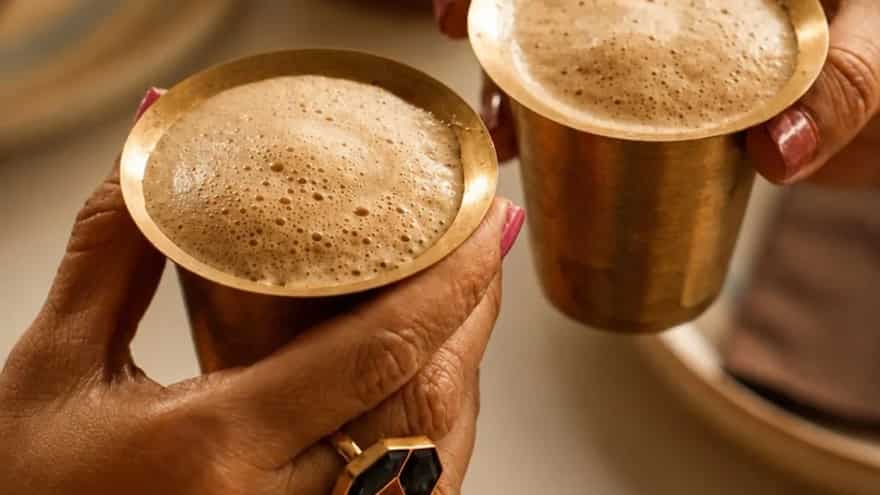
Image credit: Hosa
This shift requires treating coffee with the sensory appreciation typically reserved for wine. "I look at coffee pairing through flavour rather than simply trying to match cuisines," he notes. "Acidity, bitterness, sweetness, roast and body all influence how a coffee interacts with food. A lighter, fruitier coffee can work beautifully with delicate or acidic dishes, while a more roasted, full-bodied coffee can complement richer flavours and desserts. When we give coffee the same attention we give wine, we start thinking about origin, processing, roast and brewing method. That makes coffee part of the dining experience rather than something we automatically serve at the end of a meal."
When breaking down the culinary mechanics of coffee, the bean's natural acidity and fruit notes, like floral and bright citrus profiles, harmonise well with delicate dishes, light seafood, and subtle desserts. Conversely, the roast and structure of the coffee, which bring out bitterness, chocolate, and spice, pair naturally with rich meats, heavy sauces, and decadent desserts.
The Evening Crossover: Coffee In Modern Mixology
Parallel to its culinary use, coffee is seeing a revival behind the bar. Where coffee in cocktails was once restricted to standard Espresso Martinis, modern bartenders now treat it as an intricate flavour agent capable of adding texture, aroma, and nuance to spirits.
Joy Singh, Founder of Loco’ Den and Cafe Loco, observes that the boundary separating daytime coffee drinkers from nighttime cocktail enthusiasts has largely dissolved. "I think the biggest change is that people no longer see coffee and cocktails as two completely different worlds," he says. "The same person can start their day with a great coffee and end the day with a well-made cocktail. That crossover is becoming very natural."
"At Cafe Loco and Loco’s Den, we see this every day," Singh continues. "Cafe Loco is built around an all-day experience: coffee, food, music and community, while Loco’s Den takes that energy into the evening with cocktails, music and nightlife. Coffee becomes a very natural bridge between the two. From a bartender’s perspective, coffee is also an incredibly versatile ingredient. It brings bitterness, aroma, acidity, sweetness and texture, and it can add complexity to a cocktail without necessarily making the drink taste like coffee."
The rise of specialty coffee has provided a richer palette than simple espresso extractions. "Specialty coffee has completely changed the conversation," Singh says. "We are beginning to understand that coffee, much like wine or whisky, has a very distinct personality depending on its origin, processing, roast and brewing method. Earlier, coffee in cocktails was often just espresso; you wanted the bitterness, the roast and the caffeine. Today, bartenders are thinking about the actual flavour profile of the coffee. Is it fruity? Is it floral? Does it have chocolate or caramel notes? Is it acidic or more earthy? That opens up a much bigger creative space."
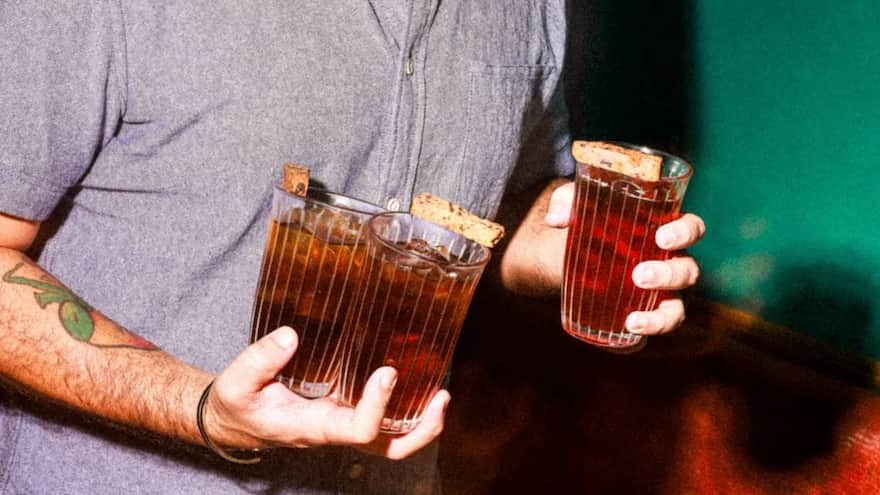
Image credit: Loco's Den
This reflects a shift in consumer habits, where rigid drink categories no longer apply. "Absolutely. I think the consumer has become much more fluid," Singh points out. "People don’t necessarily think, ‘I am a coffee drinker’ or ‘I am a cocktail drinker’ anymore. They think about what they feel like drinking at a particular time. You can have a flat white at 10 AM, a cold brew at 4 PM and an Espresso Martini at 10 PM, and there is no contradiction in that."
To achieve this, bartenders are looking past the espresso machine, incorporating alternative extraction techniques and fruit parts. "Espresso is probably the most obvious starting point, but it is just one part of the coffee universe," Singh explains. "Cold brew, cold drip, coffee infusions, coffee tinctures and concentrates can all create very different results. Even something like coffee cascara, the fruit surrounding the coffee bean, can bring a completely different flavour profile into a drink. I also think bartenders should look at coffee more as a flavour ingredient rather than a finished beverage. You can use it in syrups, infusions and clarified drinks, or pair it with citrus, tropical fruits, herbs, spices and even savoury ingredients. The fun starts when you stop asking, ‘How do I make a coffee cocktail?’ and instead ask, ‘What can coffee contribute to this drink?’"
For modern bar programmes, extracting flavour takes several forms. Cold brew and drip methods provide a smooth, low-acid base ideal for spirit-forward cocktails. Coffee tinctures allow for high-aroma micro-dosing to create classic twists. The cascara fruit offers a tart, tea-like botanical element that works in sour builds, while house amaros serve as complex, herbal-bitter digestifs crafted from single estates.
Jeet Rana, Co-Founder of Barbet & Pals, echoes the desire to explore the structural qualities of coffee. "Coffee has so much more to offer than just bitterness and caffeine," he says. "Depending on the bean and extraction, you can extract fruit, chocolate, spice, nuttiness, acidity, and even floral notes. That gives us a huge playground as bartenders. Coffee can be the hero of a drink, but it can also add bitterness, aroma, or depth without the cocktail necessarily tasting like a typical coffee cocktail."
"We’re starting to treat coffee like any other serious cocktail ingredient," Rana adds. "Cold brew, infusions, coffee liqueurs, different extractions, and fermentation, each technique can bring out something completely different from the same bean. At Cavity, for example, we have a dessert drink where we source coffee from the Baba Budan Hills and turn it into our own amaro. It’s a fun, nuanced expression of coffee rather than your conventional Espresso Martini."
Rana treats coffee origins much like a spirit base. "Massively. I look at coffee almost like I look at a spirit. A bright, fruity coffee with good acidity needs a completely different cocktail build around it compared to something darker, roasted, and chocolate-forward. The origin, roast, and extraction determine everything from the base spirit we pair it with to the balance of sweetness and acidity in the final drink."
Celebrating Local Terroir: The Story Of Indian Single Origins
A growing driver in India's coffee culture is a focus on home-grown origins, bringing the country's coffee history to the forefront of food and beverage menus.
"This is probably the aspect that excites me the most," says Rana. "For our Cavity drink, we use coffee from Baba Budan Hills as a tribute to Baba Budan and the heritage of coffee arriving in India, where seven coffee seeds were planted in the hills of Karnataka around 1600. Today, Indian coffee extends far beyond traditional southern regions. You have Araku in Andhra Pradesh, Koraput in Odisha, and emerging coffee regions in the Northeast, including Nagaland, Meghalaya, and Arunachal Pradesh. As bartenders, there is a huge opportunity to start exploring these regions in the same way we explore regional Indian ingredients in cocktails. At Barbet & Pals, that's something we want to push further, celebrating not just Indian coffee, but the specific origins and terroirs behind it."
Chef Harish agrees that regional storytelling presents an avenue for restaurants to showcase diversity. "Definitely. India has a much richer coffee story than we sometimes acknowledge," he notes. "Beyond the familiar South Indian filter coffee, there are different growing regions, varieties, processing methods and brewing traditions to explore. Restaurants can use those differences to tell stories about place and culture, just as we do with regional ingredients and cooking techniques. Coffee can become another lens through which guests discover the diversity of India."
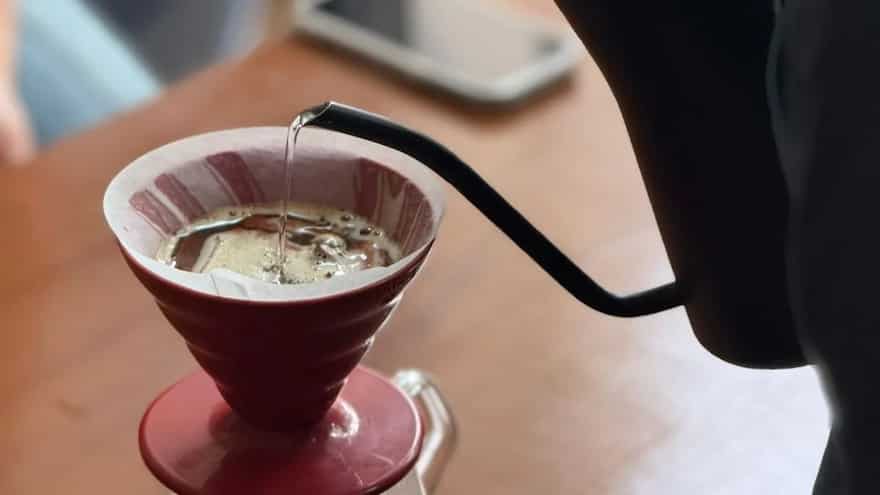
Image credit: Something's Brewing
Joy Singh highlights how combining Indian coffees with indigenous botanicals yields drinks with a distinct identity. "I think India is in a very interesting position because we have both a rapidly developing specialty coffee culture and a cocktail culture that is becoming much more experimental," he says. "I don’t think the future is going to be about simply putting an Indian twist on an Espresso Martini. It is going to be about using Indian coffee and Indian ingredients to create drinks that have their own identity. We have incredible spices, fruits, botanicals and regional ingredients, and increasingly we also have access to very good Indian coffees. Putting those two worlds together can create something that feels genuinely contemporary but still has a sense of place."
India offers distinct coffee-growing regions, each bringing primary characteristics to menus. The heritage origins of the Baba Budan Hills in Karnataka offer chocolatey, full-bodied, and nutty notes suited for house-made coffee amaros. In Andhra Pradesh, the high elevation of the Araku Valley produces bright acidity with fruity and floral notes, ideal for light, citrus-forward cocktails. Koraput in Odisha yields deep earthy profiles with a smooth finish, which chefs and bartenders use for infusions and savoury meat glazes. Meanwhile, the micro-climate shade-grown coffees of the Northeast present a unique berry and herbal acidity that works in cold brew tinctures and botanical spritzes.
Craft, Tech, And The Home Brewing Renaissance
As restaurants and bars elevate coffee on their menus, brewing at home has shifted from a kitchen chore to a personal discipline driven by an appetite for quality.
Abhinav Mathur, Founder & MD of Something’s Brewing, has watched this trajectory closely. "The biggest shift is that coffee has moved from being just a beverage to becoming a full home experience," he says. "We're seeing a real paradigm change from entry-level manual brewers for specialty coffee, to mid-range semi-automatic machines for espresso and milk-based drinks, to high-end, barista-level machines for aspirational home brewers who are building dedicated coffee corners or home bars. This momentum has been building since we started in 2020, but interest especially among millennials and Gen Z has never been higher, both for home brewing equipment and for brewing experiences like workshops."
New coffee brewing hardware is bridging the gap between convenience and manual craft. "A few launches really stand out to us right now," Mathur explains. "The xBloom Studio is the clearest example of 'automation as craft': grinder, pouring kettle and precision scale in one machine, with the choice to go fully automatic or completely manual. The Fellow Ode Gen 2 is a big step for filter brewers, with sharper, more even grinding and a built-in anti-static system that solves the everyday mess of clingy grounds. And the Mahlkönig X54 brings café-grade engineering home, with precise, repeatable grinding for both espresso and filter, plus app-based tracking. What ties them together is that the innovation isn't really about speed; it's about giving people café-level precision and consistency at home, whether they hand control to the machine or keep it themselves."
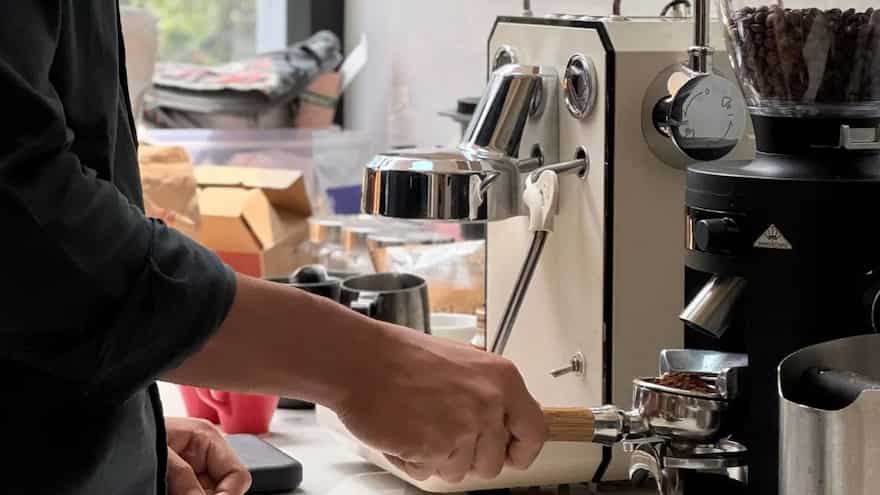
Image credit: Something's Brewing
Mathur views tech as part of a continuous learning spectrum rather than a divide between automation and manual brewing. "It's less a trade-off and more a spectrum that coexists within the same ecosystem," he notes. "Convenience is essential for beginners; automation is what gets people through the door. But specialty coffee drinkers actively prefer manual brewing because it lets them control the extraction and fully experience the aroma and flavour of single-origin coffees. We don't see these as opposing camps; we see them as different stages of the same journey, and we've built our ecosystem to support both."
This rise in craft appreciation is reflected in consumer habits. "Absolutely, and the clearest evidence is our workshops," says Mathur. "They've been sold out for three months running, every weekend, across Delhi, Surat and Bengaluru. That's a strong signal that home coffee brewing is becoming a genuine habit and skill people want to invest in, not just a functional task. It's also become a form of 'me-time', a quiet ritual people carve out to relish something they enjoy, on their own terms."
Mathur predicts Indian home brewing will mirror the progression of craft beer. "We see Indian coffee brewing following the same arc as craft beer did, from novelty to real discipline," he says. "The next wave of home brewers won't just chase new gadgets; they'll chase skill: grind consistency, extraction, water ratios, the same way craft brewers got serious about yeast and water chemistry. Alongside that, we expect a distinctly Indian identity to emerge, with brewers exploring Indian single-origin beans and regional flavour pairings instead of just copying café formats. The result: bigger baskets, accessories, grinders, recurring coffee, upgrades, and more home coffee corners, as brewing becomes less about the drink and more about the ritual and the space people build around it."
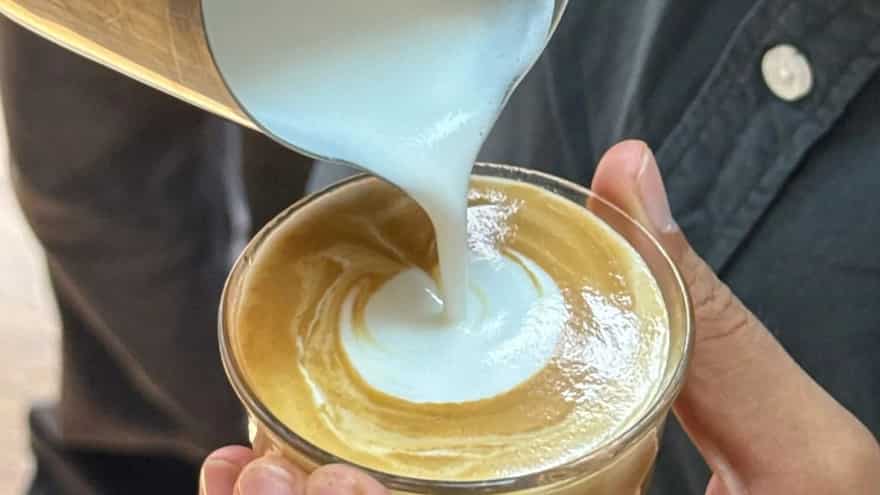
Image credit: Something's Brewing
Experiential Cafés And Sober Socializing
Public coffee spaces are also adapting to offer experiential environments, transforming from takeaway counters into community hubs that accommodate working, leisure, and dining.
Amitabh Negi, CEO of Vita Nova Group (Coffee Island India), highlights how coffee occasions have broadened. "Coffee is becoming less tied to a particular time of day and more connected to different occasions," he explains. "We see it moving into work breaks, social catch-ups, meals, leisure, and personal downtime. Consumers are also choosing formats based on the moment, from familiar hot coffees to cold and more contemporary beverages. This shift is making coffee a more natural part of everyday life rather than simply a morning ritual."
Café design and menu strategy are shifting to reflect this. "The café today is as much about the experience as it is about the coffee," Negi says. "Consumers are increasingly spending more time in cafés, pairing beverages with food and using these spaces for work, building communities, curated experiential activities, casual meetups/conversations or simply to unwind. Our approach has been to build an all-day experience where coffee, food and the space work together, rather than treating them as separate parts of the offering."
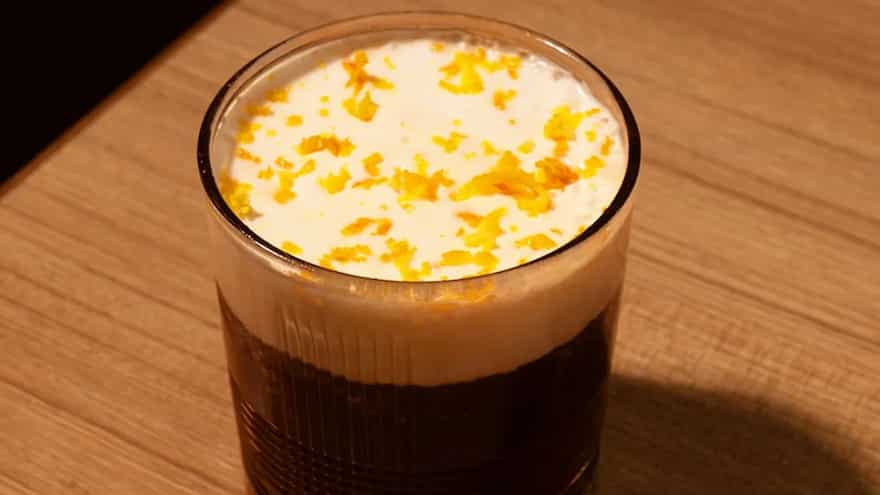
Image credit: Coffee Island
Consumers have built up significant coffee literacy and a desire to try global formats. "The Indian coffee consumer is becoming more curious and discerning," Negi notes. "There is greater awareness of origin, roast profiles, brewing methods and flavour characteristics, along with a growing willingness to experiment. We see this in the way consumers move between familiar coffees, newer blends and formats such as Mont Blanc and Ube, while also showing interest in where their coffee comes from. Our range brings together coffees from origins including Ethiopia, Brazil, Nicaragua, Kenya, Colombia and Peru, alongside Indian blends and single-estate coffees. The opportunity is to make that discovery approachable while keeping quality and consistency at the centre."
However, adaptation remains essential. "International formats work best in India when they are adapted and not just replicated," he points out. "Our approach has been to bring a European coffee philosophy while understanding the Indian palate and its consumption habits. There is significant room to innovate around more flavours, cold coffee formats, and food pairings, while still retaining the character and craft behind the coffee."
This creates a functioning all-day café spectrum. The morning ritual from 8 AM to noon is driven by single origins and filter formats. As the day moves into work and meetings from noon to 4 PM, batch brews and cold drip concentrates take over. Late afternoon social downtime sees a rise in specialty formats like Ube or Mont Blanc coffees, and the evening hours transform these spaces into sober parties featuring coffee raves, music, and curated meetups.
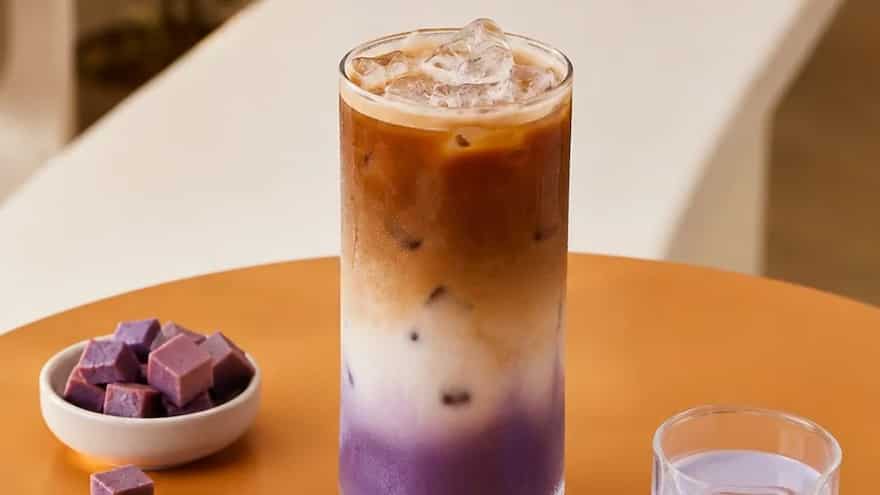
Image credit: Coffee Island
One of the more distinct cultural shifts is coffee's emergence in social nightlife through coffee raves. Shruti Pawar, Founder of Salt By Shruti, explains how coffee powers alcohol-free socializing. "The idea for coffee rave was inspired by the 'conscious clubbing' movement, the rise of sober, network-over-coffee culture, and a desire to merge the communal energy of dance music with daytime wellness," she says. "Coffee rave events prioritize conversation, shared interests (like coffee tasting, singles meetups, workshops, or gaming), and community building over high-decibel music and crowded dance floors."
For remote workers and younger demographics, these events provide accessible environments to build connections. "With remote work, online learning, and rising living costs, young adults need accessible physical spaces outside of home, office/school, specially the introverts," Pawar notes. "Cafes with coffee meets or coffee culture serve as low-friction, welcoming hubs where you can hang out for hours over a single cup, whether you're catching up with friends, working solo alongside others, or attending social meetups."
In this context, coffee serves as an entry ticket into a community-driven lifestyle. "Yes, a ₹200 coffee can become the entry point to an event, identity, community, or Instagrammable experience rather than the primary reason people attend," Pawar explains. "They appeal to people who want the excitement and social connection of a party without necessarily drinking or staying out late. As interest in sober and wellness-oriented socialising grows, coffee raves could become one of several alternatives to alcohol-centred nightlife. The concept could expand beyond morning raves into after-work or sunset gatherings, offering an alternative to conventional nightlife."
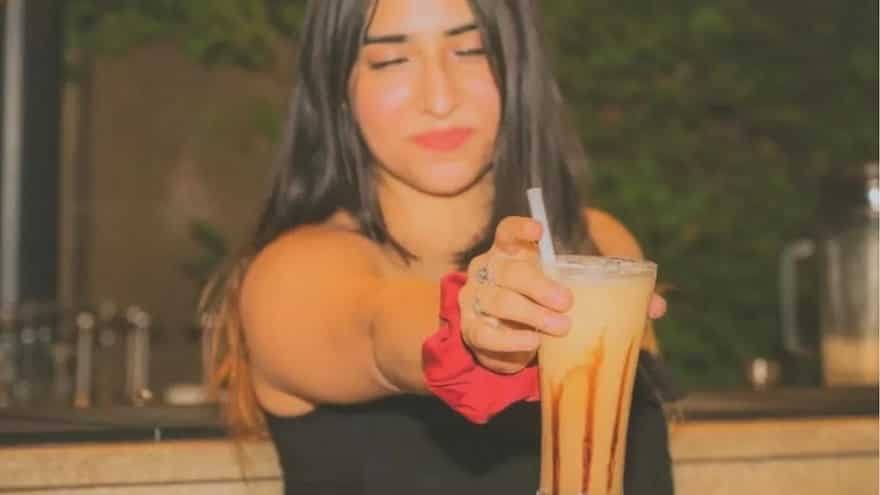
Image credit: Salt By Shruti
Looking ahead, the future of coffee will be shaped by a blend of craft, technology, sourcing transparency, and creative exploration. As Amitabh Negi summarizes, "I don’t think the next phase will be defined by one trend. Consumers will look for better quality and transparency, alongside new flavours, formats, food pairings and more experiential spaces. Technology will play a role in personalisation and consistency, but the fundamentals of sourcing, quality and craftsmanship will remain important. The expectation is increasingly for both a good cup and a good café experience."
Chefs and bartenders alike expect to dive deeper into unexplored components. "I think chefs will increasingly treat coffee as an ingredient rather than just a beverage," Chef Harish notes. "We will see more experimentation with cold extraction, infusions, reductions, fermentations, coffee-based sauces and savoury applications. There is also a lot of potential in exploring different varieties, processing methods and even parts of the coffee fruit that are less commonly used in restaurants."
In the bar world, Jeet Rana sees a similar trajectory. "Definitely. Coffee culture in India has evolved massively, and cocktail culture is naturally borrowing from that momentum," he says. "I don't think the future is simply limited to more Espresso Martinis. Instead, I see bartenders exploring different Indian coffees, varied extraction techniques, and diverse styles of drinks, whether light, bitter, spirit-forward, dessert-style, or low-ABV. Coffee is moving from being a broad flavor profile to becoming a fundamental ingredient in a bartender's toolkit, and with the diversity of coffee produced in India, we have barely scratched the surface."




