


 Share
Share

Due to its spiritual significance on the occasion of Guru Nanak Jayanti, kada prashad embodies simplicity, equality and humility. Made using three key ingredients—whole wheat flour, ghee and sugar—the sweet delicacy is part of the langar feast offered to devotees across all walks of life, visiting the gurudwara. Usually distributed as remnants from the sacred offering following the kirtan or recitation of spiritual songs, the act of dispensing the atte ka halwa is believed to be closely associated with the Sikh’s core principle of selfless survice or seva. The buttery, nutty flavours of the kada prashad can be recreated easily using Usha’s Infrared Cooktop, as a way of strengthening the spirit of brotherhood while also making the technique of perfecting the sweet dish with finesse and specificity.
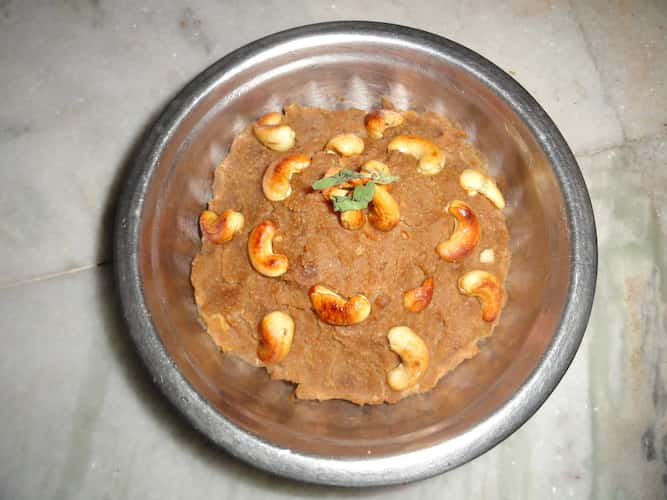
Image Credits: Wikimedia Commons
Kada Prashad Recipe [Serves 3-4]
Ingredients
- 1 cup whole wheat flour
- 1 cup ghee
- 1 cup sugar/jaggery
- 1 cup water
- ¼ cup slivered almonds (optional)
If you don’t have Usha’s Infrared Cooktop, Shop Now 
Method
- Set the infrared cooktop to a medium high setting between 650-800 watts and place a kadhai on the surface.
- Add the ghee to a kadhai to let it melt before adding in the whole wheat flour.
- Use a spatula to stir the flour and ghee mixture continuously for 10-12 minutes, ensuring that the bottom does not singe or change colour too quickly.
- Once the mixture begins to impart a nutty aroma and turn the colour of a milk chocolate bar, add in the water while mixing rapidly.
- The heat of the flour-ghee mixture will ensure that the water is absorbed almost instantaneously, solidifying the mixture slightly.
- Add the sugar and stir well to combine, until the kada prashad begins to leave the sides of the kadhai.
- Turn off the induction stove and transfer the sweet preparation to a bowl, garnishing with slivered almonds.
- Offer it as bhog to Guru Granth Sahib before distributing it to everyone when still warm.
Also Read: Easy Punjabi Thali Recipes Made Entirely On An Induction Stove
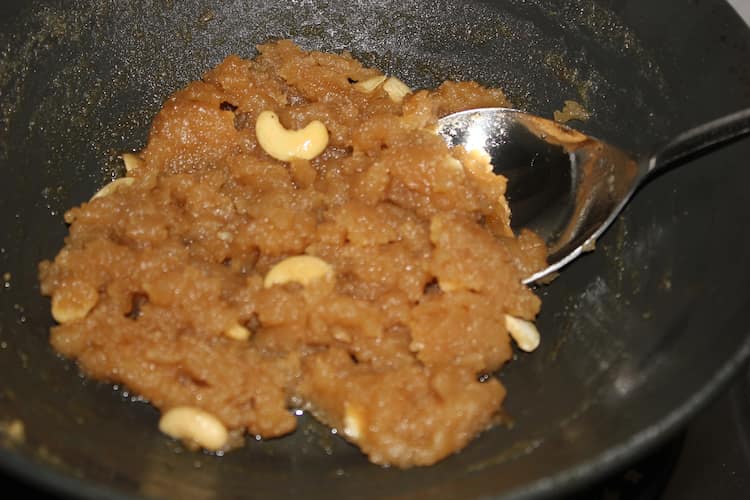 Image Credits: Wikimedia Commons
Key Tips To Make Kada Prashad On An Infrared Cooktop
- Since infrared cooktops heat quickly and evenly, chances of the flour burning at the bottom of a thin-bottomed pan are higher; hence, it is important to use a heavy-bottomed pan to prevent sticking or scorching.
- Avoid switching the temperature of the cooktop instantly before the flour is roasted evenly in the ghee, since this might yield inconsistent results and uneven browning.
- The key to obtaining a silky smooth and buttery kada prashad is to stir constantly using a flat spatula or whisk throughout the course of the browning process to ensure a lump-free and evenly cooked halwa.
- Ideally, have hot water handy for mixing the atte ka halwa since cold water could cause splattering or lump formation when not mixed thoroughly by a trained hand.
- Adjust the power setting of the infrared cooktop to control the temperature as well as keep the heating stable and efficient, instead of lifting the pan and moving it around constantly.




