


 Share
Share

Every year, from 1st to 10th December, the hills of Nagaland converge at Kisama Heritage Village near Kohima to celebrate the Hornbill Festival, a ten-day extravaganza that gathers nearly all Naga tribes under one sky. What makes this festival unforgettable for many visitors is not only the dizzying display of traditional dances, music, crafts, and tribal attire, but also the rich, earthy, and often surprising culinary world offered by Naga kitchens. Inside each tribal “morung” (dormitory/hut) and food stall, tribal cooks prepare traditional meals, often something they’d cook in their home kitchens. The Hornbill Festival gives outsiders a rare chance to sample this deeply local, and often ancestral, cuisine in one place. In this article, we explore what you might eat when you visit Hornbill, and explore a range of everyday comfort stews, exotic forest flavours and more.
Traditional Cooking Practices and the Use of Local Produce
The food offered at the festival is anchored in natural methods suited to the terrain. Meats are smoked for preservation and depth of flavour, while vegetables are cooked with bamboo shoot for light tang and aroma. Fermented soybean (axone), fermented fish, fermented leaves and seasonal roots provide umami, and each tribe manages these ferments differently. Eastern Nagaland uses yam and yam stems extensively, a result of the soil and climate, while other regions rely more on perilla seeds or wild greens gathered from nearby forests. These practices ensure that the food remains healthy, with minimal oil and maximum reliance on fresh produce.
Signature Meat Dishes Served In The Morungs
Smoked pork forms a central part of many tribal cuisines. During the festival, one group might cook smoked pork with bamboo shoot, while another combines it with fermented soybean to create a deeper, stronger aroma. Chicken and fish cooked in bamboo absorb the woody fragrance of the vessel, and some tribes display festive meats such as wild boar or civet cat, which traditionally appear during communal celebrations. These meats are often cooked slowly, without oil, allowing the natural flavour of the animal and the local herbs to come through.
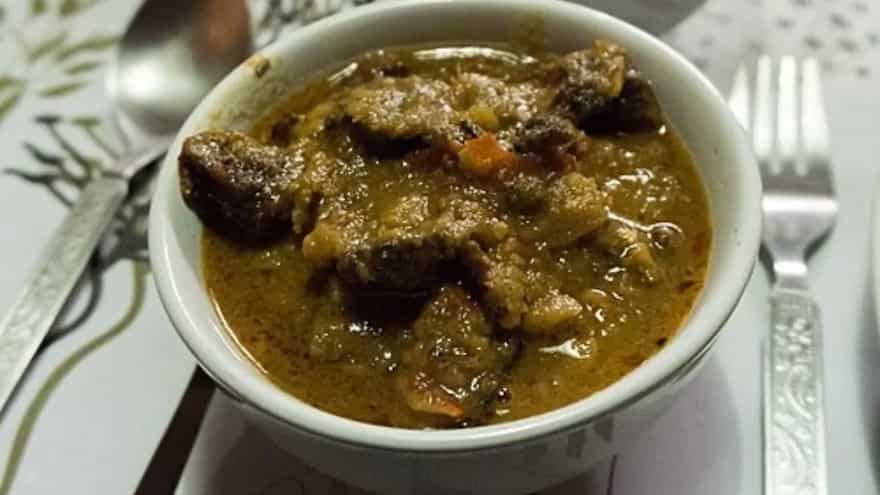
Image credit: Wikimedia Commons
Tribal Specialities And Everyday Eating Patterns
Meals served during Hornbill often reflect what is eaten at home, not restaurant adaptations. Galho, a warm, nourishing rice dish often cooked with vegetables or smoked meat, appears in several morungs, although each tribe seasons it differently depending on preferred herbs and ferments. Vegetarians find comfort in leafy stews, bamboo-shoot-based dishes, and assorted vegetables cooked with local aromatics. Millet and rice come together in a creamy porridge-like preparation that is served as a gentle sweet, showing the role of grains in tribal diets.
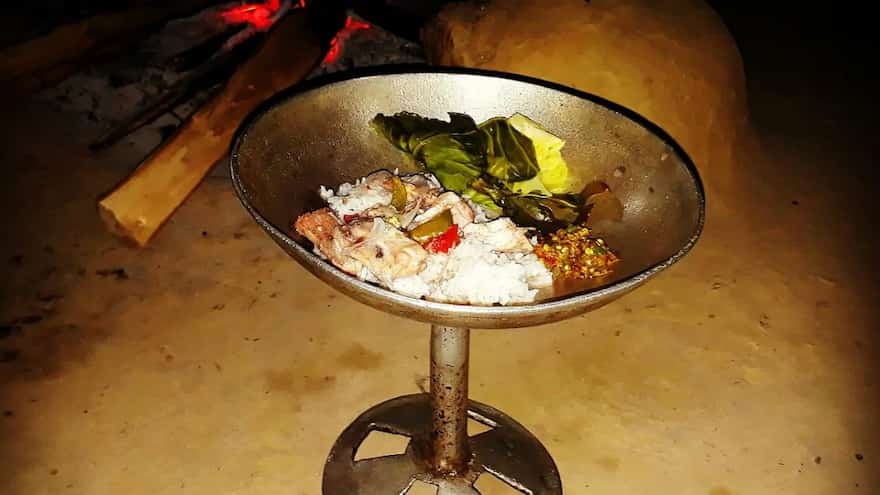
Image credit: Wikimedia Commons
Forest And River Delicacies Unique To The Festival
One of the reasons people travel to Hornbill is the chance to try foods that are rarely available outside tribal homes. Snails cooked with perilla paste offer nutty, earthy flavours tied closely to the hills. Silkworms appear as a seasonal delicacy, usually steamed or lightly tossed with herbs to retain their soft texture and rich, almost creamy flavour. Fish may be prepared inside bamboo or simmered with fresh bamboo shoot to create a clean, fragrant dish. These preparations are tied to foraging and seasonal availability, making them representative of Nagaland’s ecology.
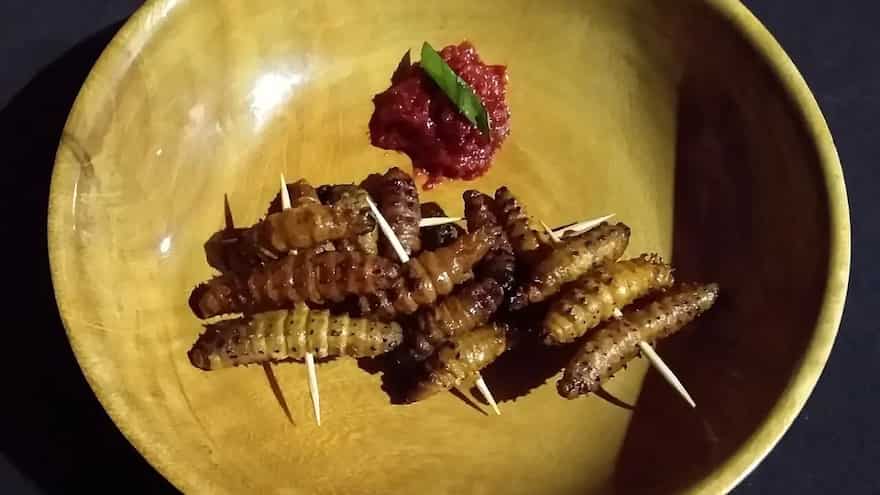
Image credit: Wikimedia Commons
Chutneys And Fermented Accompaniments That Define The Meal
The side components of the meal carry as much importance as the mains. Chutneys are fiery, fermented, smoky or herbal depending on the tribe. Roasted tomato chutneys, chutneys made with local chillies, fermented crab chutneys, fermented cucumber chutneys and smoked-meat chutneys appear across different morungs. These are integral elements that dictate the flavour of the plate.
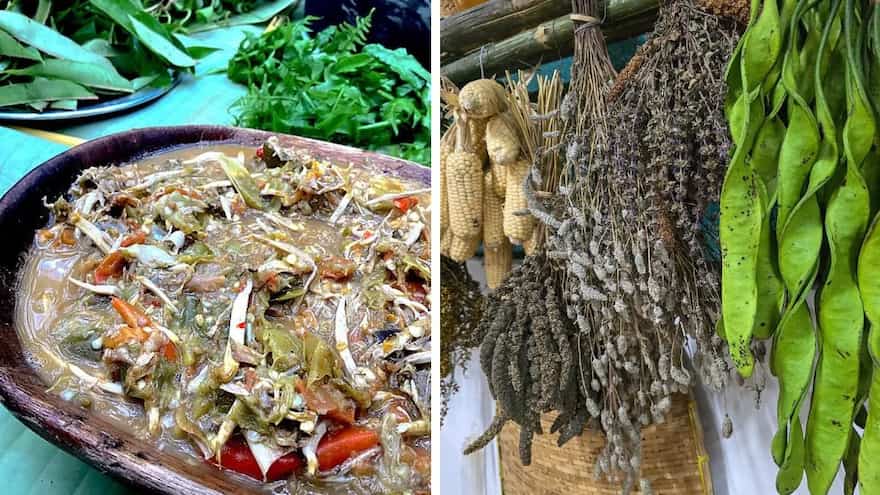
Image credit: Wikimedia Commons
Vegetarian Or Vegetable-Heavy Preparations
Though meat-heavy meals are common, Naga cuisine also makes use of vegetables, leafy greens, and edible forest produce. Some tribals prepare stews or dishes combining local vegetables with fermented items or bamboo shoots. Additionally, there are fermented leaf-based dishes: for example, Anishi, fermented colocasia (arbi) leaves/stems, used especially by the Ao tribe as a flavouring/preservative, often cooked with meat, though vegetarian versions are possible.
Sweets, Drinks And Ritual Beverages Of The Festival
Desserts at Hornbill are rare, but hard to miss. A thick blend of rice and millet is cooked into a porridge-like dish gives a gentle, creamy finish to the meal. Black sesame paste appears in many communities, added to both savoury preparations and warm drinks. Tea takes a different form here: strong black tea, naturally bitter, enjoyed by elders and traditionally by warriors, is served without sweetening. Alongside tea are fermented beverages such as Zutho and Thutse, both prepared from paddy husk and natural yeast. These drinks carry light effervescence and depth, reflecting the long history of fermentation in the region. Interesting cultural parallels emerge when one notices koji, also prepared with paddy husk, sold in some stalls, tying Nagaland’s brewing practices to other cultures of East and Southeast Asia.
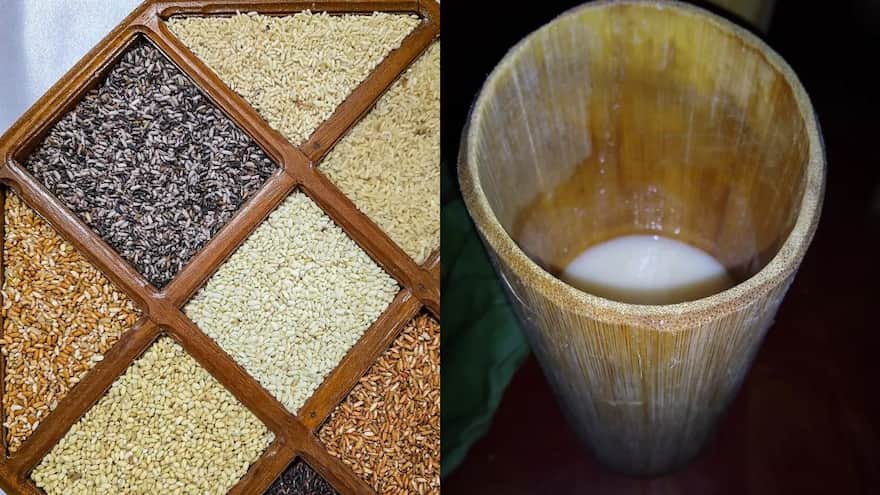
Image credit: Wikimedia Commons
Culinary Identity Through Tribal Diversity
Every dish at Hornbill is shaped by the tribe that prepares it. What makes the festival compelling is not the presence of a single signature dish, but the range of interpretations. Ingredients, ferments, techniques and even the intensity of smoke differ from one morung to the next. The tasting experience becomes a tour of the state itself; high-altitude flavours in one hut, forest-edge aromatics in another, river-influenced preparations in a third. This diversity is what makes the festival a living culinary map.
What You (The Visitor) Should Expect
If you visit Hornbill Festival with an eye (and appetite) for food:
- You’ll find dozens of small food-stalls or “kitchens” run by tribal families, each offering dishes prepared in their traditional style, often the same meals they’d serve at home.
- The meals are often straightforward: rice (or sticky rice), a meat or vegetable dish (smoked, boiled, or simmered), greens or bamboo shoot stews, and at least one kind of chutney or fermented side.
- Drinking options: traditional rice beers/wines like Zutho and Thuthse, served in traditional vessels. Great for relaxing after a day of festival wandering.
- Because of the tribal and local nature of the food, flavours may be strong: smoky, earthy, fermented, sometimes pungent (axone), sometimes spicy (local chilies). But that is part of the authentic Naga food-experience. If you go to more than one morung or stall, expect variety: what you taste at one will likely differ at another.
- For vegetarians or those preferring lighter meals, there are options: vegetable or greens stews, bamboo-shoot dishes, fermented leafy preparations (like anishi), rice/beanie-based dishes, though meat is dominant in many menus.
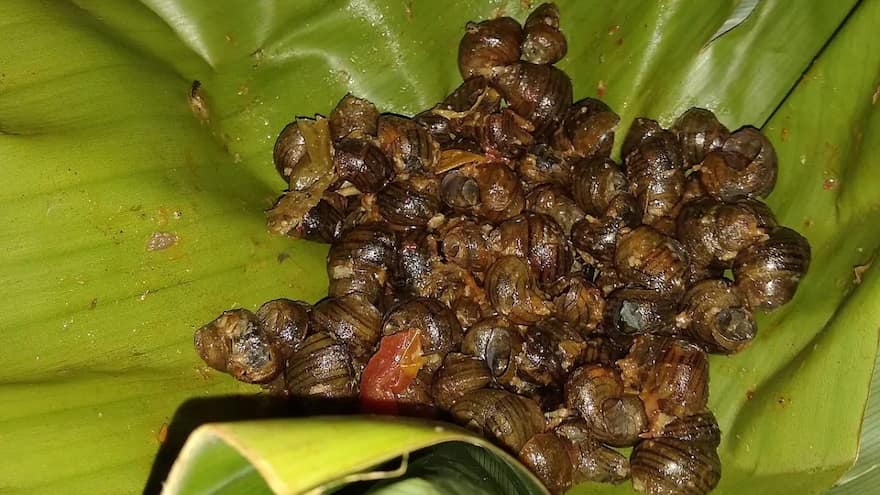
Image credit: Wikimedia Commons
Why Hornbill Food Matters, Culture, Identity & Ecology On The Plate
Cultural Identity & Tribal Diversity: With nearly all tribes of Nagaland converging at Hornbill, and each tribe preparing its own food in its own style, the festival becomes a living showcase of intra-Naga diversity. Food becomes a medium of cultural identity, tribal memory, and a way to preserve ancestral culinary knowledge.
Sustainability & Ecology: The reliance on forest produce, seasonal greens, foraged herbs, bamboo, and minimal oil suggests a sustainable, ecological approach, in harmony with Naga traditions of living close to the land. Smoking, drying, fermenting, all preservation methods adapted to hilly terrain and limited market access.
Community & Hospitality: Eating during Hornbill is communal, morungs, kitchens, shared meals. Visitors are often welcomed into these spaces, encouraged to taste, ask, learn. Food becomes a bridge between tribes and outsiders, a way to share stories, heritage, and hospitality.
Diversity Beyond Stereotypes: For many people, “Naga food” might conjure up only a few stereotypes: “very spicy,” “meat-heavy,” “smoky.” But Hornbill shows that Naga cuisine is much more nuanced, and there's a lot to discover, learn and appreciate for everyone.




