


 Share
Share

As the winter chill retreats from the vast expanse of the Great Rann of Kutch, the landscape prepares for a dramatic transformation. This is a land defined by extremes: the endless white of the salt marsh, the harshness of the salt-crusted earth, and the vibrant resilience of its people. When Holi arrives, the monochromatic desert is shattered by a riot of colours, but the true essence of the festival lies in the kitchens of the bhungas, the traditional circular mud houses. For those who celebrate, Holi is synonymous with certain flavours, yet the Kutchi iteration offers a distinct, rustic charm that reflects the local geography and the nomadic history of the region.
The Ritual Of The Hearth
The festivities begin not with colour, but with fire. On the eve of Holi, the Holika Dahan bonfire is lit across villages like Dhordo and Hodka. Unlike the urban celebrations where wood is the primary fuel, in the Rann, people often use dried cow dung cakes and agricultural waste. As the flames leap towards the desert sky, locals offer ears of wheat and stalks of jowar or sorghum to the fire. This ritualistic roasting of the first harvest is a precursor to the feast. The charred grains, known as hola, are shared among the community, symbolising the bounty of the earth before it is consumed by the upcoming summer heat. Food in Kutch is a testament to survival and soul. Because the region is arid, the cuisine relies heavily on millets, dairy, and preserved ingredients. During Holi, these humble elements are elevated into festive staples that provide the energy needed for a day of dancing to the beat of the dhol.
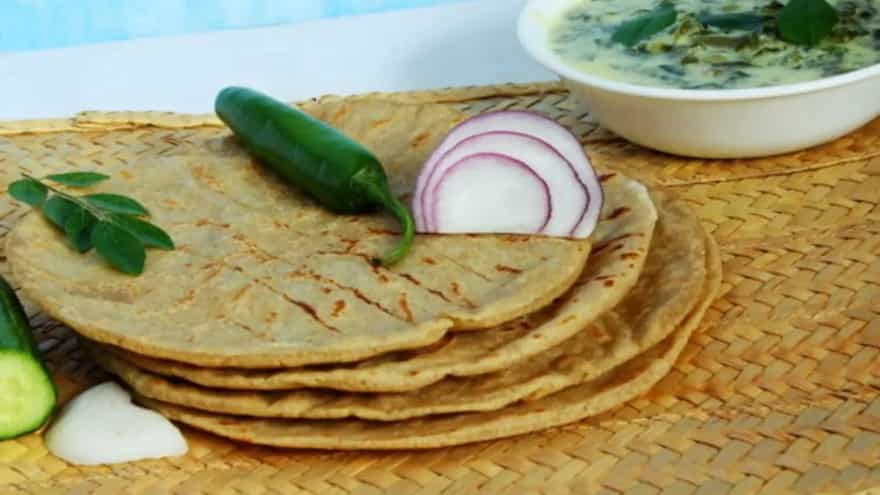
Image credit: Adobe Stock
The Sweetness Of Tradition: Ghooghra And Beyond
No Holi in India is complete without a deep-fried dumpling. While the north celebrates with gujiya and the south with karigadabu, Kutch has its beloved ghooghra. The Kutchi ghooghra is a masterpiece of texture. The outer shell is made from refined flour and ghee, rubbed together until it reaches a crumbly consistency before being kneaded. The filling is where the regional identity shines. While many versions use khoya or milk solids, the Kutchi version often leans on roasted semolina, desiccated coconut, and a generous amount of crushed nuts. There are also savoury and spicy versions which are just as delicious.
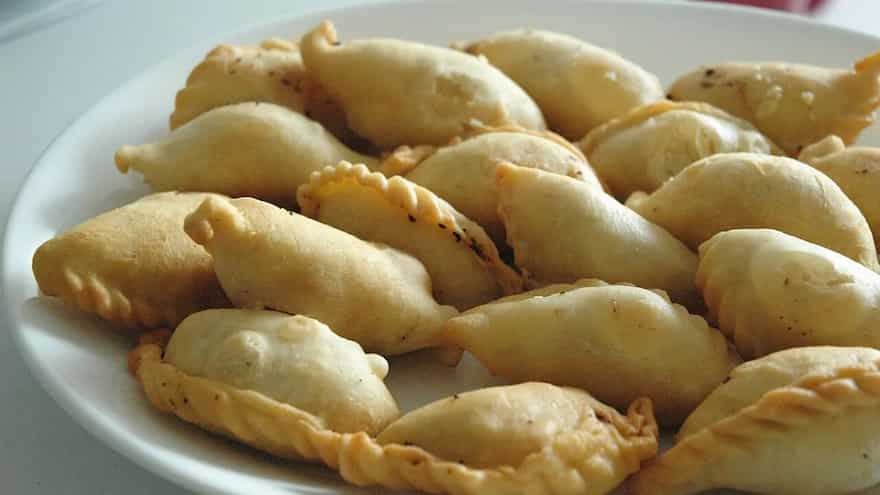
Image credit: Wikimedia Commons
The absence of heavy syrup makes these sweets travel-friendly, a nod to the nomadic pastoralists who needed food that could last in the heat. Flavouring agents like cardamom and nutmeg are used with a light hand, allowing the richness of the ghee to take centre stage. Another festive favourite is magas, a dense, fudge-like sweet made from coarse gram flour, sugar, and ghee. It is often topped with melon seeds, providing a nutty crunch that balances the melt-in-the-mouth texture of the flour.
Lilva: The Green Gold Of Spring
The timing of Holi coincides with the final harvest of lilva, or fresh green pigeon peas. In Kutch, lilva kachori is the definitive savoury staple of the season. These are not your average street-side kachoris. The filling is a vibrant green paste of crushed peas, seasoned with ginger, green chillies, and a hint of lemon juice. The addition of a little sugar is a classic Gujarati touch, creating a complex flavour profile that is spicy, tangy, and sweet all at once. These kachoris are served hot with a side of date and tamarind chutney. In the villages, you might also find lilva ni kadhi, a yoghurt-based curry thickened with gram flour and studded with these fresh peas. It is light, cooling, and the perfect antidote to the dusty play of colours outside.
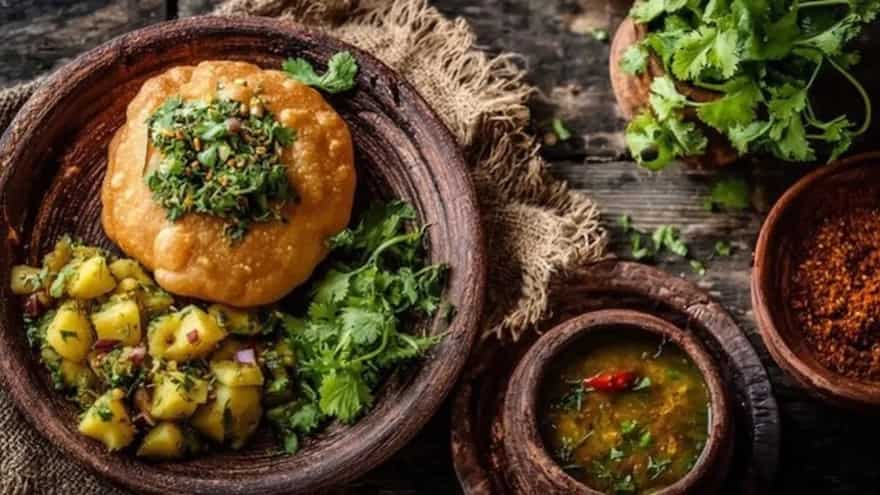
Image credit: Adobe Stock
The Main Event: Bajra And Lasan
As the sun climbs higher over the salt pans, the play of colours winds down, and families gather for the heavy mid-day meal. In the Rann, wheat is a luxury, while bajra or pearl millet is the staple. For Holi, the bajra na rotla is prepared with extra care. These thick, hand-patted flatbreads are cooked over a slow charcoal fire until they develop a smoky char. The rotla is never eaten alone. It is traditionally accompanied by ringna no oro, the Kutchi version of baingan bharta. The aubergines are roasted until the skin blisters, then mashed and sautéed with onions, tomatoes, and a heavy dose of garlic. Speaking of garlic, the lasan ni chutney (garlic chutney) is the fiery soul of the meal. Made with dry red chillies and local garlic, it provides a sharp contrast to the cooling dairy products that follow.
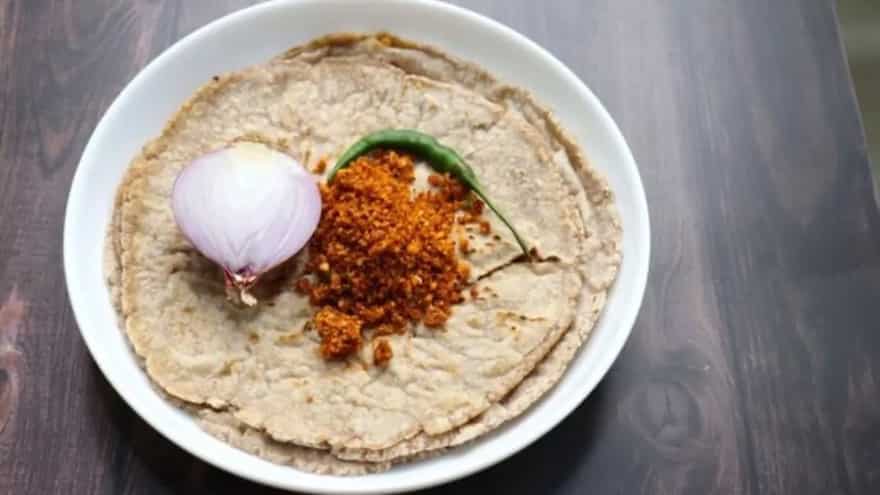
Image credit: Freepik
Dairy is an integral part of the Kutchi diet, thanks to the vast herds of buffaloes and camels. During Holi, a special basundi or doodh pak is prepared. This is milk reduced over a slow flame for hours until it thickens into a creamy consistency, sweetened and garnished with saffron and charoli seeds. It is often served with puri, making for a rich, satisfying conclusion to the festive meal.
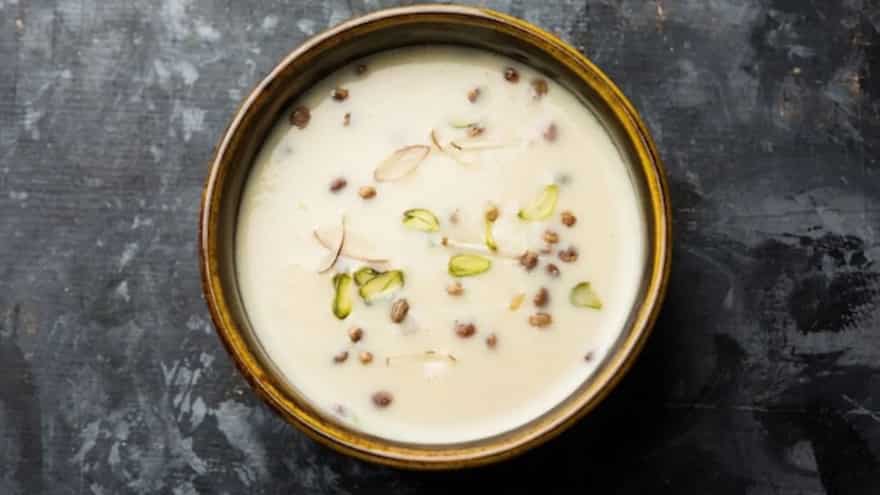
Image credit: Freepik
Savouring The Savouries: Farsan Culture
Kutchis take their farsan or snacks very seriously. On Holi, the variety is staggering. Tikha gathiya, papdi, and vanela gathiya are laid out for guests who drop by to offer greetings. These gram flour snacks are seasoned with ajwain and black pepper, providing a savoury respite from the onslaught of sweets. One unique regional specialty is the kutchi dabeli, though it is often considered a street food, many households prepare a festive version during Holi. The potato filling is spiked with a special dabeli masala that includes cinnamon, cloves, and star anise, then tucked into a bun with pomegranate seeds and peanuts. It represents the modern face of Kutchi festive eating, blending traditional spices with contemporary textures.
Image credit: Freepik
Hydration In The Heat
Playing Holi in a desert requires serious hydration. While the rest of the country might indulge in thandai, the Rann of Kutch relies on chaas or buttermilk. This isn't just plain buttermilk; it is tempered with roasted cumin powder, black salt, and sometimes a tempering of curry leaves and mustard seeds. It is served in large earthen pots, keeping it naturally cool even as the desert temperature rises. For a festive twist, some households prepare rajwadi chaas, which is thicker and richer, almost like a liquid meal in itself.
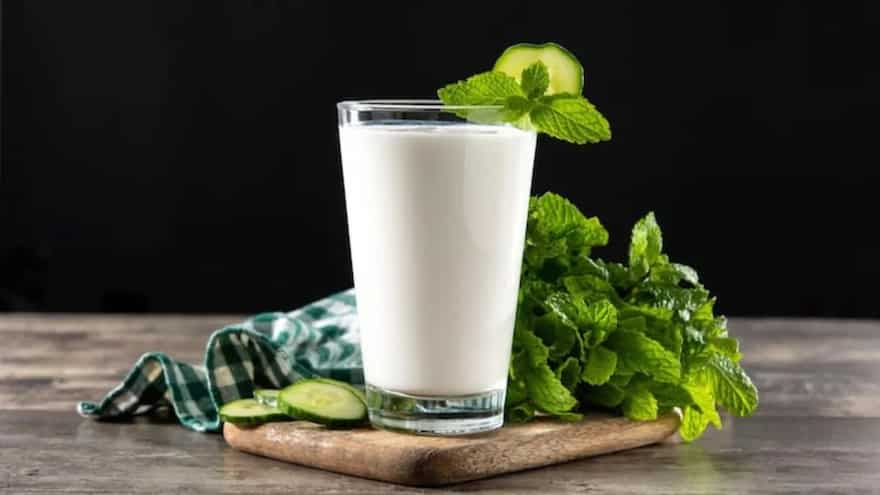
Image credit: Freepik




