


 Share
Share

Ganesh Chaturthi is an auspicious time when the beating of drums and the heavy scent of camphor fill the air, signalling the arrival of the beloved Bappa. While the festival transforms modern Indian homes into sanctuaries of devotion and culinary brilliance, historical records reveal a time of unmatched grandeur orchestrated by the royal dynasties of the subcontinent. Families like the Peshwas, Gaekwads, Wadiyars, Holkars, Scindias and Thanjavur Marathas patronised public celebrations that blended deep faith with absolute culinary opulence. Their palace kitchens became the epicentre of gastronomic innovation, creating elaborate prasad that honoured both the deity and their distinct regional heritages. These festive spreads were not mere meals. They were elaborate displays of wealth, devotion and agricultural prosperity, showcasing the finest seasonal ingredients transformed by master royal chefs into edible art. The traditions forged in these palace fires established a culinary legacy that continues to define Indian festive food today.
The Shaniwar Wada And The Steamed Masterpiece
Ganeshotsav in Maharashtra owes much of its monumental scale to the Peshwa rulers of Pune. The royal kitchens in the historic Shaniwar Wada turned the simple steamed dumpling into an absolute masterpiece. Devotion dictated that exactly twenty-one ukadiche modaks be offered to the deity, a number representing spiritual completeness and auspicious beginnings. These delicate parcels were crafted from exceptionally fine rice flour, carefully kneaded with warm water and ghee to achieve a translucent shell. Inside, they were generously stuffed with freshly grated coconut and melted dark jaggery, scented heavily with green cardamom and nutmeg. Alongside this beloved sweet, the royal naivedya included the iconic puran poli, a sweet flatbread stuffed with Bengal gram and jaggery, roasted until perfectly golden. The feast was anchored by varan bhaat, a comforting preparation of pigeon pea lentils and rice, served with lavish dollops of pure homemade ghee. The meals were rigorously vegetarian, strictly devoid of onion and garlic, and served on large fresh banana leaves set upon massive silver plates. This profound Maratha tradition cemented the classic Maharashtrian festive menu we instantly recognise today.
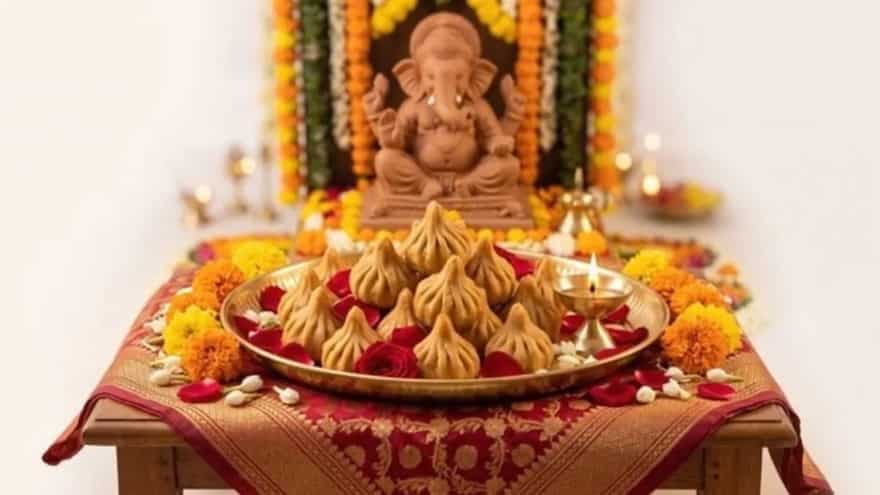
Image credit: Adobe Stock
Maratha Roots Meet Gujarati Opulence
Bringing their proud Maratha roots to Gujarat, the Gaekwad dynasty created a fascinating culinary synthesis in Baroda. Their royal offerings retained Maharashtrian staples but infused them with Gujarati richness and an abundance of dairy. The Baroda palace kitchens prepared exquisite mawa gujiyas and satori, a rich sweet flatbread stuffed with roasted milk solids and sugar. They also mastered the highly patient art of basundi, simmering fresh milk in massive brass cauldrons for several hours until it reached a thick, luxurious consistency, heavily laced with saffron strands and chironji nuts. Savoury additions were equally important to balance the palate. Kothimbir vadi, which are crisp coriander and gram flour fritters, alongside spiced masale bhaat loaded with seasonal vegetables, provided a perfect counterpoint to the immense sweetness of the prasad. For the Gaekwads, the scale of the feast was a direct reflection of prosperity and unwavering devotion, beautifully blending local Gujarati agricultural wealth with the strict ritualistic requirements of traditional Maratha worship.
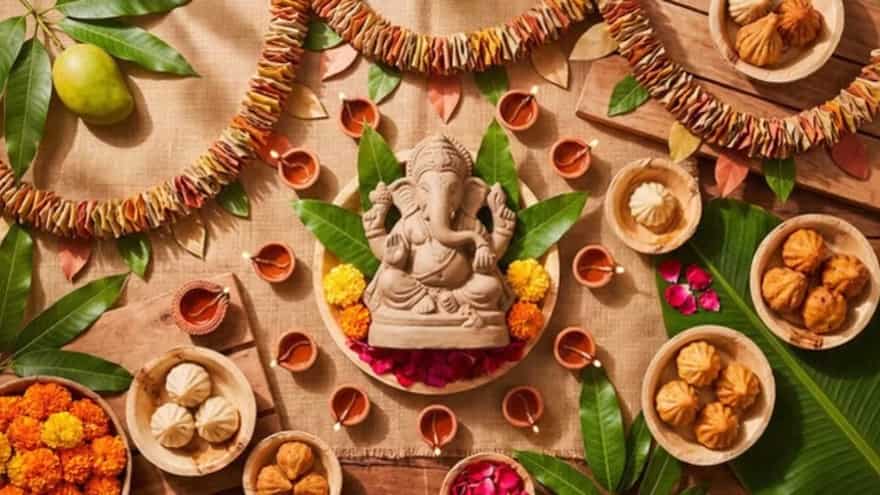
Image credit: Adobe Stock
Southern Grandeur And Gram Flour Confections
Down south, the Wadiyar dynasty of Mysore celebrated Lord Ganesha with a distinctly different, yet equally magnificent, flavour profile. While their Dasara celebrations are globally renowned, their Ganesha festivals were affairs of immense spiritual and culinary gravity. The royal chefs painstakingly prepared obbattu or holige, a delicate sweet flatbread filled with lentil and jaggery, roasted on a hot griddle with abundant fresh ghee. Fried variants of the modak, known regionally as kadubu or karigadubu, were essential components of the sacred offering, providing a satisfying crunch that contrasted with the softer sweets. One cannot discuss the Wadiyar kitchens without acknowledging their legendary confections, heavily laden with roasted gram flour and clarified butter. The iconic Mysore pak, accidentally invented by the royal chef Kakasura Madappa when he served a rapidly solidifying syrup of ghee, gram flour and sugar to the Maharaja, became an enduring symbol of southern royal indulgence. Though initially created for a royal lunch, such rich ghee based confections became integral to palace festive offerings, served proudly alongside panchakajjaya and cooling kosambari lentil salads.
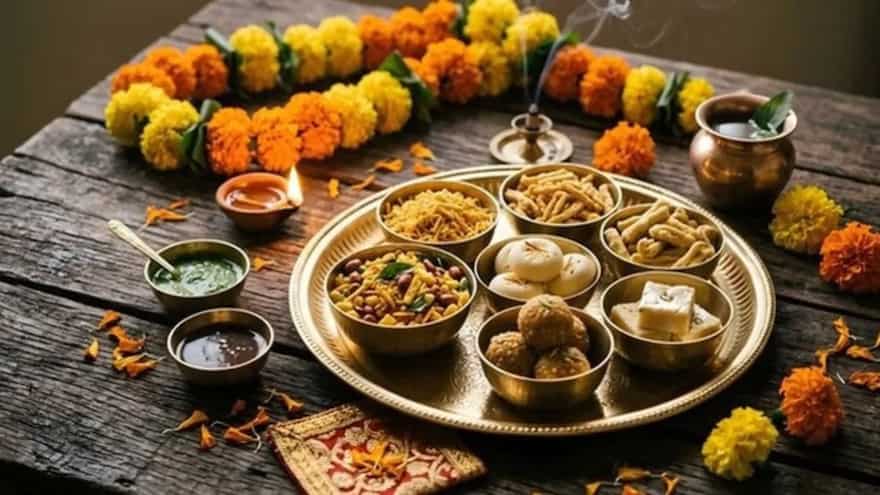
Image credit: Adobe Stock
Malwa Bounty And Egalitarian Devotion
Under the visionary leadership of rulers like Ahilyabai Holkar, the Holkar dynasty of Indore cultivated a deeply spiritual and egalitarian approach to governance and festivities. The Indore royal kitchens fully embraced the agricultural bounty of the fertile Malwa plateau, celebrating the harvest season through their meticulously crafted sacred food offerings. Their Ganesha prasad featured a stunning array of laddoos, ranging from bespoke besan creations to delicate motichoor laddoos infused with pure saffron and studded with melon seeds. Given the historical regional love for flattened rice in Indore, unique poha modaks found their way into the festive repertoire, ingeniously blending local ingredients with traditional devotional forms. The Holkar royal family patronised local artisans with immense respect, even commissioning the Khargonekar family to sculpt their Ganesha idols for generations. The food prepared in their sprawling kitchens was less about ostentatious display and more about community welfare. Massive quantities of sweet prasad were prepared daily and distributed widely among the subjects after the grand royal aarti, reinforcing the bond between the ruler, the divine, and the people.
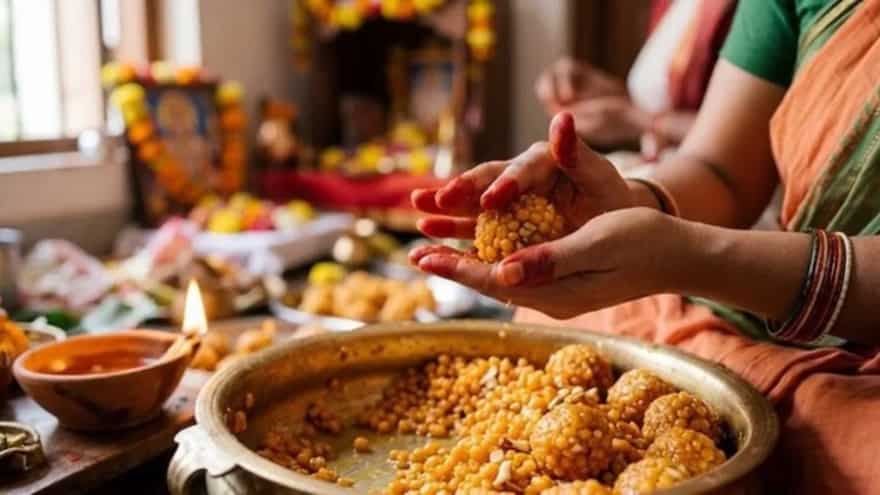
Image credit: Adobe Stock
Central Indian Splendour And Rich Dairy Offerings
The Scindia rulers maintained their fierce Maratha traditions in the heart of central India. In Gwalior, the Ganesh Chaturthi naivedya was an affair of absolute grandeur, often echoing the elaborate chappan bhog traditions of offering fifty-six unique items to the divine. Their modaks were heavily enriched with premium dry fruits, chopped dates, and rich mawa, reflecting the strong historical influence of northern Indian dairy sweets. The traditional puran poli remained a revered staple, but it was frequently accompanied by lavish saffron infused milk and panchamrit made from the purest local curd, cow milk, wild honey, sugar and fresh ghee. The Scindia kitchens took immense pride in sourcing the finest imported almonds, pistachios, and delicate edible silver leaf to elevate the humble prasad into a visual masterpiece fit for royalty. They also prepared panchkhadya, a highly nutritious sweet spiced powder made from roasted gram, desiccated coconut, sesame seeds and poppy seeds, which was offered in small spoonfuls to the faithful devotees.
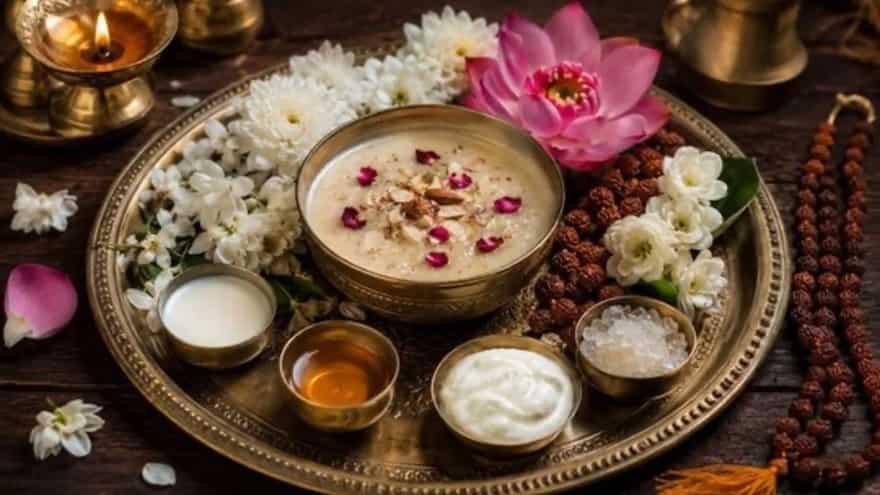
Image credit: Adobe Stock
A Culinary Confluence In The Cauvery Delta
Far away in the southern reaches of the Tamil lands, the Thanjavur Maratha dynasty engineered a spectacular culinary confluence that married their fierce Marathi heritage with the abundant produce of the fertile Cauvery delta. The royal kitchens, heavily documented by King Serfoji the Second in his legendary culinary manuscript Sarabhendra Pakasathram, developed a unique Ganeshotsav menu. Here, the traditional modak evolved into the delicately steamed sweet kozhukattai, yet the fillings often betrayed a distinct Maratha influence with the inclusion of roasted sesame and freshly ground nutmeg. The royal naivedya was an extraordinary fusion of two distinct worlds. Spiced amti lentil broths were tempered with local curry leaves and mustard seeds, whilst the sacred puran poli was enriched with the highly prized local coconut and native cardamom. This glorious synthesis ensured that the Ganesha prasad in the Thanjavur palaces was entirely unique, offering an aromatic, spice laden tribute that beautifully celebrated the rich agricultural diversity of their adopted southern homeland.
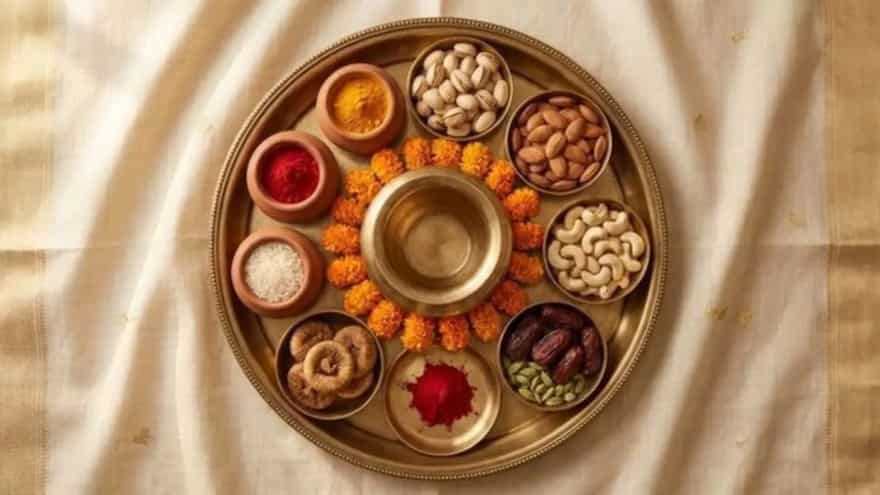
Image credit: Adobe Stock
The Enduring Legacy Of Palace Kitchens
Today, the glorious legacy of these royal kitchens continues to shape how India celebrates its favourite deity. The meticulous recipes and culinary techniques have trickled down from towering stone palace walls to everyday domestic hearths, bridging the historical gap between ancient royalty and the modern devotee. Whether it is the steamed perfection of a Pune modak, the rich decadence of a Mysore sweet, the robust flavour of a Gwalior dry fruit offering, or the spiced aromas of a Thanjavur feast, these foods remain a profound expression of enduring faith. The sheer devotion of the Peshwas, Gaekwads, Wadiyars, Holkars, Scindias and Thanjavur kings lives on in every single bite of festive prasad, preserving a magnificent and delicious culinary heritage for countless generations to come.




