


 Share
Share

While the world celebrates the arrival of the king of fruits with thick shakes and decadent desserts, the Gujarati household approaches summer with a more nuanced philosophy. It is a season of preservation, hydration, and zero waste. The scorching heat of the Rann or the humid breeze of the coastline demands food that balances the body temperature while keeping the palate excited. These recipes are often passed down through generations by word of mouth, rarely finding their way into mainstream restaurant menus. They involve the sharp tang of raw mango, the probiotic goodness of buttermilk, and a tempering of spices that aid digestion.
Fajeto: The Royal Mango Yoghurt Curry
If you have ever enjoyed a feast of Aamras and felt guilty about the pulp left on the mango stone, Fajeto is the answer to your prayers. It is a brilliant example of the Indian ethos of resourcefulness. Traditionally, after extracting the pulp for Aamras, the mango stones and skins are rinsed in water. This golden, mango-infused water becomes the base for Fajeto.
To prepare this at home, you need one cup of fresh mango pulp and two cups of sour yoghurt. Whisk them together with three tablespoons of gram flour (besan) until the mixture is velvety smooth. Add two cups of water to achieve a thin, soup-like consistency. Heat a heavy-bottomed pan and add a teaspoon of ghee. For the tempering, use mustard seeds, fenugreek seeds, a few dried red chillies, and a pinch of asafoetida. Sauté a teaspoon of ginger-green chilli paste and a few curry leaves before pouring in the mango-yoghurt mixture. Simmer this on a low flame, stirring continuously to prevent the yoghurt from curdling. Season with salt and a bit of jaggery if the mangoes are not sweet enough. The result is a vibrant yellow curry that balances the sweetness of the fruit with the tartness of the curd. It is best enjoyed hot with steamed rice or a simple rotli.
Baflo: The Ancient Cooling Elixir
While Aam Panna has gained nationwide popularity, its Gujarati cousin, Baflo, remains a localized secret. The word originates from bafvu, which means to boil. Unlike modern aerated drinks that provide momentary relief, Baflo is designed to prevent heatstroke and rehydrate the body from within.
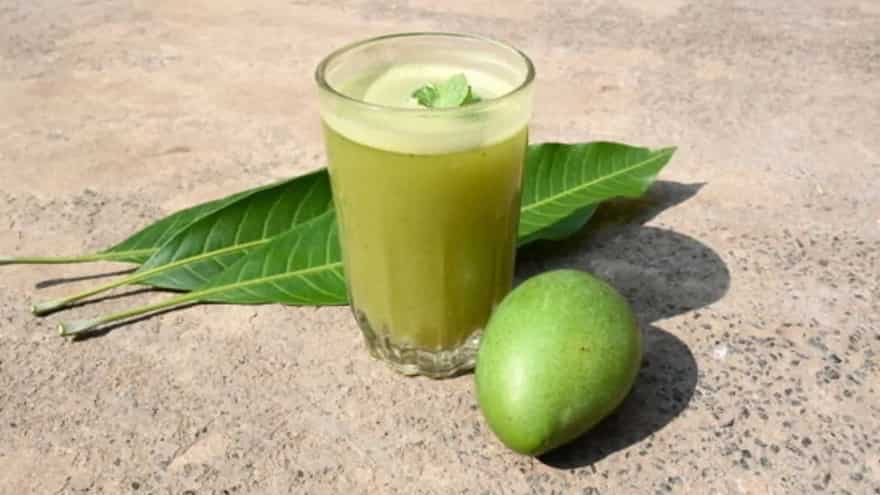
Image credit: Adobe Stock
Take three large raw mangoes and boil them in a pressure cooker with enough water to cover them. Once they are soft and mushy, let them cool completely. Peel the skins and squeeze out every bit of the softened pulp into a large bowl. To this pulp, add roasted cumin powder, black salt, and a generous amount of grated jaggery. The key to a great Baflo is the ratio of sweet to sour. Add chilled water to the concentrate and stir until the jaggery dissolves. Some households prefer to add a touch of fresh mint paste for an extra layer of freshness. Serve this in tall brass glasses with a sprinkle of cardamom powder on top. It is the perfect afternoon companion when the mercury levels are at their peak.
Methia Keri: The Instant Mango Crunch
Summer in a Gujarati home is synonymous with pickle making. While the heavy, oil-soaked pickles take months to mature, Methia Keri is an instant gratification pickle that provides a spicy, bitter, and sour explosion in every bite. It is usually made in small batches and consumed within a week.
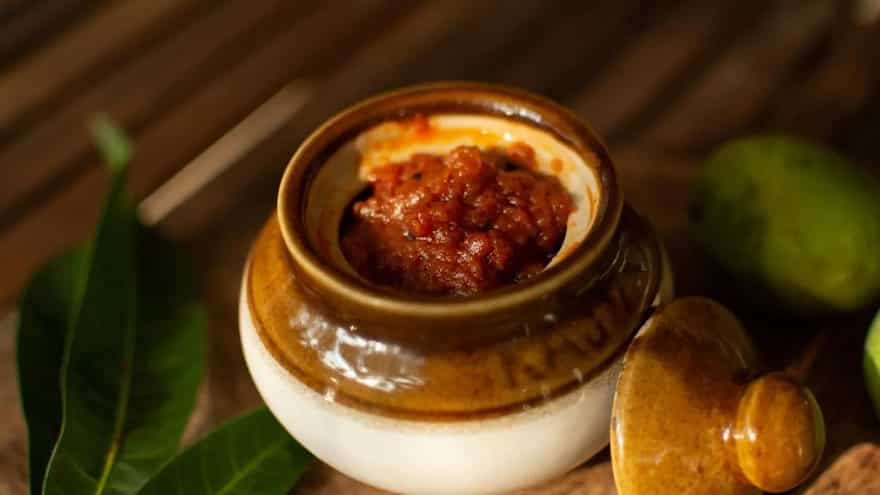
Image credit: Pexels
You will need firm, raw Rajapuri or Totapuri mangoes. Wash and dry them thoroughly before dicing them into small, even cubes. The star ingredient here is the methi kuria, which are coarsely ground fenugreek seeds. In a mixing bowl, combine the mango cubes with a generous amount of methi kuria, split mustard seeds (rai kuria), Kashmiri red chilli powder, and turmeric. Heat half a cup of peanut oil until it reaches the smoking point, then let it cool slightly. Pour the warm oil over the spice-coated mangoes. The heat from the oil partially cooks the spices and helps them adhere to the fruit. Add salt and a teaspoon of sugar to balance the bitterness of the fenugreek. Let it sit for a few hours before serving. The crunch of the raw mango against the earthy bitterness of the seeds makes it an addictive side dish for any meal.
Kachi Keri Ni Dal: A Tangy Protein Boost
Lentils are a staple throughout the year, but during the summer months, the addition of raw mango transforms the humble Toor Dal into a refreshing masterpiece known as Kachi Keri ni Dal. It provides the necessary protein while the Vitamin C from the mango aids in iron absorption.
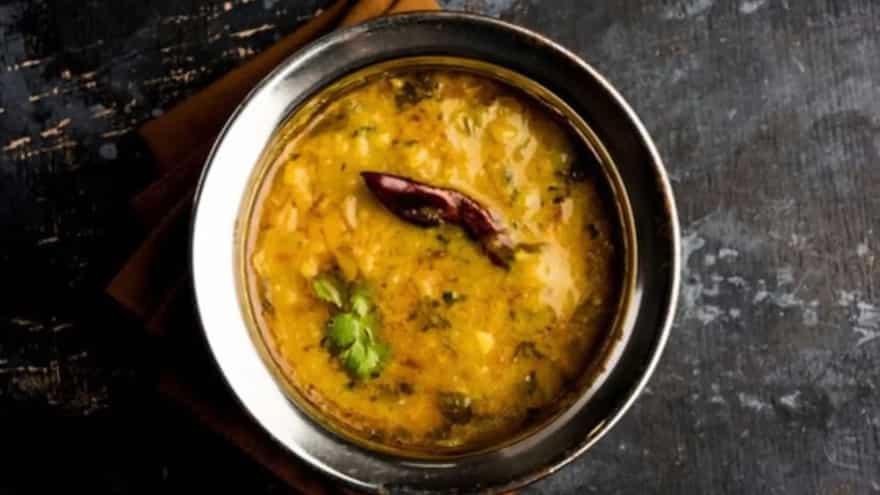
Image credit: Adobe Stock
Pressure cook one cup of split pigeon peas (toor dal) with a pinch of turmeric until it is completely soft. Whisk the dal until it is smooth. While the dal is simmering on the stove, add half a cup of raw mango wedges. These should be peeled and sliced into thick batons so they do not disappear into the dal completely. Add a handful of raw peanuts, which provide a lovely textural contrast once they are boiled. For the tempering, use oil or ghee with mustard seeds, cumin, cloves, and a cinnamon stick. Add a few slit green chillies and curry leaves. Pour this over the simmering dal and let the mangoes cook until they are fork-tender but still hold their shape. Finish with a bit of jaggery and plenty of fresh coriander. The sweetness of the jaggery highlights the sharpness of the green mango, creating a flavour profile that is quintessentially Gujarati.
Vaghareli Chaas: The Smoky Digestif
No Gujarati meal is complete without chaas (buttermilk), but the vaghareli or tempered version is reserved for special summer lunches. This is not just a drink; it is a digestive aid that uses the science of Ayurveda to cool the gut.
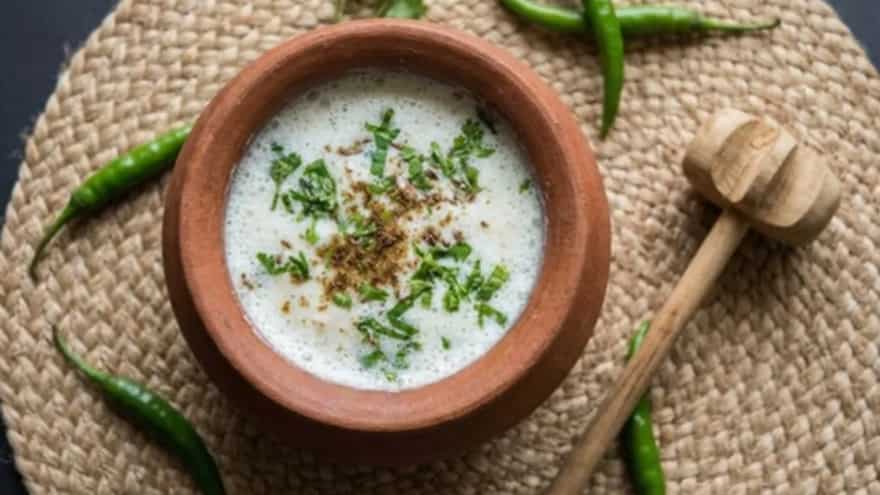
Image credit: Adobe Stock
Start with fresh, homemade yoghurt. Thin it down with chilled water and churn it until a light froth forms on top. The consistency should be thin and watery, not thick like a lassi. The magic lies in the vaghar (tempering). In a tiny tempering pan, heat a teaspoon of oil. Add half a teaspoon of cumin seeds and let them crackle. Add a pinch of strong hing (asafoetida) and a few finely chopped curry leaves. While the oil is still sizzling, pour it directly into the cold buttermilk and immediately cover the vessel with a lid. This traps the smoky aroma of the spices within the liquid. After a minute, uncover and add finely chopped ginger and green chillies. Season with salt and a hint of black salt. Serve it chilled in earthen pots to keep the temperature naturally low.




