


 Share
Share

Kutch occupies a unique position on India’s western edge. The district stretches across salt marshes, desert land, seasonal wetlands and a long coastline along the Arabian Sea. Its border towns lie close to Pakistan, and this geography has shaped every aspect of life. Movement of people, goods and traditions has always flowed through these spaces, even if sometimes limited or interrupted by politics and history. Food in these border towns reflects this layered identity; it combines the needs of survival in a harsh terrain with the creativity of communities who learned to work with what they had. The perception of Gujarat as largely vegetarian does not always account for the rich non-vegetarian traditions that thrive in Kutch. In these towns, meat and seafood form part of daily life, tied closely to occupation and environment. This article looks closely at meat and fish dishes from Kutch’s border towns.
Bohra Meat Dishes Of Border Kutch
The Dawoodi Bohra community has lived in Kutch for centuries, and its cooking traditions stand out within the larger regional food landscape. Bohra households prepare meat dishes with careful attention to flavour and method. Their biryani, for instance, uses goat meat marinated in yoghurt, ginger, garlic and spices. The rice is cooked in layers with fried onions, coriander and mint. This dish carries the mark of festive occasions and family gatherings. It does not use excessive chilli but builds depth with slow cooking and balanced seasoning. Alongside biryani, many families prepare nihari, a slow-cooked goat shank stew eaten with flatbread. Minced meat fillings go into samosas that are offered at community feasts.
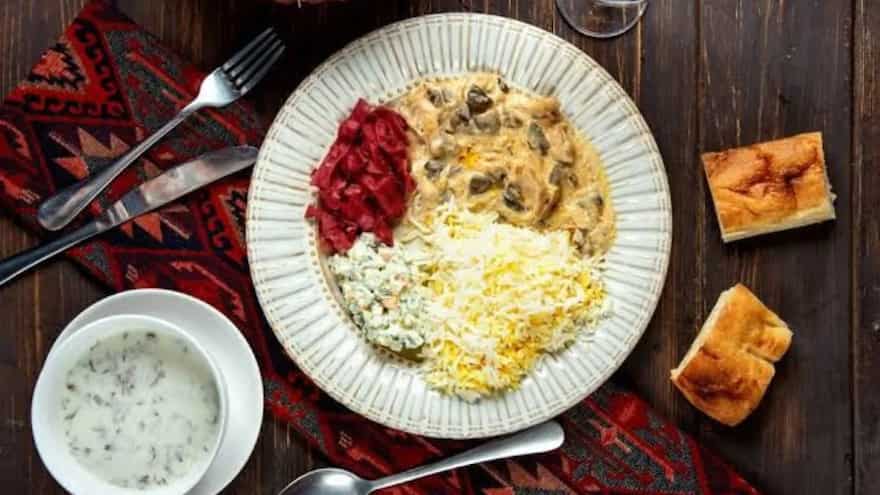
Another dish called khurdi highlights the Bohra approach to subtle spicing. Khurdi is a thin soup made from goat stock, flavoured with yoghurt and green chillies. It has a light texture but a distinctive taste, and it is usually served with rice. Goat offal, such as liver or kidney, also appears in Bohra kitchens, cooked with onions and ground spices. These dishes show how communities in Kutch adapt non-vegetarian cooking to both celebration and everyday meals. They combine resourcefulness with culinary identity, while also connecting Kutch to the wider Saurashtra and Kathiawadi food traditions that have influenced the region.
Coastal Koli Fish Curries
Fishing is one of the oldest occupations along the Kutch coast. The Koli community has built its food traditions around the catch brought in each day. Curries form the main part of this cooking. Fish such as pomfret, bombil and surmai are commonly used. The preparation begins with a simple marinade of turmeric, salt and red chilli. The fish is then either fried or cooked in a curry base. The curry usually combines garlic, dried red chillies, tamarind or kokum for sourness, and sometimes ground coconut paste. These ingredients create a flavour that is sharp yet balanced, with the freshness of the fish at the centre.
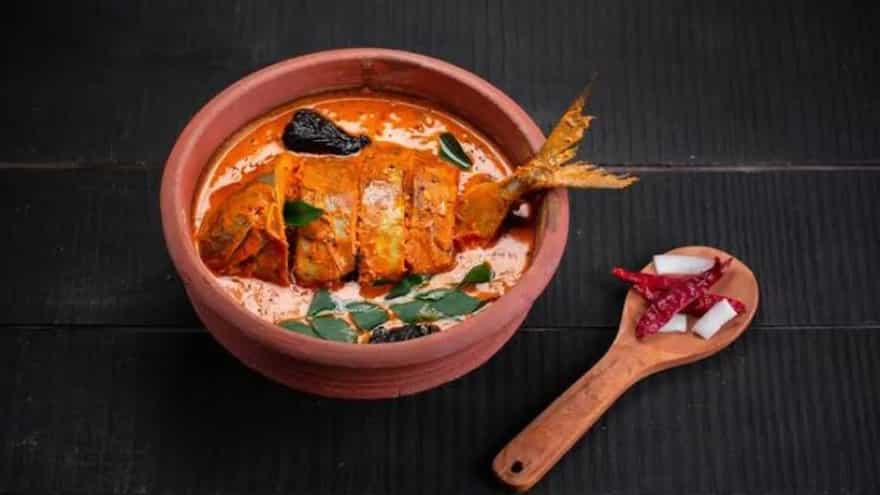
The side dishes that accompany Koli curries are modest but essential. Bajra rotla, a flatbread made from pearl millet, is often eaten with fish curry. Rice is used where it is grown or traded. During monsoon months, when the sea is unsafe for fishing, households depend on dried or salted fish stored earlier in the year. This cycle of fresh and preserved seafood reflects the practical demands of life on the coast. It also shows how food remains closely linked to the natural environment. Every dish in a Koli kitchen carries both the taste of the sea and the memory of a seasonal livelihood.
Rural Meat Dishes And Household Memories
Inland towns and villages of Kutch also have strong meat traditions, although these are less well known outside the region. Goat is the most common meat because pastoral groups raise herds across the grasslands. Families prepare goat curries, fried liver dishes and bone broths using local spices. One dish called khariya uses goat bones and marrow cooked until the stock becomes rich and flavourful. The soup is eaten with millet rotla and considered both nourishing and filling. In smaller kitchens, offal is cooked with onions and spices to make dry side dishes that stretch available resources.
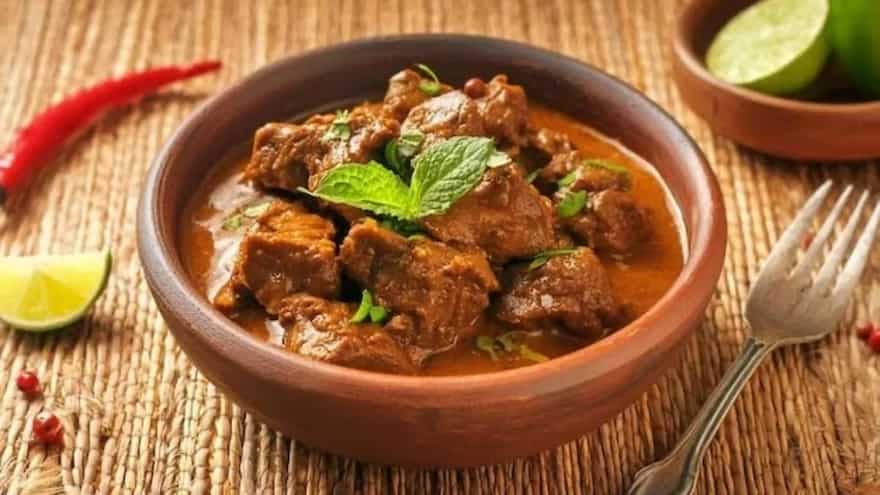
Chicken dishes have also become part of daily meals, often cooked in onion-based gravies or dry masala forms. Seafood appears in rural homes as well, particularly dried shrimp or prawn curries. Dishes like bumla use dried fish mixed with vegetables to create strong flavours suited for humble meals. Many of these recipes are remembered through oral accounts and family traditions. They reflect a time when rural kitchens managed with limited supplies but still produced dishes that were both hearty and culturally significant. In these preparations, one can see how food in Kutch remains rooted in resourcefulness as well as in community practice.
Dried Seafood Traditions
Preservation plays an important role in the food of Kutch’s coastal towns. Drying fish is one of the most established techniques, and it allows households to store seafood for the lean monsoon months. The process involves cleaning and salting the fish, then leaving it to dry in the sun. Once dried, the fish takes on a stronger flavour. It can be cooked in stews, fried with spices, or mixed into vegetable dishes. Families value dried seafood both for its long shelf life and for the intensity of flavour it adds to simple meals.
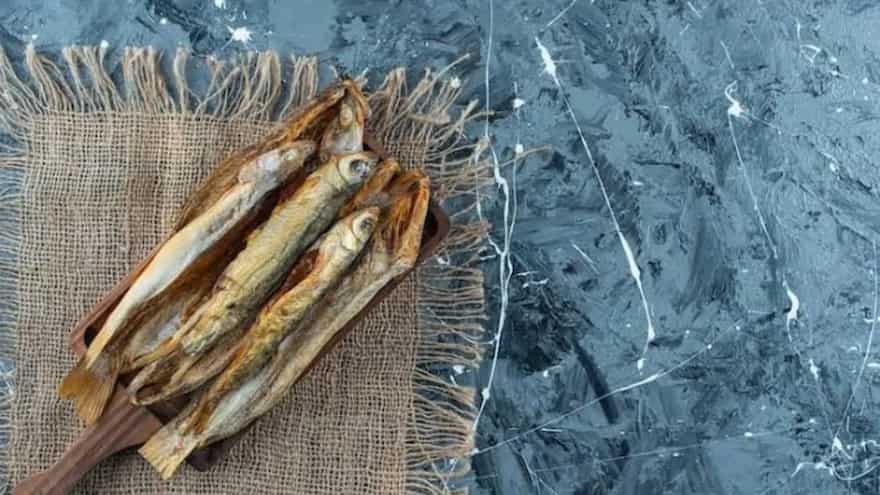
Dried prawns, anchovies and bombil are widely used. These are often added to curries with tamarind, onions and ground spice pastes. The strong taste of dried seafood pairs well with staples like rice or millet bread. This tradition shows the resilience of Kutch’s food culture. It demonstrates how communities used practical methods to make the most of their resources. The reliance on dried seafood reflects not only necessity but also acquired taste, as generations have grown to value the distinct flavour profile that these dishes offer.
Seasonal Prawn Harvests
The Little Rann of Kutch, which lies close to several border towns, plays an important role in seasonal fishing. During monsoon, floodwaters connect the Rann to the Gulf of Kutch, creating conditions for prawn breeding. A species called Metapenaeus kutchensis appears in large numbers during this period. Local communities practise a traditional fishing method known as pagadia, where prawns are caught barefoot by hand in shallow waters. The fishing season runs briefly, usually between August and September. This harvest provides fresh prawns for local consumption and contributes to the economy of the area.

In kitchens, prawns are cooked in various ways. They are either fried with a simple mix of turmeric and red chilli, or simmered in gravies that use onions, garlic and green chillies. These dishes bring seasonal variety to meals and highlight the connection between local ecology and food traditions. The prawn harvest is not only about consumption. It reflects how communities in border towns adapt their diet to natural cycles and use seasonal abundance to strengthen their food culture. It shows again how closely tied Kutch’s food is to the environment around it.




