


 Share
Share

In the serene landscapes of Himachal Pradesh, food is not merely sustenance but a sacred offering. At the heart of this culinary philosophy lies the Dham. This traditional mid-day feast is prepared during weddings, festivals, and religious ceremonies. What makes it unique is its strict adherence to ancient customs, its distinct cooking techniques, and the absence of onions and garlic, which are traditionally replaced by the rich flavours of yoghurt, slow-cooked pulses, and aromatic spices. The origins of Dham are deeply rooted in the temple culture of Chamba. Legend suggests that the kings of Chamba were so enamoured by the Kashmiri Wazwan that they wished to recreate a vegetarian version as an offering to the deities. Over centuries, this temple food moved into the community, evolving into the elaborate multi-course meal we see today.
The Botis: Masters Of The Flame
A Dham is never cooked by an amateur. It is the domain of the Botis, a community of Brahmin chefs who have passed down the secrets of these recipes through generations. These chefs arrive at the venue days in advance, bringing with them a sense of ritual. They cook in a long trench dug into the ground, known as a Dhunni, which is fueled by wood fire. The vessels used are equally important. Large, heavy-bottomed copper pots called Charoti are used to slow-cook the dishes. The copper reacts subtly with the ingredients, enhancing the flavour and ensuring even heat distribution. This slow-cooking process, often lasting several hours, allows the spices to penetrate deep into the lentils and vegetables.
The Components Of A Traditional Dham
While the menu varies slightly between districts like Kangra, Chamba, and Mandi, the core structure remains consistent. The meal is served in a specific sequence to aid digestion and balance the palate.
1. Madra: The Crown Jewel
Madra is the defining dish of any Dham. It usually consists of chickpeas (Chana), kidney beans (Rajma), or black-eyed peas cooked in a rich, velvety yoghurt-based gravy. The key to a perfect Madra is the constant stirring of the yoghurt to prevent it from curdling and the generous use of ghee.
2. Sepu Badi: The Mandi Special
Originating from Mandi, Sepu Badi consists of steamed and fried lentil dumplings made from split black gram (Urad Dal) and spinach. These dumplings are simmered in a tangy gravy of yoghurt and spinach, offering a unique texture and earthy flavour.
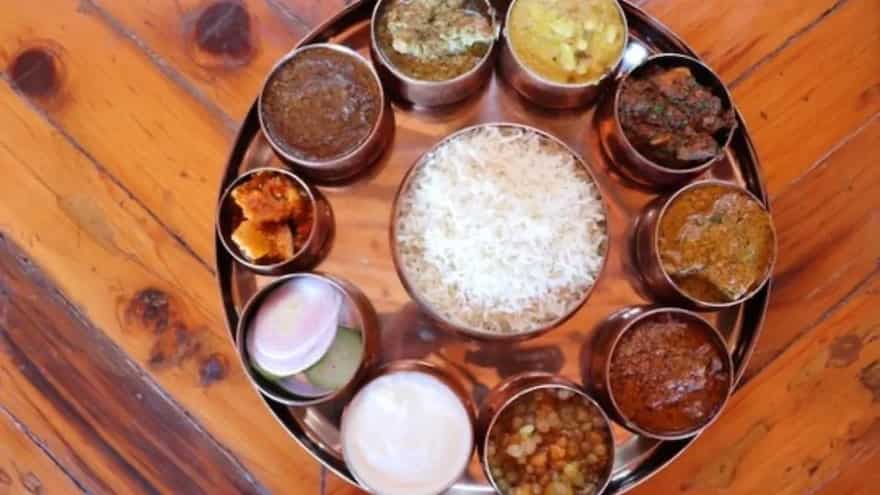
Image credit: Adobe Stock
3. Mah Ki Dal
No Dham is complete without black lentils. This dal is slow-cooked until it reaches a buttery consistency. Unlike the North Indian Dal Makhani, the Himachali version focuses more on the natural flavour of the lentils, often tempered with local spices like mustard oil and dried red chillies.
4. Khatta: The Palate Cleanser
To balance the richness of the yoghurt and ghee, a tangy dish called Khatta is served. In Kangra, this is often a dark, sour gravy made from chickpea flour (Besan) and dried mango powder (Amchoor) or tamarind, often featuring small pieces of pumpkin or boondi.
5. Meetha: The Sweet Ending
The meal concludes with a sweet dish. This is typically Meetha Bhat, which is sweetened rice loaded with dry fruits, saffron, and aromatic spices like cardamom and fennel.
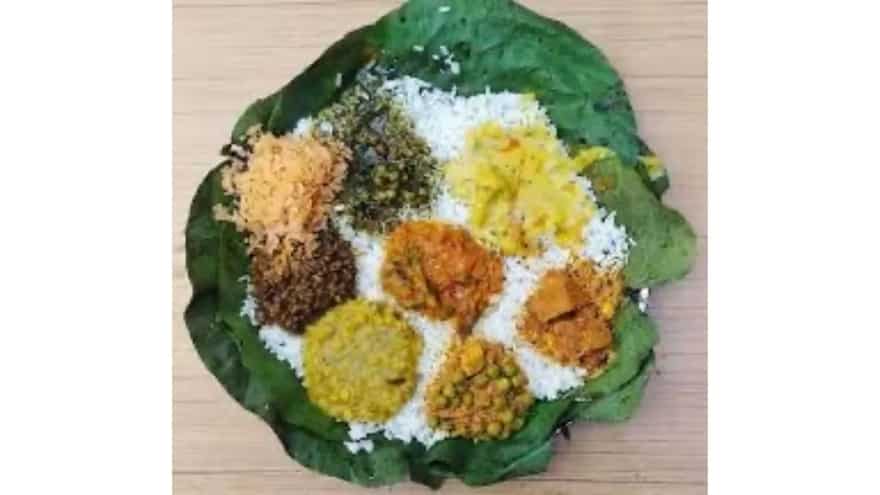
Image credit: Wikimedia Commons
Bringing The Dham Home: A Guide For Your Kitchen
While you may not have a copper Charoti or a wood-fired trench, you can recreate the magic of the mountains using standard kitchen equipment. The secret lies in patience and the quality of spices.
Essential Ingredients
• Dairy: Thick yoghurt and pure Desi ghee.
• Spices: Fennel seeds (Saunf), black cardamom, cinnamon, cloves, and asafoetida (Hing).
• Legumes: White chickpeas, black lentils, and split black gram.
Recipe 1: Chana Madra (Chickpeas in Yoghurt)
This is the most accessible dish to start your Himachali culinary journey.
1. Preparation: Soak 1 cup of white chickpeas overnight and pressure cook them until tender but not mushy.
2. The Base: Whisk 2 cups of thick yoghurt with a tablespoon of rice flour to prevent curdling.
3. The Tempering: Heat ghee in a heavy-bottomed pan. Add cloves, black cardamom, a cinnamon stick, and a teaspoon of fennel seeds. Add a pinch of hing.
4. Cooking: Add the boiled chickpeas and sauté for a few minutes. Lower the heat and slowly pour in the yoghurt mixture.
5. The Slow Simmer: Cook on low heat, stirring continuously until the ghee begins to separate from the yoghurt. Season with salt and a touch of turmeric. Avoid adding water; let the yoghurt form the thick gravy.
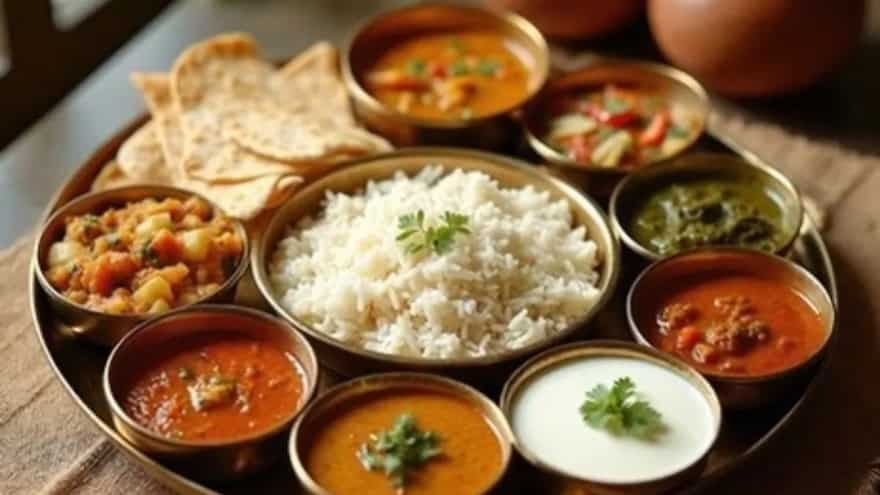
Image credit: Adobe Stock
Recipe 2: The Khatta (Tangy Curry)
1. Make a thin slurry of chickpea flour (Besan) and water.
2. Heat mustard oil until it smokes, then add cumin, dried red chillies, and fenugreek seeds.
3. Add the besan slurry and cook until it thickens.
4. Stir in tamarind pulp or amchoor powder along with a little jaggery to balance the tartness.
5. Add steamed pumpkin chunks or boondi before serving.
The Etiquette Of Eating
A Dham is not just about what you eat, but how you eat. Traditionally, guests sit in long rows called Pangat on the floor. The food is served on Pattals, which are plates made from dried leaves stitched together with small twigs. This practice is eco-friendly and adds a subtle leafy aroma to the hot food. The Botis move quickly down the rows, serving rice followed by the various gravies. You are expected to eat with your hands, as it is believed to enhance the sensory experience and connection with the food. It is common to see people mixing the Khatta with rice at the end of the meal to settle the stomach.
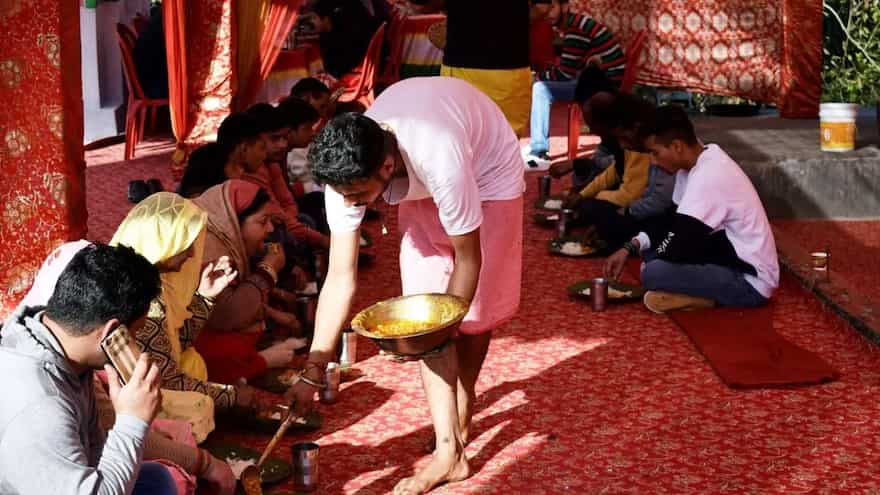
Image credit: Pixabay
Why Himachali Dham Is Relevant Today
In an era of fast food, the Dham stands as a testament to the slow-food movement. It uses local, seasonal ingredients and avoids the heavy use of preservatives or artificial colours. The heavy use of spices like cardamom and fennel aids digestion, while the protein-rich lentils provide sustained energy. Furthermore, the communal aspect of the Dham fosters a sense of equality. Regardless of social standing, everyone sits on the same level and enjoys the same meal. It is a powerful cultural binder that keeps the spirit of Himachal alive, whether in a remote village or a bustling city apartment.




