Share
Share

If you have ever been to the hills in this season, Galgal is the bright yellow sun that sits in every courtyard and market basket. As the chill of winter begins to soften and the mountain air carries a hint of blossoming rhododendrons, this massive citrus fruit becomes the centre of social life in Uttarakhand and Himachal Pradesh. It is a time when the biting cold of the peaks is countered not just by the warmth of woollens, but by the sharp, electric zing of the mountain lemon.
To truly understand this fruit, one must look through the eyes of those who have documented its heritage. Rushina Ghildiyal, a celebrated culinary expert, writer, and consultant who has spent years championing Pahadi food, explains that the preparation is far more than a simple culinary act. Known locally as Sana Hua Nimbu or Galgal ka Khatta, it is a social event and a moment of collective pause. Families and neighbours gather in the afternoon sun to share a bowl of something that is simultaneously spicy, sweet, sour, and incredibly pungent. In the hills, food is a bridge between the harshness of the terrain and the warmth of the community, and no dish exemplifies this better than Galgal Chaat.
The Identity Of The Hill Lemon In Pahadi Culture
In Pahadi food traditions, the naming of the fruit is just as important as its flavour. While the word Galgal is widely used, there are nuances that only a local palate can distinguish. Rushina Ghildiyal clarifies that "We actually call it Pahadi Nimbu hee in Uttarakhand." She explains that while the term Galgal is often used loosely for any large hill lemon, the true Pahadi Nimbu is a more spicy-aromatic, thinner-skinned variety that ripens to a beautiful true lemon yellow.
According to Rushina, this variety is prized for a "sharp, spicy, and peppery aroma in its zest, reminiscent of thai Makroot lime." It possesses a thinner, rougher, and bumpier skin, making it far easier to "sana" or mash for fresh preparations like Khattai. This distinguishes it from the Galgal (Citrus pseudolimon) commonly found in the Delhi plains. That version, while also a large and vibrant yellow citrus, has a "milder, floral scent and a very thick, spongy, and smooth yellow rind." This thicker pith makes the plains variety a robust workhorse for long-term pickling, as it absorbs oil and spices over several months, whereas the mountain variety is built for immediate, fresh consumption.
The Pahadi Nimbu is a winter mainstay, cherished as a functional medicine with a warming "taseer" or internal property. Rushina notes that it "aids in digesting heavy winter foods and boosts immunity during the Himalayan winter, a quality that the more watery Galgal of the plains lacks." Because mountain diets can be heavy with grains and fats, the fruit is believed to "cut through the grease and prevent winter sluggishness."
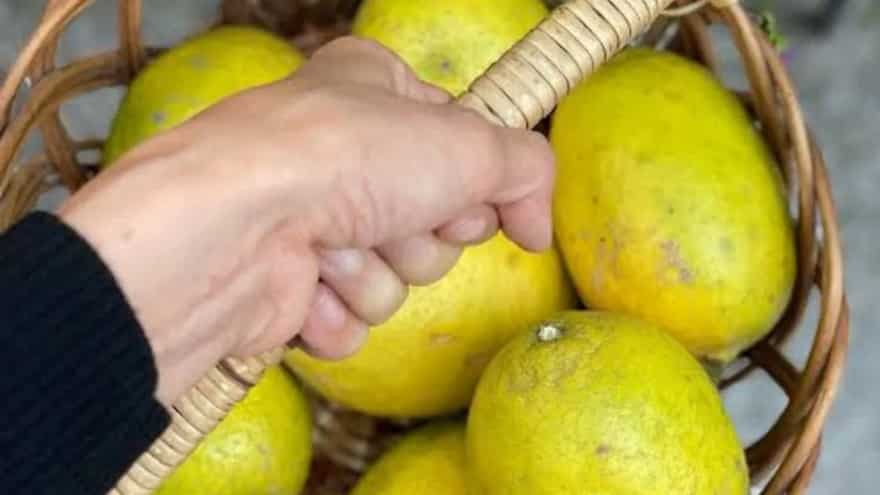
Image credit: Noonmumbai
Also read: Kumaon Over For A Delightful Pahadi Thali
The Communal Ritual Of Sana Hua Nimbu
The preparation of Galgal ka Khatta is inextricably linked to the winter social ritual known as dhoop sekna, or sun-basking. On cold, short, sunny afternoons, families gather on rooftops or in courtyards to prepare and share these dishes. The process is inherently communal. Rushina describes it as a shared effort: "The preparation of this is a communal event with everyone peeling and prepping the fruit."
The most elaborate version, popular towards the Kumaon region, is the Sana Hua Nimbu. It is made by taking the Galgal (including the white pith or albedo) and often mixing it with other Pahadi citrus like oranges and Chakotra (pomelo). The ingredients are then "sanaoed" or thoroughly mashed and mixed by hand. This manual mixing is what gives the dish its name. The recipe requires Pisyoon Loon, which are traditional herb and spice flavoured salts with functional properties, and a nutty, toasted Bhang (hemp) Chutney. A splash of raw mustard oil, curd, and jaggery are added to create a complex, punchy snack.
Rushina also highlights regional variations across the hills. "In Garhwal we also do a version called Chakotra Chaat with Chakotra (Pomelo), Spicy chilli and green garlic pisyoon loon, lemon and a touch of sugar." In another variation known as Nimbu Khatai, the fruit is peeled and the segments are broken into large chunks before being tossed with Pisyoon Loon, chilli, and coriander to make a "mouth puckeringly sour salady snack."
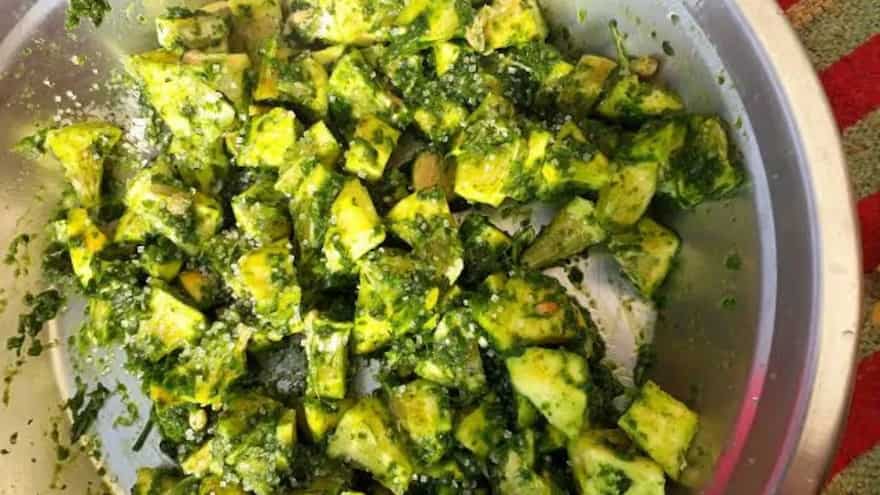
Image credit: Being Pahadia
A Flavour Profile Defined By Mountain Terroir
What makes the flavour of the hill lemon distinct is its layered complexity. Unlike the standard lemons of the plains which offer a sharp, one-dimensional acidity, the Pahadi Nimbu provides a sophisticated sensory experience. Because its "juice is more potent and its skin more aromatic," it stands up perfectly to the heavy, pungent additions of hemp seeds and raw mustard oil.
The edible nature of its pith is a revelation to those outside the hills. In the Galgal, the pith is thick and spongy but lacks the intense bitterness found in other citrus. It acts as a reservoir, soaking up the spiced curd and releasing the juices as one chews. Rushina points out that the aromatic oils in the skin are essential to the flavour: the peppery, spicy notes in the zest provide a depth that standard limes simply cannot match. This aromatic potency is what allows it to pair so well with the earthy, nutty profile of Bhang ki Chutney.
The combination of the lemon's natural acidity with the sweetness of jaggery and the creaminess of curd creates an emulsified sauce that is both refreshing and comforting. It is this balance that makes it possible to consume large quantities of the fruit in the winter sun without it becoming overwhelming.
Beyond The Chaat Bowl In Modern Pahadi Cuisine
While the seasonal chaat is the most famous use, the culinary utility of the Galgal and Pahadi Nimbu extends far beyond the sun-drenched courtyards. In the traditional mountain kitchen, nothing goes to waste, and the fruit is utilised in various forms throughout the year.
Beyond the famous pickles that use the thick-skinned varieties, Rushina Ghildiyal notes other unique applications: "We also use it to make a delicious Til ki Chutney in Garhwal." This sesame-based chutney benefits from the citrus burst, which balances the richness of the sesame seeds. The fruit also serves as a vital ingredient in contemporary Pahadi homes where it is used to brighten up dal or as a base for refreshing winter beverages.
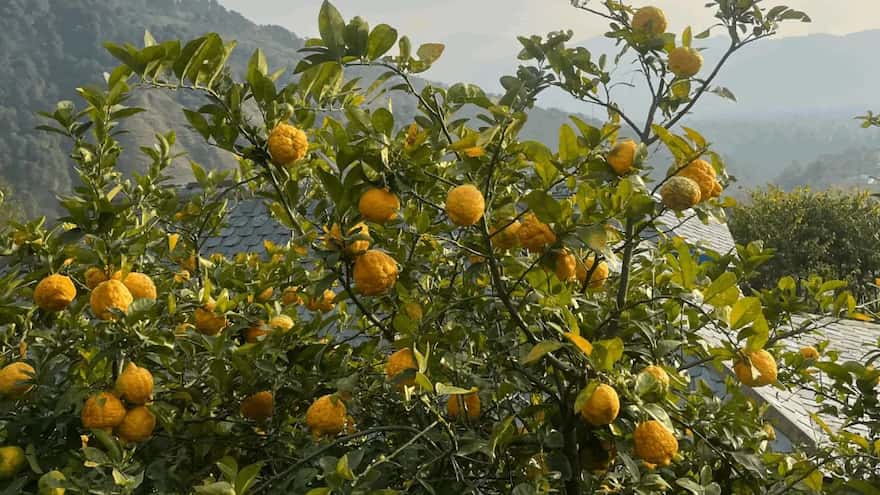
Image credit: The Kindness Meal
Even as the dish gains popularity in urban centres under the name Galgal Chaat, the traditionalists remain focused on its origins. Rushina explains that while the name Galgal Chaat has become popular recently, "the sana hua nimbu is the origin." She emphasizes the importance of putting these details together to differentiate between the various citrus types and their traditional uses.
Modern Interpretations And Culinary Evolution
As mountain cuisine finds a place on global food maps, the Galgal stands as a symbol of the Pahadi way of life. It represents a culture that understands the seasons, values communal effort, and knows how to turn a simple fruit into a powerful digestive aid and a social celebration. Whether it is the spicy-peppery Pahadi Nimbu of Uttarakhand or the thick-skinned Galgal used for aged pickles, this citrus remains the seasonal heartbeat of the Himalayas.
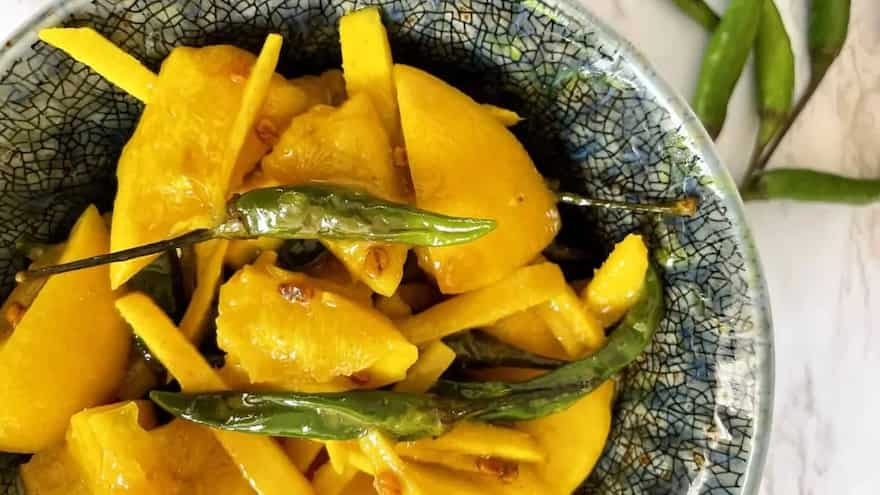
Image credit: The Kitchen Docs
In recent years, Galgal has found its way into the commercial market as a concentrate. Galgal squash is a popular alternative to synthetic lemon drinks. Its high juice content makes it ideal for large-scale extraction. In local cafes across Rishikesh, Almora, and Manali, you will now find Galgal-infused teas and beverages, where the mountain citrus replaces the standard lime to give a local twist to global favourites.