Share
Share

The rising sun over the Coromandel Coast brings more than just daylight to the intentional community of Auroville. It brings the very fuel needed to feed thousands of its residents and visitors. Located just outside Puducherry, Auroville has long been a testing ground for sustainable technologies, afforestation programmes and harmonious living. At the very heart of this experimental township lies a culinary and engineering marvel known as the Solar Kitchen. This facility stands as a powerful testament to what humanity can achieve when it aligns its daily needs with the rhythms of nature. In a world increasingly burdened by climate change and depleting fossil fuels, the kitchen serves as a beacon of hope. It proves that large-scale operations do not have to come at a heavy cost to the planet. By harnessing renewable energy so effectively, the community has created a blueprint that modern cities and rural villages alike can look toward for inspiration.
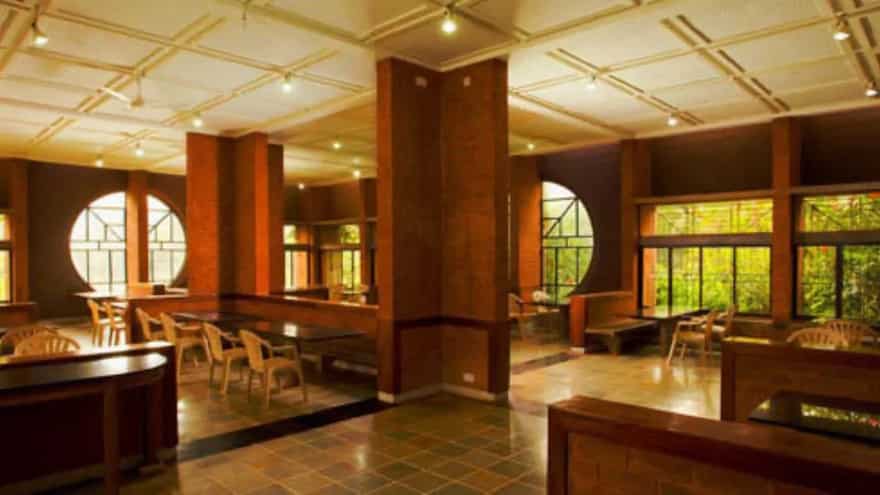
Image credit: Auroville.org
What Is The Auroville Solar Kitchen?
The Solar Kitchen is exactly what its name suggests. It is a massive community kitchen and dining hall that relies primarily on solar energy to prepare its food. Instead of burning firewood, coal or relying heavily on imported liquid petroleum gas, the facility captures concentrated solar power to generate high-temperature steam. This steam is then used to cook massive quantities of rice, lentils, vegetables and soups every single day. The kitchen prepares lunches for local schools, permanent residents, volunteers and guests. However, it is not merely a place to eat. It is a central hub for the township, acting as a social gathering space while simultaneously demonstrating that large-scale catering can be both environmentally friendly and remarkably efficient.
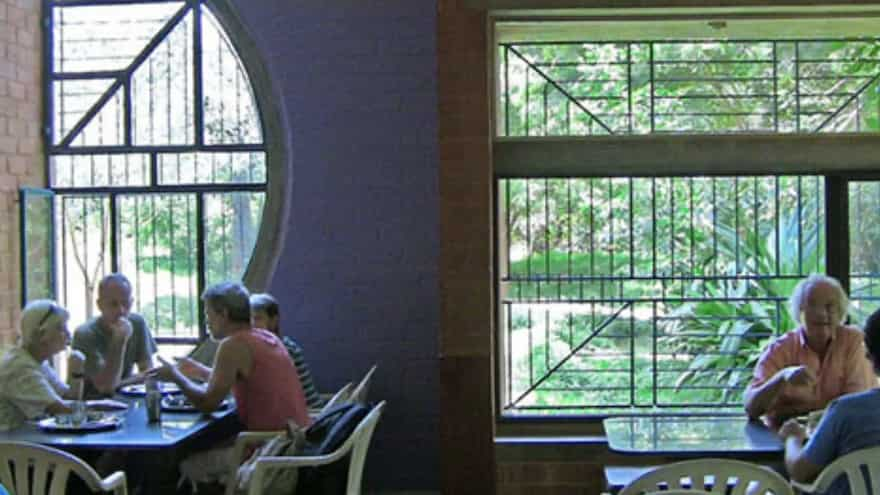
Image credit: Auroville.org
The History Behind The Heat
The journey of this ambitious project began in the late twentieth century. As Auroville grew in population, so did the need for a centralised dining facility that could provide nutritious meals for everyone. The founders and engineers within the community wanted a solution that perfectly aligned with their ecological values. They wanted to minimise their carbon footprint and reduce dependency on external energy grids. Construction began in the mid-1990s following extensive research and collaboration between international architects and local engineers. The kitchen was officially inaugurated in 1997. The crowning achievement of this structure was the design and installation of the Solar Bowl, an innovative architectural feat that remains one of the largest stationary solar concentrators in the world. The project required immense precision, with volunteers and professionals working side by side to place thousands of mirrors by hand.
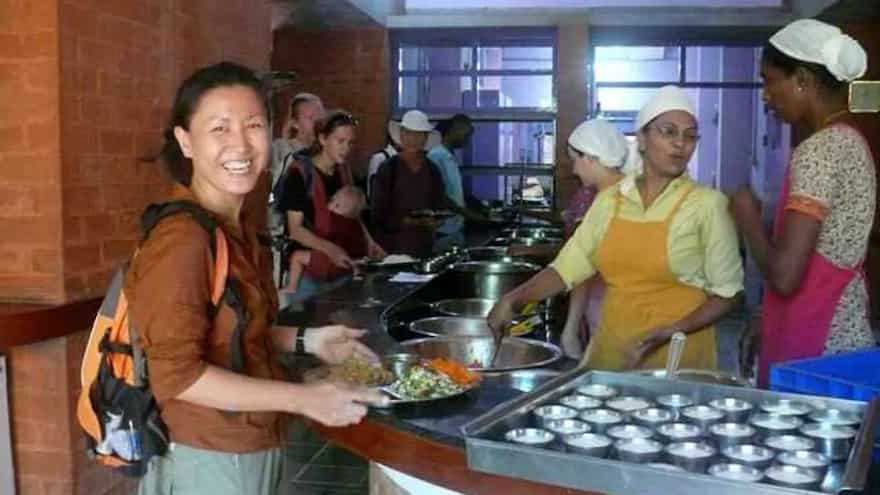
Image credit: Auroville.org
How The Solar Bowl Works
To understand the mechanics of this incredible facility, you have to look up at the roof. Built directly into the structure of the building is a massive, stationary, spherical reflector measuring fifteen metres in diameter. This giant bowl is meticulously lined with thousands of small, square mirrors. Because the bowl itself is fixed and does not move, an ingenious computerised system is used to track the sun. A cylindrical receiver suspended above the bowl is programmed to follow the sun precisely as it moves across the sky from east to west. As sunlight hits the thousands of mirrors, it bounces back and concentrates intensely on this tracking receiver. Water pumped through the receiver is instantly heated to a rapid boil, creating high-pressure steam. This steam travels down through insulated pipes directly into the kitchen below. There, it enters specialised double-jacketed cooking vessels. The heat transfers to the food inside the pots, cooking it perfectly and evenly without a single open flame, spark or puff of smoke.
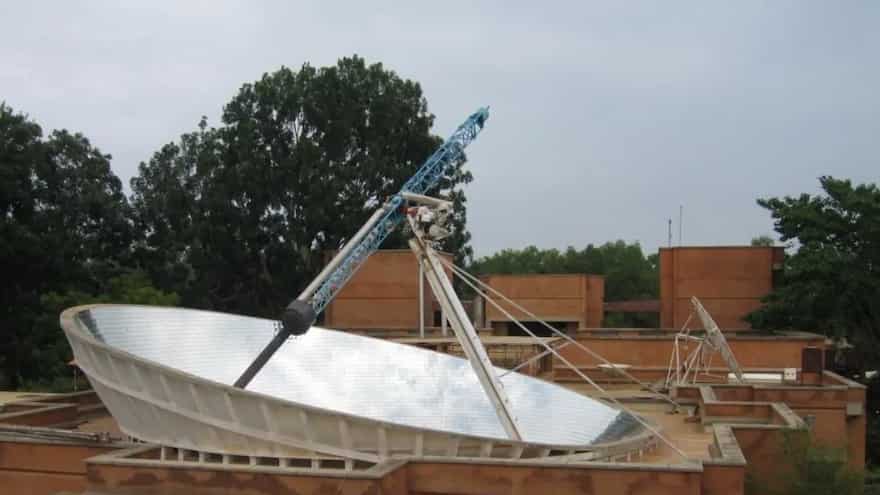
Image credit: Wikimedia Commons
Auroville Community And Food Culture
In Auroville, the culture surrounding food is deeply intertwined with the underlying philosophy of community living. The dining hall is a vibrant space where people from dozens of different nationalities and backgrounds sit together. Sharing a meal here is a unifying experience that fosters dialogue, mutual respect and a sense of shared purpose. The food itself reflects a deep commitment to holistic health and sustainability. Ingredients are largely sourced directly from Auroville farms, prioritising organic agriculture, soil regeneration and seasonal harvests. The flavours are a unique, comforting blend of traditional Indian dishes and international cuisines, catering to the diverse palate of the residents. This farm-to-plate approach ensures that the community reduces its carbon footprint not just in how the food is cooked, but also in how it is grown, harvested and transported.
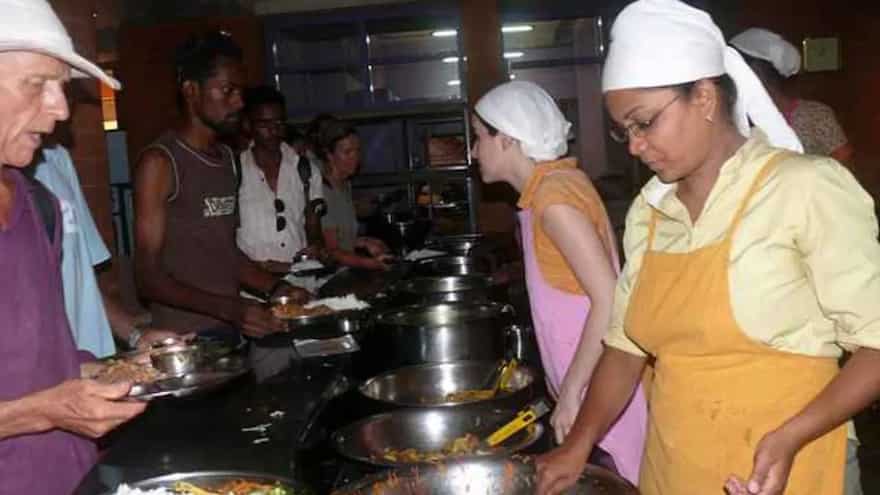
Image credit: Auroville.org
The Benefits Of Solar Cooking During LPG Shortages
For many Indian households and commercial eateries, the fluctuating price and scarcity of LPG cylinders can be a significant source of financial anxiety. Supply chain disruptions and global energy crises often leave families vulnerable to sudden price hikes. The Auroville model offers a brilliant and highly practical counter-narrative to this problem. By tapping into abundant renewable energy, the kitchen insulates itself from the volatility of global fossil fuel markets. During times of gas shortages, the sun continues to shine freely. Scaling this concept down or adapting it for wider institutional use could provide immense relief for boarding schools, ashrams, hospitals and large residential complexes across the subcontinent. Furthermore, shifting away from traditional biomass fuels like firewood or cow dung eliminates harmful indoor air pollution, which is a leading cause of respiratory diseases in rural India. Solar cooking promotes absolute energy independence while preserving local forests and improving public health.
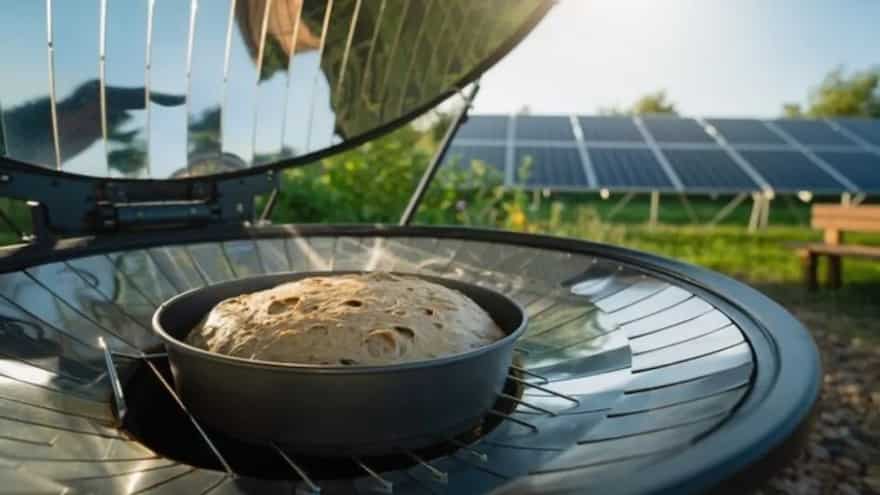
Image credit: Pexels
How To Incorporate Sustainable Cooking At Home
You do not need a fifteen-metre solar bowl on your roof to start cooking sustainably. Taking inspiration from Auroville is easy and highly rewarding for any household.
• Invest in a Box Solar Cooker: You can begin by purchasing a simple box solar cooker for your terrace or sunny balcony. These insulated boxes use glass and mirrors to trap heat. They are fantastic for slowly cooking rice, boiling potatoes, roasting peanuts or even baking cakes while you go about your day.
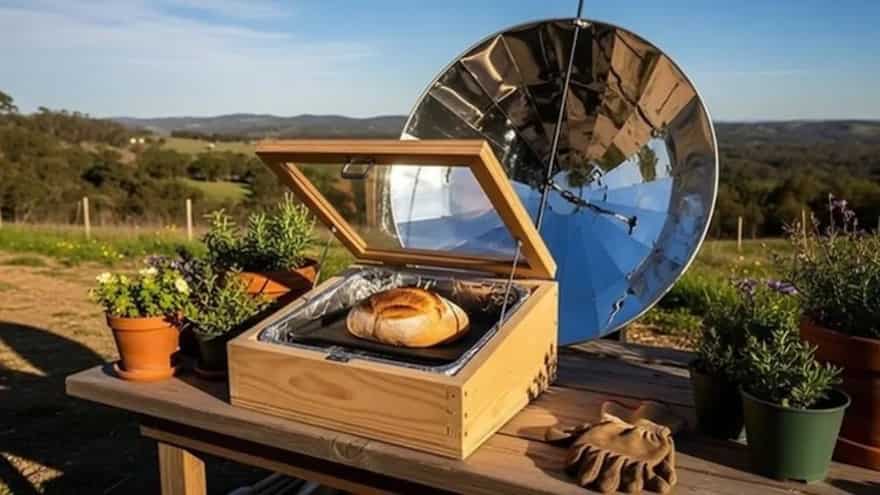
Image credit: Pexels
• Explore Parabolic Cookers: For faster results, parabolic solar cookers offer much higher temperatures. They concentrate sunlight onto a single point and can easily fry, sauté or boil food just like a conventional gas stove.
• Utilise Thermal Cookers: Another excellent investment is a thermal cooker, often known as a haybox. You simply bring your food to a boil on your regular stove for a few minutes, transfer the hot pot into the heavily insulated thermal cooker, and let the trapped heat finish the cooking process over the next few hours.
• Adopt Mindful Prep Habits: Beyond buying new equipment, sustainable cooking is heavily about your daily behaviour. You can dramatically minimise gas usage by soaking lentils, chickpeas and beans overnight to reduce their boiling time.
• Trap the Heat: Always use well-fitting lids on your pots and pans to trap steam and speed up the cooking process. Cooking without a lid wastes a massive amount of thermal energy.
• Optimise Your Burner: Ensure you match the size of your pot to the size of your gas burner. Flames that lick up the sides of a small pot are entirely wasted energy.
By making these small but impactful adjustments, any household can lower its reliance on expensive LPG, save money on monthly utility bills and take a meaningful step towards a greener, more sustainable future for the planet.