


 Share
Share

If you have watched Dhurandhar and found yourself pausing at the mention of doodh soda, wondering what exactly this drink is and why it feels so familiar to some audiences, you are not alone. The film has brought renewed attention to a beverage that once belonged firmly to everyday life across parts of India and Pakistan, yet rarely appeared in cookbooks, menus, or mainstream food conversations. The idea of milk mixed with carbonated water or soda has roots in Victorian England, where carbonated milk mixtures were consumed as refreshing or medicinal beverages as early as the late nineteenth century. These practices reached South Asia through the British Empire, where local populations adapted the concept using available carbonated sodas.
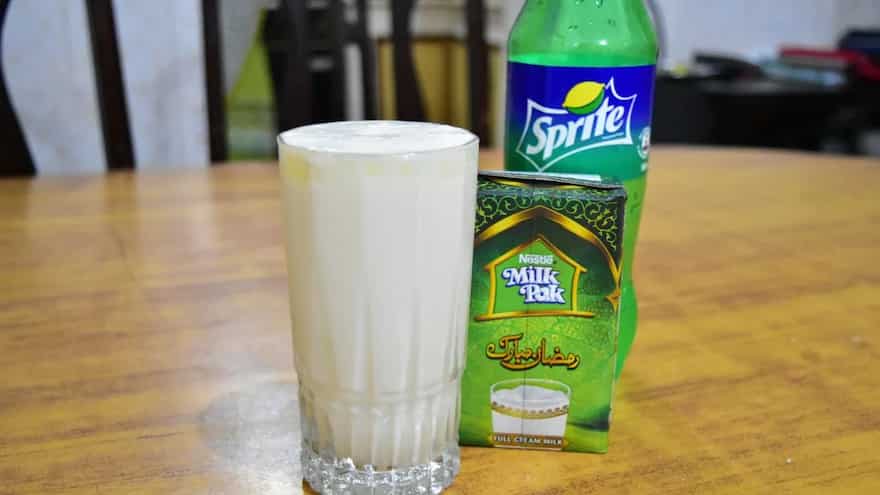
Image credit: Wikimedia Commons
Carbonated water arrived in urban Indian markets by the late 1800s, with soda fountains established in cities like Bombay, Pune and Lahore amid colonial trade networks and evolving café culture. Early versions of doodh soda would have been prepared using soda water, milk, and sometimes sweeteners or flavourings. In the Punjab region of both India and Pakistan, this drink became especially popular, partly because lemon-lime sodas like 7-Up and Sprite (or locally produced equivalents like Pakola in Pakistan) were commonly mixed with chilled milk as a simple, refreshing beverage.
Regional Significance in India and Pakistan
Across India, particularly in Punjab and parts of Delhi and Kolkata, doodh soda has been a familiar local refreshment for decades. Doodh soda also became particularly associated with Irani cafés, especially in Bombay and parts of Gujarat. These cafés, run largely by Parsi and Iranian-origin families, played a key role in shaping urban food culture. Soda-based drinks formed a standard part of their menus, and doodh soda appeared alongside lime soda, raspberry soda, and ice cream sodas. After decades of steady but local popularity, its profile rose significantly in late 2025 thanks to increased public interest.
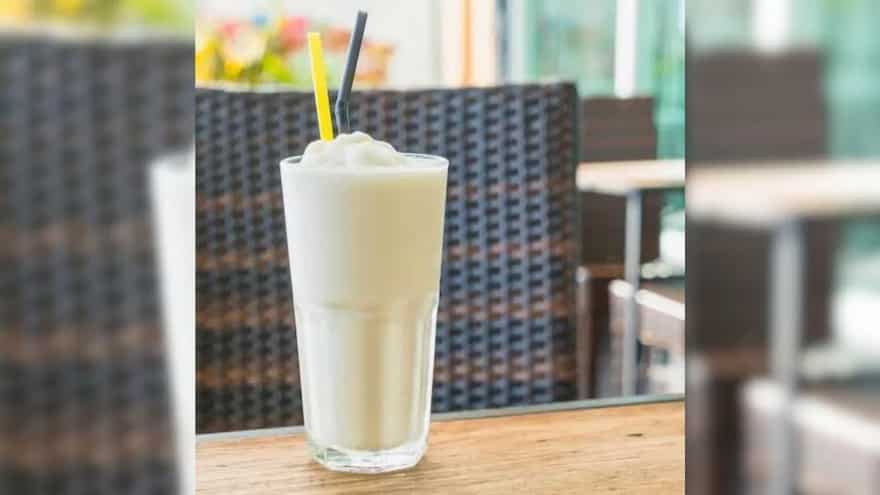
Image credit: Freepik
In Pakistan, Doodh soda has longstanding popularity across the Punjab provinces and major cities such as Karachi and Lahore. It is often served cold during hot weather, and in many Pakistani households and eateries it has become associated with Ramadan iftar tables, where its combination of creamy milk and fizzy soda helps with hydration after fasts. The beverage’s cultural resonance in Pakistan also stems from its ubiquity in roadside stalls, dhabas and informal eateries, where it is offered as an everyday drink rather than a specialty item. It existed alongside falooda, ice cream sodas, and fruit sherbets. These drinks were valued for their cooling effect and affordability, and references to milk-and-soda combinations appear in oral histories of Karachi’s café culture.
Doodh soda represents a shared culinary history between India and Pakistan that predates Partition. Its continued presence on both sides of the border reflects how everyday food practices often persist independently of political boundaries. After Partition, these habits continued independently on both sides of the border, though they were rarely documented in written recipes or menus.
Changes Over Time
Despite its long presence, doodh soda faded from mainstream menus in both countries during the late twentieth century. The rise of packaged soft drinks, branded milk beverages, cold coffees, and café culture focused on Western-style drinks meant that traditional mixed sodas like doodh soda were less featured in urban drink menus. Many older soda fountains and traditional refreshment houses also declined as drinking habits shifted. Even so, the drink endured informally in homes and in specific regional contexts, sustained by personal and community memories rather than formal documentation in cookbooks or menus.
Contemporary Resurgence And The Role Of Dhurandhar
The recent resurgence of interest in doodh soda has been influenced in part by its appearance in contemporary popular culture, most notably through the film Dhurandhar. The film’s visual language and period references brought renewed attention to everyday objects and habits associated with mid-twentieth-century urban life, including traditional drinks that were once commonplace. Following the film’s release and promotional cycle, doodh soda began to re-enter public conversation through media coverage, social media discussion, and editorial features focused on retro and inherited food practices. This renewed visibility did not introduce the drink as something new, but rather recontextualised it as a recognisable element of shared cultural memory. In this way, Dhurandhar functioned as a catalyst rather than a point of origin, prompting renewed curiosity around a drink that had continued to exist since generations. The film’s role in the drink’s resurgence underscores how visual media can draw attention back to everyday food traditions that were never formally archived but remained present through habit and remembrance.

Image credit: Freepik
How To Make Doodh Soda At Home
Doodh soda has traditionally been prepared with minimal ingredients and no specialised equipment. The method below reflects common household practices documented across North India and Pakistan, with room for small adjustments based on taste.
Ingredients
- Chilled full-fat milk (well refrigerated)
- Plain soda water or lemon-lime soda (such as Sprite or 7-Up)
- Sugar, to taste (optional)
- Rose syrup or vanilla essence (optional)
- Ice cubes (optional)
Step-by-Step Method
- Chill the milk thoroughly: The milk should be very cold before use. This helps prevent curdling when soda is added and ensures the drink stays refreshing.
- Prepare the glass: Use a tall glass. If preferred, add a few ice cubes, although many traditional preparations rely only on chilled milk without ice.
- Pour the milk first: Fill the glass halfway with chilled milk. Pouring milk first allows better control when adding soda.
- Add sweetening, if using: If sugar is used, stir it into the milk at this stage until fully dissolved. If using rose syrup or vanilla essence, add a small amount and mix gently.
- Add the soda slowly: Gently pour soda water or lemon-lime soda into the glass until it reaches the desired level. Pouring slowly reduces excessive froth and helps the milk remain smooth.
- Stir lightly: Use a spoon to give one or two gentle stirs. Over-stirring can cause the drink to foam excessively or lose carbonation.
- Serve immediately: Doodh soda is best consumed fresh, while the fizz is still active and the milk remains cold.
Notes On Variations
- In some regions, soda water is preferred for a milder taste, while lemon-lime sodas are used for added sweetness and citrus notes.
- Rose syrup is a common addition in parts of North India and Pakistan, though the drink is equally traditional without flavouring.
- The milk-to-soda ratio varies by preference, but a roughly equal proportion is widely used.




