


 Share
Share

As the spring breeze begins to sweep across the Indian subcontinent, it brings with it the spiritual resonance of Chaitra Navratri. This nine night festival is more than just a religious observance: it is a celebration of the primordial feminine energy that sustains the universe. The first day, falling on 19th March 2026, marks the beginning of the Hindu New Year for many and sets the stage for a journey of self discipline and devotion. The first day is dedicated to Maa Shailputri, the embodiment of the Earth and the daughter of the mountains. Her name is derived from Shail, meaning mountain, and Putri, meaning daughter. She represents the peak of consciousness and the solid foundation upon which our spiritual lives are built. Understanding the rituals, the symbolism, and the dietary practices of this day allows us to align ourselves with the natural rhythms of the season.
The Goddess Of The Peaks: Maa Shailputri
In Hindu iconography, Maa Shailputri is depicted riding a bull named Nandi, holding a trident in her right hand and a lotus flower in her left. This imagery is deeply symbolic. The bull represents stability and firm determination, while the trident signifies the balance of the three gunas: Sattva, Rajas, and Tamas. The lotus symbolises purity and the ability to remain detached from the muddy waters of worldly desires. Historically, Maa Shailputri is the reincarnation of Sati, the daughter of Daksha Prajapati. After the tragic events of the Daksha Yagna, she took birth as the daughter of Himavat, the King of the Himalayas. This transition from a life of intense penance to being born as the daughter of the mountains signifies the power of resilience and rebirth. For devotees, worshipping her on the first day is an act of seeking inner strength and grounding.
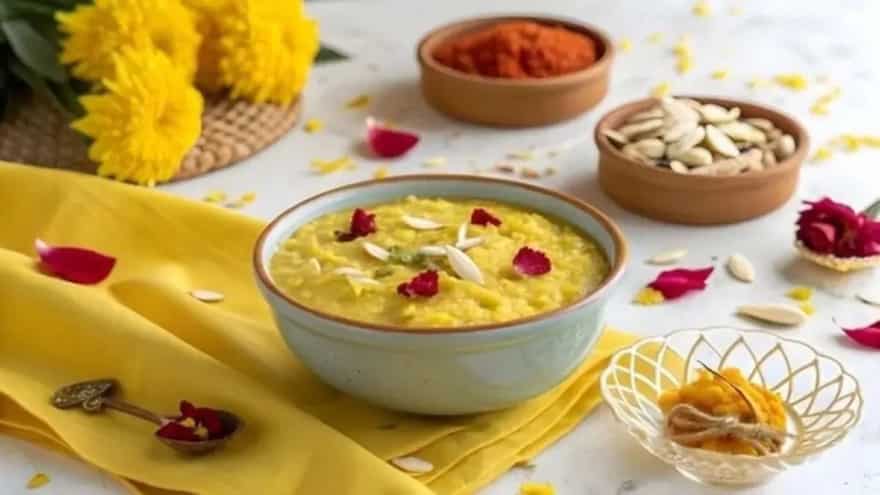
Image credit: Adobe Stock
The Radiance Of Yellow: Colour Of The Day
The first day of Chaitra Navratri is associated with the colour yellow. This choice is far from arbitrary. Yellow represents the brightness of the sun, the warmth of the spring, and the blossoming of flowers. It is a colour that stimulates the mind and brings a sense of optimism and happiness. In the context of the chakras, yellow is linked to the Muladhara or the Root Chakra. Just as Maa Shailputri is the foundation of the Navadurga, the Root Chakra is the foundation of our spiritual journey. Wearing yellow on this day is believed to attract positive vibrations and enhance one focus during prayer. Whether you choose a traditional yellow saree, a bright kurta, or even a simple yellow dupatta, the goal is to mirror the luminous energy of the Goddess.
Image credit: Adobe Stock
The Purest Offering: The Significance Of Ghee
Every day of Navratri features a specific offering or Bhog that is particularly dear to the deity. For Maa Shailputri, the preferred offering is pure desi ghee. Ghee has always held a sacred place in Indian households and Vedic rituals. It is considered the purest form of fat, symbolising clarity, nourishment, and longevity. By offering ghee to the Goddess, devotees pray for a life free from diseases and a body that is strong enough to withstand the challenges of the spiritual path. After the puja, this ghee is often distributed as Prasad or used in preparing the family meals, ensuring that the divine blessings are physically integrated into the body. This practice highlights the intersection of spirituality and physical well-being, a theme that is central to the Navratri experience.
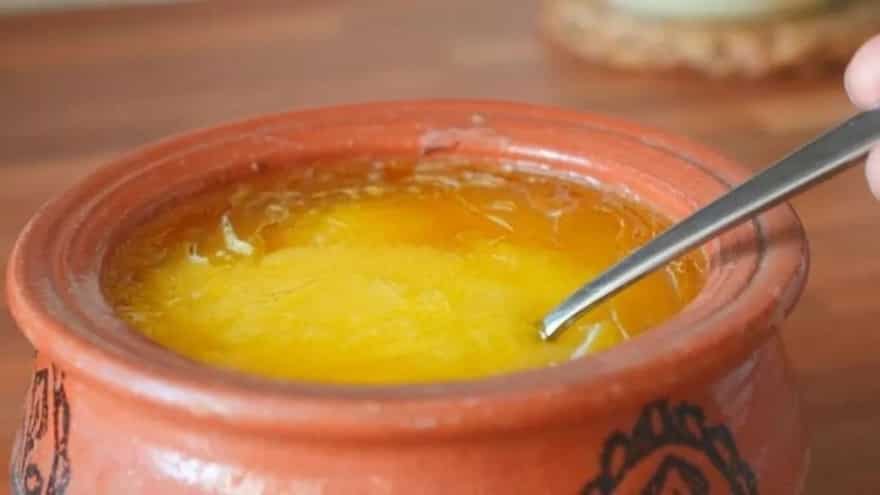
Image credit: Adobe Stock
Nourishing The Soul: What To Eat On Day 1
Fasting during Navratri is a method of detoxification, both for the body and the mind. The transition from winter to summer is a time when the human immune system can be vulnerable. Therefore, the traditional Navratri diet is designed to be light, nutritious, and easy to digest. On the first day, the emphasis is on Satvik food. This means avoiding onion, garlic, grains, and common salt. Instead, Sendha Namak or rock salt is used. The diet mainly consists of fruits, dairy products, and specific seeds and tubers.
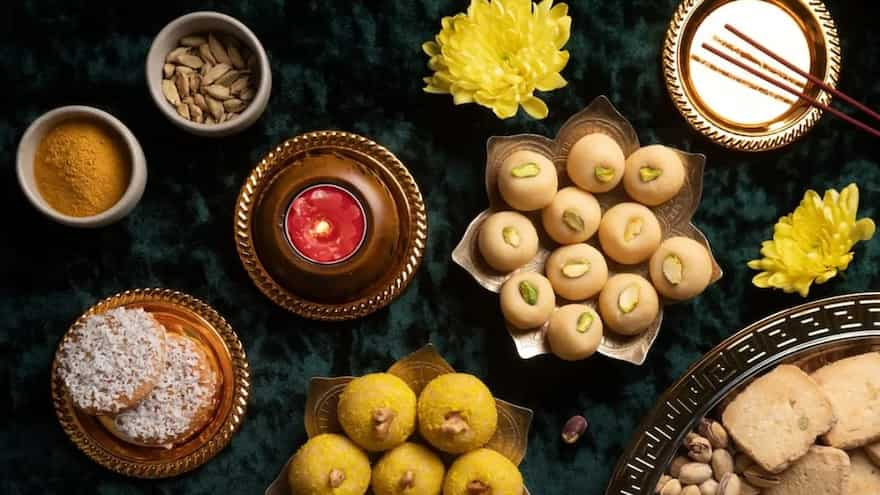
Image credit: Freepik
• Falahari Staples: Fruits like bananas, apples, and pomegranates are excellent for maintaining energy levels throughout the day. They provide natural sugars and essential vitamins.
• Buckwheat and Water Chestnut: Since grains are avoided, flours made from Kuttu or Singhara seeds are used to make rotis or puris. Kuttu is warming and protein rich, while Singhara is cooling and full of minerals.
• Sabudana: A popular choice for many, Sago can be prepared as a khichdi or vadas. It provides a quick burst of energy which is vital when you are balancing work and rituals.
• Dairy Products: Milk, curd, and buttermilk are essential for staying hydrated and getting enough calcium and protein. A bowl of curd with a bit of honey can be a refreshing meal during the afternoon.
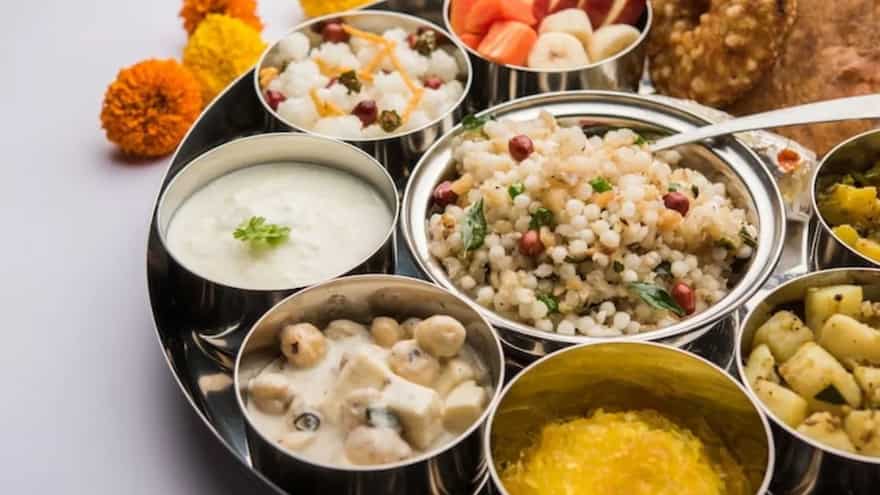
Image credit: Freepik
Cleanse And Restraint: What To Avoid Eating
While knowing what to eat is essential, understanding what to avoid is equally important for a successful fast. On the first day of Chaitra Navratri, the primary goal is to shift away from Rajasic and Tamasic foods that can make the body feel heavy or sluggish. Common grains such as wheat, rice, corn, and semolina are strictly avoided. Similarly, all legumes and lentils are kept off the plate to allow the digestive system a complete rest from complex proteins. In terms of seasoning, regular table salt is replaced because it is chemically processed: only unprocessed rock salt is permitted. Perhaps the most well known restriction is the total exclusion of onion and garlic. These are believed to increase heat in the body and disturb mental focus during meditation. Furthermore, refined oils and processed snacks should be shunned. Instead, stick to cold pressed oils or the sacred ghee offered to the Goddess. Avoiding caffeinated drinks like coffee and strong tea is also recommended, as they can lead to dehydration and acidity during a fast.




