


 Share
Share

When you stay at Rohet Garh, you can pick up an itinerary where you take a jeep safari and plan your day, delving into the flora and fauna of the desert and how certain food habits and principles have become the core of living among its people. After spending a good amount of time, admiring black bucks and nilgais, seeing them graze around the desert and trying to survive with the food they can hunt or search for, the jeep drives a few more kilometres into the Bishnoi village, where simple food, local farming traditions and kitchen habits shape who they are today.
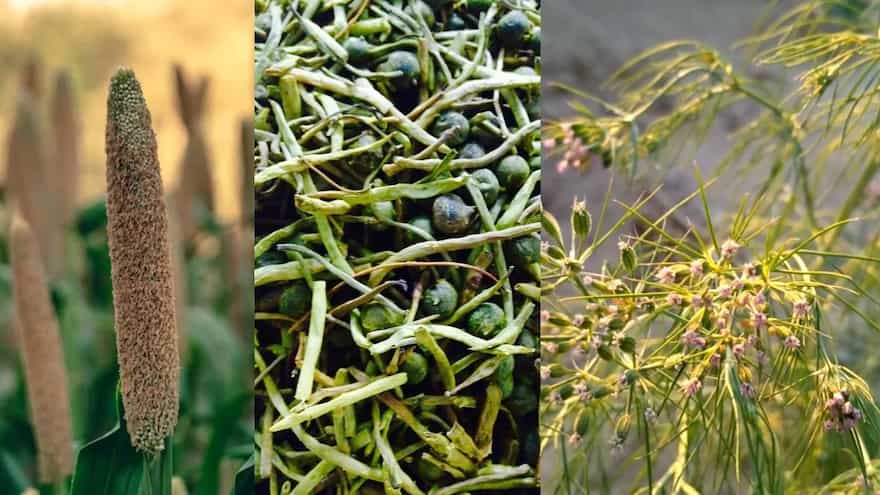
Image Credit: Wikimedia Commons
Bishnois are a sect in Rajasthan's Thar Desert that adhere to the teachings of a saint who believed that harming nature is equivalent to harming humanity, and this is reflected in how they consume, farm, and cook year-round. Along the way, you'll be welcomed into the homes of the Bishnoi elders to participate in traditional rituals such as sipping an infusion of poppy seeds produced on local fields, which is an excellent opportunity to learn about the Bishnoi tribe, a society of strict vegetarians who have played a critical role in saving the black buck antelope species from extinction. They cultivate millet during the monsoon season, which is then crushed into flour for chapattis. Their lives rely more than others on a good monsoon.
How One Desert Community Built A Food System Around Protection, Not Consumption
The conversations with Mr Khiyaram Bishnoi and his family opened up multiple questions and interesting discussions around how farming, food and following a discipline shape a life free of any modern-day food fads. For them, every meal begins from the soil, with farming practises closely tied to the daily routine, seasonal produce and respect towards livestock. Outside the gated space, the homestead reflects this self-sustaining ecosystem. The ideas of farming, using simple techniques to live all stem from one core idea where food is not a trend but grown, cooked and consumed for survival and community.
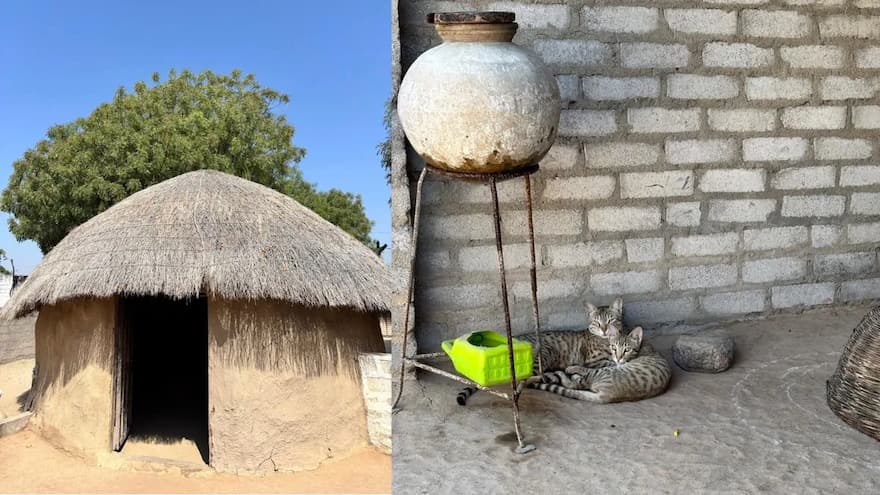
Image Credit: Rajlakshmi Dastidar
Slurrp asked the family, when it comes to ‘ethical eating’, what does it mean within a Bishnoi household. Mr Khiyaram shares, “The social concern for the environment in medieval Rajasthan manifested itself in various forms. Most of the Bishnoi rules emphasised maintaining harmony with the environment, such as the prohibition on cutting green trees and on animal slaughter. One plausible explanation is that the economy was primarily sustained by animal husbandry. Hence, any slaughter, even during droughts, would have reduced the means of livelihood.”
Similarly, the cutting of green trees was prohibited, as it would reduce the availability of green fodder for the animals, especially in this region where natural vegetation was very scarce, thin and sparse. The family goes on to share the strict vegetarian diet that they follow and how these benefits them in the long run, from planning to techniques, stating, “While crossing the Thar Desert in Rajasthan, one sees that areas inhabited by Bishnois have well-functioning traditional water harvesting systems. There is normally plenty of food. Despite the difficult environmental conditions, millet, wheat, cumin, carrots, radishes and sesame oil are produced.”
You get to know that wild fruits and vegetables play an important role in the diet, and their cultivation methods are adapted to the local conditions and environmental customs. Bishnois are also encouraged not to keep and rear goats and sheep, as they tend to end up in a slaughterhouse for the meat industry.
In A Bishnoi Home, The Kitchen Is As Sacred As The Land Outside
Next, if you want to know what the defining rules of a Bishnoi kitchen are and if any ingredients are consciously avoided to protect biodiversity, they will generously explain to you that the most important and foremost rule for the Bishnois related to the kitchen is to take a shower before entering the kitchen, which applies to both men and women. Another rule is that they don’t allow outsiders to enter the kitchen without the permission of the elders in the family. Bishnois practice simple lifestyles, known for their proclivity for letting bushes, shrubs and foliage grow in the fields, and they also manage to protect the desert sand from wind erosion.
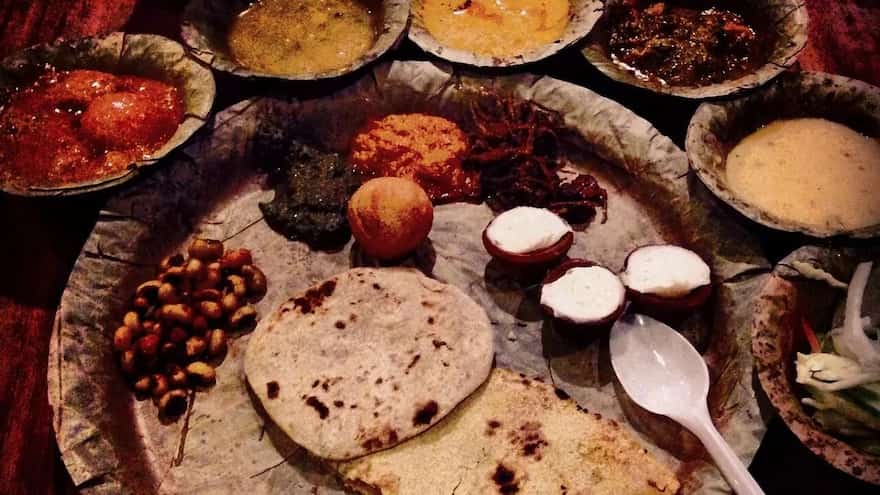
Image Credit: Wikimedia Commons
Living a life of principles that promote sustainability through and through, the Bishnois have a set of 29 rules that should be followed. Of the 29 principles laid down by Jambhoji as fundamental for the sect, eight are prescribed to preserve biodiversity as much as to encourage animal husbandry. Ten principles deal with personal hygiene and health for all. These mention simple tenets such as vegetarianism, safe drinking water (filtered with a cloth), bathing daily, environmental sanitation, and prohibiting the use of tobacco and alcohol.
“Bishnois try their best not to burn fuel food for cooking but search patiently for cow dung each day, known to produce less smoke and burn longer, store rain water, build granaries to preserve excess grains, filter water to avoid harming microorganisms, are some practices that the Bishnois adhere to,” the family shares.
Not Every Rajasthani Plate Tells The Same Story
After a few seconds, your mind will ponder if the cuisine and its flavours differ from the broader Rajasthani cuisine that everyone in the world is fascinated by. And of course, there’s a distinction since the Bishnois are strictly vegetarian, the flavours and cuisine are generally seasonal, which includes the use of local desert pods and beans produced naturally by desert bushes and plants, for example, kair & sangri, along with other desert pods which are considered an excellent source of fibre, nutrients, and are anti-oxidant. They also tend to use lots of dairy products, such as buttermilk, cream, cheese, etc., in their local food.
Mr Khiyaram and family want the people to know that the majority of the Bishnoi families are still living the traditional life, which they have been practising for the last hundreds of years, which is also evident in their food habits. “But, we can find a few of the families adopting a modern lifestyle and using LPG cylinders in their cooking habits. Climate change has not yet altered what they grow, cook or eat, but they say the changes can be seen with erratic rainfalls and rising temperatures in summers, which may pose a problem in the near future,” they share.
The Bishnoi people, known for their respect for all living things, have retained a centuries-old tradition known as the Opium Ceremony, which continues to captivate and enchant. This mysterious activity, rich in spirituality and cultural importance, provides a look into the core of Bishnoi traditions and their deep relationship with the natural world.
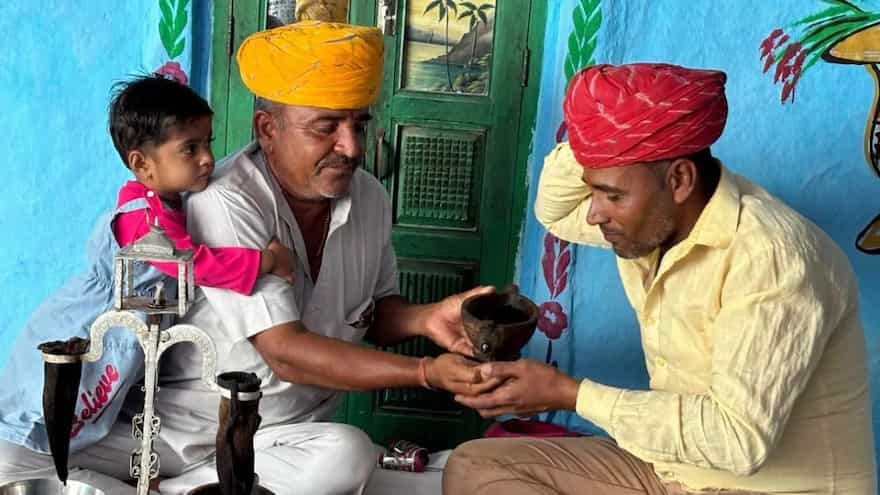
Image Credit: Rajlakshmi Dastidar
In Rural Rajasthan, A Palmful Of Opium Still Seals Trust
Opium has been utilised for ages in numerous civilisations due to its medical and spiritual benefits. Opium is thought to bring calmness and spiritual enlightenment during the Bishnoi Opium Ceremony. It is regarded as a holy substance that promotes a greater connection with the divine.
First, an elder prepares the Amal by mixing raw, dark opium paste with water, often filtering it through a cloth or a filter made out of camel hair to eliminate any residue or particles. After this, the mixture is first offered to Lord Shiva before being offered to participants. Attendees are usually elderly men of the community who gather in a circle, and the host serves the liquid by pouring it into his own cupped palm. Each person bows down and drinks the liquid from the host’s palm. It is often consumed in odd numbers (1, 3, or 5 slurps) to ensure good fortune.
There are no set dishes or drinks that must be offered alongside it, as customs differ throughout villages and ceremonies. However, soothing mainstays like masala chai and jaggery are frequently present, bringing warmth and a hint of sweetness to the event. The participants, mostly elderly men, congregate in a predetermined spot and form a circle. The opium mixture is poured into little clay cups, with each person receiving a share. Before consuming the mixture, the participants perform a sequence of prayers and chanting addressed to the divine, asking for blessings and protection. The consumption of opium is a communal act, symbolising unity and shared spirituality.
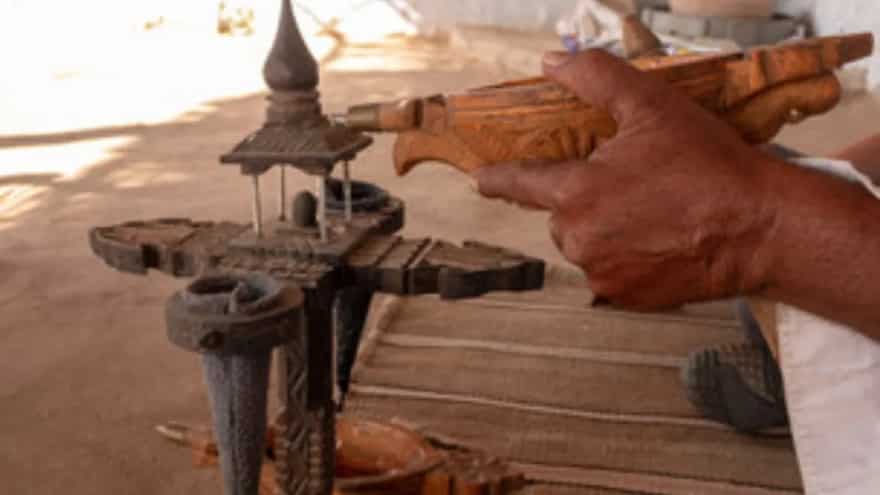
Image Credit: Adobe Stock
Once you’ve experienced and been a part of the Opium Ceremony, you learn the historical anecdotes that come with it, where ‘sharing’ becomes the foundation of hospitality and trust. The family will tell you, “Sharing opium acts as a profound gesture of hospitality, trust, and equality, particularly in rural western regions of Rajasthan. It involves offering liquid opium from the host's cupped palm to guests to seal friendships, welcome visitors, and mark special occasions like weddings or births. Refusing to consume the opium offered is often regarded as an insult to the host.” The effects of the opium cocktail differ from person to person. Some people may feel euphoric, while others may experience great serenity and tranquillity. The ceremony is thought to increase spiritual consciousness and foster a greater knowledge of oneself and the cosmos.
Lastly, when Slurrp asked how one balances tradition with awareness around narcotics, the family explained, “The opium ceremony is always held and performed by the elders of the family, and young generations are not encouraged to take part in the ceremonies as it is considered highly addictive.” They cautioned, “Also, opium ceremony usually involves taking just a few sips so as not to overdose and misuse it in the name of tradition, and this is taken very seriously by elders of the family.”
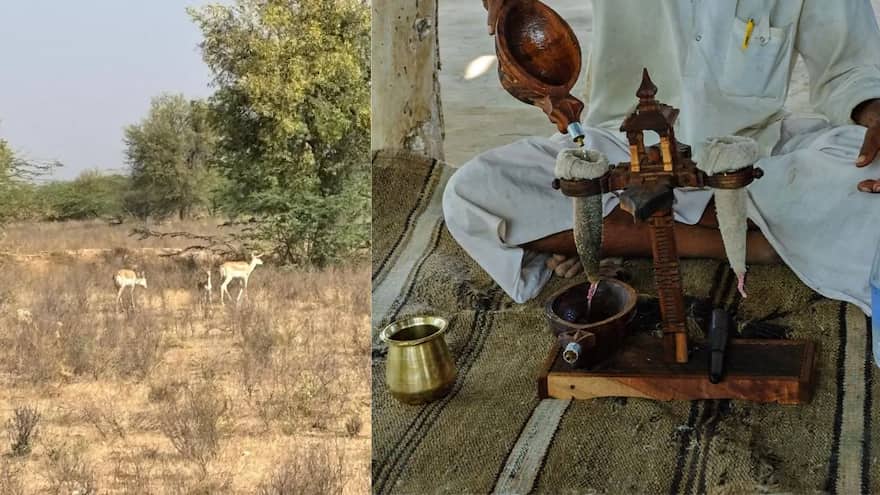
Image Credit: Rajlakshmi Dastidar
The future of the Opium Ceremony is dubious as opium laws develop; the Bishnoi community must balance retaining their traditions with legal compliance. However, the Bishnois' persistent spirit and unflinching dedication to their traditional heritage provide hope for the survival of simple and daily living, where a set of principles can shape how you view the world and its habits on a plate.




