


 Share
Share

Christmas in Australia lands right in the middle of summer, and that single fact changes everything about the food. Instead of heavy roasts and steaming puddings, the table leans towards salt air, sunscreen, long lunches that blur into the evening, and plates that can handle heat, sand, and a casual second helping. A beachside Australian Christmas is less about a formal sit-down meal and more about a spread that moves easily from the grill to the esky to the picnic table, with food that tastes good even after a swim. At its heart, the menu stays practical, generous, and flavour-forward. There is usually a barbecue or a portable grill somewhere, seafood that speaks for itself, and salads that feel like summer in a bowl.

Image credit: Adobe Stock
BBQ Mains
The barbecue is not an optional extra at an Australian beach Christmas. It is the centrepiece that allows the cook to stay outside with everyone else and take on hosting duties. It suits the weather, and it produces food that feels celebratory, freshly prepared and engaging.
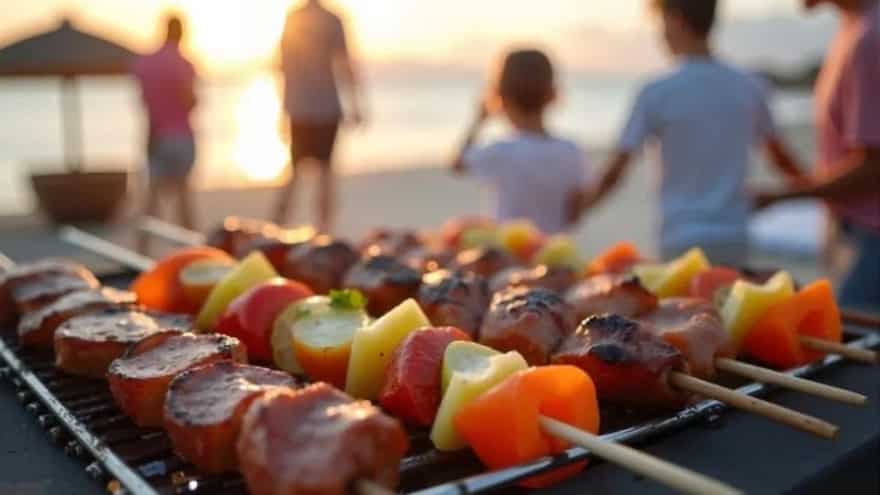
Image credit: Adobe Stock
Prawns are often first on the grill. Large tiger prawns or king prawns are butterflied, brushed with oil, and cooked quickly until just opaque. Many households keep the seasoning simple with salt, lemon, and maybe a chilli butter on the side. Some also lean into marinades with garlic, parsley, and a splash of white wine or lemon myrtle for a local note. The appeal is speed and immediacy; prawns go straight from grill to plate, sometimes eaten standing up, shells discarded into a shared bowl.
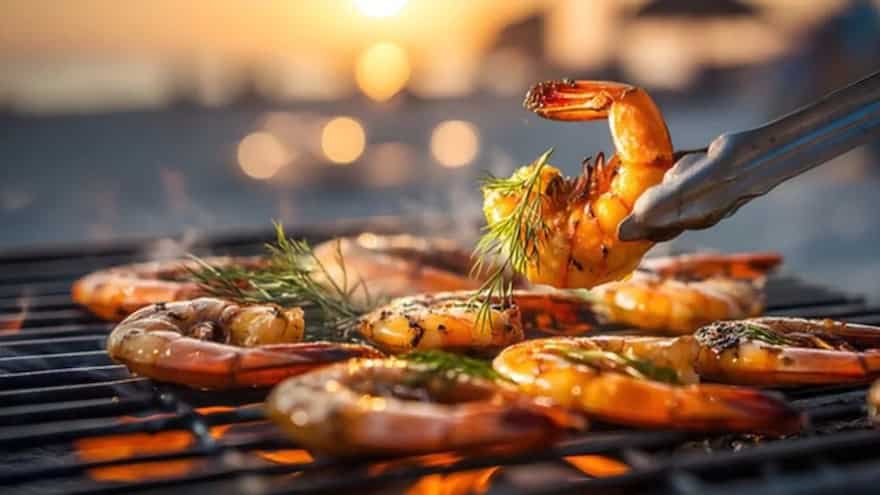
Image credit: Adobe Stock
Fish follows closely behind. Whole snapper or barramundi wrapped in foil with lemon slices, herbs, and olive oil is common, especially when cooking for a crowd. Fillets of salmon or kingfish are just as popular, cooked skin-side down on a hot plate until crisp, then finished with a squeeze of citrus.
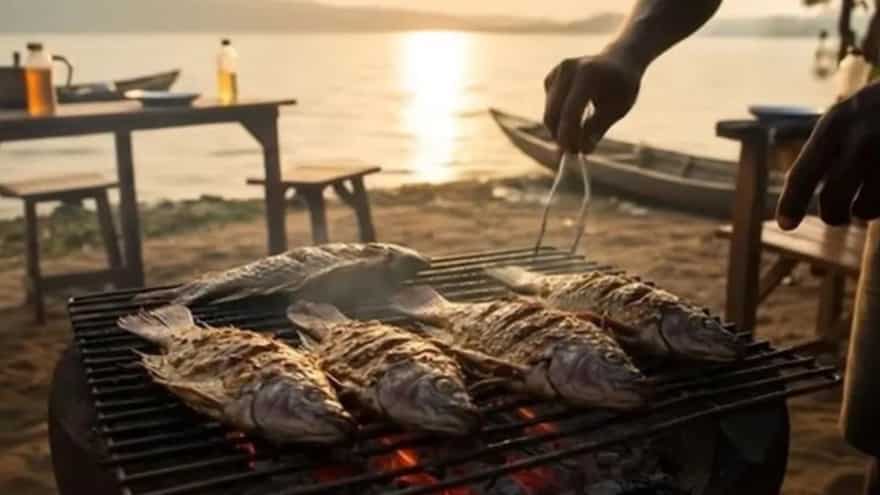
Image credit: Adobe Stock
Meat still plays a strong role. Sausages, lamb cutlets, and chicken skewers appear on most grills, often alongside seafood rather than instead of it. Lamb cutlets brushed with rosemary and garlic oil feel particularly Australian, especially when eaten with hands and a wedge of lemon. Chicken is usually marinated ahead of time, sometimes in yoghurt and spices, sometimes in honey, soy, and ginger, so it stays juicy even in high heat.
Image credit: Adobe Stock
What matters is variety. A beach Christmas barbecue rarely commits to a single hero protein. The grill is busy, layered, and generous, with something for everyone and enough flexibility to keep cooking as people arrive, leave, and wander back for more.
Seafood Staples Beyond The Grill
Not all seafood needs fire. In fact, some of the most recognisable Australian Christmas dishes are served cold, pulled straight from the fridge or esky and placed on the table with not much elaborate preparation. Cooked prawns, chilled and piled high, are almost non-negotiable. They arrive peeled or unpeeled, often both, with bowls of cocktail sauce, aioli, or lemon wedges nearby. There is something deeply ingrained about standing around peeling prawns with sandy fingers, conversation drifting as easily as the afternoon.
Oysters also feature strongly, especially in coastal areas. Sydney rock oysters or Pacific oysters are served naturally with lemon, mignonette, or a simple chilli vinegar. Some hosts offer a lightly dressed version with finger lime or cucumber granita, though many purists prefer them untouched. The ritual of shucking oysters becomes part of the day, slow and steady, with plates refilled as needed.
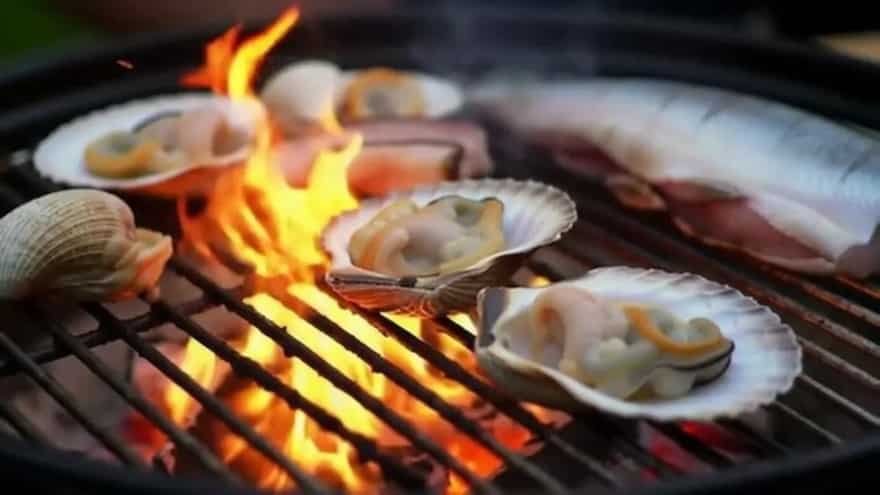
Image credit: Adobe Stock
Smoked fish makes frequent appearances too. Smoked salmon, trout, or ocean trout is laid out with capers, sliced red onion, dill, and good bread. It works as a starter, a filler between swims, or a late-afternoon snack when the grill has cooled down but people are still hungry.
Light Summer Plates
Salads at an Australian Christmas table are essential. The sweltering heat demands food that refreshes, hydrates, and balances the richness of grilled meats and seafood. Potato salad remains a classic, though versions tend to be lighter than their European counterparts. Many families skip heavy mayonnaise in favour of olive oil, mustard, and vinegar, sometimes adding herbs, capers, or pickles for sharpness. When mayonnaise does appear, it is often used sparingly and kept well chilled.
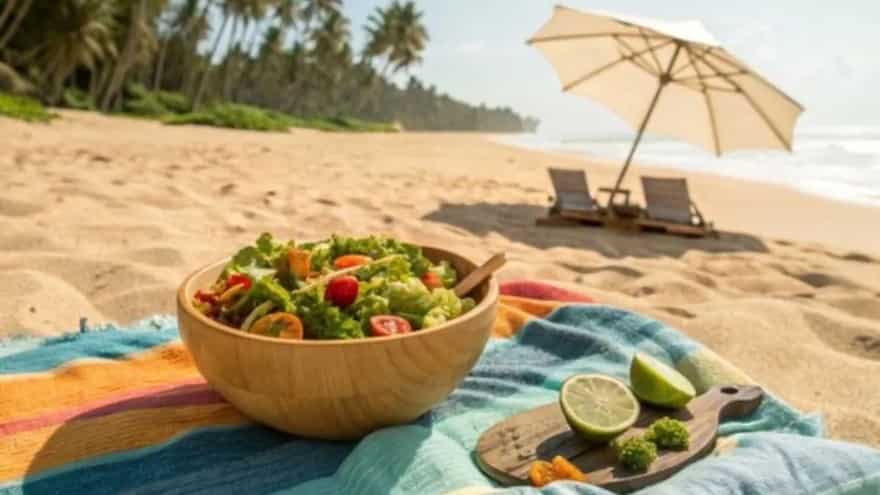
Image credit: Adobe Stock
Green salads lean towards crunch and acidity. Think cos lettuce with radishes and a lemon dressing, or shaved fennel with orange segments and olives. These salads cool the palate and cut through smoke and salt, which is exactly what is needed after a few rounds at the grill. Pasta salads are common too, especially those loaded with cherry tomatoes, basil, grilled vegetables, and feta. They travel well, hold up in heat, and feel substantial without being heavy. Rice salads with herbs, nuts, and citrus dressing also appear, often inspired by Middle Eastern or Mediterranean flavours that suit the climate naturally.

Image credit: Pexels
Fruit is treated as a proper course rather than an afterthought. Watermelon sliced thick and sprinkled with salt, pineapple grilled lightly on the barbecue, mangoes served simply with lime. These plates feel festive without tipping into excess, and they make sense after hours in the sun.
Desserts That Keep Things Breezy
Dessert at a beach Christmas rarely aims to impress through complexity. The priority is cool, shareable, and low effort. Pavlova remains iconic. Crisp on the outside, marshmallow-soft inside, topped with whipped cream and summer fruit. It is light enough to follow a big meal and flexible enough to suit different tastes. Trifle, especially fruit-forward versions, also holds its place, often served straight from the fridge. Ice creams and frozen treats do a lot of work too. Eskies are stocked with ice cream tubs, icy poles, and sorbets, making dessert something people dip into rather than formally serve.
Cocktails And Cold Drinks
Cocktails tend to be light, citrus-forward, and easy to prepare in larger quantities. Spritz-style drinks are widely used because they remain refreshing and can be assembled in jugs. Aperol spritz, limoncello spritz, and elderflower-based versions are common, mixed with sparkling wine, soda, ice, and citrus. These drinks pair well with seafood and suit extended drinking without becoming heavy.

Image credit: Adobe Stock
Gin-based drinks also feature prominently. Simple gin and tonic combinations with lime, cucumber, or herbs are practical and widely accepted. Many hosts favour restrained builds that avoid excessive sweetness. Later in the day, rum and tequila cocktails appear more frequently. Mojitos and margaritas are prepared with emphasis on acidity and balance rather than sugar. These drinks are often served over ice rather than frozen, keeping them consistent and easier to manage outdoors.

Image credit: Adobe Stock
Beer and wine remain central. Light lagers, pale ales, and session beers are preferred for their drinkability. Wine selections focus on chilled whites and rosé, which work across seafood, salads, and grilled meats. Sparkling wine is used both on its own and as a cocktail base. Sparkling water with citrus, iced teas, and fruit-based coolers are also placed alongside alcoholic options, ensuring everyone has access to cold drinks throughout the day.




