


 Share
Share

With the arrival of the monsoon, vendors in local markets start selling bundles of fresh Ambadi leaves. Ambadi is known for its sourness and has been a part of Indian cooking for centuries.
In earlier times, this wild green leafy vegetable did not need farming. It grew naturally in fields and forests during the rains. However, with increasing demand, farmers now cultivate it widely, ensuring its availability through and even beyond the monsoon season.
In Maharashtra, Ambadi rules monsoon menus with dishes like ambadi bhaji and ambadi bhakri, while in Andhra, people enjoy the fiery gongura pappu and gongura pachadi. Tamil Nadu also has its comforting version using this tangy green. Here’s a look at Ambadi’s place in different regional cuisines.
Video Credits: Indian Vlog And Recipe/ YouTube
Where Does Ambadi Grow In India?
Ambadi grows in warm, humid climates and grows abundantly during the monsoon. It is mostly cultivated in:
- Maharashtra, especially in the Vidarbha and Marathwada regions
- Andhra Pradesh and Telangana, where it is called Gongura
- Tamil Nadu and Karnataka, grown locally for regional dishes
- Parts of Odisha and Chhattisgarh, where it appears in tribal cuisines
Maharashtra’s Ambadi Bhaji
In Maharashtra, Ambadi transforms into a wholesome curry called ambadi chi bhaji. To make it, boil the leaves in water, and just when the water is drying, add jowar (sorghum) sooji to it and mix it. Then temper them with garlic, green chillies, mustard seeds, oil, and regular spices. The sourness of the greens balances perfectly with the mild and earthy flavour of jowar and adjusts the consistency. This bhaji can be enjoyed with chapati, jowar, or bajra bhakri.
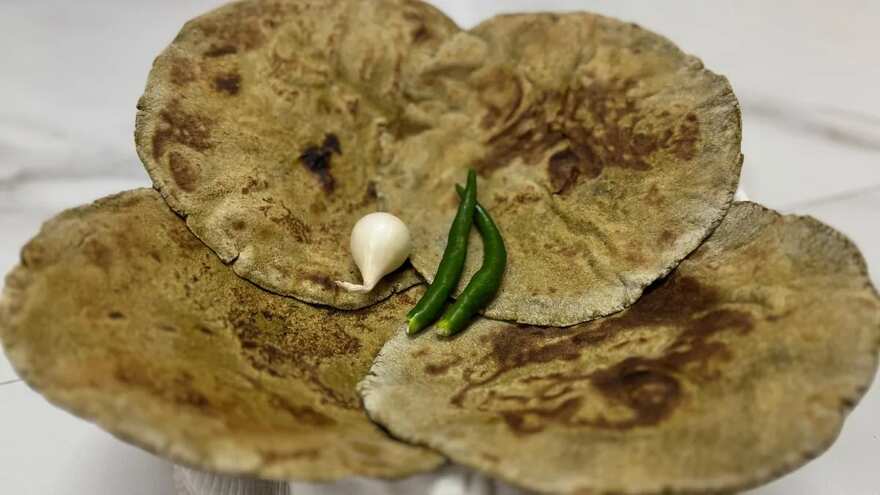
Maharashtrian Bhakri Made From Leftover Bhaji
The leftover ambadi chi bhaji can be turned into ambadi bhakri by mixing it with jowar or bajra flour and rolling out bhakri from it. The earthy taste of the bhakri pairs beautifully with thecha made from green chillies, making it a monsoon staple in Maharashtrian households. If you wish to eat the bhakri, you can boil the leaves and mix them directly with spices in the jowar, bajra flour.

Andhra Pradesh’s Gongura Pappu And Pachadi
In Andhra Pradesh, gongura (Ambadi) is one of the most loved greens. One popular dish is gongura pappu, a hearty lentil curry where the sour leaves blend with toor dal and red chillies to create a bold, tangy flavour. Another iconic preparation is gongura pachadi, where the leaves are ground with garlic and red chillies into a fiery chutney that’s served with hot rice and ghee.

Tamil Nadu’s Pulicha Keerai Masiyal
In Tamil Nadu, Ambadi is known as pulicha keerai, which means ‘sour greens’. One comforting dish made with it is pulicha keerai masiyal, where the leaves are cooked down to a mash and seasoned with tamarind, red chillies, and garlic. Served with hot steamed rice and sesame oil, it makes for a simple yet satisfying monsoon lunch.
Health Benefits of Ambadi
- Ambadi is more than just a flavourful monsoon green; it is also a powerhouse of nutrition.
- Ambadi is rich in iron, vitamin C, and antioxidants, helping build immunity during the rainy season.
- Its mild sourness stimulates digestive juices, aiding digestion
- Ambadi is low in calories but high in fibre, making it great for weight management
- It is good for skin and hair health, because of its vitamin A and C content




