


 Share
Share

Food is humanity’s most fundamental language of affection, hospitality, and care. In almost every human civilisation, the act of preparing a meal is inextricably bound to memory, belonging, and kinship. It is hardly surprising, then, that when human beings contemplate the mystery of death, they repeatedly turn to the kitchen. The custom of offering food to deceased ancestors is one of the oldest and most pervasive spiritual practices on Earth. Far from being a relic of forgotten superstition, it represents a deep psychological and emotional need to maintain a relationship with those who have crossed into the unseen realm.
While Indian households are intimately familiar with the fortnight of Pitru Paksha, this ritualistic feeding of ancestors is by no means an isolated phenomenon. From the vibrant altars of Latin America to the quiet Buddhist temples of East Asia, and from ancient Roman hearths to Celtic villages shrouded in autumn mist, humanity has consistently prepared feasts for invisible guests. Exploring these global parallels reveals an extraordinary truth: though our ritual languages differ, our spiritual appetite for connection remains remarkably uniform.
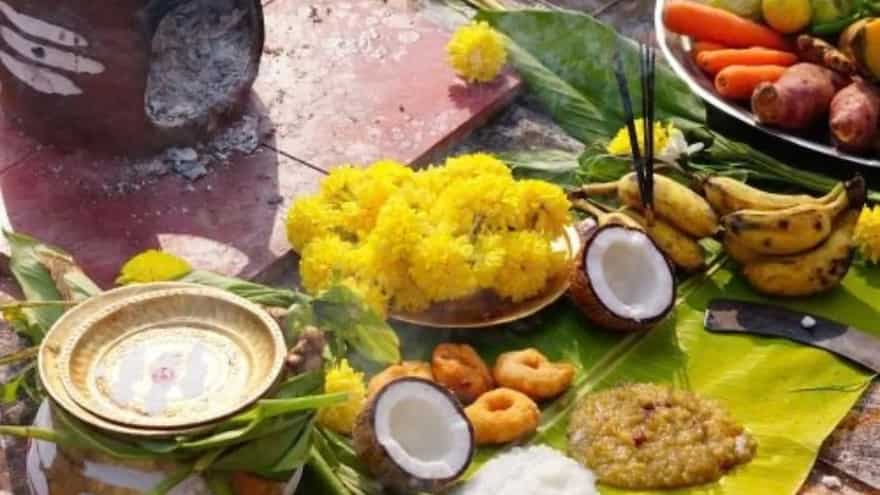
Image credit: Pexels
Pitru Paksha: The Indian Blueprint of Ancestral Gratitude
To understand the global context, one must first appreciate the nuance of Shradh and Pitru Paksha. Celebrated during the dark fortnight of the Hindu lunar month of Bhadrapada or Ashvin, this period is dedicated entirely to expressing pitru rin, the fundamental karmic debt owed to ancestors. The core of the ritual revolves around Pinda Daan, the offering of spherical balls made from cooked rice, barley flour, sesame seeds, ghee, and milk.
These rice spheres are not merely symbolic gifts. According to Vedic philosophy, they provide subtle nourishment to the soul during its transitional journey. Water libations infused with black sesame seeds, known as Tarpana, are poured with deep reverence. Crucially, the food prepared during Shradh is never consumed by the family first. It is offered to crows, known as Kagabali, who are regarded as messengers bridging the physical and subtle worlds, as well as to cows, dogs, and local priests. Feeding the wider community is seen as the ultimate vehicle for transferring merit to the departed.
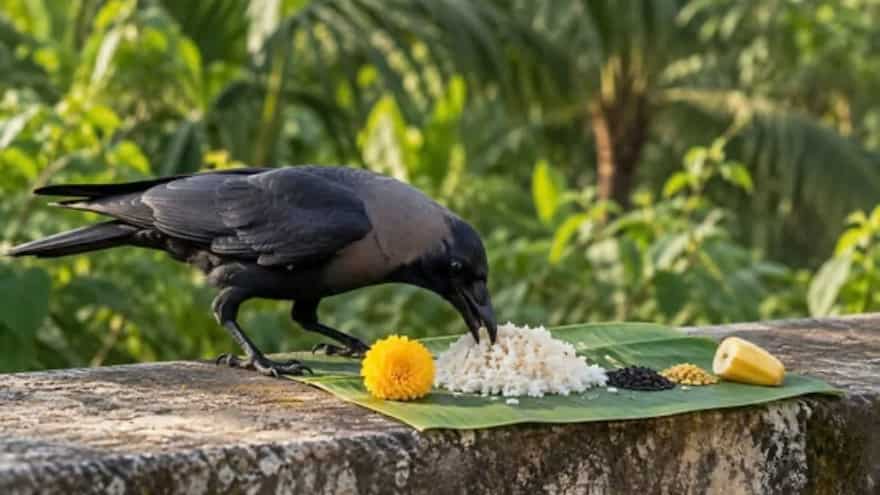
Image credit: Adobe Stock
Bàn Thờ: Vietnam’s Sacred Hearth Of Ancestral Devotion
In Vietnam, ancestral veneration is not confined to a single seasonal festival; it is a daily rhythm and an enduring domestic duty anchored by Bàn Thờ, the sacred ancestral altar found in almost every home. Positioned at the very centre of the household, this elevated altar serves as a living bridge between the visible world and the spirits of departed kin.
The feeding of ancestors in Vietnamese tradition reaches its pinnacle during Ngày Giỗ, the annual death anniversary of a family member, as well as during Tết, the Lunar New Year. On these occasions, families prepare elaborate feasts known as cơm cúng. Bowls of freshly steamed rice, savoury broths, boiled chicken, spring rolls, and sticky rice cakes are placed upon the altar alongside fresh fruit, tea, and rice wine. Incense sticks are lit, and family members bow in solemn gratitude, inviting the ancestors to consume the spiritual essence of the meal before the living gather to share the physical food. Much like Indian household traditions, this regular sharing of meals ensures that ancestors remain active, respected members of the lineage.
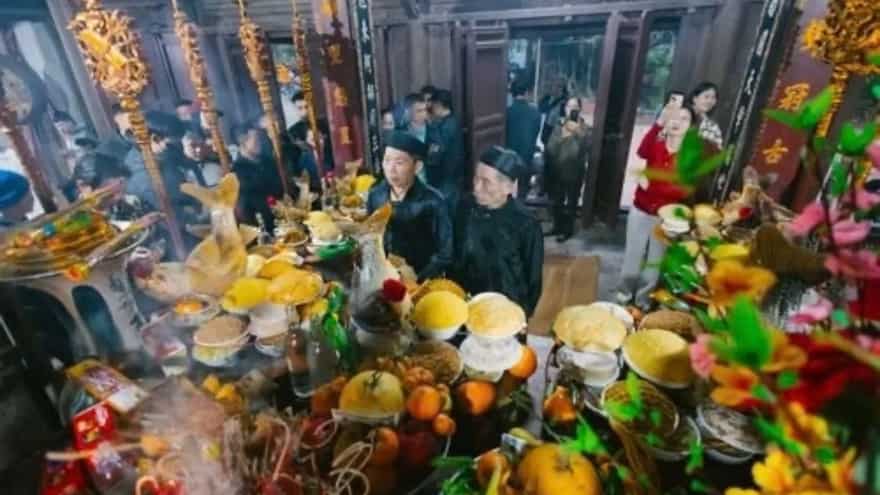
Image credit: Pexels
Día De Los Muertos: Mexico’s Vibrant Banquet For The Soul
Thousands of miles away across the Pacific, Mexico observes a strikingly similar spiritual logic during Día de los Muertos, or the Day of the Dead, celebrated at the beginning of November. Ingrained in indigenous Aztec traditions merged with Catholic All Saints’ and All Souls’ Days, this festival approaches ancestral return not with sombreness, but with exuberant joy and festive colour.
Families construct elaborate multi-tiered altars called ofrendas inside their homes and at cemetery gravesites. Food is the absolute centrepiece of the ofrenda. Ancestors are welcomed back with Pan de Muerto, a soft, sweet bread decorated with dough shaped like bones, along with dishes the deceased loved during their mortal lives, such as rich, spiced mole, tamales, fresh fruit, and traditional beverages like tequila, mezcal, or atolli.
Bright orange marigold flowers, known as cempasúchil, are scattered along pathways. Just as sesame seeds and water serve as spiritual conduits during Shradh, the distinct fragrance of marigolds and warm cooked food is believed to guide roaming spirits back to their living descendants. The food sits overnight so the ancestors can absorb its subtle essence, after which the living family gathers to consume the physical feast, celebrating the continuity of life and family heritage.
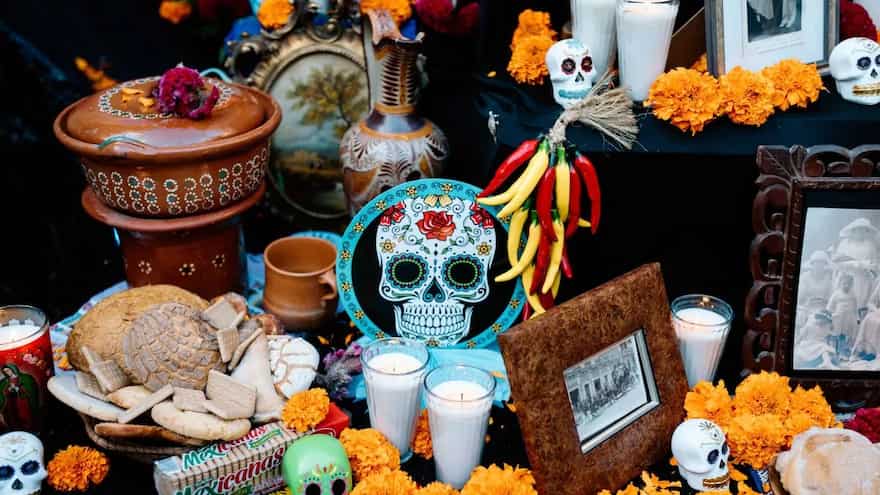
Image credit: Pexels
Zhongyuan: China’s Hungry Ghost Festival
In Chinese culture, the seventh month of the lunar calendar marks the arrival of Zhongyuan, commonly known as the Hungry Ghost Festival. Taoist and Buddhist beliefs hold that during this month, the gates of the underworld open, allowing spirits to visit the realm of the living. Among these visitors are cherished family ancestors, as well as forgotten, wandering ghosts who have no living relatives to care for them.
The response to this cosmic opening is a massive, nationwide effort of culinary hospitality. Families prepare lavish home meals, setting actual places at the dining table with empty chairs, bowls, and chopsticks reserved exclusively for deceased elders. Dishes include roasted pork, steamed fish, dumplings, and seasonal fruits.
Out on the streets, public altars are piled high with mountains of cooked rice and roasted meats. These public offerings target the unremembered dead, ensuring that no spirit goes hungry. Parallel to the food offerings, families burn joss paper, often called ghost money, and paper replicas of daily comforts. The fundamental logic closely mirrors Pitru Paksha: feeding the dead resolves their spiritual hunger, prevents supernatural misfortune, and fulfills the filial duty of xiao, ensuring cosmic balance.
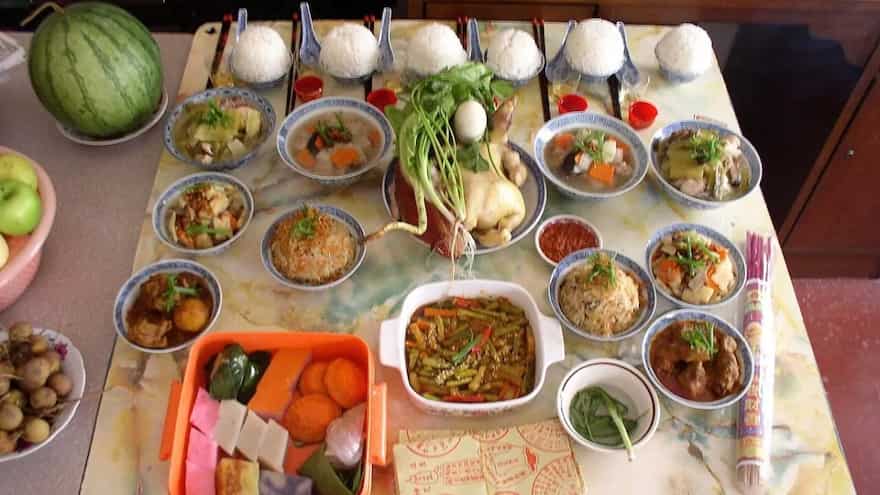
Image credit: Wikipedia
Obon: Japan’s Gentle Gathering Of Spirits
In Japan, the Buddhist tradition of Obon, observed in mid-July or August, provides another poignant parallel. During Obon, ancestral spirits return to their family homes to reunite with their kin. The preparation for their arrival involves meticulously cleaning home altars, known as butsudan, and creating delicate food offerings.
Unlike the heavy meat-based feasts found in some traditions, classical Obon food offerings adhere to Shojin Ryori, the refined Buddhist vegetarian cuisine. Families present small, exquisite bowls of freshly harvested rice, lotus root, eggplant, seasonal fruits, and sweet rice dumplings called dango.
A charming custom during Obon is the creation of shōryōuma, spirit animals crafted from cucumbers and eggplants. A cucumber with wooden toothpick legs represents a fast horse, designed to carry the ancestors home quickly. An eggplant shaped like a plump ox represents the creature that will carry their heavy gifts and take them back gently to the spirit world when the festival concludes. On the final evening, floating paper lanterns called tōrō nagashi are placed on rivers to guide the spirits safely back to the beyond.
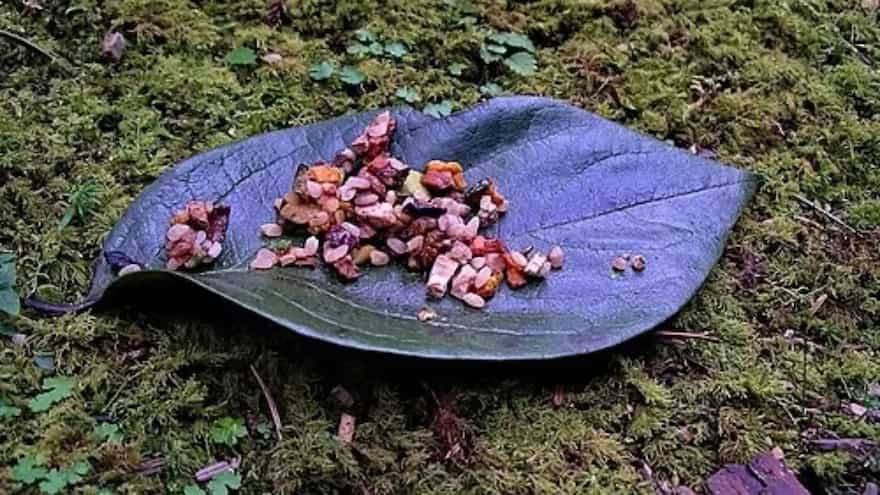
Image credit: Wikipedia
Chuseok: Korea’s Harvest Rite Of Remembrance
During the autumn equinox, Korea celebrates Chuseok, a major three-day harvest festival where family members gather to give thanks to their ancestors for the year’s agricultural bounty. The central ritual of Chuseok is Charye, an intricate ancestral service held on the morning of the festival.
The setting of the Charye table, known as Charye-sang, is governed by strict historical rules regarding direction, colour, and food placement. Freshly harvested rice, fruit, meat dishes, and rice wine called baekju are arranged meticulously. The signature food of Chuseok is Songpyeon, small, half-moon-shaped rice cakes stuffed with sweet fillings such as sesame seeds, red bean paste, chestnut, and honey, steamed over a fragrant bed of pine needles.
The shape of the Songpyeon is deeply symbolic. A full moon is destined to wane, whereas a half moon will grow full, representing future prosperity and continuous blessing from the ancestors. After the ritual bowing and offering, the family partakes in eumbok, the act of eating the blessed ritual food, absorbing the ancestral grace.
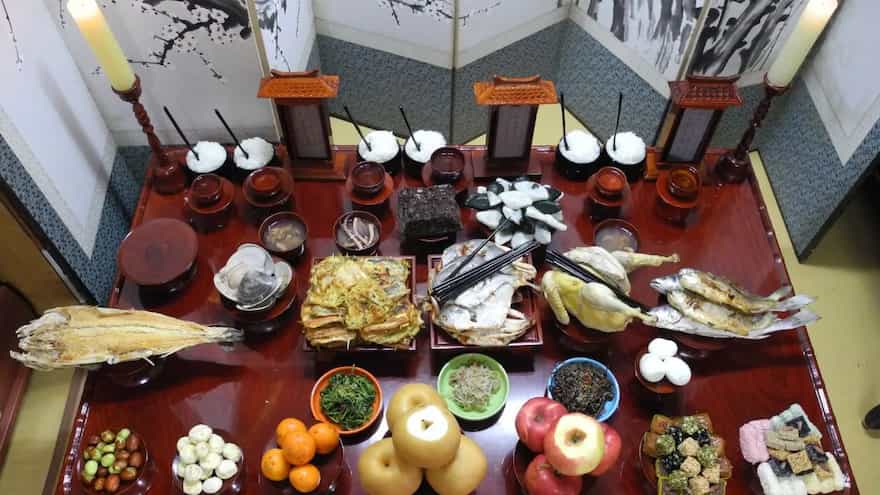
Image credit: Wikipedia
Samhain And The Silent Suppers Of Ancient Europe
Long before Halloween became a commercialised holiday of costumes and candy, the ancient Celts observed Samhain at the end of October. Marking the end of the harvest and the onset of winter, Samhain was believed to be a time when the veil between the physical world and the spirit world grew razor thin.
To honour visiting spirits and protect homes from malevolent wanderers, Celtic families practiced the Dumb Supper, or silent supper. A meal was cooked in absolute silence, and a plate was set at the table with the finest cutlery for deceased family members. No one spoke during the meal, allowing the living to listen for subtle signs of ancestral presence.
Additionally, small, round, spiced treats known as soul cakes, studded with raisins or currants and marked with a cross, were baked in large numbers. These soul cakes were offered to travellers, children, and the poor who came door to door singing verses for the dead, or left outside doorsteps alongside apples, oatcakes, and traditional potato dishes like colcannon. Sharing these soul cakes ensured that travelling spirits received nourishment through acts of charity, a custom that directly echoes leaving food out for birds and animals during Indian ancestral rites.
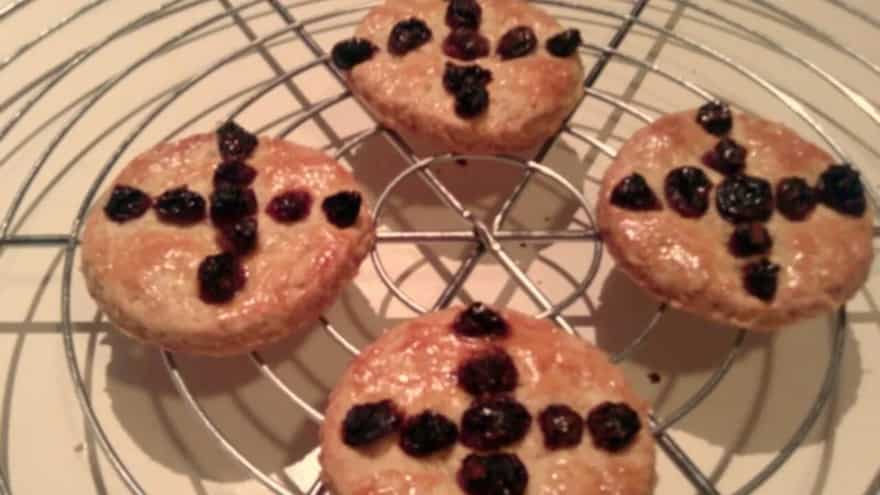
Image credit: Wikipedia
Parentalia: The Roman Feasts Of Memory
Ancient Rome also maintained a highly formalised relationship with ancestral spirits, known as the Manes. Every February, Romans celebrated Parentalia, a nine-day festival dedicated to honouring deceased parents and relatives.
The rituals began at tombs outside the city walls, where family members laid simple offerings of grain, salt, bread soaked in unmixed wine, violets, and olive oil. Roman writers noted that the dead required very little, observing that piety, rather than expensive gifts, pleased ancestral spirits. However, failure to offer these modest food gifts was believed to anger the dead, causing them to haunt the city with mournful cries.
An Enduring Human Instinct
Across vastly different geographies, climates, and theological frameworks, a singular pattern emerges. Humanity refuses to let physical death dissolve the familial bond. Whether it is an Indian household rolling rice into pindas, a Mexican family baking sweet Pan de Muerto, or a Korean home steaming Songpyeon, the core impulse is identical.
Feeding the dead is an act of reciprocal love. It acknowledges that our present existence is built upon the labour and sacrifices of those who came before us. By setting a plate for the unseen, we remind ourselves that memory is active, that gratitude requires expression, and that no one is truly forgotten as long as their place at the table remains preserved.




